TL;DR

Get business pricing on garage and car supplies
- Business-only prices and quantity discounts
- Tax-exempt purchasing
- Multiple users, one account, clear invoices
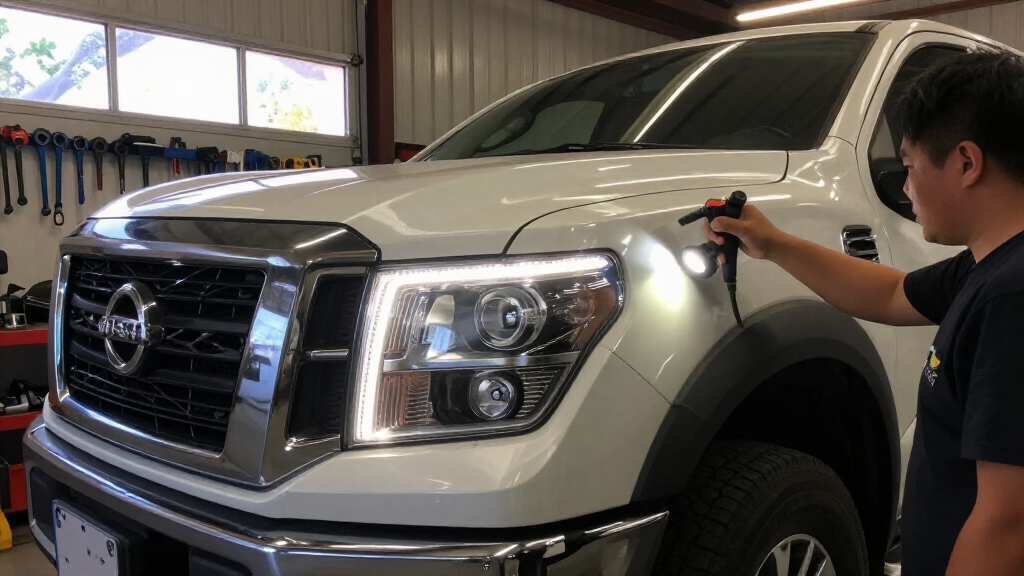
A new study reveals Nissan Titan headlights generate glare 615% above IIHS safety thresholds. Despite this, the vehicle remains within legal limits. The findings raise questions about safety standards and manufacturer compliance.
A recent study has found that the headlights of the Nissan Titan produce glare that is 615% over the safety limit set by the Insurance Institute for Highway Safety (IIHS). Despite this excessive glare, the vehicle remains within legal headlight regulations, raising questions about safety standards and manufacturer compliance. The study’s findings are prompting further investigation into vehicle headlight testing and regulation enforcement.
The study, conducted by an independent safety research organization, measured the headlight glare of various pickup trucks, including the Nissan Titan. It found that the Titan’s headlights exceeded the IIHS glare limit by a staggering 615%. This limit is designed to minimize driver distraction and prevent glare from impairing other road users. However, despite surpassing this threshold significantly, the Nissan Titan has not been flagged for legal violations, as it still complies with federal lighting regulations. The IIHS and federal authorities have not yet issued any recall or enforcement actions related to this specific issue. The research highlights a discrepancy between safety testing results and legal standards, raising concerns about whether current regulations adequately address real-world glare risks.Implications of Excessive Headlight Glare in Consumer Safety
This finding matters because excessive headlight glare can impair visibility for other drivers, increasing the risk of accidents, especially at night or in adverse weather conditions. While the Nissan Titan remains legal, the 615% excess over IIHS limits suggests that current safety standards may not fully account for real-world glare effects. Manufacturers might be able to produce headlights that technically pass regulations but still pose safety risks to other road users. The study could prompt regulators and safety organizations to re-evaluate headlight testing procedures and limits to better protect all drivers.
high beam headlight bulb for Nissan Titan
As an affiliate, we earn on qualifying purchases.
As an affiliate, we earn on qualifying purchases.
Background on Headlight Safety Regulations and Testing
Headlight glare has been a concern for road safety experts for years, with the IIHS setting specific limits to reduce driver distraction and improve nighttime visibility. These limits are based on laboratory measurements that simulate how headlights affect oncoming drivers. The Nissan Titan, a popular pickup truck, has been under scrutiny as recent tests suggest its headlights produce significantly more glare than the IIHS threshold. However, federal regulations governing vehicle lighting are primarily focused on compliance with minimum standards, not necessarily on the real-world impact of glare. The discrepancy between safety testing and actual driver experience is a growing area of concern in automotive safety discussions.
anti-glare headlight covers for trucks
As an affiliate, we earn on qualifying purchases.
As an affiliate, we earn on qualifying purchases.
Unclear Impact on Road Safety and Regulatory Response
It is not yet clear whether the excessive glare measured in the study will lead to increased accident rates or if regulators will update standards accordingly. The study’s findings are recent, and no official safety alerts or recalls have been issued. The actual impact on driver safety remains to be fully assessed, and authorities have not yet indicated any planned regulatory changes.
night driving headlight upgrade for pickup trucks
As an affiliate, we earn on qualifying purchases.
As an affiliate, we earn on qualifying purchases.
Next Steps in Safety Evaluation and Regulatory Review
Regulatory agencies such as the National Highway Traffic Safety Administration (NHTSA) are expected to review the study’s findings and determine if further testing or new standards are necessary. Automakers may also be prompted to revisit their headlight designs to reduce glare. Additional research is likely to follow, assessing whether the current legal limits are sufficient to ensure safety in real-world driving conditions. Consumers and fleet operators should stay informed about potential updates to vehicle lighting regulations.
vehicle headlight glare reduction kit
As an affiliate, we earn on qualifying purchases.
As an affiliate, we earn on qualifying purchases.
Key Questions
Does exceeding the IIHS glare limit mean the Nissan Titan is illegal to drive?
No. The Nissan Titan still complies with federal lighting regulations, meaning it is legal to operate on public roads despite exceeding the IIHS safety threshold for glare.
Could this glare level cause accidents or impair other drivers?
Excessive glare can impair visibility for oncoming drivers, especially at night, potentially increasing accident risk. However, direct safety impacts from this specific glare level are still under study.
Will regulators change headlight standards because of this study?
It is currently unclear. Regulatory agencies are reviewing the findings, but no official changes or recalls have been announced yet.
Are other vehicles also producing excessive glare?
The study focused on several pickup trucks, but the Nissan Titan’s glare was notably higher. Further testing may reveal if this is a broader issue across other models.
What should consumers do if they are concerned about headlight glare?
Consumers can check with their vehicle manufacturer for headlight adjustment options or consider aftermarket solutions. Regularly inspecting and maintaining headlights can also help reduce glare issues.
Source: rss
Halloween Picks
halloween
As an affiliate, we earn on qualifying purchases.