When towing, a high refresh rate in your TPMS is essential because it provides real-time tire pressure updates, helping you spot drops early. This quick info allows you to react before serious issues develop, like blowouts or loss of control. A slow refresh rate can delay warnings and compromise safety, especially during long trips or challenging terrain. Keep going to discover how sensor calibration and tire conditions also influence your system’s effectiveness.

Get business pricing on garage and car supplies
- Business-only prices and quantity discounts
- Tax-exempt purchasing
- Multiple users, one account, clear invoices
Key Takeaways
- A high refresh rate provides real-time tire pressure updates, crucial for detecting sudden drops during towing.
- Slow refresh rates can delay critical alerts, increasing the risk of tire failure on challenging routes.
- Accurate and timely data from a high refresh rate enhances safety and prevents blowouts while towing.
- Proper sensor calibration ensures reliable readings, especially important during tire condition changes under heavy loads.
- Tire conditions like temperature and wear affect sensor accuracy, making a high refresh rate vital for consistent monitoring.

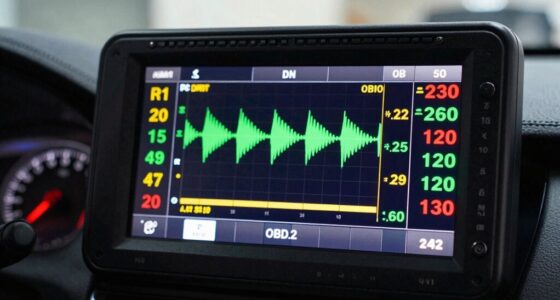
Ever wondered how to keep your tires safe and your towing experience smooth? One key factor often overlooked is the refresh rate of your Tire Pressure Monitoring System (TPMS). The refresh rate determines how frequently your system updates tire pressure data, which can make a significant difference when you’re hauling heavy loads or maneuvering challenging routes. If your TPMS has a slow refresh rate, you might not notice sudden drops in tire pressure right away, increasing the risk of tire failure or blowouts. Conversely, a system with a high refresh rate provides real-time updates, allowing you to respond promptly to any issues before they escalate. Ensuring your TPMS has a high refresh rate is especially crucial during long trips or difficult terrain, where tire issues can develop rapidly and go unnoticed. Sensor calibration plays a vital role in guaranteeing your TPMS functions accurately. Proper calibration aligns the sensors with your vehicle’s specific tire specifications, so the tire pressure alerts are precise and reliable. Without regular calibration, you might receive false alerts or, worse, miss critical warnings, putting your safety and that of your cargo at risk. Regularly checking Sensor calibration can help maintain optimal system performance. Additionally, understanding how different tire conditions impact sensor readings can further enhance safety during towing. Being aware of tire condition variations, such as temperature changes or uneven wear, helps ensure the system remains accurate and trustworthy. Especially when towing, where uneven weight distribution and increased stress on tires are common, maintaining accurate sensor calibration becomes even more important. It also helps prevent unnecessary alerts and ensures your system functions smoothly. It assures that the system accurately monitors each tire’s condition, giving you peace of mind during long hauls.
TPMS with high refresh rate for towing
As an affiliate, we earn on qualifying purchases.
As an affiliate, we earn on qualifying purchases.
Frequently Asked Questions
How Does Refresh Rate Affect TPMS Accuracy During Towing?
A higher refresh rate improves TPMS accuracy during towing because it provides real-time updates on tire pressure, helping you spot issues quickly. This reduces the chances of sensor calibration errors and guarantees tire pressure stability. When the system updates more frequently, you get more reliable data, allowing you to react faster to pressure drops or changes. Ultimately, a faster refresh rate keeps you better informed and safer on the road.
Can a Low Refresh Rate Cause Delayed Tire Pressure Alerts?
Ironically, a low refresh rate can cause delayed tire pressure alerts, leaving you unaware of issues until it’s too late. Your sensors might be durable, but they can’t fight signal interference or update quickly enough, making you think your tires are fine when they aren’t. This delay compromises safety, especially during towing. So, don’t overlook the importance of a higher refresh rate to guarantee timely, accurate alerts and peace of mind.
Is There a Recommended Minimum Refresh Rate for Towing TPMS?
Yes, a recommended minimum refresh rate for towing TPMS is around once every 5 seconds. This guarantees you quickly detect changes in tire pressure and temperature, especially important with sensor placement near the wheels and when monitoring tire temperature during towing. A higher refresh rate helps you respond promptly to pressure drops or heat buildup that could indicate issues, keeping you safer on the road.
How Often Should I Calibrate My TPMS With High Refresh Rates?
Think of your TPMS like a watchful guardian, constantly monitoring tire health. You should recalibrate high-refresh-rate sensors at least once a month, especially before long trips. This guarantees sensor durability and accurate readings, preventing surprises on the road. Regular calibration keeps your system reliable, much like tuning a finely crafted instrument—ensuring it performs flawlessly when you need it most. Stay proactive for safe, smooth towing adventures.
Do Higher Refresh Rates Impact Battery Life of TPMS Sensors?
Higher refresh rates can lead to increased battery drain in your TPMS sensors because they transmit signals more frequently. This may impact signal stability over time, especially if the sensors are already working hard. If you notice quicker battery depletion or inconsistent readings, consider lowering the refresh rate to balance alert accuracy and battery life. Monitoring your sensors’ performance helps guarantee reliable tire pressure data without unnecessary battery wear.
tire pressure monitoring system calibration kit
As an affiliate, we earn on qualifying purchases.
As an affiliate, we earn on qualifying purchases.
Conclusion
Just like a vigilant captain watches over the seas, keeping your TPMS refreshed guarantees you’re always aware of your trailer’s health. With the right refresh rate, you’re steering clear of surprises and maneuvering safely through your journey. Remember, patience and attention to detail are your loyal crew—without them, even the bravest sailor risks the storm. So, stay vigilant, keep that system current, and enjoy smooth sailing on every trip.
heavy-duty TPMS sensors for trucks
As an affiliate, we earn on qualifying purchases.
As an affiliate, we earn on qualifying purchases.
real-time tire pressure monitor for trailers
As an affiliate, we earn on qualifying purchases.
As an affiliate, we earn on qualifying purchases.
Fall Picks
fall essentials
As an affiliate, we earn on qualifying purchases.