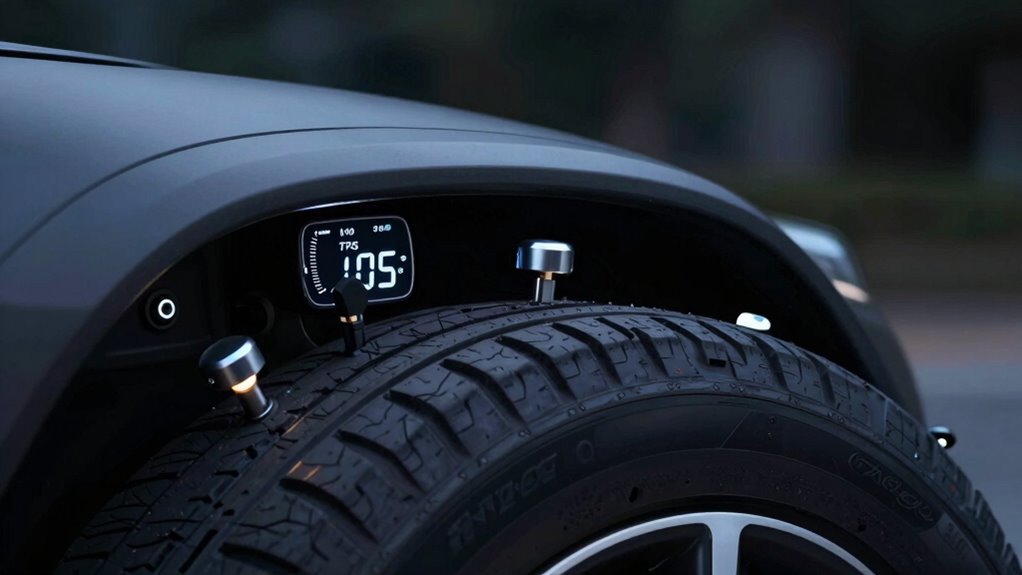

External TPMS sensors can show different pressure levels than your gauge due to calibration issues, environmental influences, and wireless interference. If your sensors aren’t properly calibrated, they may provide inaccurate data, especially after tire maintenance or temperature changes. Environmental factors like temperature swings and signal interference can also cause fluctuations. Understanding these causes can help you troubleshoot and confirm accurate readings. Keep reading to discover more tips for maintaining reliable TPMS performance.

Get business pricing on garage and car supplies
- Business-only prices and quantity discounts
- Tax-exempt purchasing
- Multiple users, one account, clear invoices
Key Takeaways
- External sensors require proper calibration to match actual tire pressure; miscalibration causes discrepancies with gauges.
- Environmental factors like temperature changes can affect sensor readings, leading to differences from gauge measurements.
- Wireless transmission interference can distort sensor data, causing readings to differ from gauge values.
- Sensor response varies with environmental conditions, impacting accuracy compared to a manual gauge.
- Regular calibration and awareness of environmental influences are essential for consistent TPMS accuracy.
While tire pressure monitoring systems (TPMS) have become vital for vehicle safety, their accuracy can vary considerably. You might notice that the external sensors sometimes display different readings compared to a traditional tire pressure gauge. This discrepancy often stems from how sensors are calibrated and how they respond to tire pressure fluctuations over time. Proper sensor calibration is essential because it guarantees the sensor’s readings align closely with actual tire pressure, but if calibration is off, you’ll see inconsistent or inaccurate data. Many external sensors require periodic recalibration to maintain accuracy, especially after tire maintenance or rotation. If you neglect this step, you might find that the TPMS reports pressures that are either too high or too low, leading to unnecessary concerns or overlooked issues.
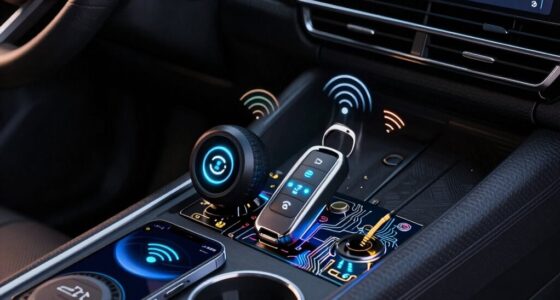
Tire pressure fluctuations are natural and can considerably impact sensor readings. Changes in temperature, for instance, cause the air inside your tires to expand or contract, resulting in pressure variations. When external sensors aren’t properly calibrated, they may not account for these fluctuations accurately, making their readings less reliable. You might notice your TPMS showing a pressure drop during cold mornings or a rise during hot days, which can be confusing if you’re used to trusting the system implicitly. These fluctuations are normal, but if your sensor isn’t properly calibrated, it can amplify perceived inaccuracies, causing you to second-guess the system’s reliability. Additionally, external sensors rely on wireless transmission to send data, which can be affected by environmental interference, further impacting accuracy. Regularly checking the sensor calibration and understanding sensor response can help ensure your readings stay consistent and trustworthy. Being aware of environmental factors that influence sensor performance is also crucial for maintaining reliable readings. Properly understanding sensor calibration procedures can also help you troubleshoot potential issues more effectively.
external TPMS sensor calibration kit
As an affiliate, we earn on qualifying purchases.
As an affiliate, we earn on qualifying purchases.
Frequently Asked Questions
How Often Should External TPMS Sensors Be Calibrated?
You should calibrate your external TPMS sensors every 6 to 12 months to guarantee accuracy. Sensor durability varies, so regular calibration helps maintain reliable readings and compensates for wear or environmental factors. Check your vehicle’s manual for manufacturer recommendations, and consider calibration more frequently if you notice inconsistent pressure readings or after replacing sensors. Consistent calibration keeps your tire pressure monitoring system functioning correctly, ensuring safety and peak performance.
Do External Sensors Work With All Vehicle Models?
Think of external sensors as puzzle pieces; they don’t always fit every vehicle perfectly. Sensor installation varies across models, leading to compatibility issues. Before you attempt installation, check if your vehicle supports the specific sensor system. Some sensors are designed for certain makes and years, so always verify compatibility to avoid frustration. If unsure, consult your vehicle’s manual or a professional to guarantee the sensors will work seamlessly with your car.
Can External Sensors Detect Slow Leaks Effectively?
External sensors can detect slow leaks effectively by monitoring tire pressure consistency over time. They provide real-time data, alerting you to gradual pressure drops that might indicate a slow leak. Look for sensors with durable construction, as sensor durability guarantees reliable readings, especially during long drives. Regularly checking your sensors and maintaining their condition helps you catch slow leaks early, ensuring safer driving and preventing potential tire damage or blowouts.
Are External Sensors More Accurate Than Traditional Gauges?
External sensors can be more accurate than traditional gauges, but their reliability depends on sensor compatibility and proper calibration frequency. You should guarantee the sensors are compatible with your vehicle to get precise readings. Regular calibration is essential; if you neglect this, readings might drift and become inaccurate. When properly maintained, external sensors often provide consistent, real-time tire pressure data, making them a valuable tool for maintaining ideal tire health.
How Do External Sensors Impact Fuel Efficiency?
External sensors act like vigilant guardians, ensuring your tire pressure stays steady like a heartbeat, which boosts fuel efficiency. When tire pressure remains consistent, your engine doesn’t have to work harder, saving fuel. Durable sensors withstand the road’s hustle, maintaining accuracy over time. By keeping tire pressure ideal, you enhance efficiency, reduce emissions, and extend your tire’s life—all driven by the reliable rhythm of sensor durability and tire pressure consistency.
tire pressure gauge with digital display
As an affiliate, we earn on qualifying purchases.
As an affiliate, we earn on qualifying purchases.
Conclusion
In the end, understanding why external sensors differ from a gauge is like chasing shadows in a moonlit night—fascinating yet complex. While sensors offer quick insights, remember they can read differently due to calibration, temperature, or placement. Don’t let these differences lull you into complacency; always verify with a trusted gauge before hitting the road. After all, in the sphere of safety, precision isn’t just a detail—it’s the guiding star that keeps you moving confidently forward.
As an affiliate, we earn on qualifying purchases.
As an affiliate, we earn on qualifying purchases.
Fall Picks
fall essentials
As an affiliate, we earn on qualifying purchases.