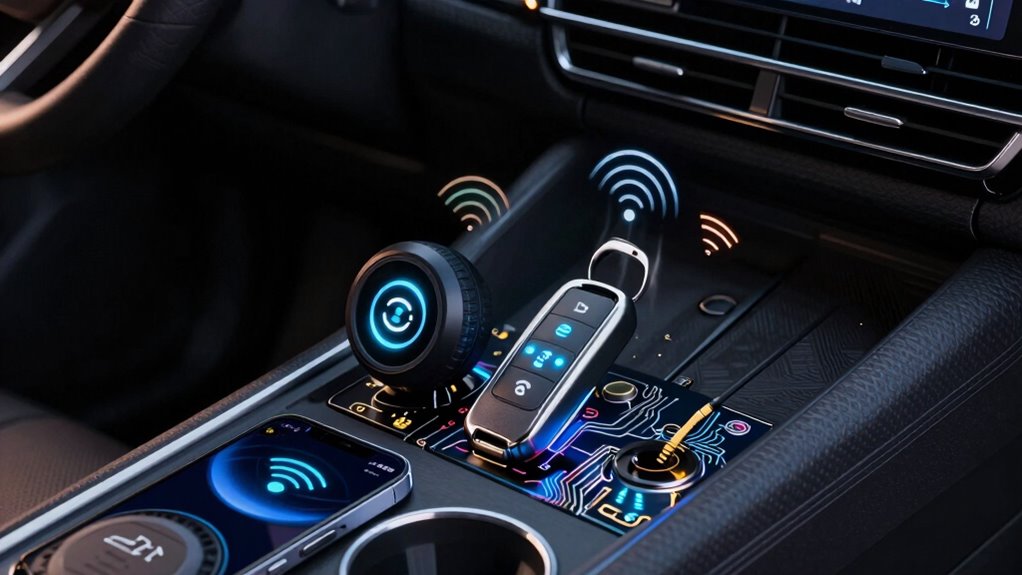

RF interference in cars occurs when signals from TPMS sensors, remotes, and wireless chargers clash, causing disruptions in your vehicle’s electronics. Poor antenna placement, strong RF signals, or added electronic devices can all raise interference risks. To reduce conflicts, make certain antennas are positioned away from electronic clutter and check shielding integrity. If you want to understand how to minimize these issues and keep your systems running smoothly, continue exploring the solutions available.
Key Takeaways
- Proper antenna placement, away from RF sources like remotes and wireless chargers, reduces interference with TPMS and other systems.
- Shielding electronic components and wiring minimizes RF noise from aftermarket devices and interior electronics.
- Using high-quality, shielded cables during upgrades helps prevent RF signals from disrupting vehicle electronics.
- Eliminating or repositioning RF-emitting devices, such as remote fobs and wireless chargers, can decrease interference with TPMS and radio systems.
- Regular maintenance and checking for damaged shielding or loose connections ensure consistent signal integrity and reduce RF conflicts.

Radio frequency (RF) interference in cars can disrupt your vehicle’s electronics, causing issues like poor radio reception, navigation errors, or malfunctioning sensors. This interference often stems from how antennas are placed and how well signals are shielded within your vehicle. Proper antenna placement is crucial; if your antenna is near devices that emit strong RF signals, such as your remote key fob or wireless charger, it can pick up unwanted signals, leading to static or signal loss. Moving the antenna to a more ideal location—away from electronic clutter—can substantially reduce interference. Many modern vehicles have antennas mounted on the roof or rear window, which helps minimize interference from engine components and interior electronics.
Proper antenna placement reduces RF interference and improves vehicle electronics performance.
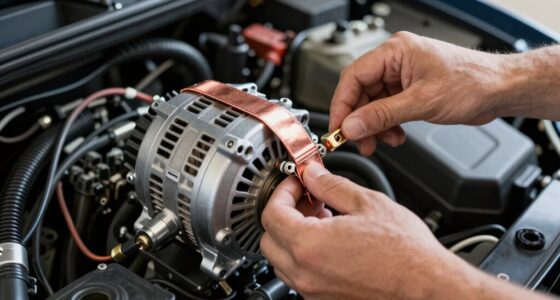
Signal shielding is another key factor in preventing RF interference. It involves creating barriers that block or reduce unwanted signals from reaching sensitive electronics like your TPMS (tire pressure monitoring system), infotainment system, or navigation equipment. Manufacturers often incorporate shielding materials inside wiring harnesses or around electronic modules to contain RF emissions. If you notice persistent issues, checking the integrity of these shields can help. Sometimes, aftermarket shielding or rerouting cables away from RF sources can restore proper function. For instance, if your wireless charging pad is causing interference, you might need to reposition it or add shielding around it to prevent RF signals from affecting nearby systems. Additionally, selecting shielded wiring during upgrades can further reduce the risk of interference.
Your vehicle’s design plays a role as well. Modern cars are engineered with electromagnetic compatibility (EMC) in mind, but aging or aftermarket modifications can compromise this balance. When you add new electronic devices—like dash cams, additional sensors, or upgraded audio systems—they can introduce new RF sources that disrupt existing signals. In such cases, proper antenna placement and signal shielding become even more vital. Shielding cables and connectors, choosing shielded wiring, or relocating antennas can help maintain a clear signal path, preventing cross-interference among devices.
Being aware of how your vehicle’s electronics interact can save you headaches down the road. If you experience frequent issues with your remote key fob, radio, or sensors, consider inspecting antenna placement and enhancing signal shielding. Simple adjustments—like repositioning antennas or adding shielding around problem areas—can make a notable difference. Ultimately, understanding these elements allows you to optimize your vehicle’s electronic environment, ensuring smoother operation and less frustration caused by RF interference.
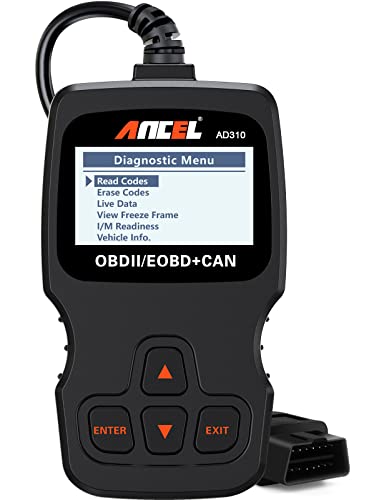
ANCEL AD310 Classic Enhanced Universal OBD II Scanner Car Engine Fault Code Reader CAN Diagnostic Scan Tool, Read and Clear Error Codes for 1996 or Newer OBD2 Protocol Vehicle (Black)
CEL Doctor: The ANCEL AD310 is one of the best-selling OBD II scanners on the market and is...
As an affiliate, we earn on qualifying purchases.
Frequently Asked Questions
Can RF Interference Affect Vehicle Safety Systems?
RF interference can affect your vehicle safety systems, causing malfunctions or false readings. To prevent this, you should pay attention to antenna placement, ensuring they’re positioned away from potential interference sources. Additionally, shielding techniques can help block unwanted signals. Proper installation and regular maintenance of these components help safeguard your safety systems, keeping them reliable and responsive when you need them most.
Are Certain Car Brands More Susceptible to RF Interference?
Certain car brands are more susceptible to RF interference because of brand susceptibility and specific model vulnerabilities. You might notice more interference issues in some brands due to their design choices or outdated electronic systems. It’s wise to research your vehicle’s make and model, and stay updated on any recalls or updates addressing these vulnerabilities. Taking these steps helps you minimize interference and maintain safe, reliable vehicle operation.
How Can I Identify if My Car’s RF Interference Is Caused by Accessories?
When you suspect your car’s RF interference, don’t just sit on your hands. Start testing methods like turning off accessories one at a time to spot interference symptoms. If your TPMS, remote, or charger behaves oddly when a specific device is active, that’s a dead giveaway. Keep a log of what’s running, and you’ll identify the culprit faster than you can say “hit the nail on the head.”
What Are the Long-Term Effects of RF Interference on Vehicle Electronics?
RF interference can cause long-term effects like component degradation and persistent signal disruption in your vehicle’s electronics. Over time, it may lead to malfunctioning sensors, erratic dashboard readings, or communication failures between systems. You might notice your car’s electronic features become unreliable or fail altogether. To avoid these issues, regularly inspect your accessories, keep firmware updated, and minimize the use of multiple RF devices simultaneously, especially near sensitive components.
Are There Legal Regulations for RF Emissions in Automotive Accessories?
Think of regulations as a traffic cop guiding your vehicle’s electronics. Yes, there are legal regulations for RF emissions in automotive accessories. Regulatory standards set emission limits to prevent interference, ensuring your devices work smoothly. Manufacturers must comply with these standards to avoid legal issues and ensure safety. So, when choosing accessories, check that they meet these emission limits to keep your car’s electrical system running harmoniously.

OBD2 Scanner Reader Bluetooth Wireless Auto Diagnostic Scan Tool for iOS & Android for Performance Test Bluetooth 5.4 Car Check Engine Car Code Reader, Clear Error Code Live Data Reset Exclusive APP
【Comprehensive Performance Testing】V011 OBD2 Scanner provides a complete diagnostic solution, giving you a thorough understanding of your vehicle's...
As an affiliate, we earn on qualifying purchases.
Conclusion
Understanding RF interference is key to keeping your car’s systems running smoothly. Did you know that nearly 30% of vehicle malfunctions are caused by radio frequency interference? By being mindful of how devices like TPMS, remotes, and chargers interact, you can prevent frustrating glitches. Stay aware of potential interference sources, and you’ll guarantee your car stays connected and safe on the road. Don’t let RF conflicts disrupt your drive—stay informed and proactive.

ANFLAG Car Jump Starter with Air Compressor 160PSI, 7000A Car Battery Jumper Starter Portable 12V Jump Box(All Gas/12L Diesel), Cordless Tire Inlfator, 26800mAh Powerbank, Led Lights, Safety Hammer
【8-in-1 Multifunctional Car Battery Jump Starter】This jump starter combines a 7000A booster car jump starter, a 160 PSI...
As an affiliate, we earn on qualifying purchases.
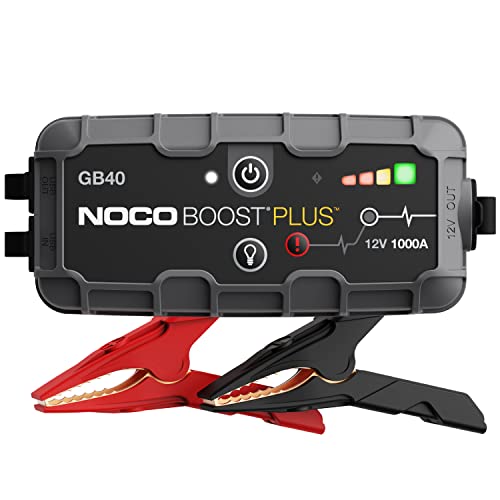
NOCO Boost GB40: 1000A UltraSafe Jump Starter – 12V Lithium Battery Booster Pack, Portable Jump Box, Power Bank & Jumper Cables - for 6.0L Gas and 3.0L Diesel Engines
START DEAD BATTERIES — Instantly start dead batteries with 1000 amps of peak lithium power. Up to 20...
As an affiliate, we earn on qualifying purchases.