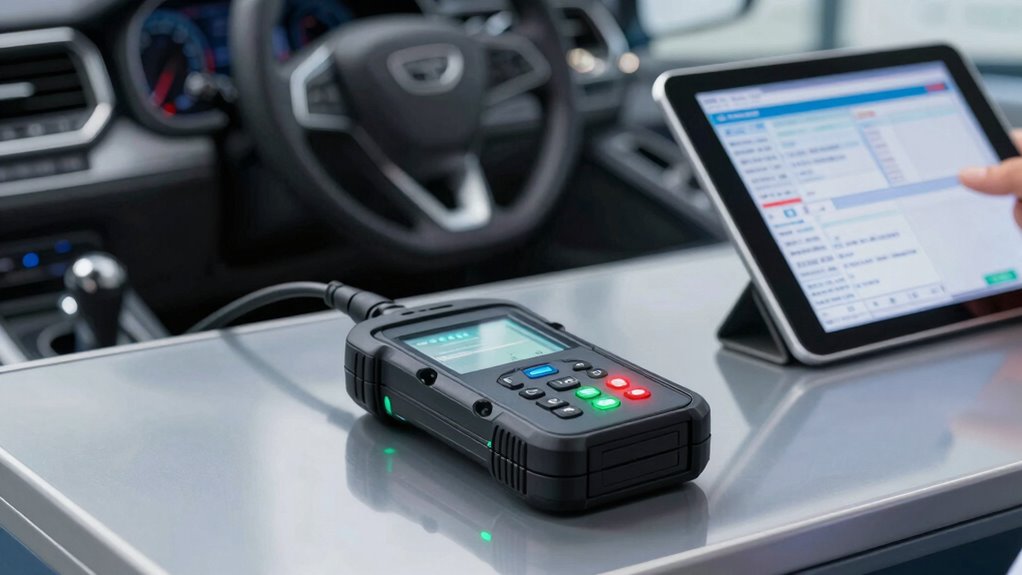
OBD2 scanners connect to your vehicle’s onboard computer to diagnose problems. Basic models read and clear error codes, offering simple insights ideal for quick checks. Enhanced scanners provide detailed live data and monitor multiple sensors, helping you fine-tune performance. Bidirectional tools go further by activating components and performing system tests, perfect for complex repairs. Understanding these options helps you choose the right tool; keep exploring to discover how each can improve your vehicle’s health.

Get business pricing on garage and car supplies
- Business-only prices and quantity discounts
- Tax-exempt purchasing
- Multiple users, one account, clear invoices
Key Takeaways
- Basic scanners read and clear codes, suitable for quick DIY checks and simple diagnostics.
- Enhanced scanners provide detailed live data and support manufacturer-specific codes for deeper analysis.
- Bidirectional scanners actively communicate with vehicle systems to perform tests, calibrations, and system activations.
- All types help identify issues early, improve vehicle performance, and support maintenance and troubleshooting.
- Regular updates and proper use enhance diagnostic accuracy and vehicle health management.
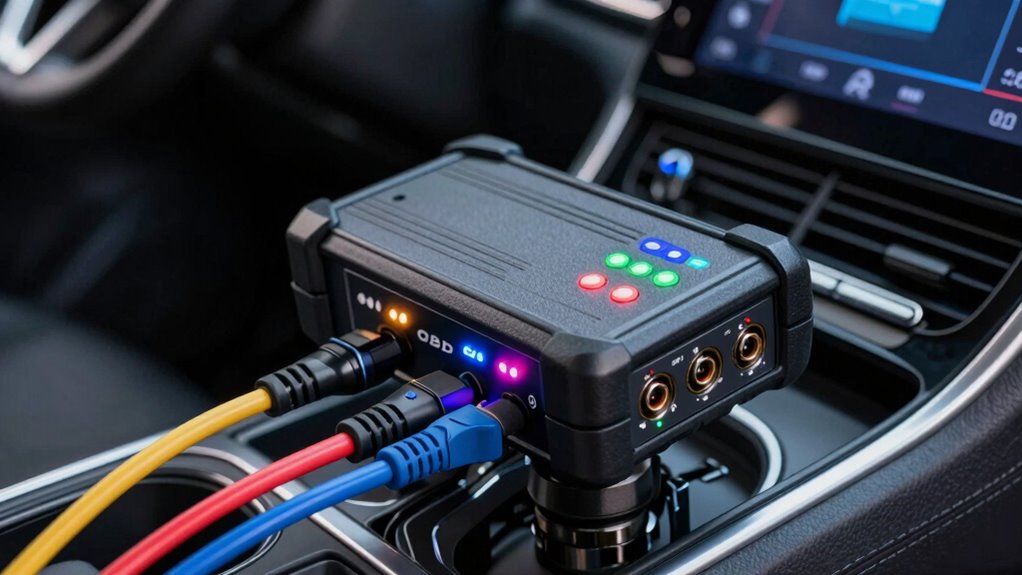
If you’ve ever wondered how to diagnose your car’s issues quickly and cost-effectively, then understanding OBD2 scanners is essential. These devices connect to your vehicle’s onboard computer, providing real-time data and error codes that reveal what’s happening under the hood. With an OBD2 scanner, you can identify problems early, saving you money on repairs and helping you maximize your vehicle’s performance. One of the key benefits is improving fuel efficiency by monitoring parameters like fuel trims and sensor calibration. When sensors aren’t properly calibrated, your engine might burn more fuel than necessary, increasing costs and emissions. An OBD2 scanner helps you detect these calibration issues so you can address them promptly, ensuring your engine runs smoothly and efficiently. Additionally, understanding sensor calibration and how it impacts engine performance can help you make more informed maintenance decisions. Knowing how to interpret diagnostic trouble codes (DTCs) can also speed up troubleshooting and reduce reliance on costly mechanic visits. Regularly updating your vehicle’s software can further enhance diagnostic accuracy and system performance, especially as vehicles become more technologically advanced. Modern scanners often include software updates that improve functionality and compatibility with newer vehicle models.
Basic OBD2 scanners are straightforward devices that read and clear diagnostic trouble codes (DTCs). They’re perfect if you want a simple way to check if your car has any issues, like a loose gas cap or a malfunctioning oxygen sensor. These scanners often come with a small display or connect to your smartphone via Bluetooth, allowing you to see the codes and basic data. While they don’t offer advanced features, they’re affordable and user-friendly, making them ideal for DIY enthusiasts or everyday drivers who want quick insights into their vehicle’s health.
Enhanced OBD2 scanners take things a step further by providing detailed live data streams and more thorough diagnosis options. With these, you can monitor multiple sensors in real-time, such as airflow, coolant temperature, and oxygen levels. This helps you understand how your vehicle operates and can assist you in fine-tuning things like fuel efficiency. For instance, if your scanner shows inconsistent sensor calibration, you can address these issues to improve engine performance and save fuel. Some advanced models also come with predefined repair tips, making it easier to troubleshoot and fix problems without needing a mechanic immediately. These scanners are also capable of reading manufacturer-specific codes, which can provide even more detailed insights into vehicle systems not covered by standard OBD2 protocols.
Bidirectional or diagnostic scan tools are the most sophisticated. They allow you to communicate with your vehicle’s computer actively, not just passively reading data. This means you can perform system tests, activate certain components, or reset specific modules. For example, you could calibrate sensors directly or run tests to verify the proper functioning of emissions systems. This level of control is invaluable for more complex repairs or modifications, positively impacting fuel efficiency and ensuring your vehicle runs at peak performance. Being familiar with diagnostic control functions can greatly expand your vehicle troubleshooting capabilities. Overall, understanding these different types of OBD2 scanners empowers you to keep your car in top shape, diagnose issues early, and save money while maintaining ideal fuel efficiency.
As an affiliate, we earn on qualifying purchases.
Frequently Asked Questions
How Often Should I Update My OBD2 Scanner Software?
You should update your OBD2 scanner software whenever firmware updates are available, ideally every few months. Regular updates improve device compatibility with newer vehicle models and enhance diagnostic capabilities. Check the manufacturer’s website or app notifications for updates, and install them promptly. Maintaining your software current guarantees accurate readings and reliable performance, helping you troubleshoot issues effectively and maintain your vehicle’s health without unnecessary hassle.
Are There Compatibility Issues With Specific Vehicle Brands?
Yes, there can be compatibility issues with specific vehicle brands. You need to check your OBD2 scanner’s brand compatibility before purchasing, as some models work better with certain brands or models. Also, keep up with software updates, as they often improve compatibility and fix bugs. Regular updates guarantee your scanner remains functional across a wider range of vehicles, reducing the chance of encountering issues with specific brands.
Can OBD2 Scanners Be Used for Emissions Testing?
Using an OBD2 scanner is like holding a key to your car’s secret engine thoughts. Yes, you can use it for emissions testing, provided it meets emission standards and is compatible with your vehicle. Basic scanners might only check engine lights, but enhanced or bidirectional scanners can give you detailed emissions data. Always verify scanner compatibility beforehand to avoid any surprises during testing.
Do Enhanced and Bidirectional Scanners Require Special Training?
Enhanced and bidirectional scanners do require some user training because they enable advanced diagnostic functions that go beyond basic code reading. You’ll need to understand how to interpret complex data and perform specific tests. While not overly complicated, these scanners demand a learning curve, so gaining some technical knowledge beforehand will help you use them effectively. Proper training guarantees you make the most of their advanced diagnostic capabilities safely and accurately.
What Is the Typical Lifespan of an OBD2 Scanner Device?
Most OBD2 scanners last around 5 to 10 years, depending on device durability and how well you maintain it. You can prolong its lifespan by protecting it from drops and moisture. Regular software updates also keep your scanner functioning smoothly and compatible with new vehicle models. Investing in a quality device and keeping up with updates ensures you get the most out of your scanner for years to come.
As an affiliate, we earn on qualifying purchases.
Conclusion
So, whether you’re a DIYer or a seasoned mechanic, understanding the different types of OBD2 scanners helps you choose the right tool for your needs. Don’t worry if you feel overwhelmed—starting with a basic scanner can still give you valuable insights, and upgrades are always available as you learn more. With the right scanner, you’ll catch issues early, save money, and keep your vehicle running smoothly. It’s easier than you think!
bi-directional OBD2 diagnostic tool
As an affiliate, we earn on qualifying purchases.
As an affiliate, we earn on qualifying purchases.
As an affiliate, we earn on qualifying purchases.
Halloween Picks
halloween
As an affiliate, we earn on qualifying purchases.