
When you clear a trouble code, the vehicle’s readiness monitors might stay incomplete, which is why your car can still fail an emissions test. These monitors perform self-tests on key emission systems under certain driving conditions, but clearing codes doesn’t reset their status. To pass, you need to drive your vehicle long enough for these tests to complete. If you’d like to learn how to guarantee monitors are ready, keep reading for helpful tips.
Key Takeaways
- Clearing trouble codes does not reset or complete the readiness monitors; they may remain incomplete afterward.
- Monitors require specific driving conditions and cycles to perform self-tests and reach a “ready” status.
- Incomplete monitors can cause emissions test failures despite the absence of active trouble codes.
- Proper sensor calibration is essential for accurate system operation and successful monitor completion.
- Driving the vehicle under proper conditions after repairs is necessary for monitors to finish testing and pass emissions.
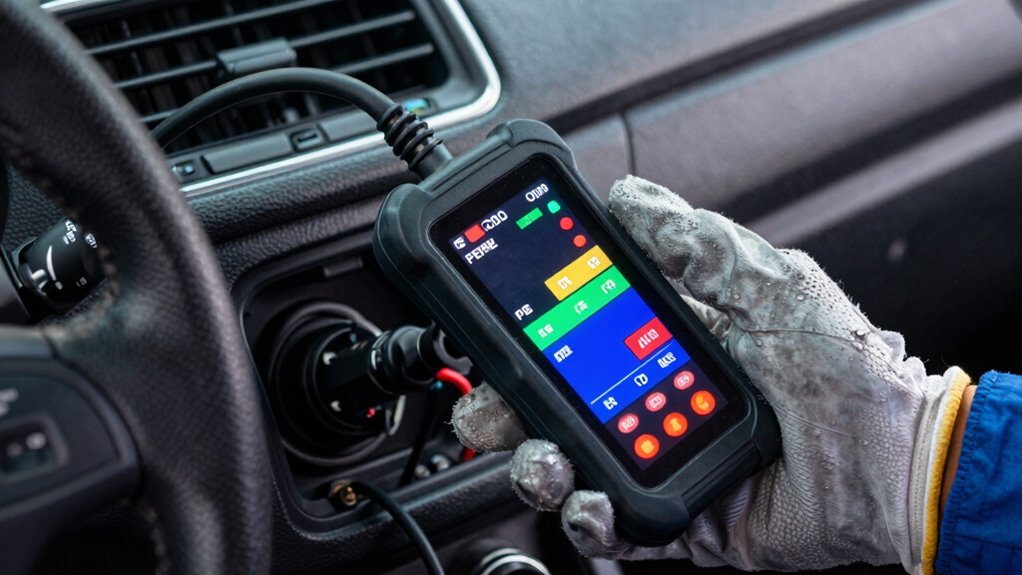
Have you ever wondered how your vehicle’s onboard diagnostics determine if your emissions system is working properly? It all comes down to the monitoring system, which tracks various components to guarantee your car meets environmental standards. When you go for emissions testing, the technician checks whether all these systems are functioning correctly, often relying on OBD2 readiness monitors. These monitors reflect the status of different vehicle systems, indicating whether they’ve completed their self-tests. However, a common misconception is that clearing a trouble code resets all these monitors, but that’s not entirely true. Even if you erase a code, the readiness monitors might still show incomplete, leading to a failed emissions test.
This is where understanding the role of sensor calibration and emissions testing becomes essential. The sensors in your vehicle, like oxygen sensors and catalytic converters, are necessary for accurate emissions readings. Over time, these sensors can drift out of calibration, giving false readings or failing to detect issues altogether. Proper sensor calibration guarantees that each sensor reports accurate data, which is imperative for the onboard diagnostics to properly evaluate your emissions system. When sensors aren’t calibrated correctly, the monitors may not complete their self-tests, even if the underlying problem is fixed. That’s why, before heading for an emissions test, technicians often verify sensor calibration and make sure all sensors are functioning correctly.
The readiness monitors go through a series of self-tests that check different parts of your emissions system—like the fuel system, oxygen sensors, and catalytic converter. These tests are designed to run under specific driving conditions, such as steady speeds or certain engine loads. If these conditions aren’t met, the monitors won’t run their tests, and their status will remain incomplete. This is why even after clearing codes, your vehicle might still fail an emissions test. The system needs enough driving cycles under the right conditions to complete the testing process, confirming that everything works as it should. Additionally, understanding the importance of sensor calibration can help you troubleshoot why monitors are incomplete despite repairs.
Frequently Asked Questions
Can a Vehicle Pass an Emissions Test With Incomplete Readiness Monitors?
You can’t pass an emissions test with incomplete readiness monitors because your vehicle’s onboard diagnostics need to show all systems are working properly. Using an OBD scanner, you can check which monitors are complete and which aren’t. While your fuel efficiency might improve with a well-maintained vehicle, incomplete monitors indicate unresolved issues, leading to a failed test. Make sure to run the necessary drive cycles to complete all readiness checks.
How Long Does It Take for Monitors to Complete After a Reset?
Monitor resets typically take several drive cycles to complete, often between 2 to 5, depending on your vehicle’s make and model. During these drive cycles, your vehicle performs self-tests through specific drive patterns to verify emissions systems. If you don’t complete enough drive cycles, monitor resets remain incomplete, leading to potential test failures. Consistently driving under varied conditions helps your monitors finish faster and guarantees your vehicle’s readiness.
Are All Vehicle Models Affected Equally by Readiness Monitor Issues?
Not all vehicle models are affected equally by readiness monitor issues. You’ll find model variations and manufacturer differences play a role in how quickly monitors reset and complete. Some vehicles have more complex systems, causing longer wait times, while others reset faster. So, your experience can vary based on your car’s make, model, and manufacturer, meaning you might need to drive longer or perform specific tests to get all monitors ready.
Can Driving Habits Influence the Readiness Status of Monitors?
Yes, your driving habits can influence the readiness status of monitors. Maintaining driving consistency, like regular highway trips, helps guarantee monitors complete their tests. Skipping maintenance or inconsistent driving can delay or prevent monitors from updating. To keep your vehicle’s readiness status accurate, stick to a regular maintenance schedule and drive consistently, especially before emissions testing. This approach helps monitors run their cycles properly and reduces the risk of failing the test.
What Are the Best Methods to Speed up Monitor Completion?
Imagine your car’s dashboard as a busy train station, with monitors waiting to complete their journey. To speed this up, use diagnostic tools to identify incomplete monitors, then adopt specific driving techniques like steady acceleration and proper idling. Regularly driving on highways and avoiding short trips helps monitors complete faster. This combination of diagnostics and consistent driving clears the way, ensuring your vehicle’s readiness status updates promptly.
Conclusion
Understanding OBD2 readiness monitors is like steering through a maze—you might clear a code, but that doesn’t guarantee you’ll pass the test. Always check your monitor status before heading to the inspection, so you don’t get caught off guard. Keep in mind, a “ready” monitor is like a green light signaling you’re good to go. Stay proactive, and you’ll avoid surprises and keep your vehicle running smoothly.