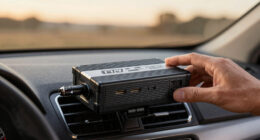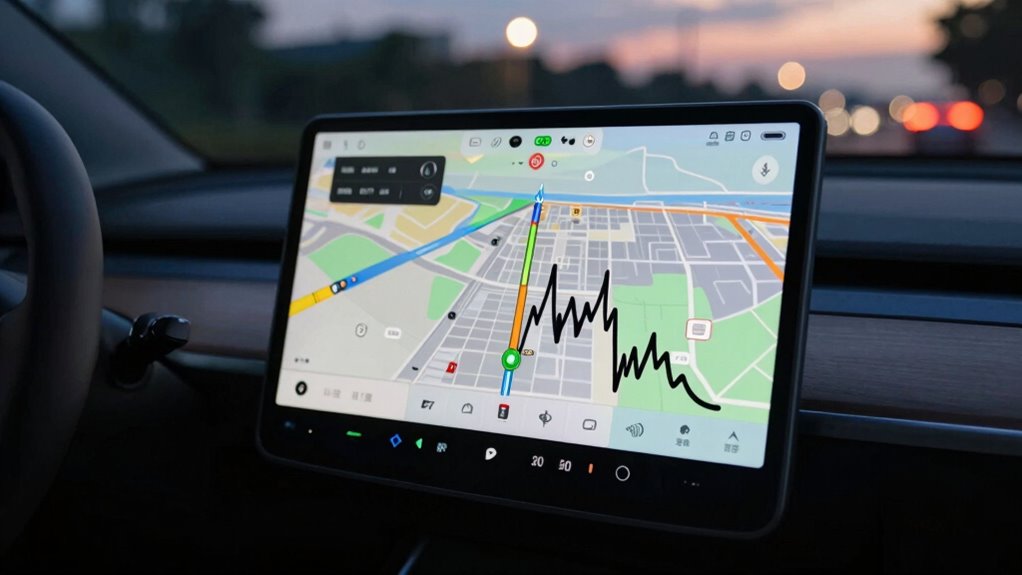

Your vehicle’s GPS drift can be caused by hidden factors like weak satellite signals, poor satellite geometry, and environmental obstructions such as tunnels, tall buildings, or dense foliage. Signal reflections, multipath errors, and atmospheric conditions further decrease accuracy. Device placement and quality also matter, along with rapid movements and weather changes. To truly understand why your location shifts, explore how each of these factors interacts and impacts your GPS system.
Key Takeaways
- Environmental obstructions like tunnels, tall buildings, and dense foliage block satellite signals, causing drift and inaccuracies.
- Multipath errors from reflected signals off water, metal, or structures lead to false position readings.
- Poor satellite geometry and limited satellite availability reduce positioning stability and precision.
- Weather conditions, atmospheric delays, and low sun angles weaken signals and increase jitter.
- Hardware quality and device placement significantly influence GPS sensitivity and error correction capabilities.

Garmin GLO 2 GPS and GLONASS Receiver for Precise Position Information on Mobile Devices, Black
Connects wirelessly to your mobile device: iPad, iPhone and other Bluetooth enabled smartphones, tablets and laptops to provide…
As an affiliate, we earn on qualifying purchases.
As an affiliate, we earn on qualifying purchases.
Satellite Signal Availability and Satellite Geometry

Satellite signal availability and satellite geometry directly impact your GPS accuracy. When your device has signals from at least four satellites, it can accurately calculate your position. Fewer satellites mean less reliable data, increasing the chance of drift. If satellites cluster closely together in the sky, your GPS struggles to determine the best position, reducing accuracy. Good satellite geometry involves satellites spread out across the sky, offering diverse angles for precise triangulation. Poor geometry, with satellites near each other or near the horizon, causes greater positional errors and makes tracking less stable. Additionally, if satellites are blocked or weak signals are received, your device may lose accuracy altogether. Ensuring suitable satellite availability and favorable geometry is essential for reliable and precise GPS navigation. Incorporating high-quality receiver technology can also significantly improve your device’s ability to process satellite signals effectively, especially in challenging environments with obstructed signals. Employing robust signal processing algorithms can further enhance positioning accuracy by compensating for signal degradation in difficult conditions. Furthermore, satellite constellation management plays a crucial role in maintaining optimal coverage and accuracy.

VFAN GPS Repeater Signal Booster Amplifier Signal Strength Active Antenna for Car/Trucks/Indoor Use, Gain 30 dB, with Magnetic Base and Waterproof
A GPS repeater system provides live and stronger satellite signals while under cover,roof or indoors.( eg: Yacht, Aircraft…
As an affiliate, we earn on qualifying purchases.
As an affiliate, we earn on qualifying purchases.
Effects of Signal Reflection and Multipath Errors

When signals bounce off tall buildings or mountains, they create multipath errors that can throw off your GPS readings. Reflections cause the signals to arrive at your device at different times, leading to inaccuracies in your position. These effects become especially noticeable in urban environments or near large structures, impacting your navigation. Incorporating local automation features can help mitigate some of these issues by adjusting settings based on your environment. Utilizing advanced algorithms can further improve location accuracy by filtering out false signals and correcting for errors caused by reflections. Understanding signal reflection and its impact on the quality of satellite data can empower users to troubleshoot and optimize their navigation systems more effectively. Recognizing the role of multipath errors is essential for improving GPS reliability in challenging environments. Additionally, awareness of environmental factors can help users anticipate and adapt to potential signal disruptions.
Signal Reflection Impact
Signal reflection occurs when GPS signals bounce off surfaces like tall buildings, mountains, or dense foliage before reaching your device. These reflections cause the signals to take longer paths, arriving at your receiver at different times. These multipath effects lead to inaccuracies in positioning, often making your location appear shifted or jittery. Multipath effects are especially common in urban environments where reflections are frequent. The following table shows common reflective surfaces and their impact:
| Surface Type | Impact on GPS Signal |
|---|---|
| Tall buildings | Significant reflection, high drift |
| Mountains | Signal bouncing, positional errors |
| Dense foliage | Signal absorption, reduced accuracy |
| Large water bodies | Reflection and signal weakening |
Understanding these impacts helps you recognize why your GPS might drift in specific environments. Multipath errors can be minimized by using devices with advanced signal processing capabilities or by avoiding areas with heavy reflection sources. Additionally, modern GPS receivers often incorporate signal filtering techniques to improve accuracy in challenging environments. Some devices also utilize antenna design improvements to better distinguish direct signals from reflected ones, further reducing positional inaccuracies.
Multipath Error Consequences
Multipath errors occur when GPS signals reflect off surfaces like buildings, mountains, or dense foliage before reaching your device. These reflected signals arrive slightly delayed, causing your GPS to interpret them as stronger signals from multiple sources. As a result, your device calculates a position that’s off by several meters, leading to inaccuracies. In urban environments, this can cause your location to jump or drift unexpectedly, especially near tall structures. Understanding signal reflection can help you better grasp how these errors occur and affect your device. Additionally, signal reflection is influenced by the surrounding environment, making some locations more prone to errors than others. Recognizing environmental factors that contribute to these errors can assist in troubleshooting and improving GPS reliability. Being aware of multipath effects can also help you interpret GPS data more accurately and take steps to mitigate these errors. Moreover, wave and wind can influence signal propagation, further complicating the accuracy of GPS signals in various settings.

AEDIKO GPS Navigation Antenna with SMA Male Connector Vehicle Waterproof Active GPS Antenna for Car Stereo Head Unit GPS Navigation System Module Truck Marine Boat GPS Tracker
GPS Antenna SMA Plug Connector GPS Active Aerial with 3M Antenna Extension Cable
As an affiliate, we earn on qualifying purchases.
As an affiliate, we earn on qualifying purchases.
Environmental Blockages and Obstructions

Environmental blockages and obstructions markedly impact GPS accuracy by weakening or blocking satellite signals before they reach your device. When you drive through tunnels, parking garages, or under bridges, signals can’t reach your GPS receiver effectively, forcing it to guess your position. Tall buildings and dense trees can reflect, scatter, or absorb signals, causing inaccuracies. Heavy clouds, storms, or large bodies of water also interfere with signal strength, especially in poor weather conditions. Indoor or underground environments prevent direct line-of-sight to satellites, leading to significant drift. Metal structures, tinted glass with metallic coatings, and thick foliage bounce signals or block them entirely, resulting in position jumps or errors of several meters. These obstructions make it harder for your GPS to maintain reliable, precise location data. Additionally, environmental factors such as signal interference from nearby electronic devices can further disrupt satellite communication, emphasizing the importance of understanding signal obstructions in GPS technology. Recognizing the impact of environmental factors can help you better interpret sudden location inaccuracies. Moreover, maintenance of GPS devices ensures that internal components are functioning correctly to minimize errors caused by environmental influences. Being aware of environmental conditions can also help you anticipate when GPS drift is more likely to occur.

Garmin Drive™ 53 GPS Navigator, High-Resolution Touchscreen, Simple On-Screen Menus and Easy-to-See Maps, Driver Alerts
Bright, high-resolution 5” glass capacitive touchscreen display lets you easily view your route
As an affiliate, we earn on qualifying purchases.
As an affiliate, we earn on qualifying purchases.
Impact of Device Installation and Placement
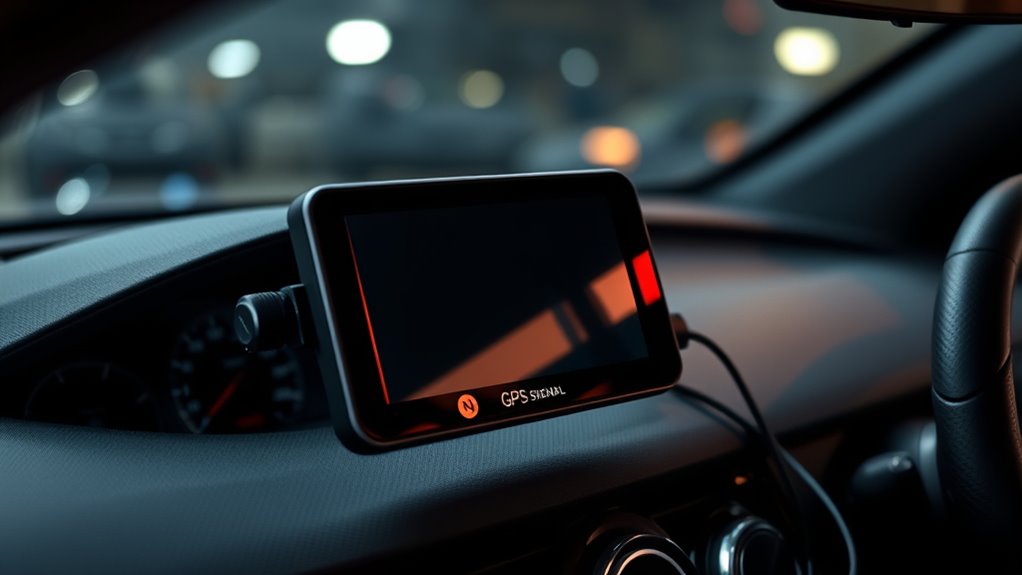
The placement of your GPS device considerably influences its accuracy, as improper positioning can obstruct signals and introduce errors. If you install it under the dashboard, behind tinted glass, or near metal surfaces, signals may weaken or bounce, causing drift. Mounting the device facing tall buildings, underground garages, or tunnels blocks satellite visibility, reducing precision. Factory calibration issues can create fixed offsets, making your location appear off even when the device is correctly installed. Also, if the device isn’t oriented properly to face the sky or if it’s worn or loosely attached, its ability to receive clear signals diminishes. Proper placement—on a dash or window with a clear view of the sky—ensures better signal reception, minimizes drift, and improves overall accuracy.
Hardware Quality and Processing Power Limitations

The quality of your GPS hardware and processing capabilities directly impact the accuracy you experience while orienting. Low-quality or outdated GPS chips often struggle with sensitivity, error correction, and signal processing, leading to increased drift and positional errors. If your device has a slow processor or inadequate algorithms, it can’t quickly adjust to rapid changes in movement or position, causing jittery or inconsistent readings. This becomes especially noticeable at higher speeds or in complex environments. Additionally, cheaper modules may lack advanced error mitigation features, increasing the likelihood of drift during signal disruptions. Poor hardware also hampers your system’s ability to filter out interference or multipath reflections, making your location appear less stable. Upgrading to a professional-grade receiver typically reduces these issues and improves overall accuracy.
Atmospheric Conditions and Signal Propagation

Atmospheric conditions can particularly affect GPS signal propagation, leading to positional inaccuracies. When signals pass through the ionosphere and troposphere, they bend or slow down, causing small errors in your location. Sun activity and weather patterns further influence signal quality. Here are three key effects:
Atmospheric conditions can cause GPS signal delays and positional inaccuracies.
- Ionospheric delays: Sun radiation causes charged particles to distort signals, especially during sunrise or sunset.
- Tropospheric refraction: Variations in temperature and humidity bend signals, mainly in bad weather.
- Sun glare and atmospheric interference: During early mornings or late afternoons, low sun angles can weaken signals, increasing drift.
These factors combine to create subtle, yet noticeable, shifts in your GPS accuracy, especially when conditions worsen. Staying aware of atmospheric influences helps you understand why your location might drift unexpectedly.
Influence of Urban Infrastructure and Underground Environments
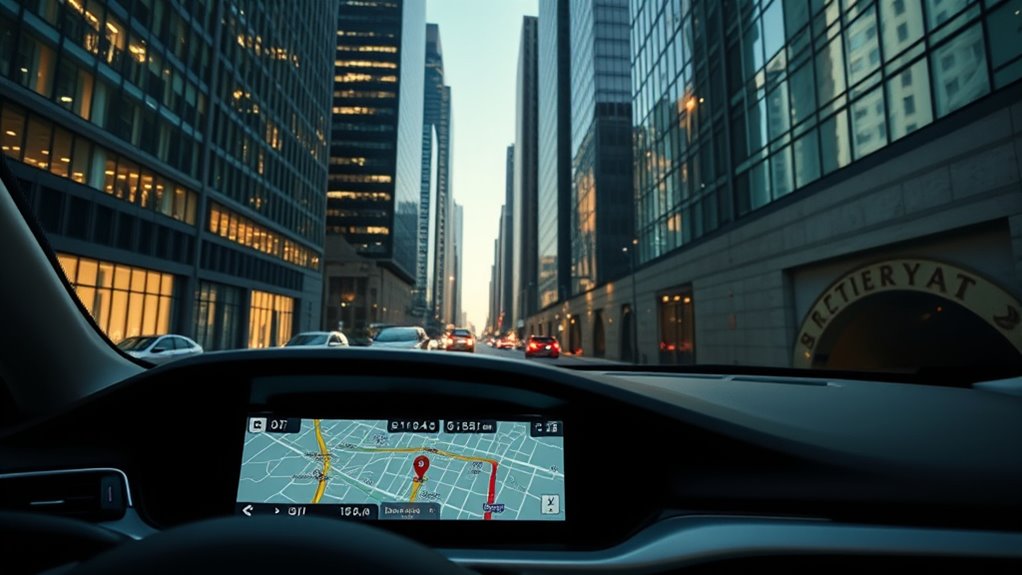
Urban infrastructure and underground environments substantially impact GPS accuracy by obstructing or weakening satellite signals. Tall buildings, tunnels, and parking garages block line-of-sight, forcing your device to rely on weaker signals or guess your position. Metal structures and dense foliage reflect signals, causing multipath errors that skew location data. Underground, signals can’t reach the receiver at all, leading to significant drift or no fix at all. Here’s how different environments compare:
| Environment | Impact on GPS Accuracy |
|---|---|
| Dense Urban Areas | Signal obstruction, reflection, drift |
| Tunnels and Garages | No satellite contact, position guesswork |
| Underground Spaces | Complete signal loss, no fix |
| Open Areas with Obstacles | Reduced accuracy, multipath errors |
Calibration and Sensor Accuracy Issues
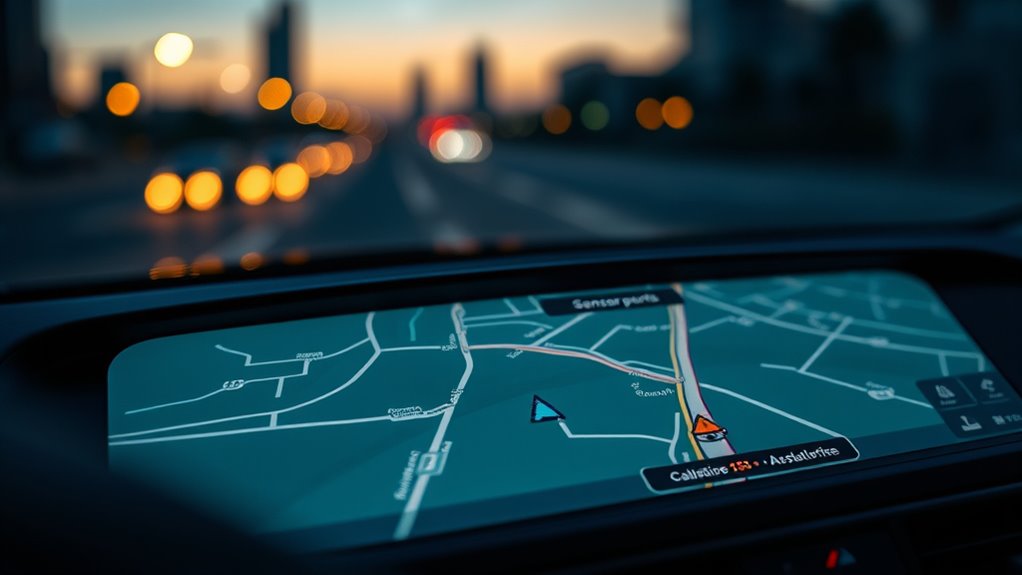
Calibration and sensor accuracy issues can markedly degrade GPS performance, even when satellite signals are strong. If your device isn’t properly calibrated, you might notice persistent position offsets or drifting. Additionally, sensor inaccuracies can cause errors in speed and direction readings, compounding positional drift. To improve your GPS’s reliability, consider these factors:
- Factory Calibration: Outdated or incorrect settings can lead to fixed offsets; recalibrate your device as recommended.
- Sensor Alignment: Misaligned accelerometers or gyroscopes distort movement data, affecting position estimates.
- Hardware Quality: Low-quality chips or faulty sensors are prone to errors, increasing drift during movement or stops.
Keeping sensors calibrated and using quality hardware helps maintain accurate positioning, reducing drift caused by internal inaccuracies.
Vehicle Speed and Movement Dynamics
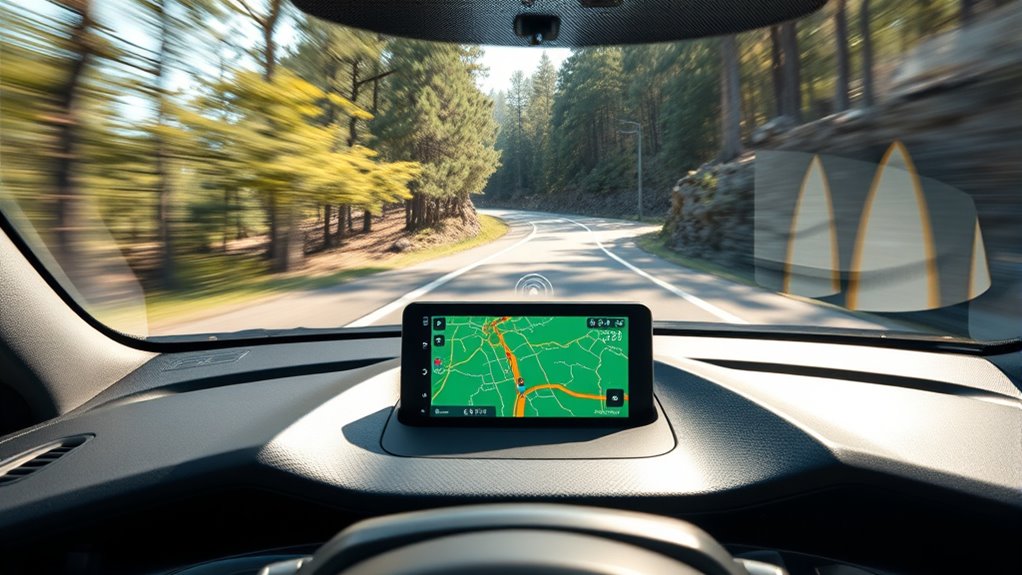
As your vehicle accelerates or decelerates, GPS accuracy can fluctuate due to movement dynamics, making precise positioning more challenging. Rapid changes in speed cause the GPS receiver to struggle with real-time calculations, resulting in positional drift. When you speed up, the system may lag behind your actual location, creating a false sense of being ahead of where you are. Conversely, slowing down or stopping can cause the GPS to overshoot or jump around, especially if combined with weak signals or poor satellite geometry. High-speed movements increase the likelihood of errors, as the receiver’s algorithms try to keep up with rapid position changes. Sharp turns and quick acceleration also impact the stability of your GPS signal, leading to scattered or inconsistent location data.
Weather Conditions and Their Effect on Signal Reception
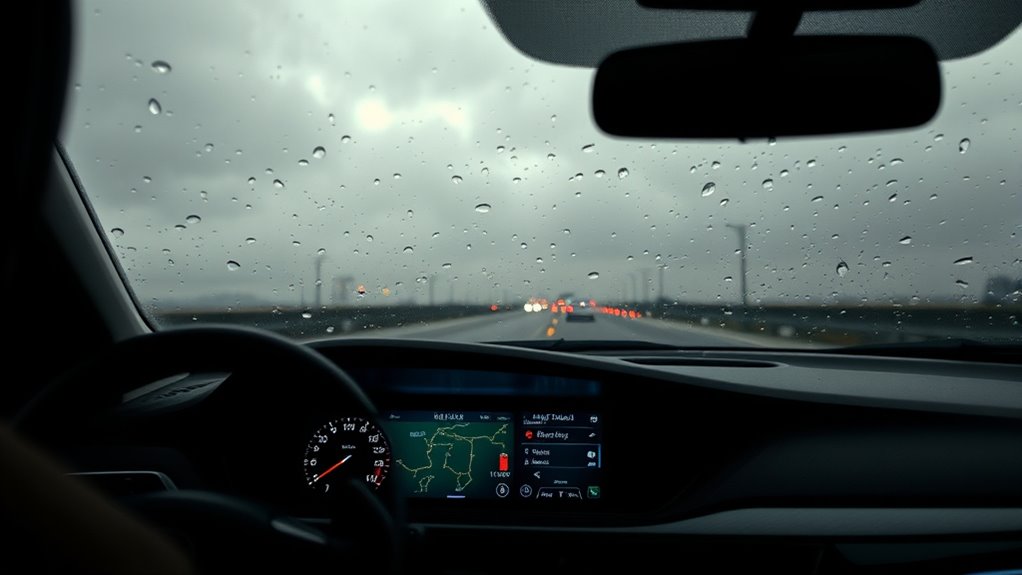
Weather conditions can considerably affect your GPS signal reception, especially during certain times of the day. The sun’s position causes atmospheric interference that weakens signals, while morning and evening hours often bring more errors due to the low sun angle. These factors combined can lead to reduced accuracy or signal loss while you’re on the road.
Sun Position Impact
Have you ever noticed your GPS signal becoming less reliable during certain times of the day? Sun position plays a big role in this. When the sun is low, especially during early morning or late afternoon, its rays cause atmospheric effects that can distort signals. These effects include:
- Increased ionospheric delay, bending signals and causing slight positional errors.
- Sun glare reflecting off surfaces, which can interfere with your device’s antenna.
- Elevated atmospheric noise levels, making it harder for your GPS to lock onto satellites accurately.
As the sun moves lower, these factors intensify, leading to more drift and reduced accuracy. Keep in mind, these issues mainly affect signals traveling through the atmosphere, independent of weather conditions like clouds or storms.
Atmospheric Interference Effects
Atmospheric conditions such as rain, snow, fog, and storms can considerably disrupt GPS signal reception. When the weather worsens, signals slow down or bend as they pass through the ionosphere and troposphere, leading to small positional errors. Heavy rain or snow can cause signals to weaken or be blocked, reducing accuracy or causing drift. Fog and storms increase atmospheric turbulence, which can distort signals before they reach your device. Additionally, severe weather often coincides with increased atmospheric moisture, amplifying effects like multipath errors where signals bounce off water droplets or clouds, skewing your position. These weather-related issues become more evident during storms or heavy precipitation, making your GPS less reliable and causing your location to jump or drift unexpectedly.
Morning and Evening Variations
Morning and evening hours often cause fluctuations in GPS signal quality because the sun’s low angle affects signal propagation. During these times, atmospheric conditions worsen, leading to increased errors. Here’s what you might notice:
- Signal delays and bending—the ionosphere and troposphere cause signals to slow or refract, reducing accuracy.
- Multipath reflections—signals bounce off buildings, water, or foliage, creating false position readings.
- Atmospheric interference—turbulence and weather variability intensify, making signals more prone to drift and jitter.
These effects are more pronounced when the sun is near the horizon, disrupting your GPS’s ability to lock onto satellites precisely. As a result, your device might display slightly inaccurate locations or jump around unexpectedly.
Frequently Asked Questions
How Does Vehicle Type Impact GPS Accuracy During Travel?
Your vehicle type impacts GPS accuracy mainly through how it affects signal reception. If you drive a large truck or an SUV with a tall metallic body, signals may bounce or get blocked, causing drift. Conversely, smaller cars or those with better antenna placement often receive clearer signals. Metal structures and dense materials in your vehicle can interfere with satellite signals, increasing positional errors during travel.
Can Software Updates Improve GPS Precision in Older Devices?
Think of your GPS device as a vintage map that needs fresh ink. Software updates act like that ink, refining the lines and correcting past mistakes. They can improve accuracy by fixing bugs, enhancing algorithms, and optimizing satellite communication. While they can’t turn an old device into new, updates can sharpen its precision, reduce drift, and make your navigation more reliable—like giving your map a much-needed upgrade.
Does Frequent Device Rebooting Affect GPS Signal Stability?
Frequent device reboots can temporarily disrupt GPS signal stability. When you reboot, your device resets its connection to satellites, which may cause a brief loss of signal or reduced accuracy until it reestablishes a stable lock. However, if you reboot regularly, it can help clear glitches or software issues that cause signal problems, ultimately improving stability. Just remember, consistent reboots aren’t a long-term fix; proper placement and environment matter more.
How Do Different Map Apps Handle GPS Drift Issues?
Different map apps handle GPS drift by using various techniques. You might notice some apps smooth out position jumps with filtering algorithms, creating a more stable view, while others quickly update your location, reflecting real-time drift. Many apps combine GPS data with map data and sensors to correct inaccuracies, giving you a clearer, more consistent position. Ultimately, how well they manage drift depends on their processing methods and data integration.
Are There External Devices That Can Enhance GPS Accuracy?
Yes, you can use external devices like GPS boosters or high-precision receivers to improve accuracy. These devices connect to your car’s system or smartphone, enhancing signal strength and reducing drift caused by obstructions or poor satellite signals. Some units employ multiple antennas or advanced algorithms, providing more reliable, precise positioning even in challenging environments like urban areas or tunnels. Investing in such gear helps keep your location steady and accurate.
Conclusion
So, next time your GPS seems to have a mind of its own, remember—it’s not just about signal strength. Ironically, the very world you navigate every day, from towering buildings to weather, secretly sabotages your accuracy. Your trusted device, crafted with high-tech promise, can still wander off course thanks to these hidden quirks. Turns out, your perfect sense of direction is just an illusion—thanks to the countless unseen factors working against you.