
Your dash cam’s timestamps go wrong mainly because of battery issues, firmware glitches, power interruptions, or incorrect setup. Faulty or low batteries cause the internal clock to reset or drift. Outdated firmware can also lead to time errors. Additionally, improper time zone configuration or GPS misalignment affects accuracy. Loop recording durations and power stability play a role too. If you want to fix these problems and keep your footage correctly timestamped, there’s more to learn ahead.
Key Takeaways
- Faulty or low batteries can cause dash cams to reset and lose accurate time settings.
- Outdated or buggy firmware may lead to persistent timestamp errors and time drift issues.
- Power interruptions or unstable supply can reset internal clocks, resulting in incorrect timestamps.
- Incorrect GPS setup or time zone configuration causes timestamp offsets and errors after restarts.
- Long loop recordings and improper settings increase the risk of timestamp discrepancies and data overwriting.
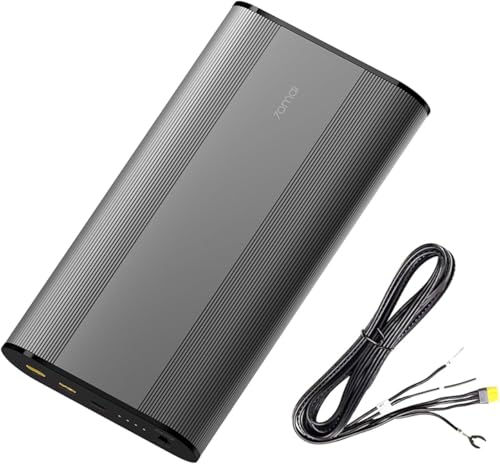
70mai Dash Cam Battery Pack BL96NNX, 96Wh LiFePO4 Backup Power, Up to 30-Hour Parking Mode, Low Voltage Protection, 11.2-30V Input, XT30+Type-C Output, 7-Protection BMS(Fuse Box Solution)
【Universal Dash Cam Compatibility】The XT30 output port simulates standard car battery signals (VCC/ACC/GND), while the included 3.3m Type-C…
As an affiliate, we earn on qualifying purchases.
As an affiliate, we earn on qualifying purchases.
Common Causes of Timestamp Desynchronization
One of the most common reasons for timestamp desynchronization in dash cams is a low or malfunctioning battery. When your battery isn’t holding a charge, the dash cam loses its time memory after power off, leading to incorrect timestamps upon restart. Even if your car’s power source seems fine, a failing battery can cause the device to reset its internal clock. Continuous power from your vehicle’s cigarette lighter or power supply helps maintain accurate time. But if the battery is faulty, the camera may revert to default or incorrect time settings each time it powers back up. This issue is prevalent across many models and is often the primary *vital* behind persistent time errors, making battery health a *essential* factor in keeping your dash cam’s clock accurate. Additionally, some dash cams rely on internal real-time clocks, which can drift or lose synchronization if not powered properly. Ensuring proper battery maintenance and considering backup power options can help prevent these issues and ensure consistent timestamp accuracy, especially since power stability is crucial for maintaining correct time data.
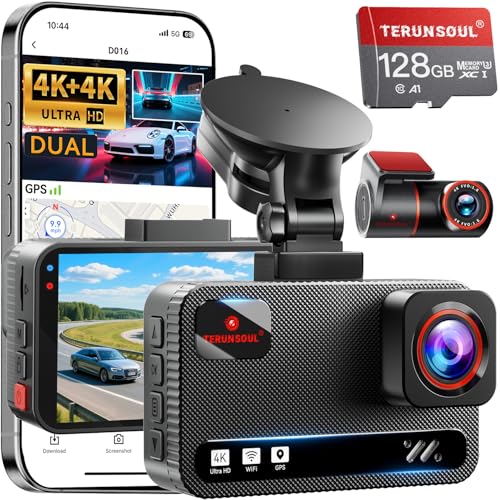
TERUNSOUl 4K+4K Dash Cam Front and Rear, Free 128GB Card Included, 5.8GHz WiFi Dash Camera for Cars, Built-in GPS, G-Sensor, 170°Wide Angle, 3" IPS Screen, 24H Parking Mode, Support 512GB Max
Ultra HD 4K Front + 4K Rear Recording: The Terunsoul dash cam supports dual-channel simultaneous recording, capturing both…
As an affiliate, we earn on qualifying purchases.
As an affiliate, we earn on qualifying purchases.
How Battery Issues Affect Time Accuracy

A malfunctioning battery directly impacts your dash cam’s ability to keep accurate time. If the battery is low or faulty, your camera may lose its stored settings after being powered off, causing timestamps to reset or become inaccurate. Without a reliable power source, the dash cam can’t maintain the internal clock, leading to desynchronization when you restart the vehicle. Many models rely on the battery or a small backup power supply to preserve time data during shutdowns. When the battery deteriorates, the camera often shows incorrect timestamps or reverts to default settings. To fix this, you need to replace or recharge the battery, ensuring continuous power or using a reliable power connection like your vehicle’s cigarette lighter. Proper power management keeps your dash cam’s time accurate. Additionally, battery maintenance can prevent future issues with time drift, and regularly inspecting the backup power supply can help ensure consistent timekeeping. Ensuring your dash cam’s power source is stable is crucial for maintaining accurate timestamps over time to avoid discrepancies caused by battery issues.

SZSAUTO Vehicle GPS Antenna Waterproof Active GPS Dash Cam Antenna with 3.5mm Plug for Car Truck SUV Windshield Mirror Dash Camera Cam Vedio Surveillance Monitoring DVR Recorder GPS Tracker Receiver
Specification : Frequency:1575.42MHz;LNA Gain: 28dB; Power Supply DC Voltage: 3V to 5V; Power Supply DC Current: 10mA Max
As an affiliate, we earn on qualifying purchases.
As an affiliate, we earn on qualifying purchases.
The Impact of Loop Recording Settings on Time Data
If your dash cam’s loop recording duration isn’t set correctly, it can cause time errors after power cycles. Short or long loops may trigger discrepancies in the timestamp display, leading to confusion. Resetting the loop to a 2-3 minute setting often helps keep your time data accurate and consistent. Proper device configuration ensures your dash cam functions reliably during your travels. Additionally, understanding how loop recording settings impact overall data integrity can prevent ongoing timestamp issues. Being aware of storage management can also help avoid overwriting important time-sensitive footage. Adjusting these settings based on your recording habits can further improve timestamp accuracy and data reliability, especially when considering how cookie categories relate to data processing and user privacy management.
Loop Duration and Errors
Loop recording duration plays a crucial role in maintaining accurate timestamps on your dash cam, as setting the wrong length can cause system errors and time desynchronization. If your loop is too long, the camera might overwrite data before it synchronizes properly, leading to incorrect timestamps upon restart. Conversely, a very short loop causes frequent overwrites, increasing chances of errors during power cycles. Resetting the loop to around 2-3 minutes typically resolves these issues, ensuring more consistent time data. Incorrect loop durations also contribute to repeated manual corrections, as the system struggles to keep accurate records across overwrites. Adjusting this setting to a balanced duration helps stabilize timestamps, reducing errors and ensuring your dash cam’s clock remains dependable over time. Additionally, European cloud servers can enhance data accuracy and security, further supporting reliable timestamp management.
Short vs. Long Loops
Choosing between short and long loop recording settings directly affects your dash cam’s ability to keep accurate time. Short loops, like 2-3 minutes, reset frequently, reducing the chance of time errors after power loss. Longer loops, such as 10-15 minutes, increase the risk of timestamp discrepancies if the system malfunctions or resets.
| Loop Duration | Pros | Cons |
|---|---|---|
| Short (2-3 min) | Frequent resets prevent timing issues | Higher file fragmentation |
| Medium (5-8 min) | Balance between file size and stability | Slightly increased risk of errors |
| Long (10-15 min) | Fewer files, easier management | Higher chances of timestamp drift |
Choosing the right setting helps maintain accurate timestamps, especially if your device experiences frequent power cycles.
Resetting Loop Settings
Resetting your loop recording settings can directly influence the accuracy of your dash cam’s timestamps. If the loop duration is set too long or too short, it can cause the system to misalign time data after power cycles. For example, setting the loop to 10 minutes instead of 2-3 minutes may trigger time errors or require manual correction. When you reset the loop to a typical 2-3 minute interval, it helps stabilize the system’s timekeeping and prevents recurring timestamp issues. Keep in mind, improper loop settings can also lead to fragmented recordings, making it harder to verify when events occurred. Regularly reviewing and adjusting your loop settings assures consistent, accurate timestamps, reducing the need for manual corrections after each restart.
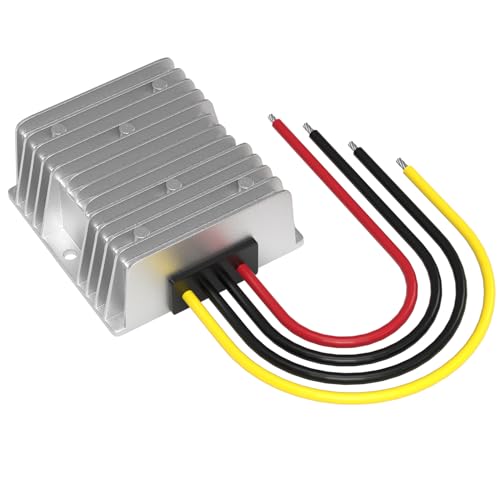
Areyourshop 8-40V to 12V Amp DC Voltage Stabilizer 120W Car Power Supply Regulator Waterproof,Converter DC,Boost Buck Converter
Wide voltage input, built-in over current, over voltage, over temperature, short circuit, and automatic protection functions.
As an affiliate, we earn on qualifying purchases.
As an affiliate, we earn on qualifying purchases.
Setting the Correct Initial Time and Date
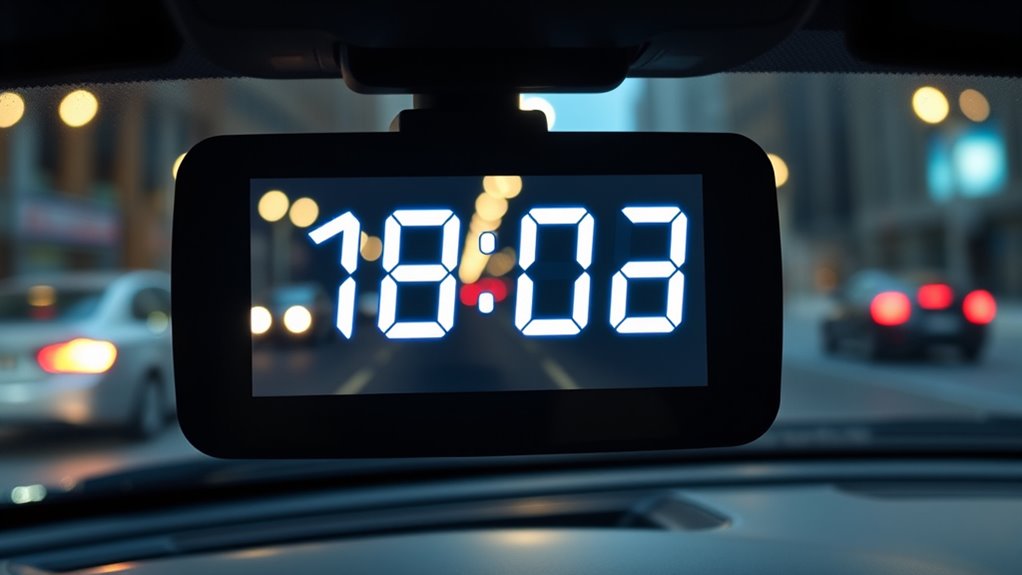
You need to manually set the correct initial time and date on your dash cam to prevent ongoing inaccuracies. Make sure to input the information accurately and synchronize it with your devices if possible. Proper setup now will save you from constant adjustments later. For optimal performance, ensure your dash cam’s internal clock is correctly configured to avoid time drift issues.
Accurate Manual Entry
Ensuring the correct initial time and date on your dash cam is essential for accurate recordings and proper time synchronization. You need to manually set these when you first install or reset your device. Follow your dash cam’s manual to access the setup menu, usually found in the settings or system options. Carefully input the correct date and time, paying attention to AM/PM or 24-hour formats as required. Double-check your entries before saving, especially during daylight saving time changes. Accurate manual entry prevents ongoing timestamp errors and reduces the need for frequent corrections. Remember, even a small mistake here can cause persistent desynchronization later, so take your time to make sure everything is accurate from the start. Proper initial setup is crucial for maintaining Free Floating timestamps and ensuring your footage is reliable.
Synchronize With Devices
To set the correct initial time and date on your dash cam, it’s best to synchronize it with an external device like your smartphone or GPS unit. Many dash cams allow automatic synchronization through GPS signals, which provide precise location and time data. Confirm your GPS mount is properly installed and receiving a strong signal before setting the time. If your dash cam doesn’t support GPS sync, manually update the date and time using the device’s menu, following the manual instructions. Using your smartphone app, if available, can also help sync the timestamp accurately. Always double-check the time zone settings to prevent offsets. Keeping your device connected to a reliable power source during setup ensures the settings aren’t lost or misconfigured.
Configuring Time Zones Properly
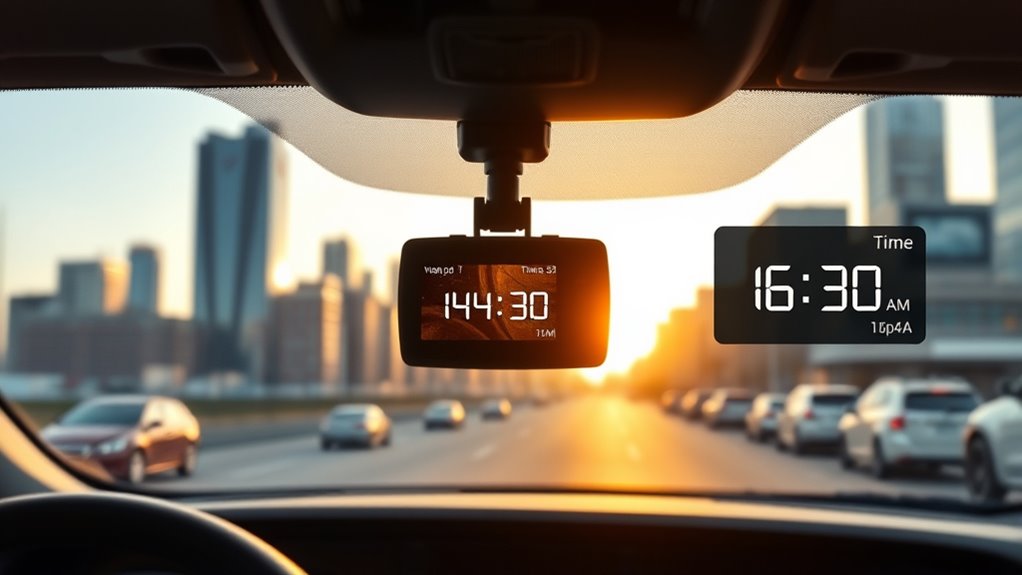
Properly configuring the time zone on your dash cam is essential to prevent persistent timestamp errors. If the zone is wrong, your camera might display a 5-7 hour offset after each restart, causing confusion and manual corrections. Many dash cams automatically sync with GPS data, but if the GPS mount has incorrect zone info or if you input the wrong setting manually, errors occur. Confirm you set the correct time zone during initial setup and avoid relying solely on GPS for time. If your device allows, manually input the correct zone and double-check it after updates or resets. Some models may overwrite manual settings with GPS data, so disabling auto-sync or updating GPS info can help. Accurate time zone setup keeps your timestamps precise and reduces ongoing adjustments. Support Breakfast options can also include guidance on optimal setup to ensure your device remains accurate.
Firmware Updates and Their Role in Time Stability
Keeping your dash cam’s firmware up to date is essential for maintaining accurate timestamps. Firmware bug fixes improve time stability and fix glitches that cause drift. Regular software updates guarantee your device stays synchronized and works reliably over time. Additionally, firmware updates can enhance overall device performance and introduce new features that support better time accuracy. Staying informed about firmware update schedules ensures your device benefits from the latest improvements and remains dependable. Regularly reviewing patch notes can help you understand what specific issues have been addressed to maintain precise timekeeping, including software stability improvements. Incorporating auditory feedback techniques may also assist in monitoring and maintaining device performance over time.
Firmware Bug Fixes
Firmware updates play a crucial role in maintaining your dash cam’s time accuracy, as outdated or buggy firmware can cause persistent date and time errors. When your device’s software isn’t current, it may process time data incorrectly or fail to sync properly with GPS or internal clocks. Manufacturers release firmware fixes specifically targeting these bugs, ensuring your dash cam maintains accurate timestamps. Regular updates can resolve glitches that cause time drift, prevent repeated manual corrections, and improve overall stability. Checking for firmware updates and installing them as recommended helps keep your device functioning reliably. Follow official guidance for updates, as outdated firmware is a common culprit behind persistent timestamp issues. Keeping your firmware current is a simple yet effective way to enhance your dash cam’s time accuracy. Additionally, firmware development often includes improvements to navigation and synchronization processes that directly impact timestamp stability.
Enhancing Timestamp Accuracy
Updating your dash cam’s firmware is one of the most effective ways to improve timestamp accuracy. Firmware updates often include fixes for bugs that cause time discrepancies, guaranteeing your device maintains correct timestamps. Manufacturers regularly release updates to address known issues and improve overall system stability. Checking for the latest firmware ensures your dash cam runs smoothly and keeps accurate time, especially after power cycles or resets. Many brands provide step-by-step instructions to perform these updates safely, minimizing the risk of errors. By keeping your firmware current, you reduce the likelihood of date and time errors caused by software glitches. This proactive approach helps maintain the integrity of your footage and ensures your timestamps are reliable, which is crucial for evidentiary purposes.
Regular Software Updates
Regular software updates play a crucial role in maintaining your dash cam’s time stability. They fix bugs, improve synchronization features, and enhance overall performance. Outdated firmware can cause incorrect timestamps, especially after power cycles. Keeping your dash cam’s software current ensures it correctly processes GPS data, time zone settings, and internal clocks. Manufacturers often release updates to resolve known issues that lead to time drift. Regular updates also prevent vulnerabilities and improve compatibility with other devices. To stay accurate, check for firmware updates periodically. Here’s a quick overview:
| Firmware Version | Update Frequency | Benefits |
|---|---|---|
| 1.0 | Annually | Basic stability |
| 1.1 | Quarterly | Fixes bugs, improves sync |
| 2.0 | As needed | Major features, fixes |
| Latest | Always check | Peak performance |
Stay current to keep your timestamps precise.
GPS Functionality and Its Effect on Timestamps
GPS functionality plays a crucial role in maintaining accurate timestamps on dash cams, but if it’s misconfigured or malfunctioning, it can cause significant time discrepancies. When your GPS mount isn’t properly calibrated, or if the device relies solely on GPS data without correct time zone settings, your timestamps may jump ahead or fall behind. Sometimes, the GPS signal might be weak or lost, especially in tunnels or urban areas with poor reception, leading the dash cam to default to incorrect or outdated time info. Additionally, if your dash cam auto-syncs with GPS data at startup, any inaccuracies in the initial setup or signal can cause persistent errors. Ensuring your GPS is correctly mounted, configured, and has a clear signal helps keep your timestamps accurate and consistent.
Troubleshooting Power Cycles and Restart Drifts
Power cycles and restarts can often cause your dash cam’s timestamp to drift or display incorrectly, even if the GPS and initial settings are accurate. This issue usually stems from power-related problems like battery issues, improper loop recording, or firmware glitches. To troubleshoot, check if your battery maintains power after shutdown—poor batteries cause time loss. Verify that your loop recording is set to 2-3 minutes, preventing time errors during restarts. Additionally, ensure firmware is up to date, as outdated software can cause sync problems. Using the table below, review common causes and solutions for restart-related timestamp drift:
| Cause | Symptom | Solution |
|---|---|---|
| Battery issues | Time resets after power off | Replace or recharge battery |
| Firmware problems | Inconsistent timestamps | Update firmware |
| Loop recording settings | Time errors on restart | Reset to 2-3 minute loops |
| Power supply interruptions | Timestamp drifts during restarts | Use continuous power source |
| GPS misconfiguration | Offset timestamps | Reconfigure time zone and GPS settings |
Preventative Tips for Maintaining Accurate Time
To keep your dash cam’s timestamp accurate, you should proactively maintain its power supply and settings. Confirm the camera is connected to a reliable power source, like a constant power outlet or wired system, to prevent power loss that resets the clock. Regularly check and update firmware to fix bugs causing time discrepancies. Properly configure the correct time zone and initial time setting, avoiding manual mistakes. Keep loop recording durations within recommended limits—around 2-3 minutes—to prevent system errors. Disable GPS auto-sync if it conflicts with manual time settings, or ensure GPS data is accurate. Ultimately, periodically verify the camera’s date and time after long trips or power outages to catch drift early. Consistent maintenance avoids time errors and keeps your footage properly timestamped.
Regularly verify your dash cam’s time after trips or outages to prevent timestamp drift.
- Use a stable, continuous power source
- Regularly update firmware
- Correctly set time zone and initial time
- Keep loop recording at 2-3 minutes
- Verify time after outages or trips
When to Seek Professional Assistance
If your dash cam continues to display incorrect timestamps despite following troubleshooting steps, it’s time to seek professional help. Persistent time drift can stem from deeper issues like faulty hardware, firmware corruption, or incompatible components that aren’t easy to diagnose on your own. Professionals can perform thorough diagnostics, including testing the battery, updating firmware correctly, and checking connections. They can also identify underlying problems such as internal component failures or wiring issues that cause power inconsistencies affecting time retention. If you’ve tried resetting settings, updating software, and verifying configurations without success, don’t delay seeking expert assistance. Addressing these problems promptly can prevent further inaccuracies and ensure your dash cam’s timestamp remains accurate, keeping your recordings reliable and legally sound.
Frequently Asked Questions
Can External Power Sources Prevent Timestamp Errors During Car Shutdowns?
Yes, external power sources can prevent timestamp errors during shutdowns. When you connect your dash cam to a continuous power supply, like the car’s cigarette lighter or an external battery pack, it keeps the internal clock running even when the car is off. This prevents loss of time memory and desynchronization. Just make certain the power source is stable and provides consistent voltage to avoid other issues.
How Does Temperature Affect Dash Cam Battery Performance and Time Accuracy?
Did you know that temperature fluctuations can reduce your dash cam’s battery life by up to 50%? Cold weather slows chemical reactions inside the battery, leading to power loss and time memory issues. Hot temperatures can cause overheating, damaging the battery and causing erratic timestamps. To keep your device accurate, store it in a stable environment, and consider a heated or insulated mount if you live in extreme climates.
Do Different Dash Cam Brands Handle Firmware Updates Similarly for Time Issues?
Different dash cam brands handle firmware updates similarly for time issues by providing official updates through their websites or apps. You typically download the firmware, follow step-by-step instructions, and install it via USB or SD card. While the process is generally straightforward, some brands, like Garmin or Blackvue, may have unique procedures or tools. Always make certain you’re using the correct firmware version to avoid new problems.
Is Manual Time Setting More Reliable Than GPS Auto-Sync for Timestamps?
Manual time setting can be more reliable than GPS auto-sync if your GPS data is inaccurate or misconfigured. You have direct control over the correct date, time, and time zone, reducing errors caused by faulty GPS signals or incorrect zone settings. However, remember to update your manual settings if needed, especially after firmware updates or changes in your location. Regular checks guarantee your timestamps stay accurate and consistent.
Can Installing a Dedicated Backup Battery Improve Time Retention During Power Loss?
Installing a dedicated backup battery can improve your dash cam’s time retention during power loss. It ensures continuous power supply, preventing the loss of time memory when your vehicle is off. This helps maintain accurate timestamps even if the main battery drains or disconnects. By keeping your dash cam powered, you reduce manual corrections and timestamp errors, guaranteeing more reliable footage and easier proof in case of incidents.
Conclusion
To keep your dash cam’s timestamps as reliable as a well-tuned clock in a bustling marketplace, stay vigilant with regular checks and updates. Avoid letting your device fall into disrepair like a forgotten relic. By understanding common causes and troubleshooting promptly, you’ll ensure your footage remains trustworthy—no matter if it’s a simple sunset or a fabled journey from days of yore. Remember, a little attention now preserves your records precise tomorrow.