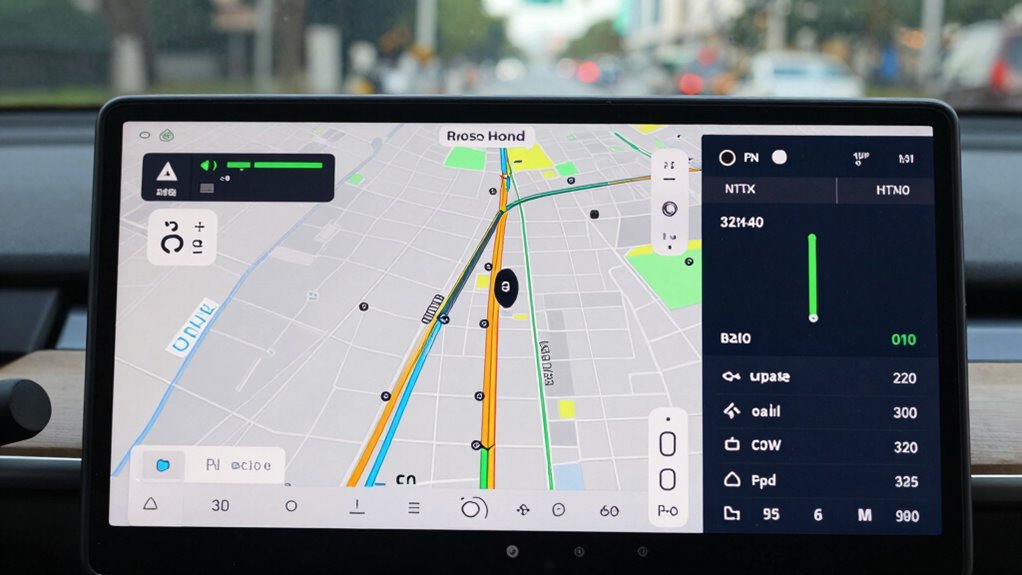

To verify your speed and location in dash cam GPS logs, start by locating the timestamps paired with coordinate data, which show where your vehicle was at specific moments. Check the recorded speed alongside the GPS coordinates to confirm your driving pace and position during incidents. Look for any discrepancies between GPS speed and your vehicle’s speedometer. For detailed tips and step-by-step guidance, keep exploring how to interpret these logs effectively.

Get business pricing on garage and car supplies
- Business-only prices and quantity discounts
- Tax-exempt purchasing
- Multiple users, one account, clear invoices
Key Takeaways
- Identify timestamp entries and correlate them with corresponding location coordinates in the logs.
- Review speed data alongside timestamps and GPS coordinates to verify vehicle speed at specific locations.
- Compare GPS speed readings with the dash cam’s timestamped footage for consistency.
- Check for any discrepancies or signal errors that might affect data accuracy.
- Organize logs chronologically to clearly demonstrate vehicle location and speed during relevant incidents.
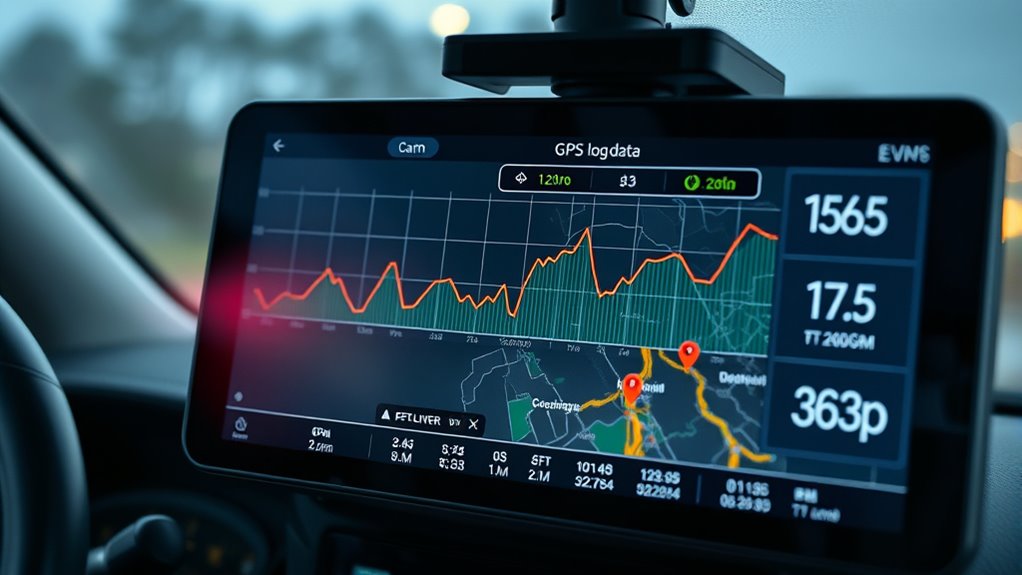
If you’ve ever wondered how to interpret the data recorded by your dash cam’s GPS, understanding its logs is imperative. These logs can serve as critical evidence in disputes, insurance claims, or legal situations, but only if you know how to read them accurately. The first step is to familiarize yourself with the GPS log files, which usually contain detailed information about your vehicle’s location, speed, and time stamps. By doing so, you not only guarantee you’re prepared to prove your case but also stay proactive with vehicle maintenance. Regularly reviewing your GPS data helps spot unusual driving patterns or excessive speeds that could indicate mechanical issues or the need for maintenance, such as brake checks or tire replacements. Being aware of your vehicle’s actual performance and location can help you address potential problems before they escalate, saving you money and promoting safety.
When examining GPS logs, pay close attention to timestamps and coordinates. They pinpoint exactly where and when each recorded event took place. If you’re in a legal dispute or trying to verify your driving behavior, this precise data can confirm whether you were speeding or if your vehicle was at a specific location at a certain time. It’s also important to understand how GPS data correlates with your vehicle’s speedometer. Sometimes, discrepancies occur due to calibration errors or signal issues, which could be relevant in legal considerations or during insurance reviews. Keeping your GPS logs organized and backed up guarantees you can present them clearly if needed, avoiding any misinterpretations or gaps that could weaken your case. Additionally, understanding the thermal behavior of GPS devices can help ensure your logs are accurate and reliable over time.
Understanding how to read these logs also involves knowing what to look for in case of disputes over location or speed. For instance, if you’re accused of speeding, the logs should show your actual speed at the specific time, not just an estimated or assumed figure. This can be critical for legal considerations, as accurate evidence might be the difference between a fine and an acquittal. Additionally, GPS logs can help demonstrate that you’ve maintained proper vehicle maintenance, such as avoiding harsh accelerations or sudden stops that could indicate mechanical problems. Being able to interpret these details allows you to keep a record that supports your vehicle’s condition and your driving habits.
As an affiliate, we earn on qualifying purchases.
Frequently Asked Questions
Can GPS Logs Be Tampered With or Altered?
Yes, GPS logs can be tampered with or altered, which raises concerns about GPS data security and log integrity. If someone gains access to your dash cam system or storage, they might manipulate the data to misrepresent speed or location. To protect against this, make certain your device has secure access controls, encryption, and regular backups. Maintaining log integrity is vital for trustworthy evidence in any dispute or investigation.
How Accurate Are Dash Cam GPS Location Records?
Imagine your dash cam’s GPS as a lighthouse guiding you through fog—it’s generally accurate, but signals can be affected by interference or tall buildings. While data encryption techniques help protect your logs from tampering, GPS signal interference may still introduce minor inaccuracies. Overall, your dash cam’s location records are reliable but not infallible, so consider these factors when using logs as proof of speed or location.
What Legal Standards Exist for GPS Log Admissibility?
You need to guarantee your GPS logs meet legal standards for admissibility, which include maintaining a proper chain of custody and securing a digital signature. Courts typically require verifiable evidence, so you should document every transfer and handling of the data. Using digital signatures verifies authenticity, while a clear chain of custody proves the data hasn’t been altered, making your GPS logs more credible in legal proceedings.
How Long Are GPS Logs Typically Stored?
GPS logs are typically stored for varying durations depending on your device’s storage capacity and policies. Many dash cams retain data from days to several months, influenced by storage duration policies and whether GPS data encryption is enabled. If you need long-term records, consider backing up logs regularly, as storage limits can lead to automatic overwriting. Always review your device’s specific retention settings to guarantee vital data remains accessible when needed.
Can Multiple Drivers’ Data Be Distinguished in the Logs?
Yes, multiple drivers’ data can be distinguished in the logs. You can look for driver identification features, like user IDs or login details, embedded in the logs. Keep in mind, some systems encrypt data for security, which might require authorized access to decrypt and analyze individual driver activity. This helps guarantee accurate tracking and accountability, especially when multiple drivers use the same vehicle.
As an affiliate, we earn on qualifying purchases.
Conclusion
By mastering your dash cam GPS logs, you hold the compass to your truth. Like a lighthouse guiding ships through fog, these logs illuminate your exact speed and location, steering you through uncertainties. When you understand this digital map, you’re not just reading data—you’re charting your own course with confidence. Trust in these logs as your steady beacon, guiding you safely and clearly through any dispute or challenge that comes your way.
dash cam speed and location logs
As an affiliate, we earn on qualifying purchases.
As an affiliate, we earn on qualifying purchases.
As an affiliate, we earn on qualifying purchases.
Halloween Picks
halloween
As an affiliate, we earn on qualifying purchases.