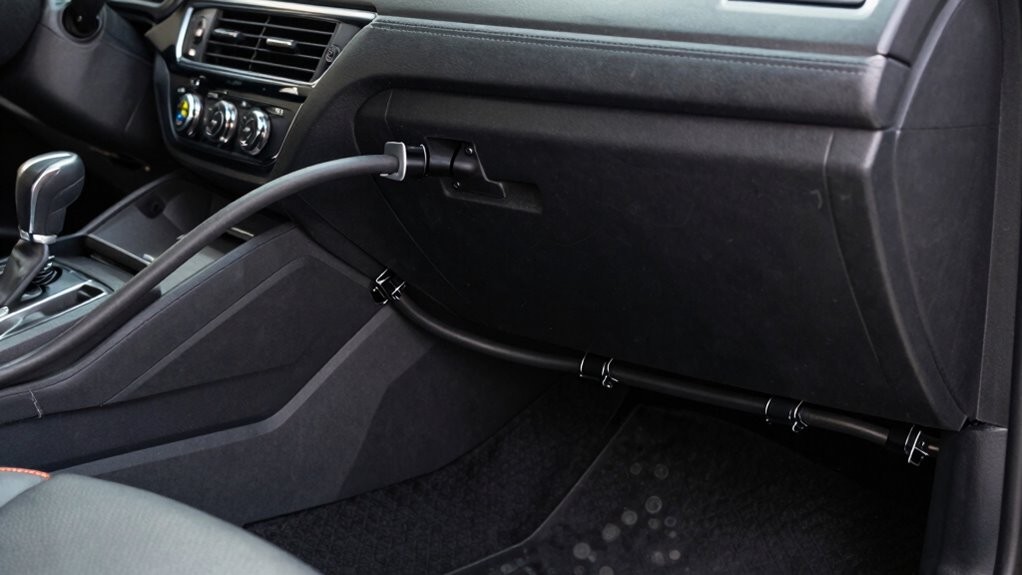
To guarantee a safe and tidy airbag cable installation, locate airbag markings like “SRS” on the A-pillar and route cables along the windshield side, avoiding deployment zones. Use factory wiring channels, secure cables with zip ties, and keep them behind or above the airbag assembly. Avoid tight bends or front placement near airbags. Following manufacturer guidelines and proper techniques helps prevent future issues—continue to explore how to perfect your installation.
Key Takeaways
- Locate A-pillar airbag markings before routing cables to ensure they stay clear of deployment zones.
- Use factory wiring channels along the windshield side for safe, interference-free cable paths.
- Secure cables with zip ties to existing wiring, avoiding tight bends and tension that could damage wiring.
- Route cables behind the headliner or through the C-pillar for a cleaner, safer installation.
- During reassembly, verify all cables are properly secured, not pinched, and free from moving parts or deployment areas.
Understanding A-Pillar Markings and Their Significance
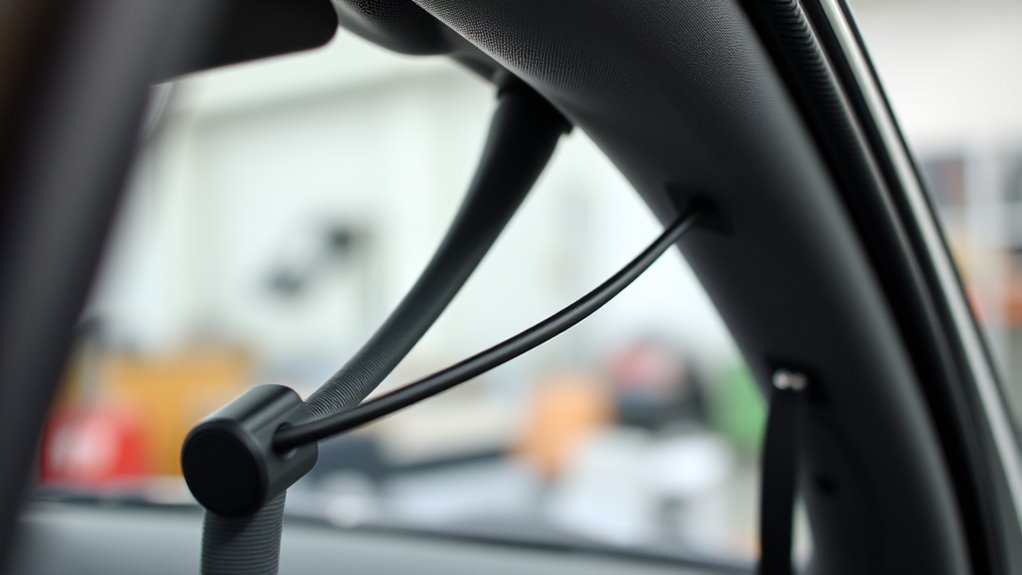
Understanding A-pillar markings is essential for safe and effective cable routing during airbag installations. These markings, like “SRS,” “Airbag,” or “SRS Airbag,” indicate the airbag’s position within the A-pillar. Spotting them helps you identify where the side curtain airbag is located, so you can plan your cable route accordingly. The safest path runs along the windshield side of the pillar, away from the airbag module. Routing behind the airbag assembly prevents interference with deployment. When locating these markings, gently pry the edge of the A-pillar cover closest to the windshield with a trim tool. This careful approach minimizes damage and ensures you’re working in the correct area, keeping safety a top priority during installation. Additionally, understanding Free Floating concepts can assist in designing a cleaner, safer cable route that reduces clutter and potential interference. Recognizing these airbag location indicators is crucial for preventing accidental deployment or damage during the process. Proper identification of airbag modules also helps avoid unnecessary disassembly or damage to surrounding components. Being aware of manufacturers’ markings can further aid in accurately locating the airbag components and ensuring a proper installation.
Choosing the Safest Path for Cable Routing
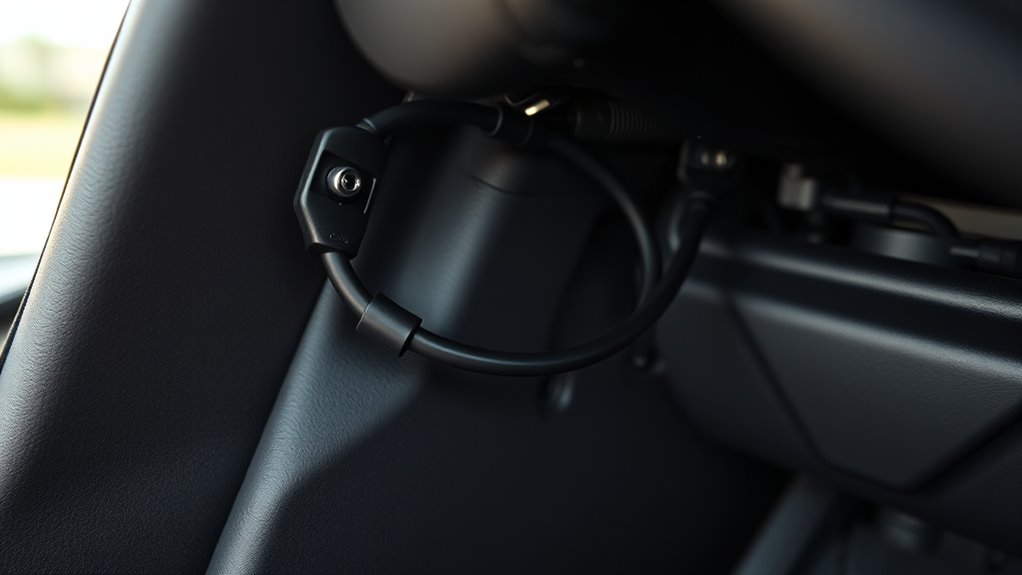
To guarantee safety during cable routing, you should choose the path that keeps the wire clear of the airbag module and deployment zone. The safest route is along the windshield side of the A-pillar, avoiding direct contact with the airbag. Routing behind existing wiring channels minimizes interference and risk. Prioritize the passenger side, which generally has less wiring and controls, reducing potential hazards. Use the table below to identify ideal paths:
| Path Option | Pros | Cons |
|---|---|---|
| Behind A-pillar wiring | Safe, hidden, minimizes interference | Difficult to access |
| Headliner routing | Clean install, less debris | Slightly more work |
| Rear door sill to C-pillar | Good alternative if needed | Longer cable required |
| Floor routing | Easy access | Less neat, potential hazards |
| Along side panel | Simple, minimal disassembly | Possible interference |
Choose routes that keep the cable away from deployment zones and avoid tight bends. Additionally, consulting manufacturer guidelines or whole-house water filtration system resources can help ensure the routing does not interfere with critical vehicle components. Considering vehicle safety standards is essential when planning your cable route to prevent any future issues. Being aware of relevant vetted trends can also help you select the most reliable and safe installation methods.
Proper Techniques for Routing Behind the Airbag
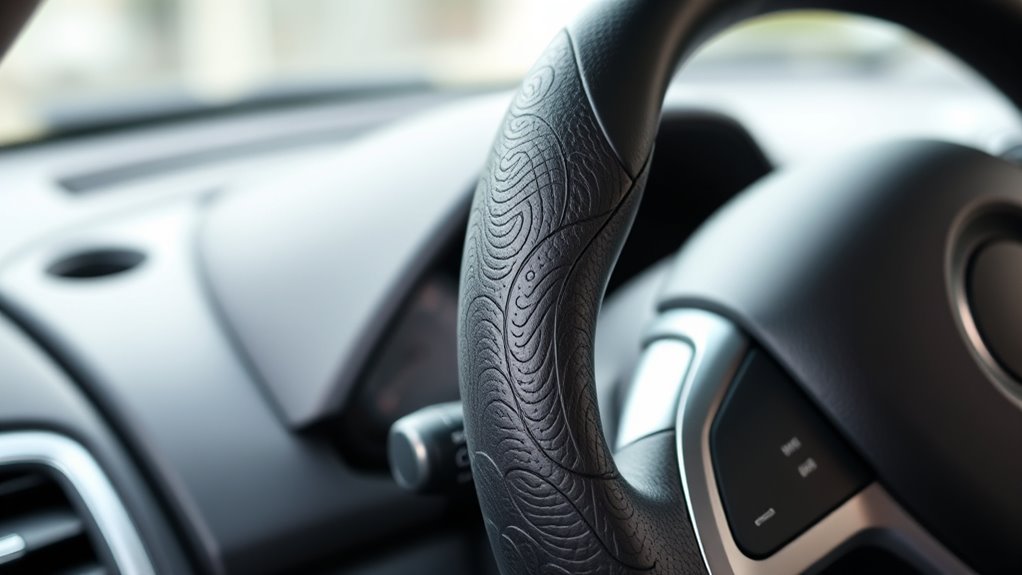
Start by locating the A-pillar markings to identify the airbag’s position and choose a path along the windshield side, away from the module. Use existing wiring channels to route the cable behind the airbag, securing it with zip ties for stability. Make sure the cable is positioned above or behind the airbag, never in front of it, to maintain safety during deployment. Incorporating innovative materials can further enhance the durability of your cable routing during installation.
Locate A-Pillar Markings
Locating A-pillar markings is essential before routing cables behind the airbag. These markings, like “SRS,” “Airbag,” or “SRS Airbag,” indicate the airbag’s position and help you avoid hazards. To do this effectively:
- Carefully inspect the A-pillar cover for embossed or printed labels, often near the top or along the edge.
- Gently pry the trim away from the pillar using a trim tool, revealing any hidden markings.
- Confirm the airbag location by cross-referencing markings with vehicle service info or diagrams.
Use Existing Wiring Channels
Utilizing existing wiring channels is the safest and most effective way to route cables behind the airbag. These channels are designed to protect wiring and prevent interference with deployment. To maximize safety, gently follow the factory wiring paths, avoiding tight bends or pinching the cable. Use zip ties to secure the new wiring alongside existing harnesses, ensuring stability without tension. Carefully inspecting sleep hygiene practices can also help prevent issues caused by improper cable management. Additionally, regularly checking the cable routing can help identify and address potential problems before they become serious. Incorporating proper installation techniques and understanding wire protection methods can further enhance safety and longevity of the wiring system.
Secure Cable Properly
To guarantee your cable stays secure behind the airbag, you need to use proper techniques that prevent movement and potential interference during deployment. First, ensure the cable is firmly attached to existing wiring using zip ties, avoiding loose loops that could shift. Second, position the wire above or behind the airbag module, never in front, to prevent interference. Third, tuck the cable neatly into the headliner or behind trim panels, pushing it in gradually with a trim removal tool. Additionally, understanding the thermal behavior of the vehicle interior helps prevent heat-related damage to the wiring during installation. Considering smart vehicle systems and their sensitivity can further enhance safety during installation. Paying attention to wire routing principles and vehicle interior heat management ensures a tidy and safe setup that minimizes risks during airbag deployment and vehicle operation. Following these steps ensures a safe, reliable installation that won’t compromise airbag deployment later.
Alternative Routing Options for a Cleaner Install
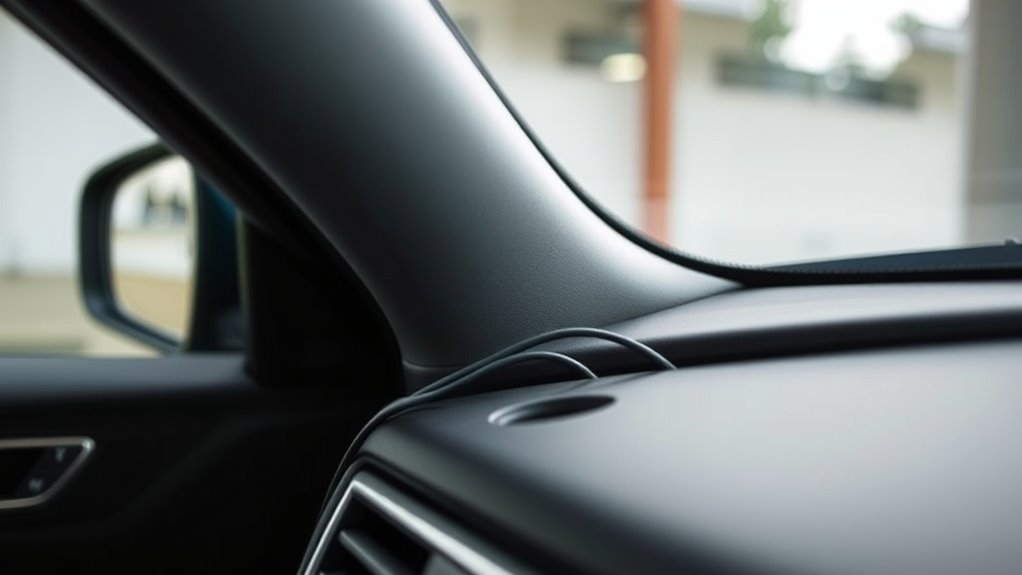
When aiming for a cleaner, more professional cable installation, exploring alternative routing options can make a significant difference. Instead of running cables along visible areas, consider routing behind the headliner or through the C-pillar. From the rear door sill, push the cable up under the side panel to reach the headliner, avoiding clutter along the floor. The headliner approach keeps cables hidden and minimizes interference with other components. If a longer cable is necessary, route it along the floor, but this is less clean. Always follow the safest path along the windshield side of the A-pillar, avoiding the airbag module, and secure the cable with zip ties to existing wiring. These alternatives help maintain a tidy look while ensuring safety. Additionally, understanding wiring basics can help prevent future electrical issues and ensure a professional installation. Proper cable management techniques are essential for both safety and aesthetics. Utilizing safe routing practices can further reduce the risk of damage or accidental disconnection over time, especially when considering flexible routing options that adapt to different vehicle models.
Common Mistakes to Avoid During Cable Installation
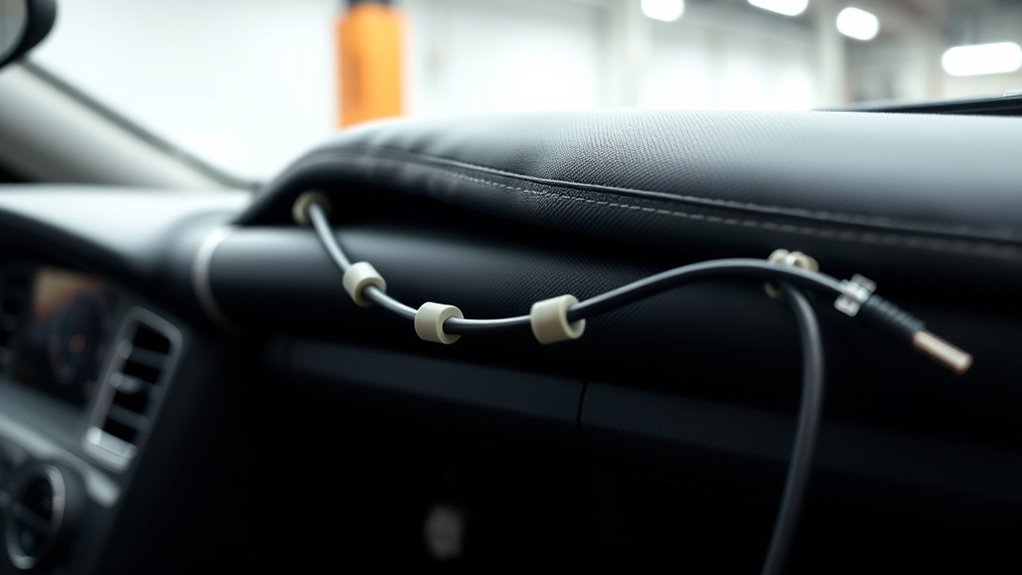
One of the most common mistakes during cable installation is routing the wire over the airbag module, which can impede proper deployment and compromise safety. To avoid this, pay attention to key errors:
- Routing in front of the airbag – blocking the deployment path can cause injury or failure.
- Pinching or damaging the wire in trim panels or door seals – this leads to immediate or eventual failure.
- Forcing cables into tight seams without proper tools – results in damage to connectors and wiring.
- Neglecting to consider proper wire routing techniques can increase the risk of damage and reduce safety during emergencies, especially given the importance of safe waterpark installations where wiring and safety features must be meticulously planned. Utilizing established cable management standards can help ensure a safe and reliable installation that won’t cause issues later, and applying passive voice detection techniques can improve the clarity of your documentation and instructions.
Manufacturer Guidelines for Airbag Wiring Repairs

Manufacturer guidelines strictly prohibit repairing airbag wiring in most cases, emphasizing replacement over repair. You should always follow the specific protocols for each brand, as some, like Genesis and Subaru, require replacing the entire harness if damaged. Ignoring these rules can compromise safety and lead to costly errors or legal issues.
Repair Restrictions and Protocols
Repairing airbag wiring is strictly restricted by manufacturer protocols because any improper repair can compromise safety and deployment performance. Manufacturers mandate replacing entire wiring harnesses or modules when damaged, ensuring integrity and safety. You must avoid splicing, patching, or attempting to repair connectors, as these actions can lead to failure during deployment.
Key points to remember:
- Always replace damaged harnesses with genuine parts—no repairs or patches.
- Follow manufacturer-specific instructions precisely to maintain warranty and safety standards.
- Never modify or alter wiring connectors—these are designed for single-use and specialized handling.
Understanding and adhering to these protocols helps prevent deployment failures, injuries, or legal liabilities, safeguarding both you and the vehicle occupants.
Manufacturer-Specific Repair Policies
To guarantee safety and maintain vehicle integrity, each automaker has strict policies regarding airbag wiring repairs. Many manufacturers prohibit splicing or repairing airbag wiring altogether, requiring replacement of the entire harness if damaged. For example, Honda and Acura mandate replacing the complete wiring harness, not repairing existing wiring. Subaru advises replacing faulty harnesses with genuine parts, avoiding any repairs. Toyota and Lexus strictly prohibit repairing SRS wiring or connectors, emphasizing replacement instead. Maserati also restricts repairs without technical authorization. These policies ensure the integrity of the airbag system and prevent potential failure or deployment issues. Always consult the manufacturer’s guidelines before attempting any repair, and when in doubt, seek professional help. Following these policies is essential for safety and compliance.
Best Practices for a Secure and Safe Cable Setup
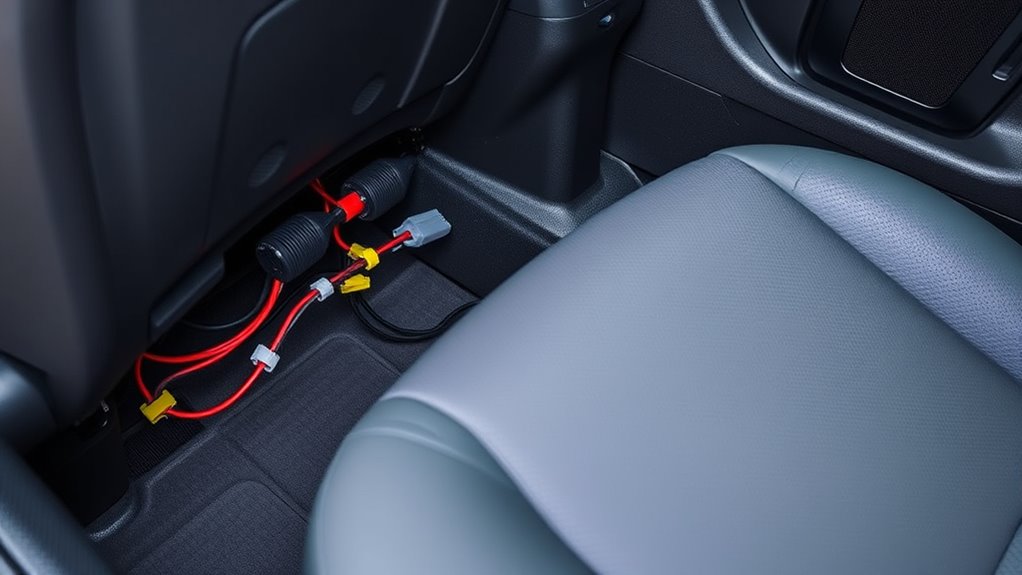
Ensuring a secure and safe cable setup requires careful planning and attention to detail throughout the routing process. You need to choose the best path that minimizes risk and maintains safety.
- Follow existing wiring channels: Use these to keep the cable protected and out of the way of moving parts or airbags.
- Secure with zip ties: Fasten the cable firmly to prevent movement that could damage it over time.
- Stay behind the airbag: Route above or behind the airbag assembly, avoiding any placement in front that could hinder deployment.
Final Checks Before Reassembling Your Vehicle’s Interior
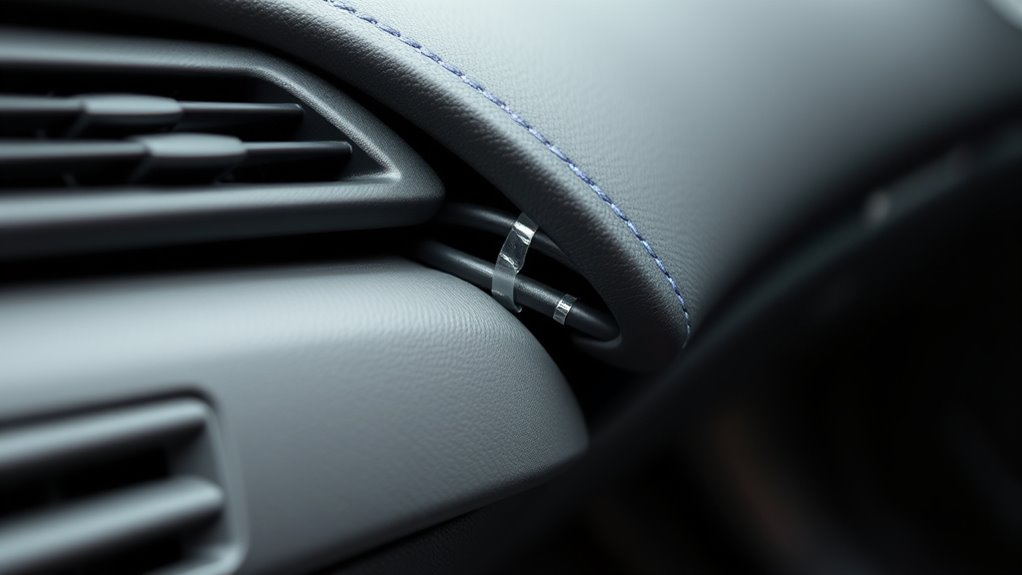
Before reassembling your vehicle’s interior, it’s crucial to perform thorough final checks to confirm that all cables are properly routed and secured. Start by inspecting each cable to ensure it follows the planned path behind the airbag and along existing wiring channels. Confirm that zip ties or clips hold cables firmly, without pinching or stressing the wires. Check that cables are tucked away from moving parts and not obstructing airbag deployment zones. Gently pull on cables to verify they’re secured and won’t shift during reassembly. Remove any slack that could cause interference. Examine all trim panels and covers to ensure they fit flush without pinched wiring. Finally, double-check the airbag areas for clearance and proper positioning to guarantee safety and functionality once reassembled.
Frequently Asked Questions
Can I Reroute Airbags if I Don’t Follow Guidelines?
You shouldn’t reroute airbags if you don’t follow guidelines because it risks compromising safety and proper deployment. Improper routing can cause the airbag to malfunction, pinch wires, or block deployment, leading to serious injury. Always adhere to manufacturer instructions to guarantee safety and functionality. If you’re unsure, it’s best to consult a professional to avoid damaging the system or creating dangerous situations during an accident.
What Tools Are Best for Prying A-Pillar Covers Safely?
You should use a trim removal tool, preferably plastic, to pry A-pillar covers safely. These tools help avoid damaging the clips or the cover itself. Gently insert the tool between the cover and the vehicle frame, applying even pressure to release the clips. Take your time, work slowly, and avoid using screwdrivers or metal tools that could scratch or break the plastic. Proper tools make the job safer and easier.
How Do I Identify the Correct Wiring Channels Behind the Airbag?
Think of the wiring channels as hidden passages behind the A-pillar, waiting to be uncovered. To identify the correct ones, look for markings like “SRS,” “Airbag,” or “SRS Airbag” on the pillar. Gently pry the cover with a trim tool, then carefully examine the area for existing wiring paths. These channels run along the windshield side, behind the airbag assembly, guiding your cable away from deployment zones and ensuring a safe, clean routing.
Is It Safe to Use Zip Ties Near Airbag Modules?
Using zip ties near airbag modules can be safe if you’re careful. Make sure the zip ties don’t pinch or put pressure on the airbag or wiring, and avoid tight securing that could damage the cables. Always route the zip ties along existing wiring channels, leaving enough slack for airbag deployment. Gently trim excess ties after securing to prevent any interference, and double-check everything before reassembling.
What Should I Do if I Accidentally Damage the Airbag Wiring?
If you accidentally damage the airbag wiring, you’re playing with fire. First, stop using the vehicle immediately and disconnect the battery to prevent accidental deployment. Then, consult your vehicle’s service manual or a professional technician. Don’t attempt to repair or splice the wiring yourself, as it can compromise safety. Instead, replace the damaged harness with a genuine part to guarantee proper functionality and safety.
Conclusion
By following these safe routing methods, you’re forging a path through unseen dangers, much like guiding a delicate thread through a labyrinth. Your careful attention guarantees the airbag’s silent promise of protection remains unbroken, and your vehicle’s harmony endures. When you respect the symbols of safety inscribed in each step, you’re not just installing a cable—you’re safeguarding a crucial guardian that stands between you and harm, now and always.