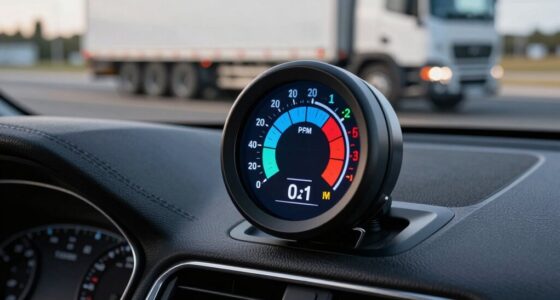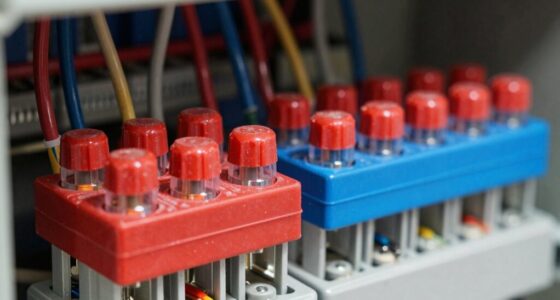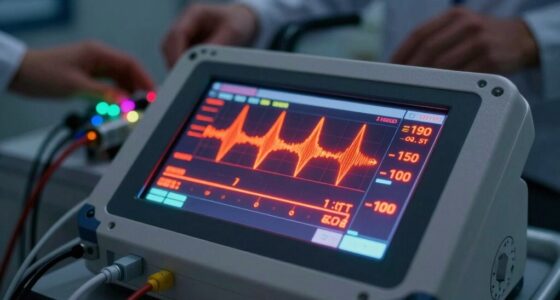
You can diagnose ABS and airbag warning lights at home using an OBD-II scanner. These devices connect to your vehicle’s diagnostic port and help you access trouble codes that point to sensor or connection issues. Common problems include dirt, corrosion, or loose wiring causing false warnings. By interpreting these codes, you can identify simple fixes like cleaning or reseating connectors. If you want to learn more about troubleshooting and what the codes mean, keep exploring this guide.

Get business pricing on garage and car supplies
- Business-only prices and quantity discounts
- Tax-exempt purchasing
- Multiple users, one account, clear invoices
Key Takeaways
- Use an OBD-II scanner to read and interpret ABS and airbag trouble codes at home.
- Visual inspect wheel speed sensors and crash sensors for dirt, corrosion, or damage.
- Reset warning lights by turning off the vehicle, waiting, then restarting to clear minor glitches.
- Check wiring connections and reseat sensors to resolve simple sensor malfunctions.
- Persistent or complex codes require professional diagnosis to ensure safety system functionality.
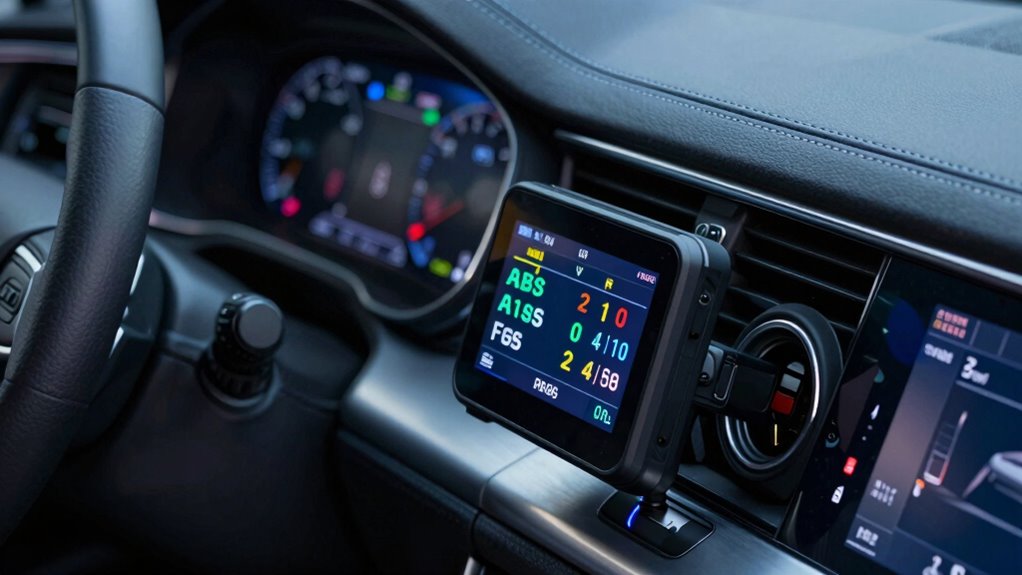
Ever wondered what those warning lights on your dashboard really mean? If you see the ABS or airbag warning light glowing, it’s telling you that something isn’t quite right with your vehicle’s safety systems. While it might seem intimidating, many issues can be diagnosed at home before heading to a mechanic. Often, these lights are triggered by sensor malfunctions, which are common and usually straightforward to identify and fix. Sensor malfunctions happen when the sensors responsible for monitoring wheel speed or crash detection fail or give inaccurate readings. Sometimes, dirt, corrosion, or loose connections can cause these sensors to send faulty signals, triggering the warning lights. Before rushing to a professional, you can attempt a warning light reset. Sometimes, simply turning the vehicle off, waiting a few moments, and restarting it can clear minor glitches caused by temporary sensor errors. However, if the warning light remains on, it’s a sign that further investigation is needed.
Many vehicle owners find that using an OBD-II scanner makes diagnosing ABS and airbag codes accessible and straightforward. These devices connect to your car’s diagnostic port and read the trouble codes stored within the vehicle’s computer. Once connected, you’ll see specific codes that indicate whether it’s a sensor malfunction, wiring issue, or other component failure. Interpreting these codes helps you understand what’s causing the warning lights to stay on. If you notice codes related to wheel speed sensors or crash sensors, you can check those components visually. Look for damaged wiring, corrosion, or debris that might interfere with sensor operation. Cleaning or reseating connectors often resolves sensor malfunctions, which can then lead to a warning light reset. Keep in mind, though, that some codes may require professional attention, especially if they involve internal faults or complex electronic issues. Additionally, understanding sensor malfunctions and their causes can help you prevent future problems and maintain your vehicle’s safety features more effectively. Recognizing how sensor signals operate can also improve your ability to troubleshoot and maintain your vehicle’s safety systems.
While attempting a warning light reset is helpful, remember that persistent warning lights shouldn’t be ignored. If they stay on after your initial troubleshooting, it’s best to consult a mechanic. They can perform a thorough diagnostic to ensure your safety systems are fully functional. Ignoring these alerts could compromise your vehicle’s safety features, especially the ABS and airbags, which are crucial in preventing injuries during accidents. In summary, understanding the basics of sensor malfunctions and how to reset warning lights empowers you to take initial steps at home. With the right tools and a bit of patience, you can often identify and fix simple problems, saving time and money, and ensuring your vehicle remains as safe as possible.
OBD-II scanner for ABS and airbag codes
As an affiliate, we earn on qualifying purchases.
As an affiliate, we earn on qualifying purchases.
Frequently Asked Questions
Can ABS and Airbag Codes Affect Vehicle Emissions?
Yes, ABS and airbag codes can indirectly affect your vehicle’s emissions. If there’s a sensor malfunction related to the emission system, it might trigger warning lights, causing your vehicle to run inefficiently. While ABS and airbag codes mainly concern safety features, unresolved issues can lead to system imbalances that impact emissions. Diagnosing these codes at home assists in making sure your emission system functions properly, reducing pollutants and improving fuel economy.
Are All ABS and Airbag Warning Lights Repairable at Home?
Not all ABS and airbag warning lights are repairable at home, but DIY troubleshooting can sometimes help. With basic diagnostic tools, you can read error codes and identify simple issues like loose connections or sensor problems. However, more complex repairs often require professional service. If you’re comfortable using diagnostic tools and follow safety precautions, you might resolve minor problems yourself, but consult a mechanic for complicated fixes.
How Often Should I Check ABS and Airbag Codes?
You should check your ABS and airbag codes during DIY diagnostics whenever you notice warning lights or after any collision or repairs. Regularly scanning with code reading techniques helps catch issues early. Use a diagnostic scanner to read codes, clear them, and monitor for recurring problems. Doing this every few months or after significant events guarantees your safety systems stay functional and alerts you to potential problems before they worsen.
Do Different Car Brands Use the Same Diagnostic Codes?
Did you know that over 80% of vehicle manufacturers use brand-specific diagnostics? Different car brands often have their own diagnostic codes, making it challenging to interpret issues across models. While some universal code standards exist, many brands rely on proprietary systems. So, when diagnosing ABS and airbag problems, you’ll need to use brand-specific tools or software to accurately read and clear the codes.
Can Clearing Codes Erase Existing Vehicle Safety Issues?
Clearing codes doesn’t erase existing vehicle safety issues. When you reset the warning light, you might temporarily hide problems like sensor calibration issues, but the underlying fault remains. If the sensor isn’t properly calibrated or the issue isn’t fixed, the warning light could come back. Always diagnose the root cause before clearing codes, and verify your vehicle’s safety systems are functioning correctly, especially for critical systems like ABS and airbags.
vehicle diagnostic scanner for car warning lights
As an affiliate, we earn on qualifying purchases.
As an affiliate, we earn on qualifying purchases.
Conclusion
By understanding ABS and airbag codes, you can confidently diagnose common issues at home, saving time and money. Think of these codes as a map guiding you through the vehicle’s safety systems, revealing exactly where the problem lies. Visualize the codes as clues in a mystery, helping you pinpoint faulty sensors or connections. With a little knowledge and the right tools, you’re empowered to keep your car’s safety features functioning properly, ensuring peace of mind on every drive.
As an affiliate, we earn on qualifying purchases.
As an affiliate, we earn on qualifying purchases.
Halloween Picks
halloween
As an affiliate, we earn on qualifying purchases.