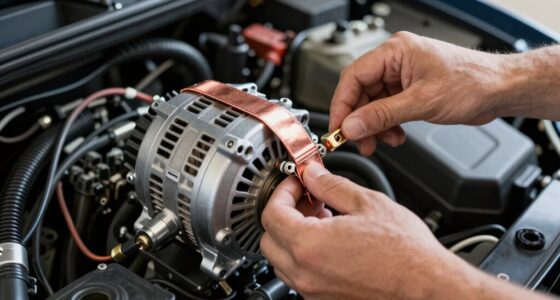

Clearing codes only turns off the check engine light temporarily, but it doesn’t fix the underlying problem causing the fault. The vehicle’s computer detects issues, and if you just wipe the codes, the warning will come back once the root cause remains unaddressed. Permanent codes indicate that repairs are needed to resolve the actual issue. If you want to understand what these codes really mean and how to properly fix them, keep exploring solutions.

Get business pricing on garage and car supplies
- Business-only prices and quantity discounts
- Tax-exempt purchasing
- Multiple users, one account, clear invoices
Key Takeaways
- Permanent codes indicate issues that require specific repairs and won’t clear until the problem is resolved.
- Clearing codes only resets the warning light; it doesn’t fix the underlying fault causing the code.
- Proper diagnostics identify the root cause, ensuring permanent codes are addressed effectively.
- Ignoring the root issue and just clearing codes risks recurring problems and potential further damage.
- Understanding the meaning of permanent codes emphasizes the need for targeted repairs rather than temporary resets.

When your vehicle’s check engine light comes on, it’s tempting to clear the codes and hope the problem disappears. But this quick fix rarely addresses the root cause. Instead, it’s essential to understand what the trouble codes mean and how proper diagnostic procedures can identify the real issue. Clearing codes might turn off the light temporarily, but if the underlying problem persists, the warning will likely reappear. That’s why relying solely on a quick reset isn’t a repair strategy—it’s a gamble that can lead to bigger problems down the line.
The key to fixing your vehicle correctly starts with thorough diagnostic procedures. These procedures involve using specialized tools, such as an OBD-II scanner, to read the stored trouble codes. Each code points to a specific component or system that’s not functioning properly. Interpreting these codes requires experience and understanding of the vehicle’s systems, because codes often point to symptoms rather than causes. For example, a code indicating misfire could stem from a faulty spark plug, fuel injector, or even an engine computer issue. Skipping diagnostics and simply clearing the codes ignores this essential step, which can result in masking the problem temporarily rather than solving it permanently.
Once the diagnostic process pinpoints the faulty parts or systems, you can develop an effective repair strategy. This means selecting the appropriate repair actions based on accurate information, rather than guessing or trial-and-error. Repair strategies could involve replacing worn sensors, repairing wiring issues, or updating software—actions that directly target the root cause of the trouble code. Properly addressing the underlying problem not only turns off the check engine light but also prevents future breakdowns and saves you money in the long run. It’s a proactive approach that recognizes the significance of fixing what’s broken rather than just hiding the warning.
Many assume that clearing codes resets their vehicle to a “like-new” state, but that’s false. If the problem remains, the check engine light will return, often with the same or new codes. This cycle can lead to unnecessary repairs and frustration. Remember, permanent codes aren’t really permanent—they’re a way for your vehicle to communicate that something needs attention. Ignoring that message by simply clearing the codes doesn’t fix the problem; it only delays the necessary repairs. Effective diagnostic procedures and targeted repair strategies are what truly resolve the issue, ensuring your vehicle runs smoothly and safely. Additionally, understanding the importance of proper diagnostic procedures can help prevent unnecessary repairs and extend the lifespan of your vehicle.
As an affiliate, we earn on qualifying purchases.
Frequently Asked Questions
Can Permanent Codes Cause Ongoing Engine Damage?
Yes, permanent codes can cause ongoing engine damage if disregarded. Many diagnostic myths suggest clearing codes fixes issues, but persistent codes indicate underlying problems that, if left unaddressed, can harm engine longevity. You should prioritize proper diagnosis and repairs rather than just clearing codes. Regular maintenance and addressing permanent codes promptly help protect your engine and ensure it runs smoothly for years to come.
Do All Vehicles Display Permanent Codes the Same Way?
Not all vehicles display permanent codes the same way. During diagnostic procedures, you’ll notice differences in how manufacturers interpret and present these codes. Some cars store permanent codes with specific symbols or in dedicated menu options, while others may require special tools for code interpretation. Understanding these variations helps you accurately identify issues, ensuring you don’t overlook persistent problems that could lead to further engine damage if left unaddressed.
How Often Should I Check for Permanent Codes?
You should check for permanent codes during each diagnostic frequency or as part of your maintenance schedule, ideally every few months or after any vehicle repairs. Regular checks help catch underlying issues early before they turn into serious problems. Incorporate code scans into your routine maintenance to ensure your vehicle stays in top shape and to prevent minor issues from becoming costly repairs.
Are Permanent Codes Always Related to Emissions?
Are permanent codes always related to emissions? Not necessarily, but they often are due to their role in emissions maintenance. Think of code terminology as a map—permanent codes mark issues that won’t clear until proper repairs are made. While many relate to emissions systems, some can involve other engine components. Always address permanent codes promptly, as ignoring them can lead to bigger problems down the road.
What Tools Are Best for Reading Permanent Codes?
You should use diagnostic tools and code readers designed for permanent codes to read them effectively. These tools connect to your vehicle’s OBD-II port, providing detailed information about the codes. Look for code readers that support advanced functions like live data and freeze frame data, as they help interpret permanent codes precisely. Investing in a quality diagnostic tool guarantees you quickly identify issues without unnecessary guesswork.
As an affiliate, we earn on qualifying purchases.
Conclusion
So, next time you see those permanent codes, ask yourself—are you really fixing the problem or just hiding it? Clearing codes might give you a quick fix, but it doesn’t address the root cause. Isn’t it better to understand what those codes truly mean and take meaningful action? Remember, true repair comes from digging deeper, not just clearing away the signs. Are you ready to go beyond quick fixes and find lasting solutions?
car check engine light repair tool
As an affiliate, we earn on qualifying purchases.
As an affiliate, we earn on qualifying purchases.
professional automotive diagnostic tool
As an affiliate, we earn on qualifying purchases.
As an affiliate, we earn on qualifying purchases.
Halloween Picks
halloween
As an affiliate, we earn on qualifying purchases.