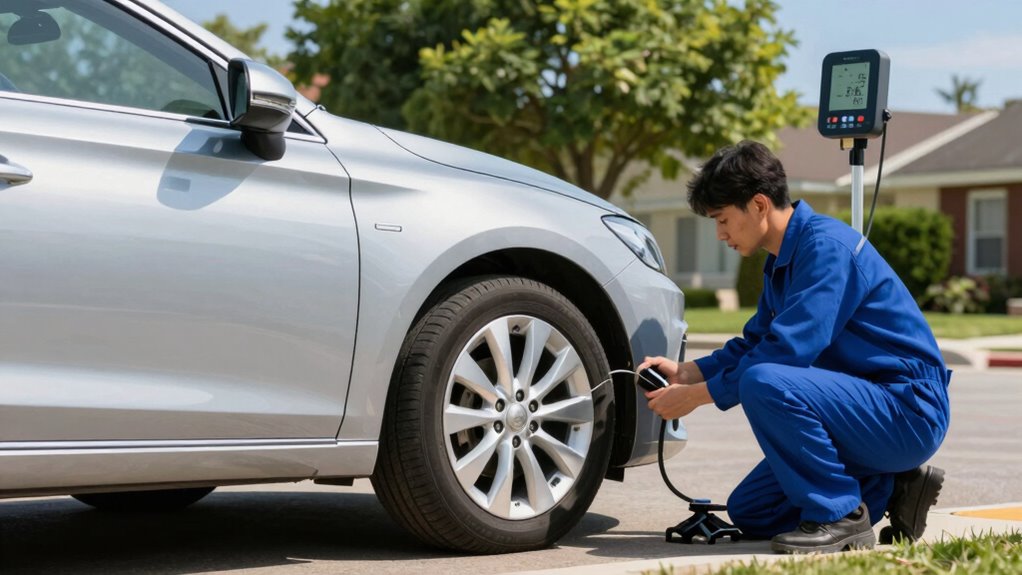

To test your TPMS in daily driving, regularly check tire pressure with a manual gauge and compare it to the system display for accuracy. Observe how quickly the system reacts when you add or release air, and watch for false alarms or delays. Monitor sensor performance over time to guarantee durability against debris, temperature, and vibrations. If you keep these points in mind, you’ll better understand your TPMS’s reliability and longevity. Keep going to learn more about making your system work best.

Get business pricing on garage and car supplies
- Business-only prices and quantity discounts
- Tax-exempt purchasing
- Multiple users, one account, clear invoices
Key Takeaways
- Regularly compare TPMS readings with manual tire pressure measurements for accuracy validation.
- Monitor sensor performance over time to detect drift, damage, or false alarms during daily driving.
- Test system responsiveness by adjusting tire pressure and observing the TPMS update speed.
- Evaluate sensor durability by observing their performance under typical road conditions and weather.
- Confirm consistent pressure detection and system alerts to ensure reliable tire monitoring during daily use.

Many daily drivers overlook the importance of Tire Pressure Monitoring Systems (TPMS), even though maintaining proper tire pressure is crucial for safety, fuel efficiency, and tire longevity. When you rely on TPMS, you’re trusting that it provides precise readings, but how do you know if it truly delivers? The real-world test for TPMS involves more than just checking if the warning light comes on—it’s about verifying tire pressure accuracy over time and ensuring sensor durability under daily driving conditions.
First, you need to evaluate tire pressure accuracy. Don’t just assume your TPMS is correct because the display shows normal pressure. Regularly check your tire pressure with a reliable manual gauge, especially after resetting the system or installing new sensors. Comparing manual readings to the system’s report helps you identify if the sensors are providing correct data. Over time, sensors can drift or become less exact, leading to incorrect alerts or missed warnings. An accurate TPMS allows you to maintain ideal tire pressure, which improves safety and fuel economy. If you notice consistent discrepancies between manual measurements and sensor readings, it might be time to recalibrate or replace your sensors. Being aware of sensor calibration** is key to ensuring your system remains reliable over time. Additionally, understanding how sensor accuracy** impacts overall vehicle performance can help you make informed maintenance decisions.
Sensor durability is equally critical. Daily driving exposes TPMS sensors to various conditions—road debris, temperature fluctuations, and vibrations—that can affect their lifespan. During the real-world test, pay attention to how sensors hold up after several months of use. Do they still transmit signals reliably? Are they resistant to damage from rough roads or harsh weather? If a sensor fails prematurely or starts giving false readings, it compromises your ability to monitor tire pressure effectively. Robust sensors are built to withstand the rigors of everyday driving, ensuring consistent performance without frequent replacements. Understanding the importance of sensor durability helps you choose products that will last longer and perform better. Additionally, considering sensor installation quality and compatibility can influence long-term reliability.
Another aspect to consider is how well the system responds to changes. When you add or remove air, does the TPMS update promptly? A trustworthy system reacts quickly, confirming that the sensors are functioning correctly and maintaining tire pressure accuracy. If your system lags or fails to detect pressure drops, it might signal underlying sensor durability issues or calibration problems.
Ultimately, the real-world test for TPMS confirms whether your system is trustworthy. You want sensors that maintain tire pressure accuracy over time and resist the challenges of daily driving. By actively verifying pressure with manual gauges and observing sensor performance, you ensure your TPMS does its job—keeping you safe, saving fuel, and extending your tires’ life. Properly functioning sensors and accurate readings give you peace of mind, knowing your vehicle’s tire health is always under control.
TPMS tire pressure monitoring system
As an affiliate, we earn on qualifying purchases.
As an affiliate, we earn on qualifying purchases.
Frequently Asked Questions
How Long Do TPMS Sensors Typically Last Before Replacement?
TPMS sensors usually last between 5 to 10 years, but this depends on factors like battery life and sensor calibration. Over time, the battery depletes, leading to false alerts or sensor failure. Regularly check for warning lights or inconsistent readings. To guarantee safety, get your sensors tested and calibrated during routine maintenance, and replace them when the battery is near the end of its life or calibration issues arise.
Are TPMS Systems Compatible With All Vehicle Models?
Ever wondered if your vehicle’s TPMS system fits? Not all systems are compatible with every model. You need to check if your car’s tire pressure sensors are calibrated correctly and whether the system supports your vehicle’s make and year. Some vehicles require specific sensors or adapters for proper installation. Before buying, verify compatibility to guarantee your TPMS functions accurately and keeps your tire pressure optimized.
What Are Common Signs of TPMS Sensor Failure?
You’ll notice signs of TPMS sensor failure when the warning light stays on or flashes unexpectedly. Other clues include inconsistent tire pressure readings, which might suggest sensor calibration issues, or a sudden drop in battery life causing the sensor to stop transmitting signals. If these issues happen, it’s best to have a mechanic check the sensors, as failed sensors can compromise your safety and tire maintenance accuracy.
Can TPMS Be Installed Aftermarket on Older Vehicles?
Yes, you can install aftermarket TPMS sensors on older vehicles, but think of it like tuning a vintage instrument—you’ll need to guarantee proper sensor calibration for accurate readings. Compatibility varies, so check if the sensors match your vehicle’s make and model. This way, you’re giving your car a modern heartbeat, ensuring your tire pressure warnings stay reliable and your drive remains safe and smooth.
How Does Weather Affect TPMS Sensor Accuracy?
Weather affects TPMS sensor accuracy mainly through temperature changes and moisture, which can interfere with sensor calibration. Cold weather can cause tire pressure to drop, making sensors report inaccurate readings, while hot weather can increase pressure. Rain or snow may impact the sensor’s weather resistance, potentially leading to false alerts or malfunctions. To guarantee accuracy, regularly check and calibrate your TPMS sensors, especially after significant weather shifts.
As an affiliate, we earn on qualifying purchases.
Conclusion
While some might think TPMS is just a luxury, it’s actually a smart safety feature for daily drivers. By catching low tire pressure early, you prevent potential blowouts and improve fuel efficiency. Yes, some may see it as an unnecessary gadget, but consider how it actively protects you on every drive. Investing in a reliable TPMS isn’t just about convenience—it’s about making smarter choices for your safety and peace of mind on the road.
As an affiliate, we earn on qualifying purchases.
As an affiliate, we earn on qualifying purchases.
Fall Picks
fall essentials
As an affiliate, we earn on qualifying purchases.