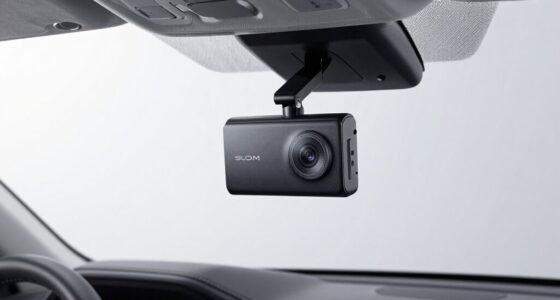
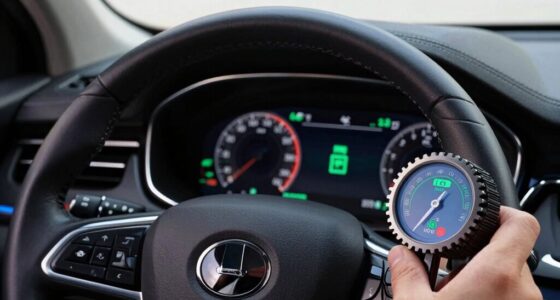
To guarantee your dash cam captures clear footage, position it just behind the rearview mirror, centered and angled downward for an unobstructed view of the road ahead. Secure it tightly using the provided mounts, and regularly check stability, especially on rough roads. Adjust the angle to avoid glare and keep the lens level. Proper placement and maintenance prevent shaky footage and assure reliable performance—keep all these tips in mind to get the most out of your gear. If you continue exploring, you’ll find more expert advice to optimize your setup.

Get business pricing on garage and car supplies
- Business-only prices and quantity discounts
- Tax-exempt purchasing
- Multiple users, one account, clear invoices
Key Takeaways
- Position the dash cam just behind the rearview mirror, centered, and angled downward for optimal road coverage.
- Secure the mount firmly using provided tools, ensuring stability and preventing vibrations or dislodgement.
- Regularly inspect and adjust the camera’s angle to maintain a clear, level view and avoid glare or blind spots.
- Keep the mounting system clean and in good condition to ensure consistent performance during rough roads.
- Choose the right mounting method (suction, adhesive, clip) based on your vehicle and usage needs for secure placement.

Whether you’re an avid traveler or frequently hit the road for work, mounting your dash cam correctly is essential for capturing clear footage and ensuring safety. The way you position your camera can dramatically influence the quality of your recordings, so it’s worth taking the time to get it right. Camera placement is key: you want it high enough to capture the road ahead without obstructing your view, but not so high that it picks up unnecessary glare or reflections. Most people find the ideal spot is just behind the rearview mirror, centered and angled slightly downward to cover the lane directly in front of you. This position minimizes blind spots and provides a broad, unobstructed view of the road, which is crucial when you need to review footage after an incident. Proper camera placement ensures your dash cam performs optimally and captures all the important details. Additionally, considering driver visibility can help prevent distractions and maintain safety while driving. Ensuring your camera angle is correct can also help reduce distortion and improve video clarity.
Once you’ve chosen the right spot, securing the dash cam firmly is vital. Use the mounting equipment provided—whether it’s a suction cup, adhesive mount, or a clip system—and double-check that it’s stable. A shaky or loose camera can produce grainy footage and may even fall off during a drive. Adjust the angle so the lens captures a clear, level view of the road ahead, avoiding any angles that might cut off important details or introduce glare from sunlight. Keep in mind that the placement should allow easy access to the camera’s controls and ports for maintenance or adjustments. Additionally, understanding proper mounting techniques can help prevent vibrations or dislodgement during rough roads or sudden stops. Regularly inspecting your mounting system can also help maintain optimal positioning and prevent issues caused by wear or damage.
As an affiliate, we earn on qualifying purchases.
Frequently Asked Questions
How Do I Prevent My Dash Cam From Overheating?
To prevent your dash cam from overheating, make certain it’s mounted in a shaded area or use a sunshade to improve heat resistance. Keep the camera well-ventilated, avoiding direct sunlight, which can compromise camera durability. Regularly check and clean vents or cooling areas, and consider installing a heat-resistant casing if you often park in hot environments. These steps help maintain ideal performance and prolong your dash cam’s lifespan.
What’s the Best Angle for Recording Traffic Incidents?
Imagine your dash cam is a detective, determined to catch every detail. You want the camera placement at a slight downward windshield angle, roughly 20-30 degrees, to capture license plates and incident details without too much glare. Position it centrally behind the rearview mirror for the best traffic incident record. This angle ensures clear footage while avoiding shadows or reflections, giving your detective the best view of the road drama.
Can I Use Aftermarket Mounts With My Dash Cam?
Yes, you can use aftermarket mounts with your dash cam, but check for aftermarket compatibility first. Look for mounts that offer mounting versatility, fitting your specific camera model and vehicle. Make sure the aftermarket mount securely attaches and doesn’t interfere with your view. Testing the fit before driving is wise. With the right aftermarket mount, you gain flexibility in positioning your dash cam for ideal recording angles.
How Do I Secure the Cable to Avoid Distractions?
Like a modern-day knight, you shield your focus by securing your dash cam cable tightly. Use cable management clips or adhesive cable organizers to route the wire along the windshield or headliner, keeping it out of your line of sight. Tuck excess cable behind panels or under trim to prevent it from dangling. Proper cable management is essential for distraction prevention, ensuring your view stays clear and your attention stays on the road.
What’s the Ideal Position for Night-Time Recording?
For night-time recording, position your dash cam high on the windshield, aiming slightly downward to maximize lighting conditions and capture clear details. Guarantee the camera is stabilized properly to avoid shaky footage, especially in low light. Adjust the angle so headlights and streetlights illuminate the scene without causing glare. Regularly check and clean the lens for peak performance, helping you get sharp footage even in challenging lighting conditions.
As an affiliate, we earn on qualifying purchases.
Conclusion
Now, with your dash cam securely mounted, you’re ready to hit the road with confidence. Picture the sleek device capturing every twist and turn, the crystal-clear footage ready to tell your story. Whether you’re steering through busy city streets or winding country roads, your gear is set to perform. Stay alert, keep your camera steady, and enjoy the ride, knowing that every moment is recorded—your reliable eye on the road, no matter where adventure takes you.
As an affiliate, we earn on qualifying purchases.
As an affiliate, we earn on qualifying purchases.
Halloween Picks
halloween
As an affiliate, we earn on qualifying purchases.