If you notice loose suspension bolts on the trail, stop and inspect them carefully. Check all quick-release and locknuts, ensuring they are tight using a torque wrench if possible, and look for signs of wear, corrosion, or stripped threads. Tighten any loose bolts to the manufacturer’s specifications or replace damaged ones immediately. Ensuring your suspension bolts are secure prevents ride issues and potential failure; stay with us to learn essential safety tips and proper inspection steps.
Key Takeaways
- Visually inspect all suspension bolts for looseness, wear, or corrosion before riding.
- Use a torque wrench to verify each bolt is tightened to manufacturer specifications.
- Check for damaged threads, stripped locking mechanisms, or debris obstructing bolt heads.
- Ensure all locking mechanisms, such as pinch bolts and locknuts, are secure.
- Address any signs of damage or looseness immediately to prevent suspension failure during your ride.
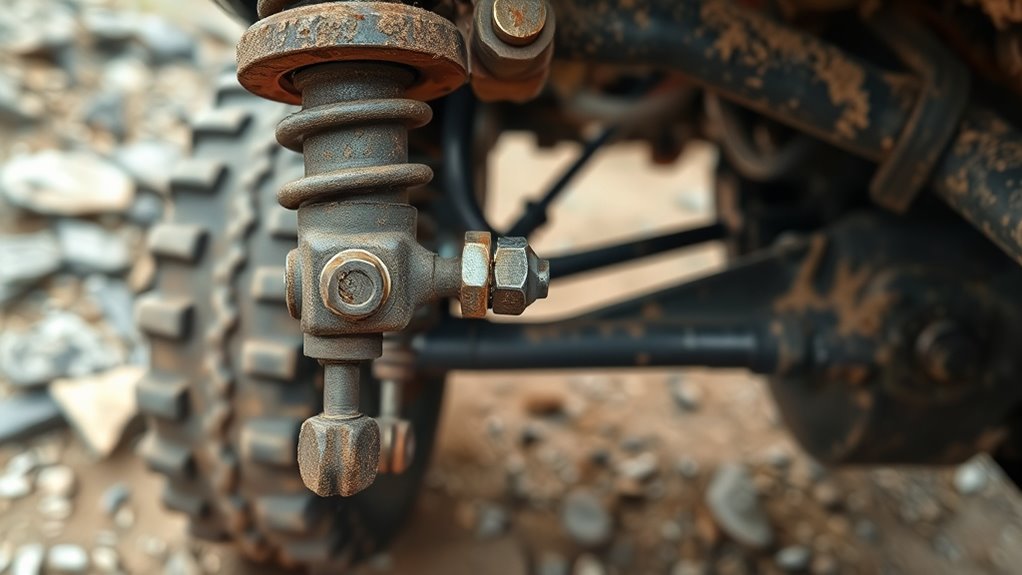
If you’re hitting the trail regularly, you’ve probably experienced or heard about loose suspension bolts causing issues during rides. These small fasteners play a vital role in your bike’s performance and safety, so it’s essential to pay attention to them before heading out. A quick and thorough bolt inspection should be part of your routine suspension maintenance. When you check your bike, focus on all suspension bolts, including those holding the shock, forks, and linkage. Loose bolts can lead to decreased control, uneven suspension function, and even damage to your bike’s components.
Start by inspecting each bolt carefully. Use a torque wrench if you have one to make certain they’re tightened to the manufacturer’s specifications. Over-tightening can be just as harmful as leaving them loose, so aim for the recommended torque values. During your inspection, look for signs of wear, corrosion, or stripped threads. These issues can compromise the bolt’s ability to hold components securely, increasing the risk of failure on the trail. If you notice any damage, replace the affected bolts immediately as part of your suspension maintenance routine.
Inspect each bolt carefully with a torque wrench to ensure proper tightness per manufacturer specifications.
Don’t forget to check for any debris or dirt buildup around bolt heads, as this can interfere with proper tightening and make future bolt inspections more difficult. Clean around the bolts with a brush or compressed air, ensuring you can see if any bolts are loose. Also, pay attention to the condition of the locking mechanisms, such as pinch bolts or locknuts, to make certain they’re still functioning correctly. Tighten or replace as needed before you set out on your ride. Regular suspension maintenance isn’t just about keeping your bike running smoothly; it’s about safety. Loose suspension bolts can cause your suspension to behave unpredictably or even fail mid-ride, increasing your risk of a crash. Incorporating support breakfast into your pre-ride checklist can help you stay alert and focused, ensuring you catch potential issues early. This simple step can save you from more costly repairs and ensure your ride stays smooth and safe.
Frequently Asked Questions
How Often Should Suspension Bolts Be Checked During Trail Rides?
You should check your suspension bolts before every trail ride and periodically during long rides, especially if you hit rough terrain. Regular bolt maintenance and suspension inspection guarantee everything stays tight and secure. Use a torque wrench to verify bolts are properly tightened, and look for signs of wear or looseness. Staying proactive helps prevent suspension failure, keeping your ride safe and smooth throughout your adventure.
Can Loose Bolts Cause Damage to Other Suspension Components?
Loose bolts can definitely cause damage to other suspension components. When bolts are loose, they may vibrate and wear out faster, especially if they’re affected by bolt corrosion. This can lead to misalignment or breakage. Always check that bolts meet the torque specifications to prevent this. Properly torqued bolts ensure the suspension stays secure, reducing the risk of damage and keeping your ride safe on the trail.
What Tools Are Best for Tightening Suspension Bolts Safely?
Tightening suspension bolts is like locking in a secret handshake—you want it just right. Use a torque wrench to verify bolts are tightened to manufacturer specs, preventing over-tightening or loosening. Apply thread locker to keep bolts secure, especially if vibrations are frequent. These tools work together to keep your suspension safe and reliable, giving you peace of mind on the trail. Always double-check your torque settings before hitting the trail again.
Are There Specific Signs Indicating Suspension Bolt Failure?
Yes, there are specific signs indicating suspension bolt failure. During bolt inspection, look for unusual noises like clunking or squeaking, or notice if your vehicle handles differently—like pulling to one side or feeling unstable. Visual signs include rust, corrosion, or any cracks around the bolts. If you spot any of these signs, stop driving immediately and tighten or replace the bolts to prevent further damage or safety hazards.
How Can I Prevent Suspension Bolts From Loosening Again?
Think of your suspension bolts as the roots of a strong tree—if they loosen, everything above can falter. To prevent this, regularly check bolt torque and apply thread locking compound during maintenance. Tighten bolts to manufacturer specifications and revisit them after rough rides. By securing these “roots,” you guarantee your suspension remains resilient, keeping your vehicle stable and ready to face new trails.
Conclusion
Remember, a stitch in time saves nine. Before hitting the trail again, double-check those suspension bolts to guarantee they’re tight and secure. Ignoring small issues can lead to bigger, costly problems down the road. Stay proactive, trust your instincts, and don’t take chances with safety. Regular maintenance keeps your ride smooth and reliable. When you prioritize inspection and care, you’ll enjoy worry-free adventures—because an ounce of prevention is worth a pound of cure.