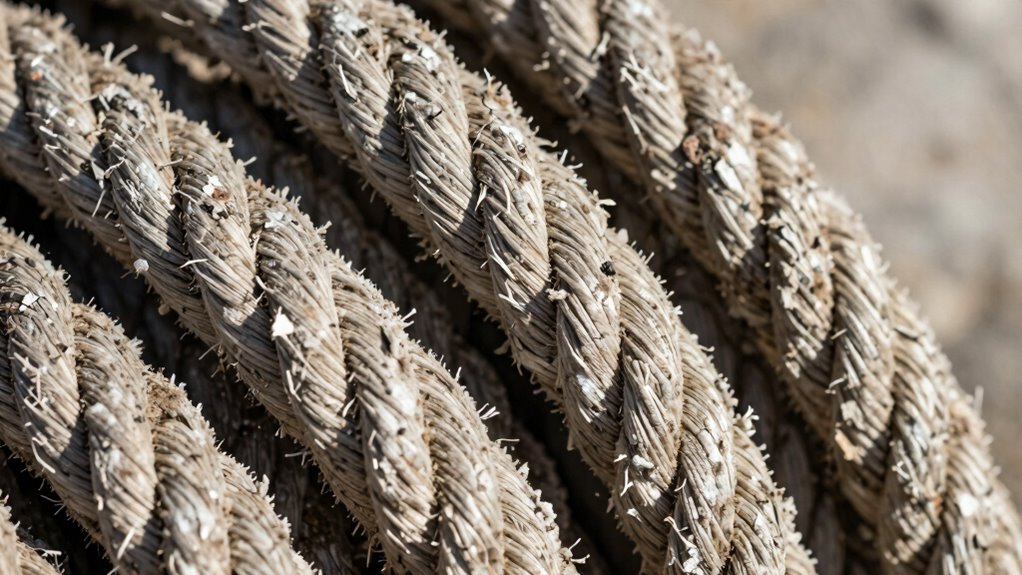

To care for your synthetic rope, regularly clean it with fresh water to remove dirt, salt, and grime that cause wear. Keep it away from excessive heat sources like engines or direct sunlight, which weaken fibers over time. Protect it from UV damage by storing it in shaded, dry areas and applying UV protectant sprays. Recognizing signs of deterioration early helps prevent failures. Mastering these tips will help you extend your rope’s lifespan and performance.

Get business pricing on garage and car supplies
- Business-only prices and quantity discounts
- Tax-exempt purchasing
- Multiple users, one account, clear invoices
Key Takeaways
- Regularly rinse synthetic ropes with fresh water to remove salt, dirt, and grime, preventing abrasive wear.
- Store ropes in shaded, dry areas to minimize UV exposure and prevent material deterioration.
- Avoid prolonged heat or friction near engines or heat sources to maintain the rope’s tensile strength.
- Apply UV protectant sprays and inspect for signs of brittleness or discoloration to prevent unexpected failure.
- Recognize early signs of wear and damage for timely repairs or replacement, prolonging rope lifespan.
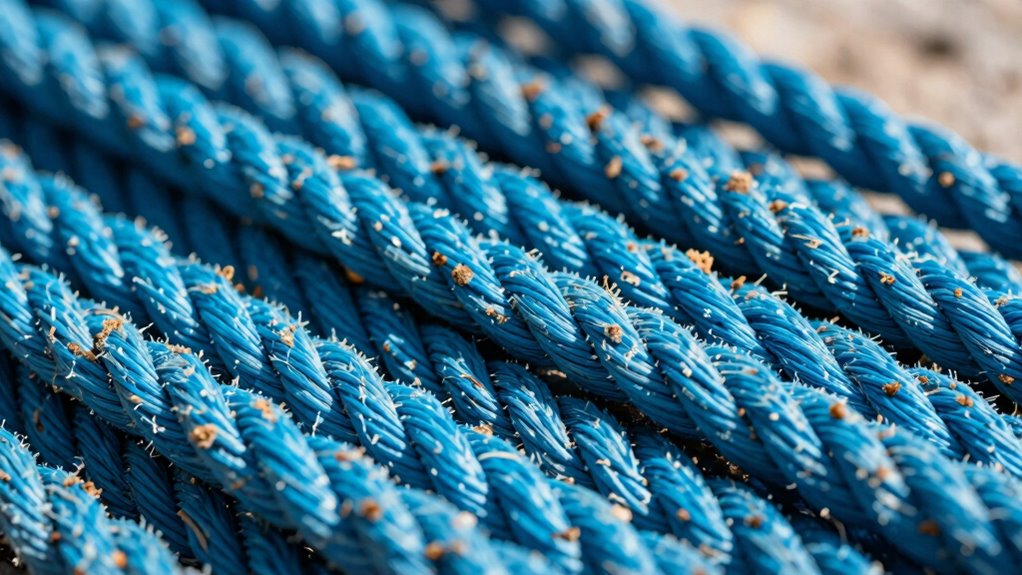
Synthetic ropes are a popular choice for many applications because of their durability and strength, but proper care is crucial to guarantee they last. Whether you’re using them in marine applications or for recreational use, understanding how dirt, heat, and UV damage affect these ropes can help you extend their lifespan and maintain their performance. Marine environments expose synthetic ropes to constant moisture, salt, and dirt, which can accelerate wear and degradation if not properly managed. In recreational settings, ropes often face dirt, abrasion, and exposure to sunlight, all of which can weaken their fibers over time. Recognizing these factors and taking proactive steps can make a significant difference in how long your synthetic ropes stay reliable.
Proper care extends the life of synthetic ropes exposed to dirt, heat, and UV in marine and recreational environments.
Dirt and grime are common foes that can cause accelerated wear if they accumulate on the rope’s surface. When dirt settles into the fibers, it creates abrasive particles that grind against the material every time the rope moves or bears weight. This friction can cause fibers to fray or break, especially in high-stress applications like mooring boats or climbing. Regular cleaning is essential; simply rinsing the rope with fresh water after use in marine environments removes salt and dirt, preventing build-up that could lead to premature failure. For recreational use, wiping the rope with a damp cloth or mild soap keeps dirt at bay, especially after outdoor activities. Avoid harsh chemicals that can weaken the fibers—stick to gentle cleaning methods to preserve the rope’s integrity. Additionally, understanding the effects of environmental exposure helps in making informed maintenance decisions, including proper storage practices.
Heat is another factor that can compromise synthetic ropes. Excessive exposure to high temperatures, whether from friction, nearby equipment, or direct sunlight, can cause the material to soften or degrade. In marine applications, avoid leaving ropes near engines or heat sources, as prolonged heat exposure can weaken the fibers. Similarly, in recreational use, don’t leave ropes in hot cars or direct sunlight for extended periods. If you notice the rope becoming warm during use, give it time to cool down before subjecting it to further stress. Managing heat exposure helps maintain the rope’s strength and prevents it from losing its tensile properties. Proper handling around heat sources and understanding thermal effects are essential for extending the lifespan of your synthetic ropes.
UV damage is perhaps the most insidious threat to synthetic ropes in outdoor or marine environments. Ultraviolet rays break down the polymer fibers over time, leading to brittleness, discoloration, and eventual failure. To protect your ropes from UV damage, store them in shaded, dry areas when not in use. When in use, avoid prolonged exposure to sunlight, especially during peak hours. Applying a UV protectant spray designed for synthetic fibers can add an extra layer of defense. Regular inspections for signs of UV deterioration—such as fading, cracking, or stiffness—allow you to replace or repair the rope before it fails unexpectedly. Proper storage and maintenance are key to combating the UV degradation that weakens synthetic fibers over time. Being proactive in maintenance can significantly extend the effective lifespan of your ropes.
As an affiliate, we earn on qualifying purchases.
Frequently Asked Questions
How Often Should I Inspect My Synthetic Rope for Damage?
You should inspect your synthetic rope for damage before and after each use. Regular inspections help identify issues caused by dirt, heat, or UV exposure. When storing your rope, make certain it’s in a cool, dry place away from sunlight, and use proper cleaning techniques to remove dirt that can degrade fibers. Consistent inspections and proper storage extend your rope’s lifespan and keep it safe for future use.
Can Synthetic Ropes Be Repaired After Fraying or Cuts?
Did you know that up to 80% of synthetic rope damage can be repaired? Yes, synthetic ropes can often be repaired after fraying or cuts using proper rope splicing techniques or specialized cutting techniques. You should avoid attempting repairs if you’re unsure, but skilled splicing can restore strength. Always inspect the damaged area carefully, and if in doubt, replace the rope to guarantee safety and reliability.
What Are the Signs of UV Degradation in Synthetic Ropes?
You’ll notice UV degradation in your synthetic rope through signs like rope discoloration, where the color fades or becomes uneven. UV exposure weakens the fibers, making the rope less durable and more prone to fraying or breaking. You might also see a loss of flexibility or an increase in brittleness. Regularly inspect your rope for these signs, especially after prolonged sun exposure, to guarantee safety and longevity.
Is It Safe to Use Synthetic Rope in Saltwater Environments?
Yes, synthetic rope is generally safe for saltwater environments if it’s marine compatible and has good corrosion resistance. Look for ropes specifically designed for marine use, as they’re built to withstand saltwater’s harsh conditions. Proper maintenance, like rinsing with fresh water after exposure, helps extend its lifespan. Always check the manufacturer’s specifications to guarantee your synthetic rope can handle saltwater environments safely.
How Does Age Affect the Strength of Synthetic Ropes?
Think of your synthetic rope like a once-vibrant painting, slowly fading with time. As it ages, its strength diminishes due to material degradation, shortening its rope lifespan. You might notice signs like fraying or stiffness, indicating it’s weakened. Age affects synthetic ropes just like anything else—over time, they lose durability, making them less reliable for heavy loads or critical tasks. Regular inspections help you catch these signs early.
UV protectant spray for synthetic ropes
As an affiliate, we earn on qualifying purchases.
As an affiliate, we earn on qualifying purchases.
Conclusion
Taking care of your synthetic rope isn’t just about maintenance—it’s about preserving a trusted companion in your adventures. By shielding it from dirt, heat, and UV damage, you extend its life and guarantee safety with every use. Think of your rope as a loyal friend; neglecting it would be like ignoring a trusted confidant’s needs. Treat it well, and it’ll stand by you through countless journeys, whispering promises of strength and reliability with every knot.
marine synthetic rope storage bag
As an affiliate, we earn on qualifying purchases.
As an affiliate, we earn on qualifying purchases.
As an affiliate, we earn on qualifying purchases.
Fall Picks
fall essentials
As an affiliate, we earn on qualifying purchases.