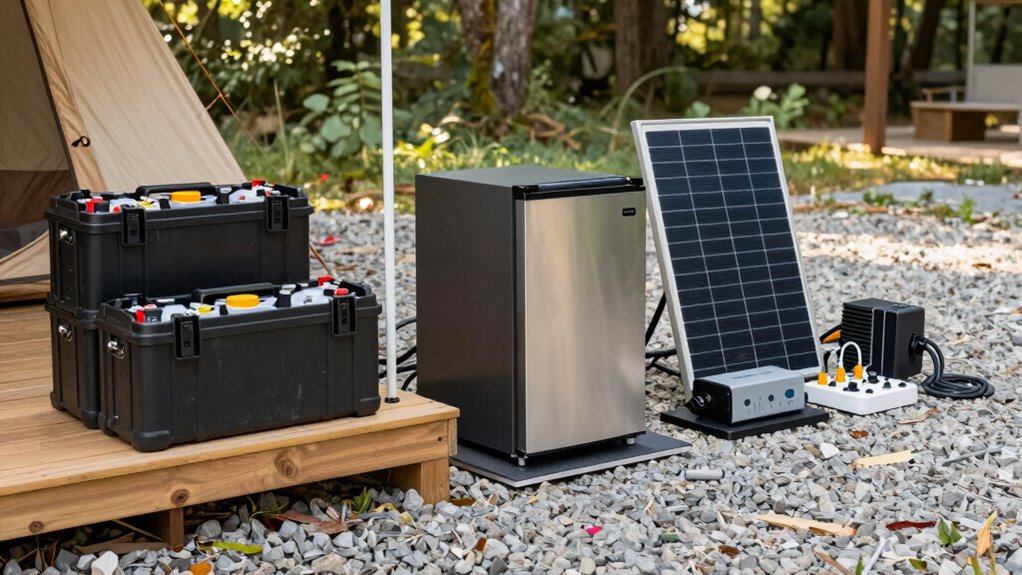
For your camp power setup, place batteries in a well-ventilated, cool, and dry spot away from direct sunlight and heat sources to prevent hazards. Position your fridge and heavy loads close to the batteries to reduce wiring length and improve efficiency. Keep wiring organized, secure, and protected from the elements, and use proper safety measures like fuses and gauges. Proper component placement guarantees safety and system longevity—continue to explore how you can optimize your setup even further.

Get business pricing on garage and car supplies
- Business-only prices and quantity discounts
- Tax-exempt purchasing
- Multiple users, one account, clear invoices
Key Takeaways
- Place batteries in cool, ventilated areas away from direct sunlight and heat sources to ensure safety and longevity.
- Position the fridge and heavy loads close to batteries to minimize wiring length and energy loss.
- Keep wiring routes organized, protected from the elements, and away from walkways to prevent damage and ensure safety.
- Distribute loads evenly across the system to avoid overloads and maintain stable power delivery.
- Regularly inspect and tighten connections, using proper fusing and circuit protection for system reliability.
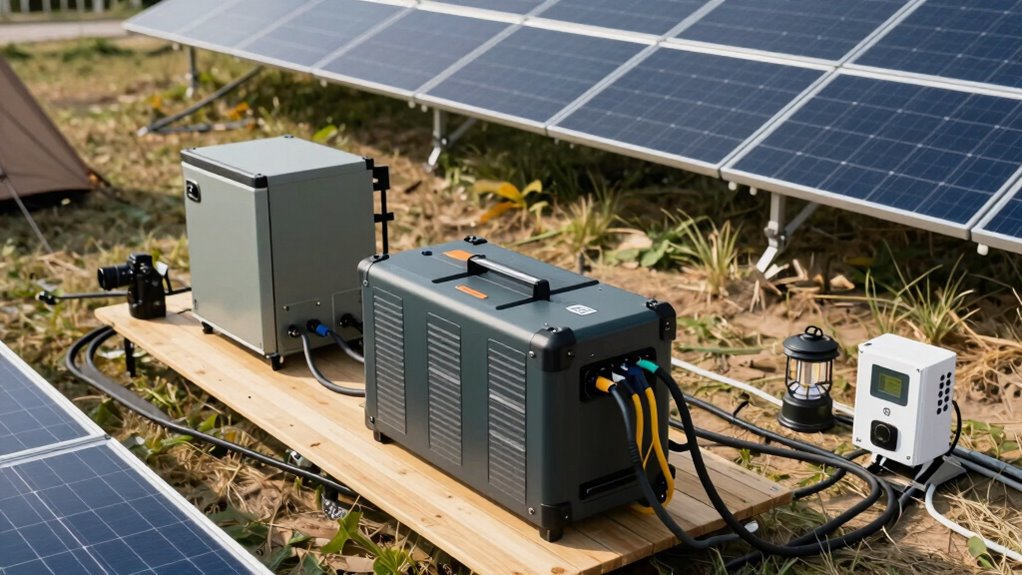
Designing an efficient camp power layout is essential for a smooth and enjoyable outdoor experience. When planning your setup, you want to ensure that each component—from batteries to appliances—is optimally positioned to maximize safety, performance, and convenience. A good starting point is understanding how to arrange your batteries, fridges, and loads to streamline power flow and minimize issues. Proper placement of solar panels is also crucial, as their position impacts both energy collection and wiring safety. You should position your solar panels where they receive the most sunlight, ideally on a roof or an open space free from shade, and keep the wiring routes clear and protected. Securely mounting the panels and using weather-resistant wiring will prevent damage and potential hazards. Avoid running wires across walkways or through areas exposed to the elements without proper insulation or protection, as this can lead to shorts or fire risks. Additionally, ensuring proper cable management helps in maintaining an organized and safe setup.
When it comes to batteries, you want to place them in a well-ventilated, cool, and dry location, away from direct sunlight, heat sources, or moisture that could affect performance or safety. Positioning batteries close to your loads reduces the length of wiring needed, which minimizes voltage drops and wiring losses. Ensuring the batteries’ placement is optimal can significantly improve system efficiency and safety. Proper ventilation of your battery area is also essential to prevent the buildup of potentially hazardous gases. You can also consider battery monitoring systems to keep track of their health and performance over time. Ensure the battery terminals are easily accessible for maintenance and that they’re connected with appropriately rated cables, respecting polarity to prevent accidental short circuits. When wiring your setup, it’s vital to follow wiring safety principles—using correct gauge wires, secure connections, and proper fusing or circuit breakers. These measures protect your system from overloads and short circuits, reducing the risk of electrical fires or damage. Proper wiring safety principles are fundamental to a reliable and safe system.
Your fridge and other heavy loads should be positioned close to your batteries to keep wiring runs short and efficient. This proximity not only helps with wiring safety but also ensures that your power supply remains stable and reliable. Make sure your loads are evenly distributed across your system to prevent overloads and maintain balance. Use dedicated circuits for high-power appliances to avoid overloading your wiring or fuses. When wiring, double-check all connections, tighten terminals securely, and keep wiring neat and organized. Proper cable management prevents accidental disconnections and makes troubleshooting easier if problems arise. Additionally, consider load distribution to optimize system performance and longevity. Proper planning and placement will help extend the lifespan of your electrical components and improve overall system reliability.
12V deep cycle battery for camping
As an affiliate, we earn on qualifying purchases.
As an affiliate, we earn on qualifying purchases.
Frequently Asked Questions
How Do Temperature Variations Affect Battery Performance?
Temperature variations can profoundly influence your battery performance. When it gets too hot or cold, it affects the battery’s efficiency and lifespan. To prevent this, you should focus on proper battery cooling and temperature regulation. Keeping your batteries within a suitable temperature range ensures they operate smoothly, last longer, and maintain reliable power. Proper placement for cooling and insulation is essential in managing these temperature fluctuations effectively.
What Safety Precautions Are Needed for Wiring in Camp Setups?
Safety first, or you’re playing with fire, literally. You should always use proper grounding techniques to prevent electrical shocks and short circuits. Make sure all wiring is insulated and secured, and avoid overloading circuits. Keep a fire extinguisher nearby and regularly inspect wiring for signs of wear. Follow manufacturer instructions and local codes. When in doubt, consult a professional to avoid risks—your safety’s worth every effort.
Can Solar Panels Be Integrated Into the Power Layout?
Yes, you can integrate solar panels into your camp power layout. Focus on ideal solar panel placement—preferably on a south-facing surface free from shade—to maximize sunlight exposure. When wiring panels, consider proper panel wiring considerations, such as using the right gauge wire and ensuring secure connections to prevent voltage drops. Incorporate a charge controller to protect your batteries and guarantee efficient energy transfer from your solar setup.
How Do I Prevent Power Surges in My Camp System?
Imagine your camp power system as a delicate dance, where one misstep causes chaos. To prevent power surges, install surge suppressors and guarantee proper circuit protection. These act like safety nets, catching spikes before they damage your gear. Regularly check your wiring and use quality fuses. By doing so, you keep your system steady, protecting your batteries, fridges, and loads from sudden voltage jolts that could ruin your adventure.
What Is the Ideal Battery Capacity for Extended Trips?
For extended trips, you should aim for a battery capacity that balances your energy needs and guarantees longevity. Generally, a 100-200Ah deep-cycle battery works well, providing ample power without sacrificing battery lifespan. Use reliable charging methods like solar panels or a quality inverter charger to keep your batteries topped off and healthy. This approach ensures you have enough power while prolonging your batteries’ life, keeping you energized throughout your adventure.
As an affiliate, we earn on qualifying purchases.
Conclusion
Now that you know where to place your batteries, fridges, and loads, you’re all set to create the perfect camp power layout. Think of it like designing your own personal Batcave—efficient, organized, and ready for action. Just don’t forget to keep your circuits as tidy as a well-organized 90s floppy disk collection. With this setup, you’ll be powering up like a tech-savvy pioneer, making your camping trip as smooth as a dial-up internet connection—fast and reliable.
As an affiliate, we earn on qualifying purchases.
circuit breaker fuse for RV electrical system
As an affiliate, we earn on qualifying purchases.
As an affiliate, we earn on qualifying purchases.
Halloween Picks
halloween
As an affiliate, we earn on qualifying purchases.