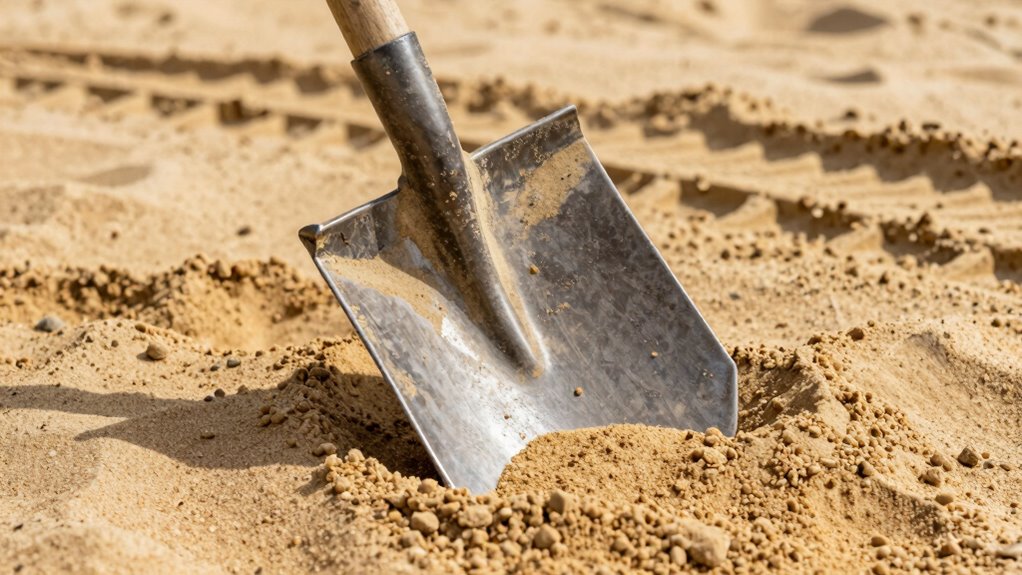

To beat spinning tires in sand, use your shovel to build ramps and clear a path in front of your tires. Deflate your tires to 12-15 PSI for better traction and remove loose sand or debris. Create gradual, stable ramps by shaping and compacting sand, and leverage natural terrain features like inclines or ridges. Combining these techniques with strategic vehicle prep can considerably improve your chances of freeing your vehicle. Stick around to discover expert tips that make recovery easier.
Key Takeaways
- Use a narrow, long-handled shovel to quickly remove sand from around tires, creating paths or ramps.
- Build stable, gradual sand ramps in front of tires to facilitate easier vehicle ascent out of soft spots.
- Deflate tires to 12-15 PSI to increase traction and reduce deep digging.
- Leverage natural terrain features like inclines or ridges to form ramps and minimize digging effort.
- Clear debris and level terrain in front of tires to improve grip and prevent further bogging.

Off-Road Traction Boards with Jack Base, Heavy-Duty Recovery Tracks for 4x4, Truck, Jeep, SUV,Ideal Offroad Accessories for Mud, Sand & Snow (Large)
[Enhanced Double-Sided Traction Design] Both sides of the boards feature a diamond array construction and cross-shaped teeth to...
As an affiliate, we earn on qualifying purchases.
Essential Shovel Tools and Techniques for Desert Recovery
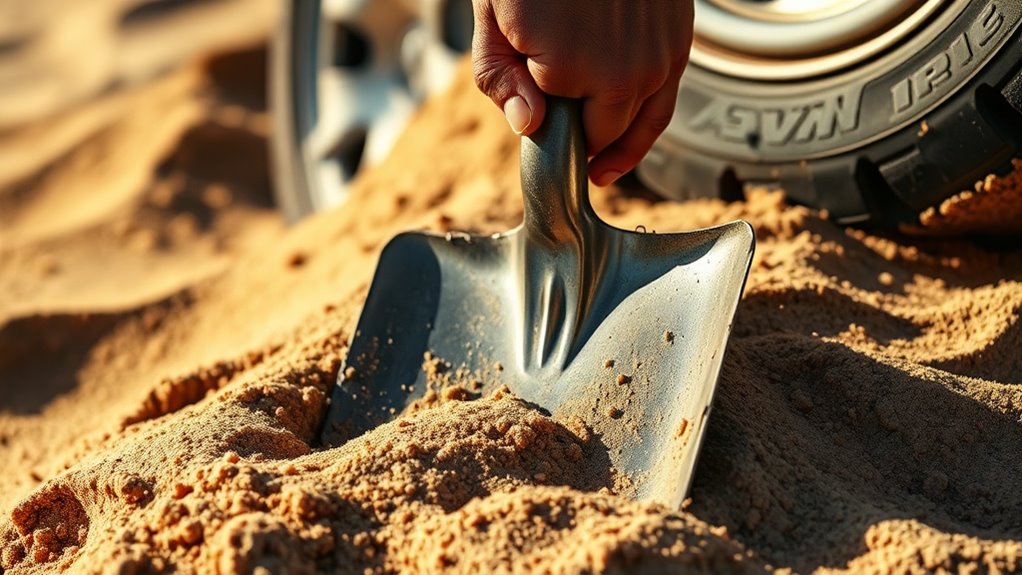
In desert recovery, having the right shovel tools and techniques can make all the difference. A long-handled shovel is your best companion, letting you reach under the vehicle easily. Choose a narrow-bladed shovel to extract sand efficiently and minimize effort. A T or D handle gives you more power when punching into tough substrate. Opt for a mid-length design that balances reach and storage, making it easier to maneuver in tight spaces. Use your shovel to clear a path in front of your tires, creating ramps to lift the vehicle. Dig sideways like a canoe paddle to remove sand quickly. Focus on the lowest points, such as shock mounts, to gain clearance. Understanding proper sand removal techniques is crucial for effective recovery. Mastering these tools and techniques speeds up recovery and reduces physical strain in the desert. Proper technique and energy-efficient equipment can further enhance your recovery efforts. Additionally, practicing these recovery skills before venturing into challenging terrain can save time and effort when it matters most. Incorporating knowledge about proper maintenance of your tools ensures they remain effective when needed. Being aware of projector technology can also help in choosing the right equipment for detailed planning or review of recovery procedures.

OULEME Off-Road Traction Boards with Jack Lift Base, Recovery Board for Sand, Mud, and Snow Tracks - Tire Traction Pads for RV Truck Jeep SUV (BLACK)
Dimensions: The size of one traction board L 41.7 inches (106 cm), W 11.8 inches (30 cm), H...
As an affiliate, we earn on qualifying purchases.
Preparing Your Vehicle: Tire Pressure and Stability Tips

Adjusting your tire pressure is essential before attempting recovery in sandy conditions. Lowering your pressure increases your tire’s footprint, boosting traction and reducing the chance of getting stuck deeper. Start by deflating to around 12-15 PSI, which is enough to make a noticeable difference without risking bead roll-off; for 16-inch rims, go down to about 16 PSI. If you’re in a real bind, halving your normal pressure can help, but don’t go too low to avoid losing the tire from the rim. Once you’re free, reinflate your tires to normal pressure using an air compressor. Maintaining proper tire pressure not only improves your chances of getting unstuck but also helps keep your vehicle stable, preventing unnecessary slipping or tilting during recovery. Vetted – wave and wind Proper tire pressure also plays a role in minimizing the risk of tire damage caused by wave impacts or wind-related stresses in sandy environments. Additionally, understanding cloud service vulnerabilities can help you prepare for unexpected outages that might occur during recovery scenarios. Proper tire pressure also contributes to optimal vehicle stability in loose terrain, making your recovery efforts safer and more effective.

BUNKER INDUST Off-Road Traction Boards with Jack Base,Pair Recovery Track 4X4 Jeep Truck Emergency Tire Traction Mat with Bag -Sand, Mud, Snow Tracks Black Traction Pad (Gen 7th)
Jack Base Function: Designed with unique jack base in the center of the traction board is for emergency...
As an affiliate, we earn on qualifying purchases.
Strategic Sand Removal to Maximize Traction
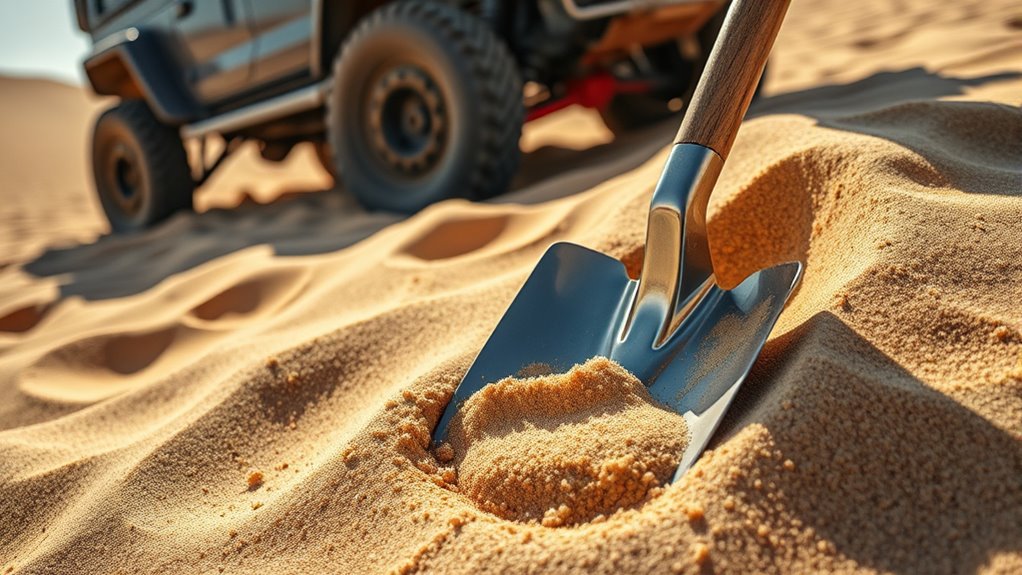
Start by clearing a path in front of your tires to reduce resistance and make traction easier to regain. Building sand ramps under the wheels can lift your vehicle and improve grip with less effort. Focus on targeted digging at low points, like shock mounts, to create the most effective surface for traction. Incorporating smart appliances and connected tools can enhance your efficiency during recovery efforts, making the process faster and more precise. Additionally, understanding the principles of home maintenance schedules can help you prepare your vehicle and tools for challenging conditions, ensuring you’re always ready to respond effectively. Implementing connected fitness tools can also streamline your recovery process by providing real-time feedback and guidance, similar to optimizing a workout routine.
Clear Path Ahead
Creating a clear path ahead is essential for maximizing traction and minimizing effort during recovery. Start by removing loose sand directly in front of your tires. Use your shovel to clear debris, creating a smooth surface. Dig out low spots or ruts that could cause your tires to bog down. Build a shallow ramp if needed, but focus on removing obstacles that block forward movement. This reduces resistance and helps your vehicle roll out more easily. To assist your understanding, here’s a quick guide:
| Step | Purpose |
|---|---|
| Clear debris | Prevents tire bogging |
| Level uneven terrain | Ensures smooth contact |
| Remove loose sand | Increases traction |
| Build shallow ramps | Facilitates easier movement |
Focusing on creating a direct, obstacle-free path can significantly improve your recovery success rate. Incorporating sound vibrations into your recovery techniques can help stabilize the soil and improve traction under certain conditions. Additionally, understanding soil stabilization methods can further enhance your recovery efforts. Properly managing the odor of the ground can also be an indicator of soil moisture levels, which affects traction. Recognizing the horsepower of electric dirt bikes can help you better assess the power needed for recovery equipment if using electric tools or vehicles. Being aware of weather conditions can also guide your approach to soil management and traction improvement.
Build Sand Ramps
Build sand ramps in front of your tires to markedly improve traction and reduce the need for deep digging. Creating sand ramps in front of your tires can markedly improve traction and reduce the need for deep digging. Use a narrow-bladed shovel to carve out a gradual incline, starting a few feet ahead of each wheel. Focus on shaping a smooth, stable slope that supports your vehicle’s weight. Dig from the lowest points around the tires, such as shock mounts, to create a firm surface. Pack the sand tightly to prevent collapse. These ramps help your tires gain grip and lift the vehicle out of the soft terrain more efficiently. By strategically building ramps, you minimize effort, speed up recovery, and avoid unnecessary digging or tire spin. Proper technique in sand recovery can make all the difference in getting unstuck quickly and safely.
Minimize Digging Effort
Building sand ramps reduces the need for extensive digging and speeds up your recovery process. To minimize effort, focus on strategic sand removal. Here’s how:
- Clear a path in front of each tire to reduce resistance and improve traction.
- Dig small ramps directly in front of the wheels to lift the vehicle, easing movement.
- Sweep sand sideways with a canoe paddle motion to remove it quickly and efficiently.
- Target the lowest points, like shock mounts, to create enough clearance without overexerting yourself.
- Using recovery techniques such as strategic sand removal can significantly enhance your efficiency and reduce physical strain. Incorporating proper equipment like shovels and paddles designed for off-road recovery can further streamline the process.

BUNKER INDUST Off-Road Traction Boards with Jack Base,Pair Recovery Track 4X4 Jeep Truck Emergency Tire Traction Mat with Bag -Sand, Mud, Snow Tracks Red Traction Pad (Gen 7th)
Jack Base Function: Designed with unique jack base in the center of the traction board is for emergency...
As an affiliate, we earn on qualifying purchases.
Creating Effective Ramps and Using the Environment
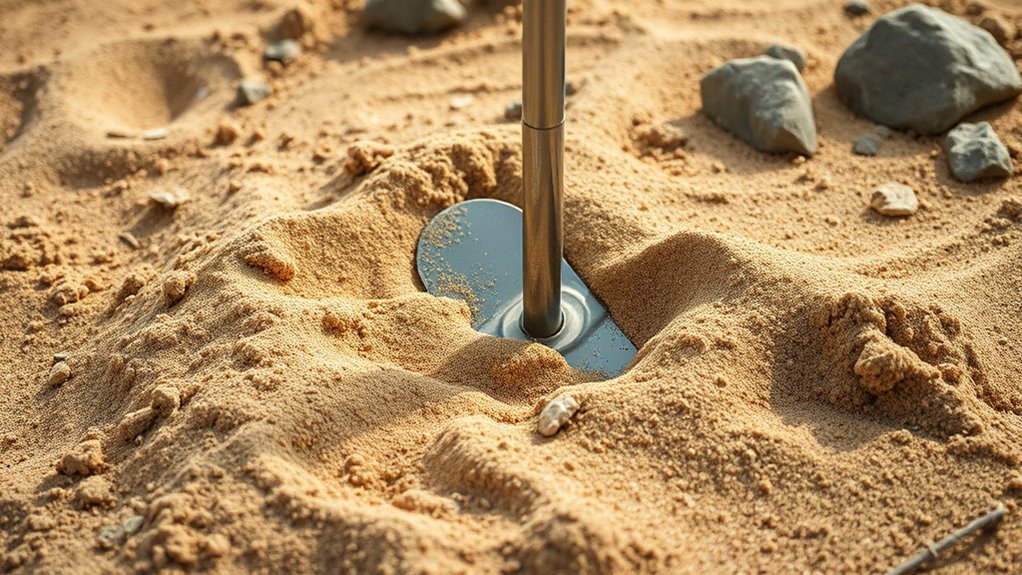
Start by scanning your surroundings for natural inclines or features you can use to your advantage. Shape sand ramps carefully to make sure they’re sturdy and provide enough clearance for your tires. By leveraging these environmental elements, you can create effective pathways that make recovery easier and reduce the need for extensive digging. Additionally, understanding proper hydraulics can help you plan your approach more efficiently. Incorporating smart home automation can also assist in monitoring terrain and guiding your recovery efforts remotely. Recognizing terrain assessment techniques can further improve your ability to adapt and select the best recovery strategy, especially when combined with outdoor environment awareness. Utilizing environmental cues can enhance your overall recovery strategy by helping you anticipate potential obstacles before they become problematic.
Choosing Natural Inclines
Leveraging natural inclines can considerably ease your recovery process by providing ready-made ramps and support from the environment. To spot the best ones, consider these steps:
- Scan the terrain for gentle slopes that lead toward firm ground, avoiding steep or loose surfaces.
- Look for existing ridges or embankments that can act as natural ramps, saving you effort.
- Identify nearby hills or mounds that can support your vehicle’s weight and help you gain traction.
- Ensure the incline is stable and not prone to shifting or collapsing under your vehicle’s weight.
Using these natural features reduces the need for extensive digging or construction, speeds up recovery, and minimizes tire spin. Always double-check stability before relying on any incline.
Shaping Sand Ramps
Creating effective sand ramps involves shaping the substrate to facilitate vehicle ascent while minimizing effort. You want to build gradual, stable slopes that support your tires and reduce slipping. Use your shovel to mound sand in front of the tire, forming a ramp that matches your vehicle’s height and weight. Focus on creating a smooth incline, avoiding sharp edges that could cause wheel spin. Properly shaped ramps distribute weight evenly, making it easier to climb out of soft spots. Here’s a quick guide:
| Ramp Type | Best Use | Tips |
|---|---|---|
| Inclined | Climbing out | Make it broad and gentle |
| Step | Gaining height | Compact sand for stability |
| Transition | Connecting surfaces | Smooth, tapered edges |
| Support | Under tires | Use surrounding terrain for reinforcement |
Leveraging Environmental Features
Utilizing natural environmental features can considerably enhance your sand recovery efforts. By working with the terrain, you can create effective ramps and leverage surroundings to reduce digging and tire spin. Here’s how:
- Identify natural slopes or ridges that can be used as ramps, saving time and effort.
- Use rocks or compacted areas to build up a stable incline for tires to grip.
- Position your vehicle near natural features like fallen logs or sturdy debris to serve as anchors or leverage points.
- Clear loose sand around these features to maximize their effectiveness and prevent further sinking.
Combining Shoveling With Traction Aids and Anchors
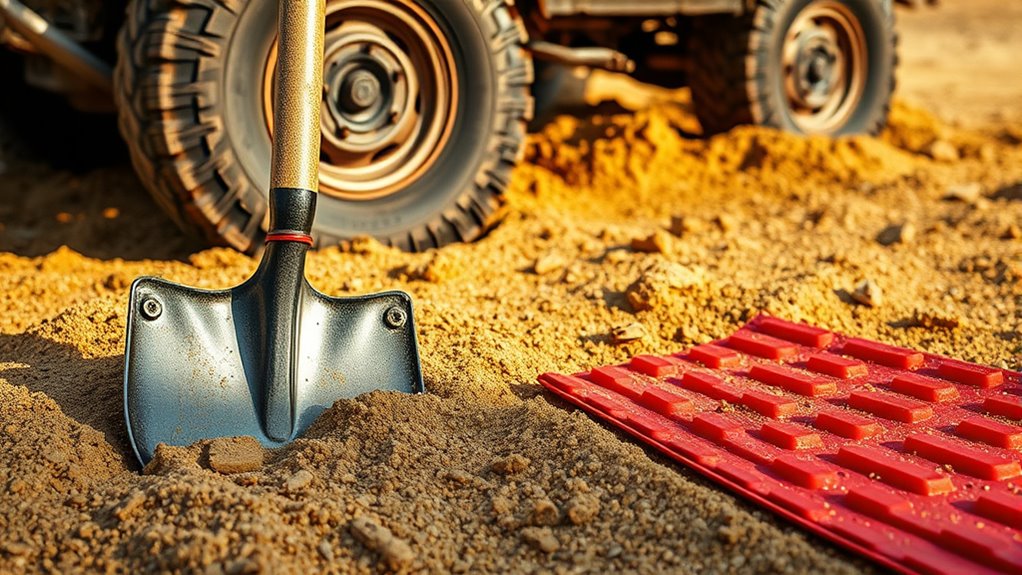
Combining shoveling with traction aids and anchors considerably enhances your recovery efforts by reducing the amount of digging needed and increasing stability. By creating ramps or clearing a path with your shovel, you set a solid foundation for traction devices like ramps or MaxTrax. Burying a spare tire or using an anchor, such as a sand-embedded spare, provides a secure point to attach kinetic straps or winches. These anchors distribute the load, making recovery safer and more efficient. When you combine shoveling with these aids, you minimize deep digging, conserve energy, and improve traction. This integrated approach guarantees your vehicle gains the grip it needs without excessive effort, turning a frustrating stuck into a manageable recovery.
Step-by-Step Recovery Process to Minimize Effort
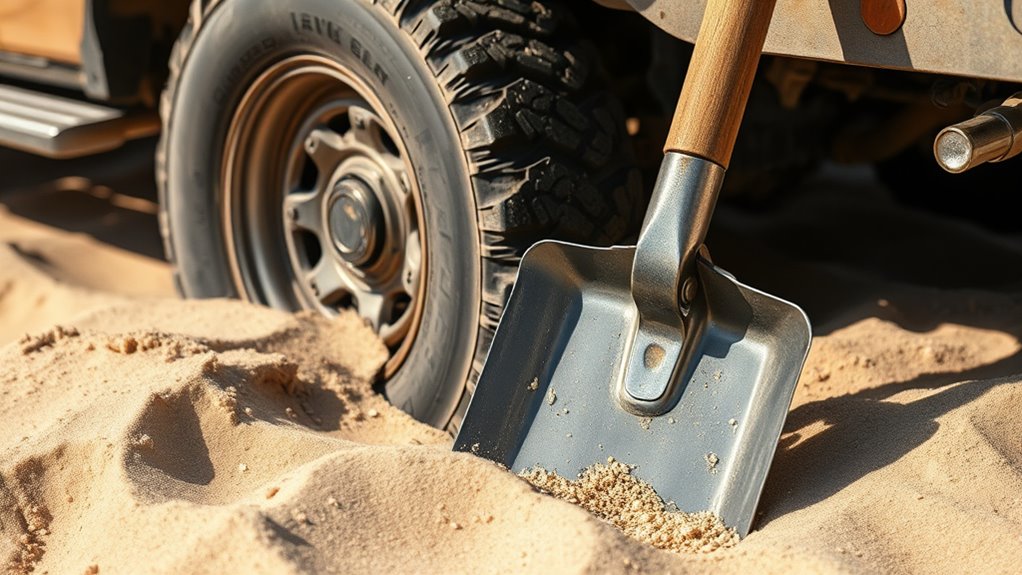
To minimize effort during vehicle recovery, follow a systematic step-by-step process that targets the root of the problem and reduces unnecessary digging. First, assess your situation and clear a path in front of all tires. Next, create ramps by digging in front of each wheel to lift the vehicle. Then, use your shovel to sweep sand sideways, quickly removing it from around tires. Finally, focus on the lowest points, like shock mounts, to maximize clearance.
- Clear debris and prepare the area in front of tires.
- Dig ramps to elevate wheels and undercarriage.
- Sweep sand sideways for fast removal.
- Target low points for maximum clearance.
Following these steps conserves effort and accelerates recovery.
Frequently Asked Questions
What’s the Ideal Shovel Length for Desert Sand Recovery?
You should choose a long-handled shovel, ideally around 48 to 54 inches, for desert sand recovery. This length allows you to reach under your vehicle comfortably and dig efficiently without bending too much. A longer handle also helps you generate more leverage, making shoveling easier and quicker. The narrow blade design minimizes effort, so combine that with the long handle for best sand removal and ramp creation in challenging desert conditions.
How Do I Prevent My Vehicle From Sinking Again After Recovery?
Did you know that deflating your tires to 12-15 PSI can double your vehicle’s footprint? To prevent sinking again, first, create firm ramps and clear the sand around your tires. Use traction aids like MaxTrax or bury a spare tire to anchor your vehicle. After recovery, reinflate your tires gradually. Keep wheels straight and avoid sudden throttle to maintain stability and prevent sinking anew.
Can Tire Deflation Damage My Rims or Tires?
Tire deflation won’t damage your rims or tires if you do it properly. You should gradually reduce pressure, starting from the recommended PSI, and avoid going below the minimum specified for your tire. Use a reliable air compressor to reinflate afterward. Just make certain you’re cautious with the pressure reduction, as excessive deflation can cause bead damage or rim contact, but standard low-pressure techniques are safe when done correctly.
What’s the Safest Way to Use a Winch With Shoveling?
Using a winch safely alongside shoveling is vital, especially since winching accounts for over 60% of recovery accidents. Always make sure your vehicle is securely anchored with proper attachments, like a recovery strap or tree saver. Clear the area of bystanders, double-check all connections, and operate the winch slowly, watching for any strain. Shovel first to create solid ramps and reduce load on the winch, preventing potential equipment failure or injury.
How Do I Identify the Best Spot for an Anchor Point?
You identify the best anchor point by looking for a sturdy, immovable object like a large rock, a solid tree root, or a heavy vehicle part. Make sure it’s directly in line with your recovery direction for maximum pull efficiency. Check its stability—if it doesn’t shift or move when pulled, it’s ideal. Avoid loose or unstable objects that could break or cause accidents during recovery.
Conclusion
Mastering the shovel trick isn’t just a skill; it’s your ultimate weapon against the relentless desert sands. With the right tools, preparation, and strategic techniques, you can turn a spinning nightmare into a victory dance. Think of it as wielding a magic wand against an unstoppable force—your persistence and ingenuity will outshine even the most stubborn terrain. Keep practicing, stay patient, and soon you’ll conquer the desert’s fiercest tricks with ease.