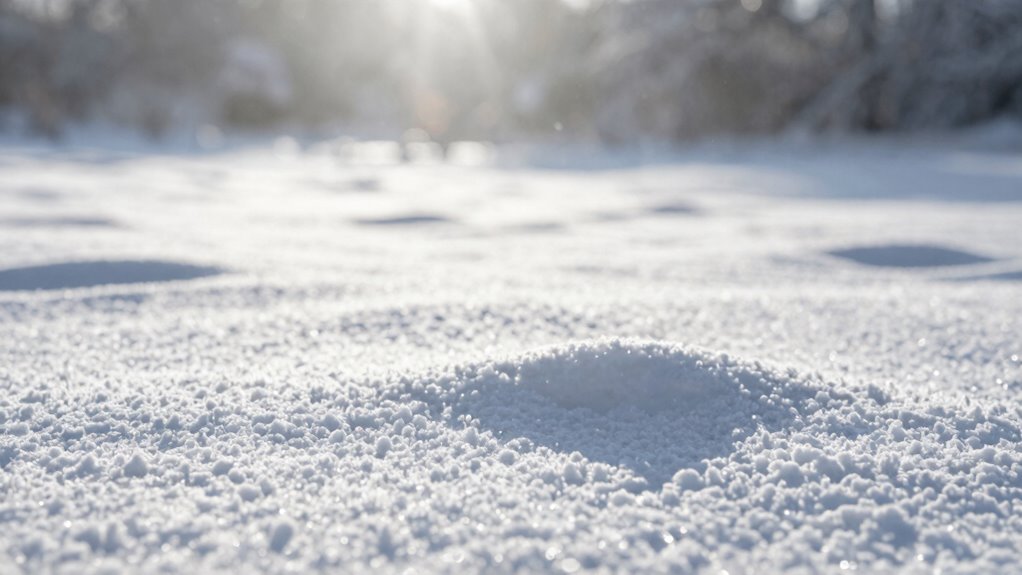

To reduce backscatter in dust and snow, you should control your lighting carefully. Use diffused, soft lighting to spread light evenly and reduce harsh reflections. Position your light source at an angle, avoiding direct aim at particles, and consider bouncing light off surfaces for softer effects. Adjusting color temperature to warmer tones can also minimize glare. Mastering these techniques will help you capture clearer, more detailed images, and you’ll discover even more effective strategies as you explore further.

Get business pricing on garage and car supplies
- Business-only prices and quantity discounts
- Tax-exempt purchasing
- Multiple users, one account, clear invoices
Key Takeaways
- Use diffused lighting, such as softboxes or bouncing off surfaces, to evenly spread light and minimize direct reflections from dust and snow.
- Adjust the color temperature towards warmer tones to soften scenes and reduce harsh backscatter caused by particles.
- Position light sources at angles that avoid direct aiming at dust or snow particles, decreasing reflections into the camera.
- Employ side or backlighting to enhance textures without emphasizing backscatter effects.
- Combine diffusion techniques with strategic light placement to significantly improve scene clarity and reduce haze.
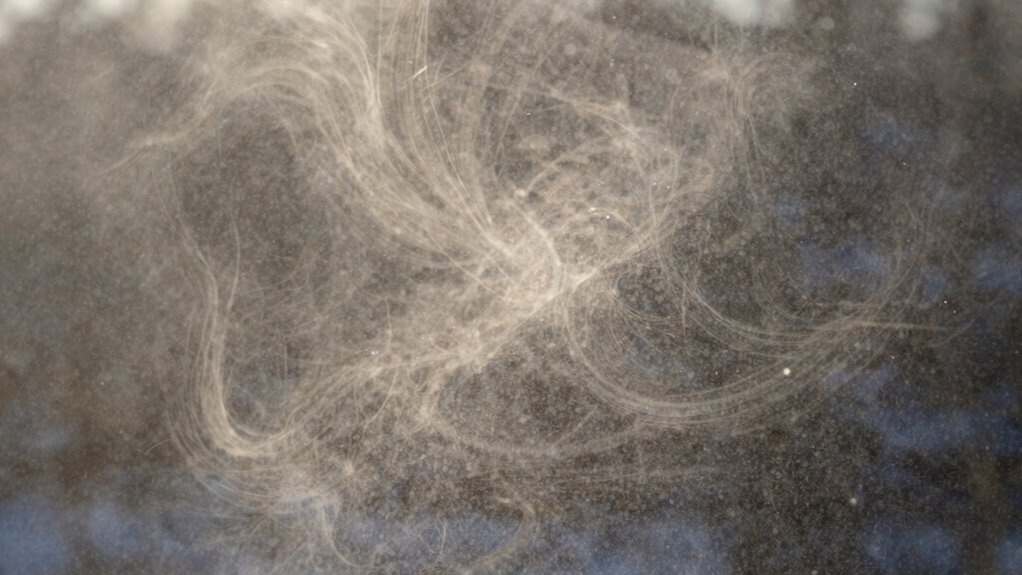
Have you ever noticed how the interplay of light transforms a scene filled with dust and snow? The way light interacts with tiny particles can create a mesmerizing effect, but it also presents challenges, especially when it comes to reducing backscatter. Backscatter occurs when the particles—dust or snow—reflect the light directly back into your camera lens, resulting in unwanted glare or haze that diminishes image clarity. To combat this, understanding how to manipulate color temperature and light diffusion becomes essential.
Backscatter from dust and snow can obscure your shot; control light temperature and diffusion for clearer images.
Color temperature plays a vital role in controlling how backscatter appears in your images. Dust and snow tend to scatter light differently depending on its warmth or coolness. Warm light, with a lower color temperature (around 3000K), tends to soften the scene, reducing harsh reflections and making backscatter less prominent. Conversely, cooler light—above 5000K—can amplify the visibility of particles, increasing backscatter and creating a more washed-out look. By adjusting your light source or camera settings to favor warmer tones, you can minimize the harsh reflections caused by snow and dust particles. This is especially useful during sunrise or sunset, when the ambient light naturally has a warmer hue.
Light diffusion is another critical aspect to consider. When light is diffused, it spreads out more evenly across the scene, reducing the intensity of direct reflections that cause backscatter. You can achieve better diffusion by using filters or diffusers on your light sources. For example, a softbox or a translucent material placed in front of your light source disperses the light, creating a gentle, even illumination that diminishes the sharpness of particles’ reflections. This not only helps in reducing backscatter but also enhances the overall image quality by providing softer shadows and more balanced exposure. Additionally, light scattering plays a crucial role in how particles reflect light, and understanding this can further help you optimize your lighting setup. Using diffused lighting techniques, such as bouncing light off surfaces, can also contribute to reducing backscatter effects. Recognizing the importance of light directionality can also assist in minimizing reflections, as adjusting the angle of your light source relative to the particles can significantly impact the amount of backscatter captured.
Positioning your light source correctly is also key. Instead of aiming your light directly at the particles, angle it so that the particles aren’t directly in the line of sight. This reduces the likelihood of backscatter reflecting straight back into your lens. Additionally, using side lighting or backlighting strategically can help highlight the texture of snow and dust without accentuating the particles’ reflections. Employing light positioning methods, like adjusting the angle or distance of your light source, can significantly improve your results.
In essence, controlling color temperature and employing effective light diffusion are your best tools for reducing backscatter in scenes filled with dust and snow. They allow you to manipulate how light interacts with tiny particles, helping you produce clearer, more detailed images. By adjusting these factors thoughtfully, you can turn a potentially hazy, obscured scene into a crisp, striking photograph that captures the true beauty of dust and snow.
softbox lighting kit for photography
As an affiliate, we earn on qualifying purchases.
As an affiliate, we earn on qualifying purchases.
Frequently Asked Questions
How Does Backscatter Impact Overall Image Quality?
Backscatter profoundly impacts your image quality by creating unwanted haze and reducing clarity. Dust particles in the air scatter light, causing a foggy appearance, while snow reflection amplifies this effect, making the image appear washed out. You might notice reduced contrast and sharpness, which diminishes overall detail. To improve your photos, control lighting and minimize dust and snow reflection, ensuring cleaner, crisper images with better contrast.
Can Specific Camera Settings Minimize Backscatter Effects?
You can minimize backscatter by fine-tuning your camera settings. Use a narrow aperture to increase depth of field and reduce haze, contrasting sharply with the softness of dust and snow. Adjust the exposure to prevent overexposure, which amplifies backscatter effects. Also, focus carefully to make certain your main subject stays crisp, helping your camera settings work together to cut down on unwanted glare and improve overall image clarity.
Are There Environmental Factors Influencing Backscatter Intensity?
Yes, environmental factors like air quality and atmospheric conditions considerably influence backscatter intensity. Poor air quality, with more dust or snow particles, increases backscatter, making it more prominent in your images. Humid or turbulent atmospheric conditions can also scatter light unpredictably, intensifying backscatter effects. To reduce this, choose shooting times when air quality is better, and consider weather conditions to minimize atmospheric disturbances that contribute to backscatter in your photos.
What Post-Processing Techniques Help Reduce Backscatter Visibility?
You can reduce backscatter visibility through post-processing by applying color correction to balance the lighting and minimize glare effects. Additionally, use noise reduction techniques to smooth out grainy areas caused by backscatter, making the image clearer. Combining these methods helps improve overall image quality, ensuring the dust and snow are captured without distracting backscatter artifacts. Focus on subtle adjustments to preserve natural details while enhancing clarity.
How Do Different Lighting Angles Affect Dust and Snow Backscatter?
You can reduce dust and snow backscatter by experimenting with angle variation and shadow interplay. Changing your lighting angle minimizes direct reflections, helping to limit backscatter visibility. Positioning your light source at an angle rather than straight on creates shadows that contrast with the particles, further reducing their prominence. By carefully adjusting these elements, you improve clarity, making dust and snow less distracting and enhancing overall image quality.
As an affiliate, we earn on qualifying purchases.
Conclusion
So, next time you’re battling dust or snow with your lighting setup, remember: the best way to reduce backscatter might just be to embrace the chaos. After all, what’s more ironic than trying to control nature’s unpredictable light, only to find that a little disorder adds that perfect touch? Sometimes, the wisest move is to work with the environment, not against it. In photography, as in life, a little dust or snow might just be your secret weapon.
bouncing light reflector for photography
As an affiliate, we earn on qualifying purchases.
As an affiliate, we earn on qualifying purchases.
color temperature adjustable LED light
As an affiliate, we earn on qualifying purchases.
As an affiliate, we earn on qualifying purchases.
Evergreen bestsellers Picks
bestsellers
As an affiliate, we earn on qualifying purchases.