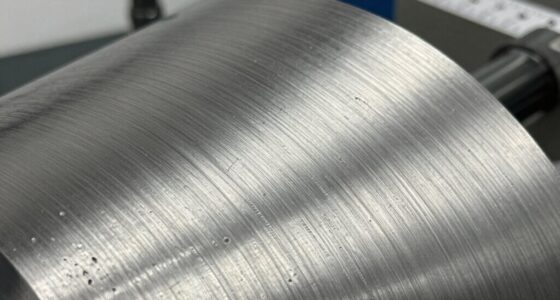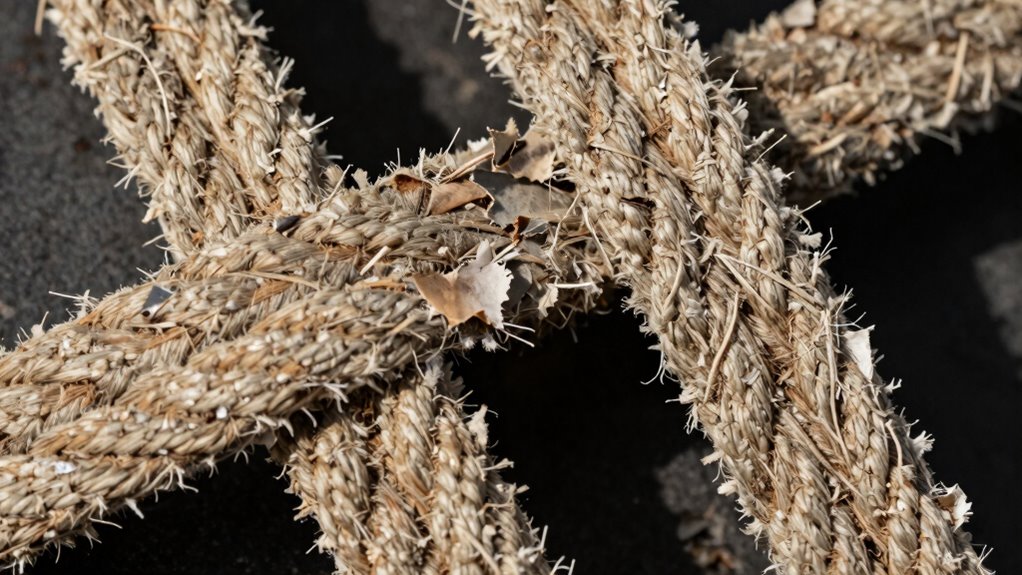

When inspecting straps and ropes, look for signs like fraying, cuts, or nicks that penetrate the fiber core, which weaken their strength. Check knots for slipping or loosening since they can fail under load. Watch for color fading, wear indicators, or surface damage like streaks or brittleness, all signaling deterioration. Any broken stitching or deformation suggests it’s time to replace. Continuing with damaged gear increases safety risks—so stay vigilant to keep your equipment reliable.
Key Takeaways
- Look for fraying, cuts, or nicks that penetrate the fiber, indicating structural weakness.
- Check for softening, deformation, or discoloration near knots signaling material deterioration.
- Identify worn or faded color-coded patches or threads as signs of significant wear.
- Examine stitches for broken or loose threads that compromise strap or rope integrity.
- Remove gear immediately if knots slip, surfaces are excessively worn, or damage patterns are evident.
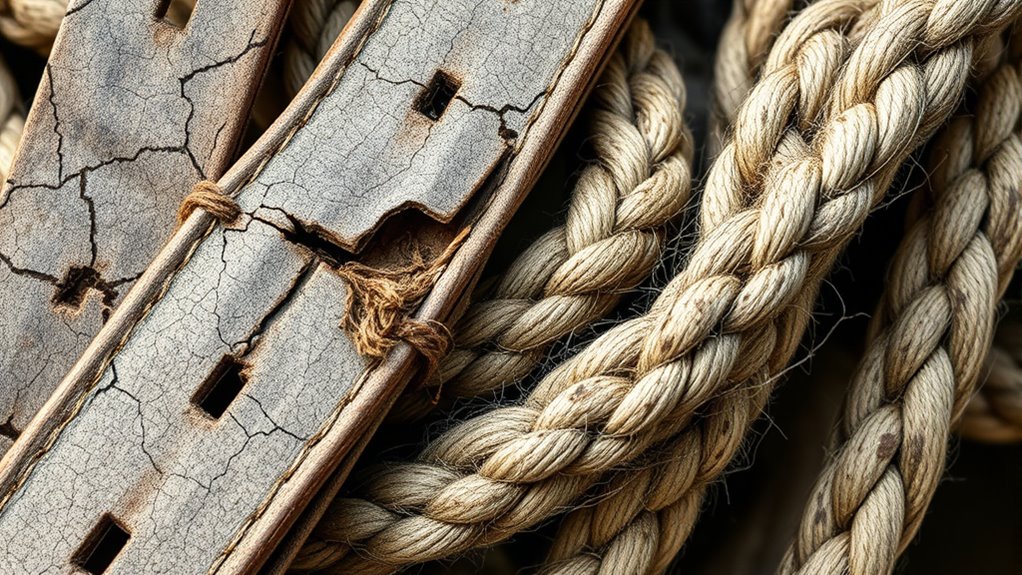
Have you ever considered how critical it is to regularly inspect your straps and ropes? These components are essential for safety, and neglecting their condition can lead to serious accidents. One of the first things to check is knot integrity. Over time, knots can loosen, slip, or develop stress points that compromise their holding power. A knot that once held securely may become less reliable if it’s been subjected to repeated loads or improper tying techniques. Always ensure knots are properly tied and tight, with no signs of slipping or unraveling. If you notice any softening or deformation near the knot area, it’s time to retire that strap or rope.
Inspect your knots regularly; loose or deformed knots compromise safety and require immediate replacement.
Wear indicators are invaluable tools for gauging the condition of your gear. Many modern straps and ropes come with built-in wear indicators—small, often color-coded patches or thread patterns that change appearance as the material degrades. When these indicators show signs of significant wear, fading, or damage, it’s a clear signal that the item has reached its limit. Don’t ignore these visual cues; they’re designed to alert you before failure occurs. Relying solely on your memory or superficial inspection can be risky, so always look for these wear indicators during your routine checks.
Beyond knots and wear indicators, pay close attention to fraying, cuts, or abrasions on the material surface. Fraying signifies that fibers are breaking down, which weakens the overall strength of the strap or rope. Cuts or nicks, especially those that penetrate the core, are even more dangerous—they can cause sudden failure under load. Also, examine the stitching if the item has sewn components; broken or loose stitches reduce the integrity of the entire piece. When you spot any of these damage patterns, it’s best to retire the gear immediately. Continuing to use compromised straps or ropes increases the risk of unexpected failure during critical moments.
Temperature exposure, chemical contact, and prolonged UV radiation can accelerate wear and degrade material strength. Be aware of storage conditions and environmental factors that may affect your equipment’s lifespan. If you notice discoloration, stiffness, or brittleness, these are signs of material deterioration. Regular inspections, especially before use, help catch these issues early. Remember, even minor damage patterns can escalate quickly under load, so err on the side of caution. Your safety depends on your vigilance—by systematically checking for knot integrity, wear indicators, and other damage signs, you ensure your gear remains reliable and safe for every use.
Frequently Asked Questions
How Often Should Straps and Ropes Be Inspected for Safety?
You should inspect your straps and ropes before each use, especially if they’re used frequently, to guarantee safety. Follow a regular inspection schedule, such as weekly or monthly, depending on usage frequency and environment. Look for signs of wear, fraying, cuts, or abrasion. Regular inspections help catch damage early, preventing accidents. Always retire any strap or rope showing significant damage or wear patterns that compromise its strength or integrity.
Can Repairs Extend the Lifespan of Damaged Straps or Ropes?
Repairs can extend the lifespan of damaged straps or ropes, but only if you address material degradation early and use proper repair techniques. You should clean, inspect, and reinforce weak spots, ensuring the repair matches the original strength. However, avoid overestimating repairs; if damage is extensive, retire the gear. Proper maintenance and timely repairs help you maximize safety and durability, but knowing when to retire remains essential.
Are There Specific Signs of Internal Damage Not Visible on the Surface?
Yes, there are signs of internal damage you might not observe on the surface. Look for fiber fraying that extends into the core, which weakens the overall strength. Also, check for core corrosion, especially in metal components, as it compromises integrity even if the exterior looks fine. Regularly inspecting these internal indicators helps prevent accidents and ensures your straps and ropes stay safe to use.
What Are the Best Storage Practices to Prevent Damage?
Think of proper storage as giving your gear a safe harbor. You should store straps and ropes in a cool, dry place away from direct sunlight, ensuring they’re protected from UV rays. Use a breathable container or hang them loosely to prevent kinks and deformation. Proper storage helps maintain their strength and flexibility, so always prioritize UV protection and keep your gear sheltered from environmental elements for long-lasting durability.
How Do Environmental Factors Affect the Integrity of Straps and Ropes?
Environmental factors markedly impact your straps and ropes’ integrity. UV degradation from sun exposure weakens fibers over time, making them prone to failure. Moisture absorption from rain or humidity causes fibers to swell and deteriorate faster. To preserve their strength, store your gear in a cool, dry place, away from direct sunlight, and avoid prolonged exposure to moisture. Proper storage minimizes environmental damage and extends the lifespan of your equipment.
Conclusion
Remember, each frayed fiber and worn thread is a silent whisper from the rope, signaling it’s time to let go. Like a trusted friend reaching the end of their journey, damaged straps remind you that safety’s true strength lies in knowing when to retire what’s no longer reliable. Trust your eyes and instincts—they’re the guardians of your safety. When patterns of damage emerge, it’s not just wear; it’s a call to release what no longer serves you.