
If you lose service miles from any backcountry area, it’s essential to have multiple communication methods ready. Carry visual signals like mirrors or brightly colored panels and audible tools like whistles or air horns. Bring extra batteries, portable power banks, and solar chargers to keep devices running. Test all equipment beforehand and familiarize yourself with switching power sources quickly. Staying proactive with backups ensures you’re prepared if your primary devices fail—continue exploring to discover more tips for staying connected.
Key Takeaways
- Carry multiple signaling devices like mirrors, signal fires, and brightly colored panels to attract attention.
- Use audible signals such as whistles or air horns to alert rescuers over long distances.
- Bring extra batteries, rechargeable power banks, and solar chargers to ensure device operation.
- Test your communication gear beforehand and familiarize yourself with switching power sources quickly.
- Combine visual and audible signals proactively, and store spare power sources in insulated containers for cold conditions.
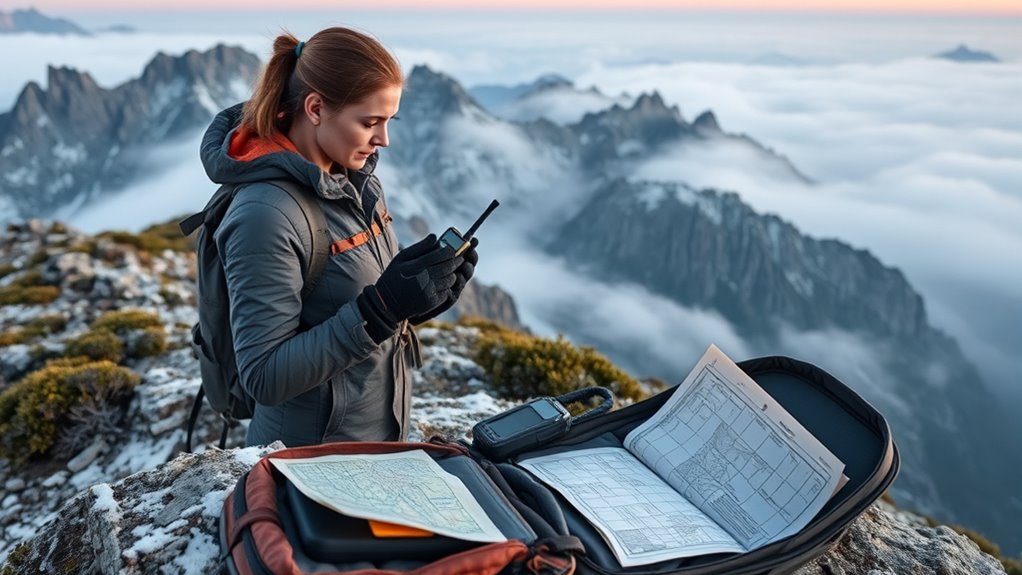
Have you ever experienced a communication breakdown during a critical moment? It’s a situation no one wants to face, especially when you’re miles away from help. In the backcountry, reliable communication isn’t just about convenience; it can be a matter of life and death. That’s why having a solid communication redundancy plan is essential. One key aspect is understanding emergency signaling techniques. If your radio or cell phone fails, you need other ways to attract attention. Visual signals like signaling mirrors, brightly colored panels, or signal fires can help alert rescuers to your location. Audible signals, such as whistles or air horns, can be effective over long distances. Combining these methods increases your chances of being noticed, especially in remote environments where traditional communication methods fall short. Additionally, understanding emergency communication techniques can significantly enhance your preparedness and response capabilities.
Another critical element is knowing your power source options. Devices used in the backcountry rely on batteries, rechargeable power banks, or even solar panels. Always carry extra batteries or portable power sources to keep your communication gear operational. Solar chargers can be a game-changer if you’re out for multiple days, offering a renewable power source when traditional batteries run out. Keep in mind that extreme cold can drain batteries faster, so plan accordingly by storing spare batteries in insulated containers. Having multiple power options ensures your devices stay charged when you need them most. It’s also wise to familiarize yourself with your gear’s power consumption so you can ration power during emergencies.
Pre-trip planning should include testing your equipment, understanding how long batteries last, and knowing how to switch between power sources quickly. Consider investing in multi-use devices, like radios that can run on both batteries and solar power. This flexibility can be vital if you’re cut off for an extended period. Remember, in a backcountry setting, your devices might be your only lifeline. Without a dependable power source, emergency signaling becomes nearly impossible, and your chances of rescue diminish. By preparing ahead of time with multiple power options and effective signaling techniques, you’re better equipped to handle communication failures. It’s about being proactive rather than reactive, ensuring that even if your primary device fails, others are ready to take its place. Staying prepared with these essentials can make all the difference when every second counts.
Frequently Asked Questions
What Emergency Communication Devices Are Most Reliable in Remote Areas?
You should rely on satellite phones and emergency beacons for the most reliable communication in remote areas. Satellite phones connect you directly to emergency services even without cell towers, ensuring continuous communication. Emergency beacons, like PLBs, transmit your location to rescue teams instantly. Carry both devices to maximize your safety, especially in emergency situations where traditional communication methods fail. Always test your equipment beforehand and familiarize yourself with their operation.
How Do I Choose the Best Backup Communication Method for My Trip?
Choosing the best backup communication method depends on evaluating signal strength and device compatibility. You need a device that works seamlessly with your primary system and offers reliable coverage in remote areas. Consider options like satellite phones, PLBs, or two-way radios, and test their effectiveness beforehand. Think of it as preparing your safety net—making sure your backup is ready to catch you if your main line of contact fails during those miles.
What Maintenance Is Required for Communication Equipment Before the Trip?
Before your trip, you should perform battery checks and inspect your antennas. Make certain batteries are fully charged or replaced, and carry spares. Check antennas for any damage, loose connections, or corrosion. Test your communication devices to confirm they turn on and function properly. This routine maintenance helps prevent failures in the field, keeping you connected when it matters most. Proper prep reduces risks and ensures reliable communication during your backcountry adventure.
How Can I Train My Group to Effectively Use Backup Communication Devices?
You should train your group through team drills and scenario practices to use backup communication devices effectively. Conduct regular exercises where everyone practices switching to backup devices and follows established protocols. Emphasize clear communication, quick responses, and familiarity with device functions. Repeating these drills guarantees your team feels confident, prepared, and can seamlessly switch to backup systems in real situations, enhancing overall safety during backcountry trips.
What Are the Legal Considerations for Using Certain Communication Devices in Remote Regions?
You need to guarantee regulatory compliance and understand licensing requirements before using communication devices in remote regions. Check with local authorities or agencies like the FCC to verify if your devices require licensing. Using unapproved devices can lead to fines or interference with critical services. Always research regional regulations and obtain necessary permits beforehand, so your communication remains legal and effective during backcountry trips.
Conclusion
Even in the backcountry’s silence, your preparedness can be loud and clear. While technology offers safety, it’s your skills and redundancy that truly matter when service drops. Remember, when the signal fades, your knowledge and backup plans become your lifeline. Don’t rely solely on devices; guarantee your communication redundancy checklist is complete. Because in the wilderness, it’s not just about staying connected—it’s about staying alive when everything else falls silent.