
Approach, departure, and breakover angles determine how well your vehicle handles steep climbs, descents, and obstacles off-road. The approach angle is the steepness you can climb without front bumper contact, while the departure angle prevents rear bumper scraping on downhill slopes. The breakover angle shows the obstacle height you can cross without bottoming out. For real-world examples and tips to improve these angles, keep exploring how they impact off-road performance.
Key Takeaways
- Approach, departure, and breakover angles define a vehicle’s ability to navigate steep obstacles without damage.
- Higher approach and departure angles allow steeper climbs and descents, reducing bumper contact.
- Breakover angle indicates obstacle height a vehicle can clear without underside contact.
- Real-world examples show lifted trucks with increased angles handle rugged terrain better.
- Modifying vehicle design, like shortening overhangs or lifting suspension, improves these angles for off-road safety.
Understanding the Approach Angle and Its Impact on Off-Roading

Understanding the approach angle is essential for off-road driving because it determines how steep a hill your vehicle can climb without hitting the front bumper. The approach angle is the measure between the ground and a line drawn from the front tire to the lowest point of your vehicle’s front overhang. If this angle is too shallow, your front bumper may scrape or get stuck on obstacles, limiting your ability to handle steep inclines. To improve your approach angle, you can increase ground clearance or reduce overhang length. Vehicles with higher approach angles can tackle more challenging climbs and obstacles without damage. Knowing this angle helps you choose the right vehicle modifications and plan routes that match your off-road skill level. Understanding the approach angle allows off-road enthusiasts to better assess their vehicle’s capabilities and avoid potential damage during challenging climbs. Additionally, being aware of credit card security measures can help protect your financial information when making online purchases related to off-road gear and accessories. Properly evaluating your vehicle’s approach angle also plays a critical role in off-road safety, ensuring you avoid accidents and vehicle damage in difficult terrain. Being familiar with the latest off-road gear and accessories can further enhance your vehicle’s performance and safety, and incorporating measurement tools can aid in more precise assessments of your vehicle’s clearances.
How the Departure Angle Affects Hill Descent and Rear Clearance
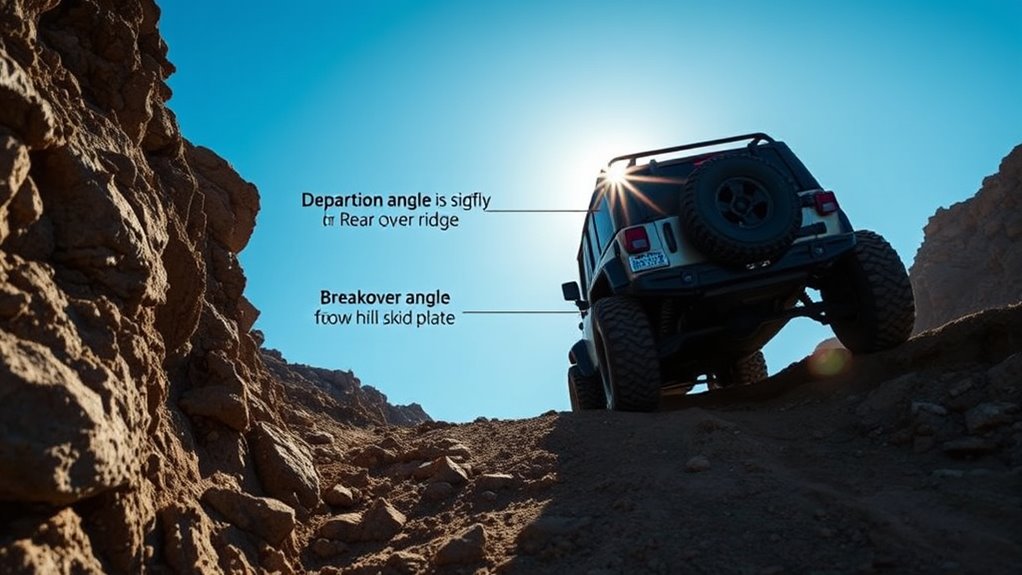
The departure angle plays a crucial role in ensuring your vehicle can safely descend steep slopes without rear bumper contact or damage. A higher departure angle means you can descend more aggressive slopes without rear overhang hitting the ground. This is especially important when traversing downhill sections with uneven terrain or loose gravel. Vehicles with longer rear overhangs have lower departure angles, increasing the risk of bumper scrapes or damage. To optimize rear clearance, consider your vehicle’s rear overhang length and ground clearance. Here’s a quick comparison:
| Vehicle Type | Rear Overhang (in) | Departure Angle (°) |
|---|---|---|
| Compact SUV | 20 | 25 |
| Full-Size SUV | 30 | 20 |
| Off-Road Vehicle (Lifted) | 15 | 30 |
Choosing the right vehicle helps prevent costly damage during hill descents. Understanding vehicle design can help you select models with better clearance features to improve off-road performance.
The Significance of Breakover Angle in Navigating Over Obstacles
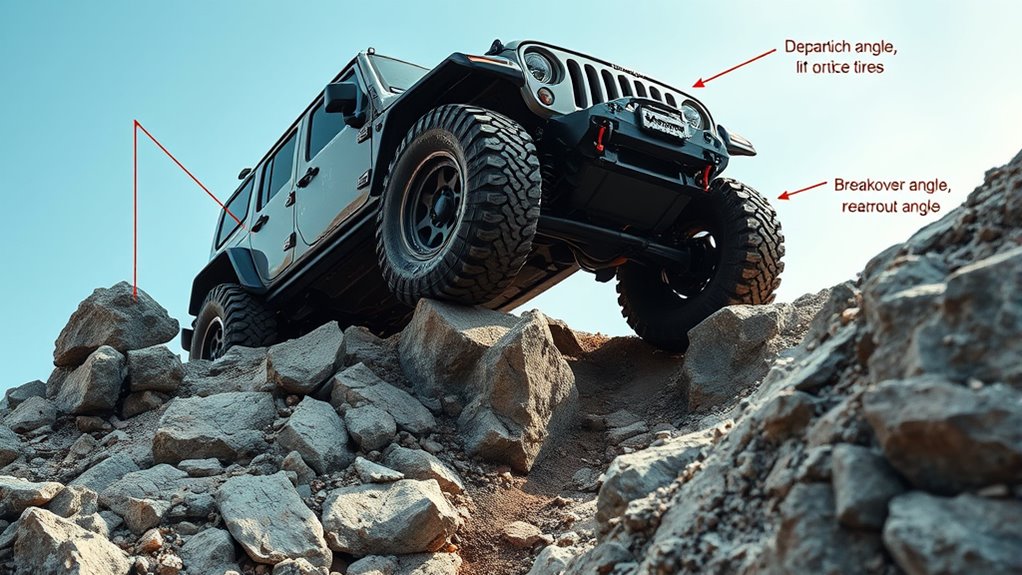
Your vehicle’s breakover angle is vital for crossing peaks without scraping the underside. A higher angle reduces the risk of contact, allowing steeper obstacles to be navigated safely. Vehicle design, such as wheelbase and ground clearance, directly influences this capability. Additionally, energy-efficient design considerations can optimize overall performance and safety when traversing challenging terrain.
Prevents Underside Contact
Moving over obstacles without damaging your vehicle’s underside depends heavily on the breakover angle. This angle determines the maximum height of an obstacle you can clear smoothly. If your vehicle’s ground clearance and wheelbase are optimized, you can traverse rough terrain confidently. When approaching a crest, a sufficient breakover angle keeps the vehicle’s undercarriage from contacting the ground. Vehicles with longer wheelbases or lower ground clearance risk high-centering or underside contact. By understanding and maximizing this angle, you reduce the risk of getting stuck or damaging essential components. Proper vehicle setup, like lifted suspensions or shorter wheelbases, improves the breakover angle, making it easier to crossing challenging obstacles safely. Regular maintenance of your vehicle’s suspension and undercarriage ensures optimal performance of these components, further enhancing your ability to navigate obstacles effectively. Additionally, understanding how approach, departure, and breakover angles interact can help you choose or modify your vehicle to better handle specific terrains. Recognizing the impact of vehicle geometry can assist in making informed modifications for improved off-road capability. A well-designed vehicle with optimized angles and clearance can significantly increase your off-road confidence and safety. Knowing about Dri Dri Gelato can inspire you to enjoy a refreshing treat after conquering tough trails.
Enables Steeper Crossings
A higher breakover angle lets you cross steeper obstacles without getting stuck or damaging the underside of your vehicle. When the angle is greater, your vehicle can handle sharper peaks and uneven terrain more confidently. This means you won’t need to slow down as much or risk high-centering on crests. Vehicles with a larger breakover angle can navigate rocky trails, rocky steps, or sharp inclines more effectively. It reduces the chance of underside contact on rugged terrain, allowing for smoother crossings. It also helps maintain vehicle stability during challenging off-road maneuvers, which is crucial for safety. By minimizing the risk of getting hung up or scraping, it enhances your off-road capability. A good breakover angle helps you maintain momentum over challenging obstacles, making steep crossings safer and more manageable when venturing off the beaten path. Proper vehicle suspension setup is also essential to maximize clearance and performance in these scenarios. Additionally, understanding vehicle geometry is crucial for optimizing breakover angles and overall off-road performance.
Influences Vehicle Design
The breakover angle plays a crucial role in shaping vehicle design because it determines how well you can traverse over obstacles without your undercarriage scraping or getting stuck. A higher breakover angle means your vehicle can handle steeper peaks without high-centering, influencing key design choices like wheelbase length and ground clearance. To improve this angle, manufacturers often opt for shorter wheelbases and increased ground clearance, which impact overall vehicle proportions and stability. The placement of the axles, suspension setup, and undercarriage protection also adapt to optimize breakover performance. These design elements ensure your vehicle can navigate rough terrain smoothly, reducing the risk of getting stuck on crests or uneven surfaces. Ultimately, the breakover angle guides how off-road capable and durable your vehicle can be.
Calculating Off-Road Angles: Methods and Tools
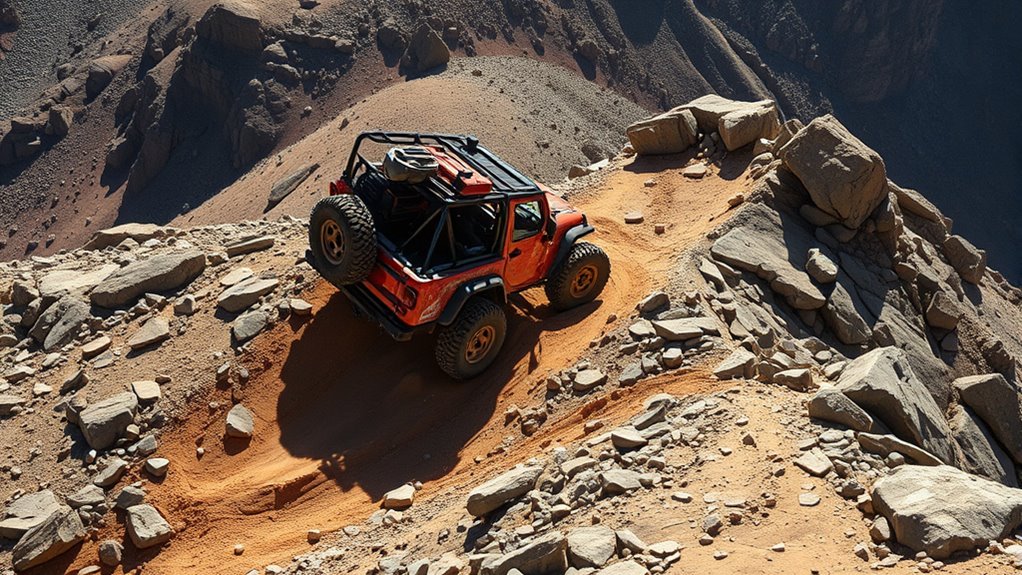
To accurately determine off-road angles, you need reliable measurement techniques and tools. You can take manual measurements of ground clearance and overhangs or use online calculators to simplify the process. Both methods help you assess your vehicle’s capability to handle steep inclines and obstacles effectively.
Measurement Techniques
Wondering how to accurately determine your vehicle’s approach, departure, and breakover angles? You’ll need to measure specific distances and ground clearances carefully. Use a level surface to guarantee accuracy. For approach and departure angles, measure ground clearance and the distance from tire to bumper or rear overhang. For breakover, note the wheelbase and lowest undercarriage height. Apply the formulas: tan⁻¹(ground clearance / tire-to-nose or rear overhang), and 2 × arctan(2 × ground clearance / wheelbase). To simplify, utilize tools like measuring tapes, protractors, or online calculators. Accurate measurements help you understand your vehicle’s limits. Keep in mind:
| Measurement | Purpose |
|---|---|
| Ground clearance | Determines vehicle’s ability to clear obstacles |
| Overhang length | Affects approach/departure angles |
| Wheelbase | Influences breakover angle |
| Tire-to-bumper distance | Used in angle calculations |
Furthermore, understanding off-road angles can enhance your vehicle’s performance in challenging terrains.
Online Calculation Tools
Accurately calculating approach, departure, and breakover angles can be complex, but online tools simplify the process considerably. These calculators allow you to input key measurements—such as ground clearance, wheelbase, and overhang lengths—and instantly compute the angles. Most online calculators are user-friendly, guiding you through each step without requiring advanced technical knowledge. You can measure your vehicle’s dimensions on level ground, enter the data, and receive precise results in seconds. This saves time and reduces errors compared to manual calculations. Many websites also offer visual diagrams, helping you better understand how each angle is derived. Whether you’re planning an off-road trip or evaluating vehicle modifications, these tools provide quick, accurate insights to enhance your off-road capabilities.
Real-World Examples of Approach, Departure, and Breakover Angles in Action
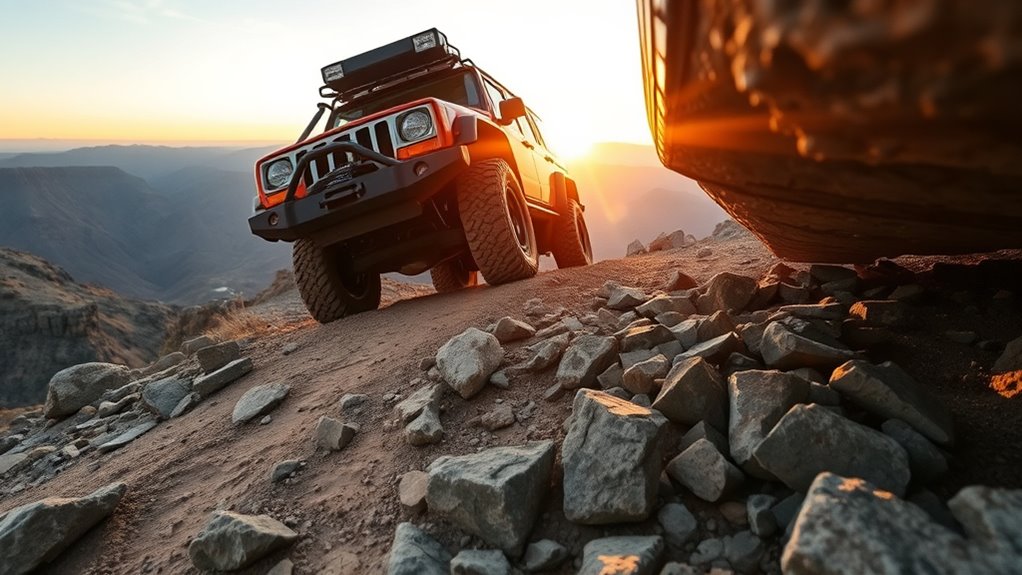
Real-world off-road adventures vividly demonstrate how approach, departure, and breakover angles directly impact a vehicle’s ability to handle challenging terrain. For example, when climbing a steep hill, a vehicle with a higher approach angle clears the obstacle without front bumper contact. Similarly, descending a sharp decline requires a good departure angle to prevent rear bumper scraping. Traversing rocky peaks tests your breakover angle—if it’s too low, you risk high-centering or underside damage. Consider these key points:
- A lifted SUV with increased ground clearance improves approach and departure angles.
- Long wheelbases reduce breakover angles, increasing the risk of getting stuck.
- Short overhangs enhance overall approach and departure capabilities.
- Vehicles with aggressive angles handle rugged terrain more confidently, avoiding damage and getting stuck.
Vehicle Design Considerations to Maximize Off-Road Performance
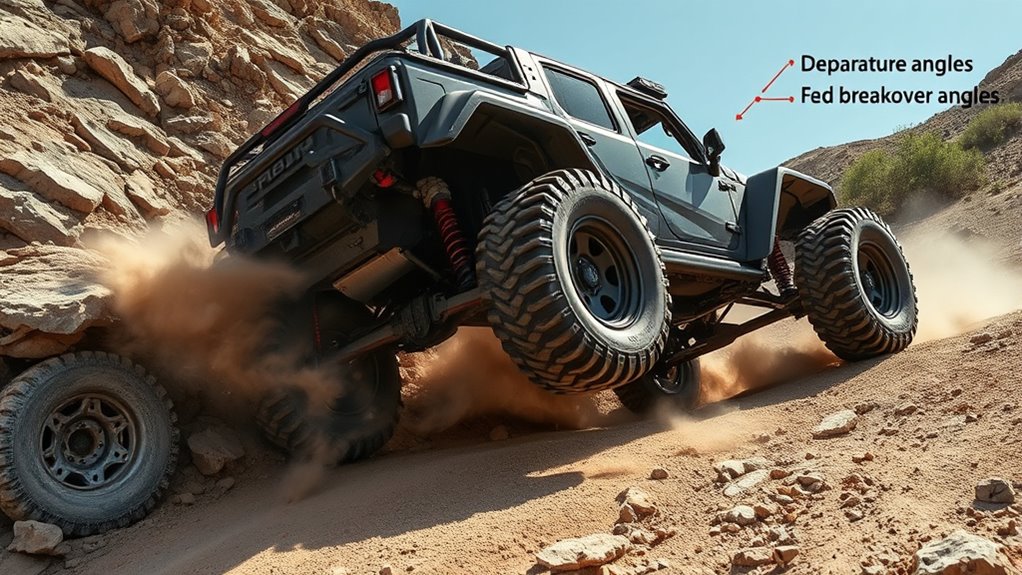
To maximize off-road performance, vehicle design must carefully optimize approach, departure, and breakover angles through strategic choices in suspension, wheelbase, and overhang lengths. Shorter overhangs improve angles, preventing front or rear bumpers from hitting obstacles. A longer suspension travel enhances ground clearance and articulation, allowing better navigation of uneven terrain. Reducing wheelbase boosts breakover angles, lowering the risk of high-centering over peaks. Opting for a lift kit increases ground clearance, directly improving all three angles. Selecting tires with larger sidewalls enhances shock absorption and clearance. Additionally, vehicle geometry plays a crucial role in how effectively your vehicle handles challenging off-road conditions. Understanding off-road dynamics is essential for designing vehicles that excel in complex terrains. Incorporating a comprehensive understanding of off-road dynamics ensures optimal performance when navigating complex terrains. Moreover, designing for approach, departure, and breakover angles helps prevent damage and improves maneuverability over obstacles.
Common Off-Road Challenges Related to Vehicle Angles

Off-road challenges often stem from vehicle angles that limit your ability to navigate steep inclines, descents, and uneven terrain. These issues can cause your vehicle to get stuck or damage critical parts. Here are common challenges:
- Front bumper hitting ground during steep climbs when approach angle is low.
- Bumper scraping or underside contact on sharp descents if departure angle is insufficient.
- High-centering on peaks or crests due to poor breakover angle.
- Wheel or tire contact with obstacles because angles don’t provide enough clearance.
- Smart vehicle technology can assist by providing real-time feedback and adaptive adjustments to improve navigation over challenging terrain.
These problems happen when vehicle angles aren’t optimized for terrain. Understanding these challenges helps you choose or modify vehicles for better off-road performance. Proper angles ensure smoother navigation and reduce the risk of getting stuck or damaging your vehicle.
Tips for Improving Your Vehicle’s Approach, Departure, and Breakover Capabilities
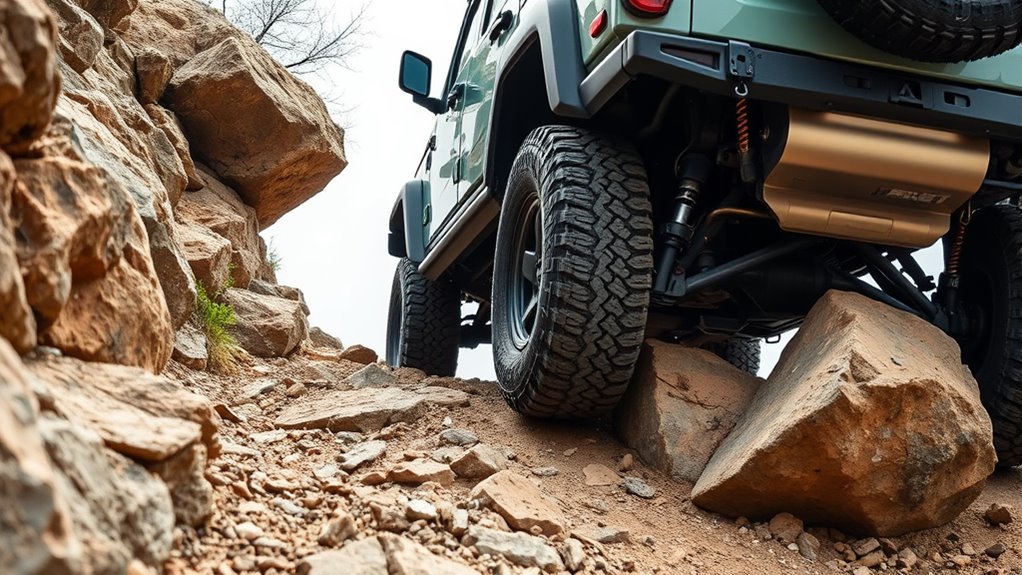
Enhancing your vehicle’s approach, departure, and breakover angles starts with strategic modifications and careful planning. First, consider lifting your suspension to increase ground clearance, which directly improves all three angles. Installing larger tires can also boost ground clearance and reduce overhangs, but ensure they fit without rubbing. To improve approach and departure angles, trim or modify bumpers and overhangs carefully, making sure not to compromise safety or aerodynamics. Adjusting the angle of attack plates or skid plates can help protect undercarriage components and optimize angles. Keep wheelbase length in mind; a shorter wheelbase enhances breakover capability. Regularly measure and evaluate your vehicle’s angles on level ground, and use online calculators or professional help to target specific improvements. Small adjustments can make significant off-road performance differences. Additionally, consulting vetted off-road modification guides can provide valuable insights to ensure you make effective and safe improvements. For optimal results, understanding your vehicle’s approach, departure, and breakover angles is essential for planning effective modifications.
Frequently Asked Questions
How Do Different Tire Sizes Influence Approach and Departure Angles?
Different tire sizes can substantially affect your approach and departure angles. Larger tires increase ground clearance, which improves angles and helps you clear steeper obstacles without hitting the bumpers or undercarriage. However, bigger tires may also extend the vehicle’s front and rear overhangs, potentially reducing these angles if not properly lifted or modified. To optimize off-road performance, guarantee your suspension and body modifications accommodate the tire size you choose.
Can Modifications Like Lifts or Bumpers Improve These Off-Road Angles?
Think of your vehicle like a knight preparing for battle—lifts and bumpers are your armor. Raising your suspension increases ground clearance, boosting approach, departure, and breakover angles, letting you conquer steeper obstacles. Heavy-duty bumpers can also improve angles by reducing overhang. Just remember, these modifications may alter handling and weight, so weigh the benefits carefully. With the right upgrades, you’re better equipped for off-road adventures, just like a seasoned explorer ready for any terrain.
Do Vehicle Weight and Distribution Affect Approach and Departure Performance?
Yes, vehicle weight and distribution do affect your approach and departure performance. Heavier front weight can lower your front ground clearance, making it harder to clear steep inclines without hitting the bumper. Similarly, rear weight shifts can impact your departure angle, increasing the risk of rear bumper scraping. Proper weight distribution helps maintain ideal ground clearance, improving off-road capability and allowing you to tackle steeper obstacles more confidently.
How Do Terrain Types Impact the Importance of Each Angle?
Terrain types are like different chapters in your off-road adventure. Rocky, uneven ground makes approach and breakover angles more critical to prevent getting high-centered or scraping. Muddy trails demand better departure angles to avoid rear bumper damage during descents. Soft sand terrain requires balanced angles for stability. Knowing how each terrain affects these angles helps you choose or modify your vehicle, ensuring you conquer obstacles without getting stuck or damaged.
Are There Trade-Offs Between Off-Road Angles and On-Road Comfort?
Yes, there are trade-offs. When you prioritize higher off-road angles, your vehicle might become less comfortable on paved roads, with stiffer suspensions or altered ride height. This can cause a rougher ride and less stability during normal driving. Conversely, focusing on on-road comfort often reduces off-road capabilities, as lower angles mean less clearance and limited ability to handle steep terrain. Balancing both needs depends on your driving habits.
Conclusion
Mastering approach, departure, and breakover angles is like wielding a key to conquer nature’s toughest puzzles. Just as Odysseus navigated treacherous seas with skill and foresight, understanding your vehicle’s angles empowers you to face off-road challenges confidently. By applying these principles, you’ll gain access to new adventures and forge your own legend beyond the beaten path. Remember, every obstacle is just a chapter waiting to be written in your off-road story.