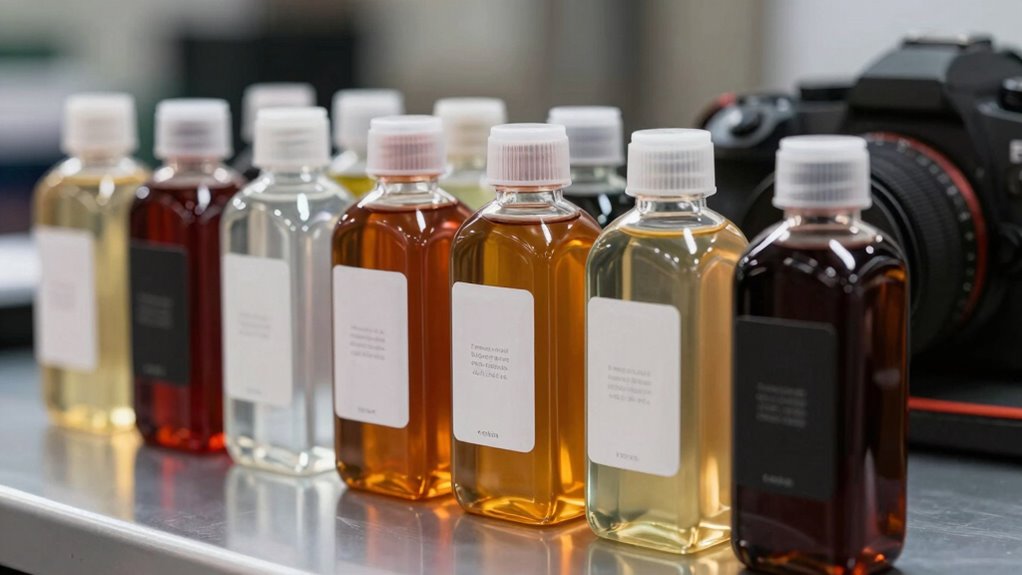

Brake fluids come in different types, mainly DOT 3, DOT 4, DOT 5, and DOT 5.1, each with unique qualities. DOT 3 and DOT 4 are glycol-based, while DOT 5 is silicone-based, incompatible with others, and resistant to moisture. DOT 5.1 offers high boiling points like DOT 4 but remains glycol-based. Knowing the differences helps you choose what’s right for your vehicle. Keep exploring to understand how to pick and maintain the best brake fluid for your needs.
Key Takeaways
- Brake fluids are classified by DOT ratings (DOT 3, DOT 4, DOT 5, DOT 5.1) based on boiling points and chemical composition.
- DOT 3 and DOT 4 are glycol-based; DOT 5 is silicone-based, which is moisture-resistant but incompatible with glycol types.
- DOT 5.1 is glycol-based with a high boiling point, suitable for high-performance braking systems.
- Compatibility between brake fluid types is crucial to prevent damage and ensure safe operation.
- Each brake fluid type has specific applications, advantages, and limitations depending on vehicle requirements.
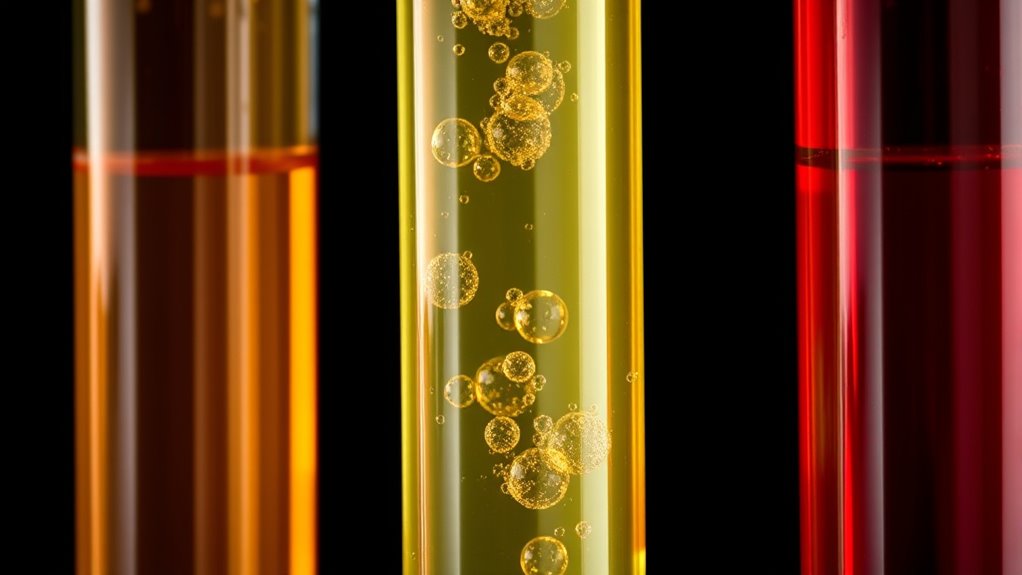
Choosing the right brake fluid is vital for maintaining your vehicle’s braking performance. When you’re selecting brake fluid, you need to consider brake fluid compatibility to guarantee it works well with your brake system. Different vehicles and brake systems require specific types of brake fluid to operate safely. Using incompatible brake fluid can lead to reduced braking efficiency, damage to rubber seals, and even brake failure. That’s why it’s imperative to check your vehicle’s manual or consult with a professional to determine the appropriate type.
Selecting the correct brake fluid ensures safe, efficient braking and prevents costly damage.
Another important aspect to keep in mind is brake fluid lifespan. Brake fluids don’t last forever; over time, they absorb moisture from the air, which can lead to corrosion and a decrease in boiling point. This deterioration compromises brake performance, especially during heavy braking or in high-temperature conditions. Typically, brake fluid should be replaced every 1 to 2 years, but this can vary depending on driving habits and the type of brake fluid used. Regularly changing your brake fluid helps maintain ideal brake response and prevents costly repairs down the line. Additionally, understanding the materials used in brake systems can help you select the most suitable brake fluid for your vehicle’s specific needs. Proper brake fluid maintenance is essential for ensuring long-term safety and optimal braking performance. Regular inspections for leaks and contamination also contribute to brake system longevity and safety. Being aware of different types of brake fluid can assist in making informed maintenance decisions and avoiding potential issues. There are several common types of brake fluid, each with its own characteristics. DOT 3 brake fluid is a glycol-based fluid that’s widely used in many vehicles. It’s affordable and has a decent lifespan but isn’t suitable for high-performance or heavy-duty applications due to its lower boiling point. DOT 4 brake fluid, also glycol-based, offers a higher boiling point than DOT 3, making it better for vehicles that experience more intense braking or operate in hotter environments. It’s compatible with DOT 3 systems, but you should avoid mixing different types without professional guidance. DOT 5 brake fluid is silicone-based and doesn’t absorb moisture, which extends its lifespan. However, it’s not compatible with DOT 3 or DOT 4 systems, so mixing can cause brake system issues. DOT 5.1, despite the similar name, is glycol-based like DOT 3 and DOT 4 but has a higher boiling point, suitable for high-performance applications. Proper maintenance practices also play a critical role in ensuring optimal brake system performance and safety. Additionally, understanding these differences helps you choose the right brake fluid for your car’s needs and climate. Always verify compatibility before topping up or replacing your brake fluid to prevent potential damage. Remember, using the proper brake fluid and replacing it at recommended intervals keeps your braking system reliable and safe. Staying informed about brake fluid types and their characteristics ensures you’re prepared to maintain your vehicle’s braking performance and avoid unnecessary repairs or safety risks.

Prestone AS401 DOT 3 Synthetic Brake Fluid – 32 oz.
Provides an extra margin of safety in extreme braking conditions (packaging may vary)
As an affiliate, we earn on qualifying purchases.
As an affiliate, we earn on qualifying purchases.
Frequently Asked Questions
How Often Should Brake Fluid Be Replaced?
You should replace your brake fluid every 2 to 3 years, or when brake fluid testing shows it’s contaminated or degraded. Regular testing helps you catch issues early, ensuring your brakes work effectively. When it’s time for a fluid change, remember to dispose of the old brake fluid responsibly, following proper brake fluid disposal procedures. Doing this keeps your vehicle safe and protects the environment.
Can I Mix Different Brake Fluid Types?
You shouldn’t mix different brake fluid types because compatibility concerns can lead to safety risks. Different brake fluids, like DOT 3, DOT 4, and DOT 5, have varying chemical properties that may not blend well. Doing so can cause corrosion, reduced braking performance, or even brake failure. Always stick to the manufacturer’s recommended brake fluid to guarantee your vehicle’s braking system stays safe and functions properly.
What Are Signs of Brake Fluid Contamination?
An ounce of prevention is worth a pound of cure. You’ll notice signs of brake fluid contamination through reduced braking performance, spongy or soft pedal feel, and dark or cloudy fluid during fluid quality assessment. Contamination detection is vital, so regularly check your brake fluid for discoloration or debris. If you suspect contamination, get your brake system inspected promptly to guarantee safety and maintain ideal brake performance.
Does Brake Fluid Affect Braking Performance?
Yes, brake fluid affects braking performance. If the fluid’s viscosity becomes too thick or thin, it can diminish braking efficiency. Additionally, a low boiling point means the fluid may vaporize under high temperatures, causing brake fade or failure. Regularly checking and replacing your brake fluid ensures it maintains proper viscosity and boiling point, helping your brakes respond promptly and reliably when you need them most.
Are There Eco-Friendly Brake Fluid Options?
Yes, there are environmentally safe, biodegradable alternatives to traditional brake fluids. These eco-friendly options reduce harmful environmental impact and are designed to meet performance standards. You can choose from glycol-based or silicone-based biodegradable brake fluids, which offer effective braking while being gentler on the environment. By selecting these alternatives, you help promote sustainability without sacrificing safety or performance, making your vehicle more eco-conscious.

Valvoline DOT 3 & 4 Synthetic Brake Fluid with High Boiling Point, Corrosion Protection, Vapor Lock Resistance, Compatible with ABS, Disc and Drum Brake Systems, 32oz
Mixes well with conventional fluids
As an affiliate, we earn on qualifying purchases.
As an affiliate, we earn on qualifying purchases.
Conclusion
Now that you understand the different brake fluid types, imagine opening your car’s hood on a chilly morning. As you check the fluid reservoir, it’s like discovering a hidden treasure chest filled with the right type of fluid—each with its own purpose. Choosing the correct brake fluid isn’t just about safety; it’s about ensuring smooth stops and peace of mind, like a perfectly timed heartbeat. Keep this knowledge in mind, and your brakes will thank you.

Brake Fluid Liquid Tester Pen,1PC DOT 3 DOT 4 DOT 5.1 Brake Fluid Liquid Tester Pen, Car Diagnostic Testing Tool with 5 LED Indicators, Hydraulic Fluid Liquid Oil Moisture Analyzer
High quality: This brake fluid tester is made of nickel-plated metal probe, which is resistant to oil and…
As an affiliate, we earn on qualifying purchases.
As an affiliate, we earn on qualifying purchases.

FAITIO 3L Brake Fluid Bleeder Kit w/ 1L Catch Bottle, Pressure Brake Bleeding Tool, Manual Power Bleeder Pump for Flush Brakes and Clutch System, Upgraded Adapters (43.5/45/49.5/50.7mm), White
One Man Brake Bleeding: No more shouting instructions or messy oil spills! This one-man brake bleeder effortlessly flushes…
As an affiliate, we earn on qualifying purchases.
As an affiliate, we earn on qualifying purchases.