
TL;DR

Get business pricing on garage and car supplies
- Business-only prices and quantity discounts
- Tax-exempt purchasing
- Multiple users, one account, clear invoices
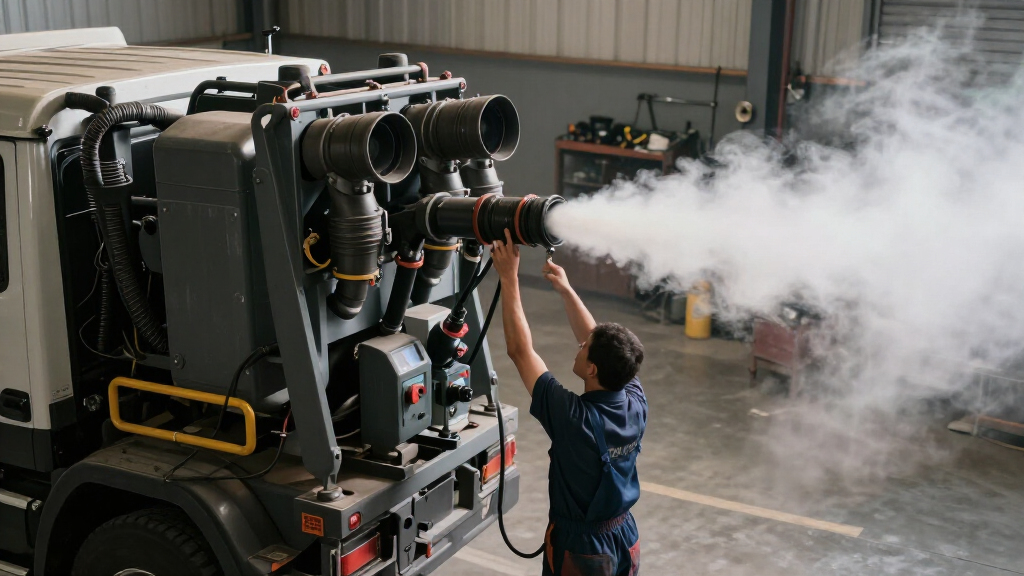
A fleet of trucks built solely for mosquito control use giant foggers to spray insecticide over large areas. This specialized equipment underscores targeted pest management efforts, raising questions about environmental impact and efficiency.
Several trucks built exclusively for mosquito control have been identified, equipped with massive fogging systems to spray insecticide over large areas. This development highlights a specialized approach to pest management that is distinct from standard vehicular pest control methods, emphasizing targeted mosquito reduction efforts.
These trucks are purpose-built vehicles featuring large, mounted foggers capable of dispersing insecticide in a fine mist over extensive zones. According to sources familiar with pest control operations, these vehicles are used primarily in urban and suburban areas during peak mosquito seasons. The trucks are designed solely for this purpose, with no other cargo or functions, underscoring their specialized role in public health efforts.
Officials from pest control agencies confirm that such trucks are part of broader mosquito mitigation strategies, especially in areas prone to mosquito-borne diseases. The equipment allows for rapid, large-scale spraying, which can be more efficient than manual or smaller-scale methods. The trucks’ design emphasizes safety and environmental considerations, with operators trained specifically to handle the insecticide and fogging technology.
While the existence of these vehicles is confirmed, details about the specific models, the chemicals used, and the frequency of operations are still emerging. Experts note that this approach is not new but that the scale and dedicated nature of these trucks are noteworthy.
Implications for Public Health and Environmental Safety
The deployment of trucks solely for mosquito fogging demonstrates a significant investment in targeted pest control, which can help reduce mosquito-borne illnesses such as West Nile virus and Zika. However, it also raises questions about environmental impact, including potential effects on non-target species and human health. The specialized nature of these vehicles suggests a move toward more aggressive and large-scale mosquito management, which could influence future policies and public perceptions of pest control methods.
As an affiliate, we earn on qualifying purchases.
Evolution of Mosquito Control Technologies
Traditional mosquito control methods have included manual spraying, larviciding, and habitat removal. The recent development of dedicated trucks with giant foggers marks an evolution toward mechanized, large-scale operations. Such trucks have been used sporadically in various regions, but their exclusive design for mosquito spraying highlights a shift toward specialized, high-capacity solutions. This approach has been driven by increasing concerns over mosquito-borne diseases and the need for rapid response capabilities.
Historical efforts relied on smaller equipment and manual labor, but recent advancements have enabled more efficient coverage. The trucks’ custom design underscores the prioritization of speed and area coverage, especially during outbreaks or peak seasons.
As an affiliate, we earn on qualifying purchases.
Unclear Aspects of Operational Scope and Impact
It remains unclear how widespread the use of these trucks is, including the frequency of deployment and the specific chemicals used. Environmental impact assessments are still in progress, and there is limited public data on potential effects on non-target species or human health. Additionally, the long-term effectiveness of this targeted fogging approach compared to traditional methods is still being evaluated.
As an affiliate, we earn on qualifying purchases.
Monitoring and Regulation of Mosquito Fogging Trucks
Authorities are expected to publish more detailed reports on the environmental and health impacts of these trucks. Regulatory agencies may update guidelines and safety standards for their operation. Public health agencies will likely continue to refine mosquito control strategies, balancing efficacy with ecological considerations. Further technological advancements and data collection will shape future use and policy decisions regarding these specialized vehicles.
industrial mosquito fogging machine
As an affiliate, we earn on qualifying purchases.
As an affiliate, we earn on qualifying purchases.
Key Questions
Are these trucks used nationwide or only in specific regions?
Currently, their use appears concentrated in regions with high mosquito-borne disease risks, but detailed geographic deployment data is limited.
What chemicals are typically used in these fogging trucks?
While specific formulations vary, they generally use pyrethroid-based insecticides, with safety protocols in place for operators and nearby residents.
Are there environmental concerns associated with these trucks?
Environmental groups have raised concerns about potential effects on non-target insects, birds, and aquatic life, prompting ongoing impact assessments.
How effective are these trucks compared to traditional mosquito control methods?
Preliminary reports suggest they provide rapid, large-area coverage, but comprehensive studies comparing their effectiveness are still underway.
Source: rss
Fall Picks
fall essentials
As an affiliate, we earn on qualifying purchases.