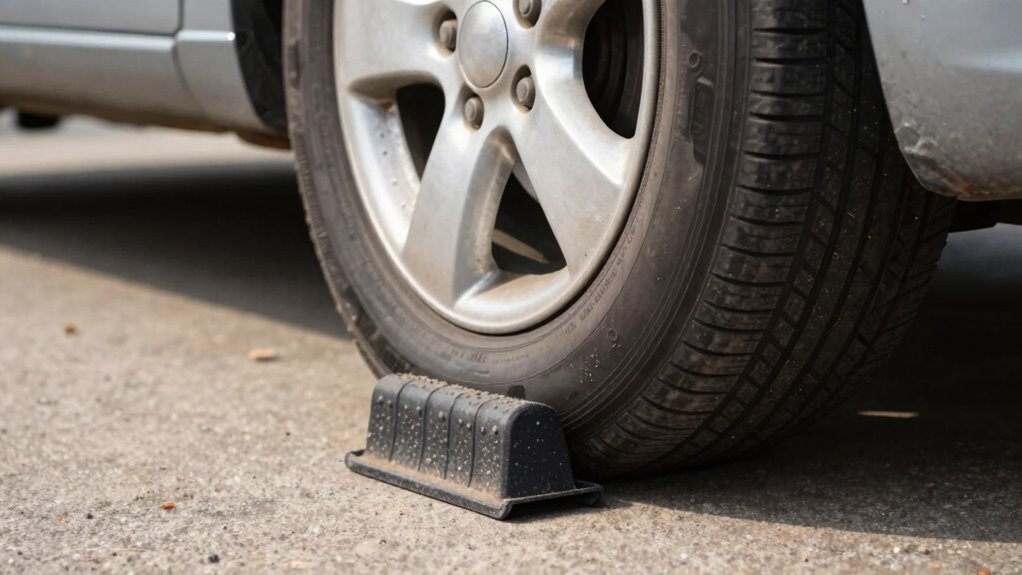

Wheel chocks are small devices placed against a vehicle’s tires to prevent it from rolling unexpectedly. They’re crucial safety tools used during parking, loading, or maintenance, especially on slopes or soft surfaces. Proper placement—centered and on opposite sides—ensures stability. Made of durable materials like rubber or steel, they work together with brakes for maximum safety. To learn how to use them correctly and prevent accidents, keep exploring these essential safety steps.
Key Takeaways
- Wheel chocks prevent vehicles from unintentionally rolling, especially on inclines, reducing the risk of accidents during parking or maintenance.
- Proper placement, like positioning chocks at tire centers and on opposite sides, ensures maximum stability.
- Made from durable materials such as rubber, plastic, or steel, wheel chocks must meet safety standards for effectiveness.
- Always set vehicle brakes before placing chocks and verify they are securely seated to prevent movement.
- Regular inspection and correct storage of chocks maintain their safety and effectiveness over time.

Pro Chaser 400W Power Inverters for Vehicles - DC 12v to AC 110v Car Inverter Converter, 6.2A Dual USB Charging Ports, Dual AC Adapter for Laptops Air Compressor
【Pro Chaser Power Inverter Basics】: This inverter provides a steady 400W of DC to AC power with a...
As an affiliate, we earn on qualifying purchases.
What Are Wheel Chocks and Why Are They Important?

Wheel chocks are simple yet essential devices designed to prevent vehicles from rolling or shifting unexpectedly. They are wedges, typically made of rubber, plastic, steel, or wood, placed snugly against a vehicle’s wheels. Properly positioned, chocks provide a physical barrier that keeps the vehicle stationary during loading, unloading, or parking. Their effectiveness depends on correct placement, ensuring full contact with the tire’s surface. Chocks are especially critical on inclines or soft surfaces where movement is more likely. They work alongside brakes, not as a replacement. Using the right size and type for your vehicle is crucial for safety. When used correctly, wheel chocks minimize the risk of accidents, injuries, and property damage, making them an indispensable safety tool in many vehicle operations. Additionally, understanding the contrast ratio of your projector can significantly improve your home cinema experience by enhancing black levels and overall image depth. Proper training on wheel chock placement can further enhance safety and prevent accidents in various settings. For optimal safety, always ensure the correct usage of wheel chocks according to specific vehicle and surface conditions. Proper knowledge of safety procedures and regular inspection of chocks can further ensure their effectiveness in preventing accidents. Educating yourself about the proper installation techniques can also help maximize their safety benefits.
BESTEK Power Inverter DC 12V to AC 110V - 300W Car Plug Adapter Outlet with 4.8A Dual USB Fast Charging Port - Car Charger Cigarette Lighter Adapter for Phone, Laptop on Road Trip - Aluminum Housing
BESTEK Advantage Upgraded: Bestek is power inverter patents owner, America's leading power inverter brand. Our inverter tech upgraded...
As an affiliate, we earn on qualifying purchases.
Materials and Design Features of Effective Wheel Chocks

Selecting the right materials and design features is essential to guarantee wheel chocks effectively prevent vehicle movement. You should choose durable, non-slip materials like rubber, heavy-duty plastic, or steel to assure reliable grip and strength. Beveled edges help the chock fit snugly against tire curves, providing better contact and stability. The length of the chock must be sufficient to cover the tire’s width, especially for dual wheel sets, to prevent slipping or rolling. For added safety, select chocks with textured surfaces or rubberized coatings for enhanced grip on different terrains. Proper design also includes sturdy construction to meet OSHA and MSHA standards, ensuring your chocks withstand the weight and force of the vehicle, minimizing the risk of failure during operation. Additionally, incorporating visual cues into the design can assist users in quick placement and confirmation of proper positioning. Incorporating user-friendly features can further improve safety and ease of use in various environments. Ensuring that the material selection is appropriate can significantly impact the durability and effectiveness of the chock over time. Using safety compliance standards as a guide can help you select the most reliable and effective wheel chocks for your needs. Moreover, considering ease of deployment can facilitate quicker and safer application during busy or high-pressure situations.

GUTA Trailer Tire Pressure Monitoring System, RV TPMS with 10 Sensors, 6 Alert Modes, Signal Booster, Power Saving Display, Long Sensing Distance, for 3 Trailers (T1/T2/T3), for Camper, Motor Homes
[Real Time Monitoring & High Fuel Economy]: GUTA TPMS has a large screen for displaying up to 10...
As an affiliate, we earn on qualifying purchases.
OSHA and FMCSA Regulations on Wheel Chocking
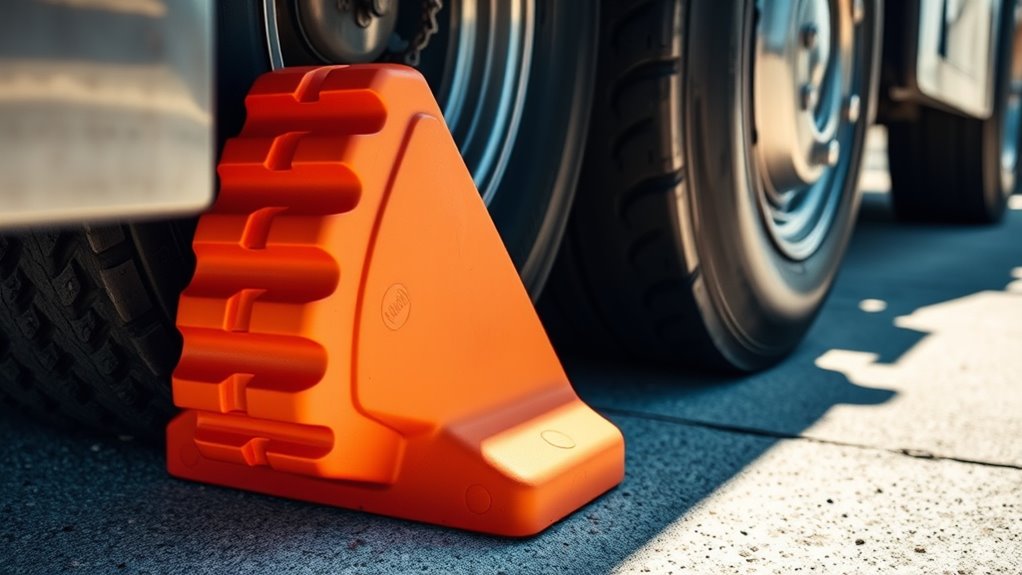
Regulations from OSHA and FMCSA set specific requirements for the proper use of wheel chocks to guarantee vehicle safety during loading, unloading, and parking. OSHA mandates chocking rear wheels of trucks and trailers when boarded by powered industrial trucks, and requires at least two chocks for anhydrous ammonia transport vehicles. It also specifies setting brakes before placing chocks on highway trucks. It is important to select appropriate chocks that can withstand the weight and environmental conditions to ensure effectiveness. Proper wheel chock placement is essential for maintaining stability and preventing accidents during vehicle parking. Selecting correct chock size based on vehicle weight and tire dimensions is crucial for optimal safety. Research indicates that using the right chocks can significantly reduce the risk of vehicle movement and related accidents. Ensuring that body jewelry materials are appropriate for the environment and application can prevent irritation and enhance safety. FMCSA generally relies on air-braked power units but requires chocks for agricultural trailers, pulpwood trailers, and heavy haulers. While FMCSA exempts independent drivers from federal chock mandates, company policies often mandate their use. Overall, regulations emphasize selecting appropriate chocks, placing them correctly, and using multiple chocks on inclined surfaces to prevent vehicle movement and ensure safety.

Tymate TM3 RV Tire Pressure Monitoring System, Tire Pressure Monitor with Solar Charge, TPMS with 4 Sensors(Max to 10) & 6 Alarm Modes, 2024 Updated w/Color LCD Display, 0-87PSI for RV/Trailer/Truck
[Explore Five Alarm Modes and Effortless Setup for Alarm Thresholds]: The Tymate Tire Pressure Monitoring System TM3 features...
As an affiliate, we earn on qualifying purchases.
Proper Techniques for Placing Wheel Chocks
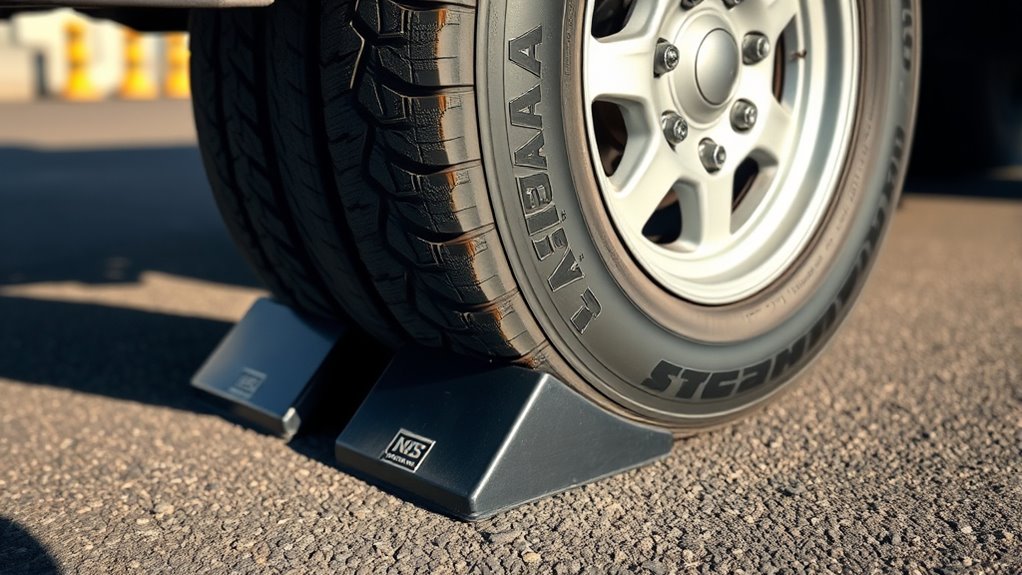
To guarantee maximum effectiveness, place wheel chocks directly at the wheel’s center point, making sure they sit flush and fully contact the tire surface. Position one chock against each side of the tire, ensuring they are stable and snug without forcing. For dual wheels, place chocks on both sides of each tire to prevent any lateral movement. Always set the chocks before engaging the parking brake, especially on inclines or uneven terrain. Avoid angles or off-center placement, which can reduce stability. Confirm that the chocks are seated securely and won’t shift when lightly pushed. If the terrain is soft or wet, consider additional measures like wheel chock wedges or more robust chocks to improve grip. Proper placement is essential for maximum safety and vehicle immobilization. Incorporating connected safety technology can also help monitor and alert you if the chocks are dislodged or improperly placed. Additionally, understanding vehicle stability principles can help you assess the effectiveness of your chock placement and prevent accidents. Being aware of proper chock positioning techniques will further enhance safety and prevent unexpected vehicle movement.
Selecting the Right Chocks for Your Vehicle

Choosing the right wheel chocks involves matching their size, material, and design to your vehicle’s specific needs. First, consider your vehicle’s weight and tire size; heavier trucks require larger, more durable chocks made from steel or heavy-duty rubber. For smaller vehicles, lightweight plastic or rubber chocks may suffice. Pay attention to the chock’s length and beveled edges to ensure a proper fit and maximum contact with the tire’s surface. Check manufacturer specifications for compatibility with your make and model. Always select chocks that meet OSHA and MSHA standards for strength and durability. Before use, test the chocks to confirm they hold the vehicle securely. Damaged or worn chocks must be replaced immediately to maintain safety and effectiveness. Properly selected and maintained chocks are essential for vehicle safety, especially when considering appropriate material selection for your specific vehicle. Incorporating proper installation techniques and understanding whole-house water filtration systems can help ensure a secure and reliable setup, reducing the risk of accidents. Additionally, selecting chocks with anti-slip features can further enhance stability during parking or maintenance.
Common Mistakes That Compromise Vehicle Safety
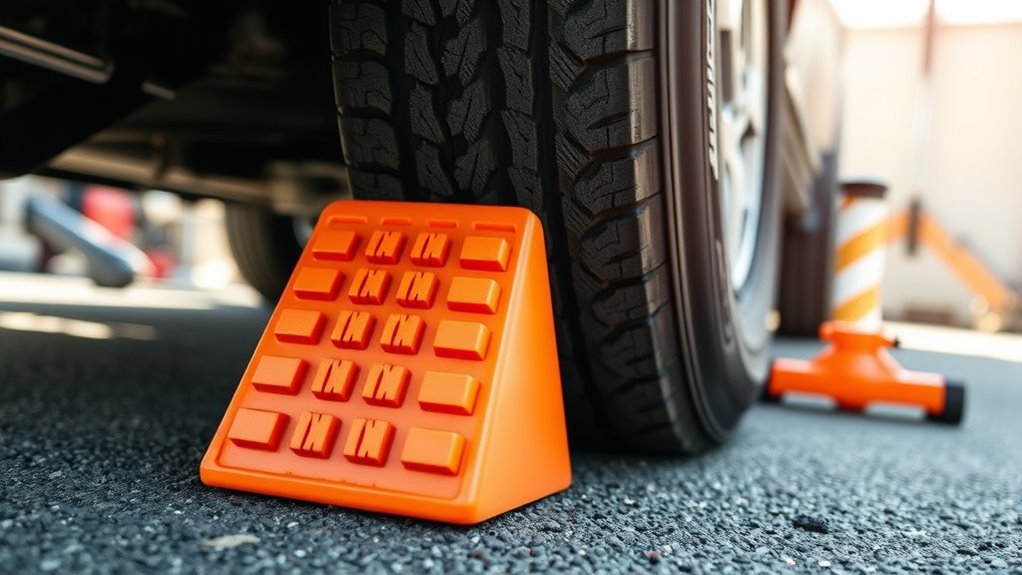
Are you aware of the common mistakes that can seriously compromise vehicle safety when using wheel chocks? One mistake is placing them off-center or at an angle instead of directly under the wheel’s center, which reduces stability. Using only one chock instead of at least two increases the risk of vehicle movement. Ignoring surface conditions, like wet or soft ground, can cause chocks to slip or sink, undermining their effectiveness. Failing to set the brake before chocking the wheels can allow movement if the chocks fail. Also, using damaged or worn chocks compromises their strength and durability. Furthermore, relying on old, untested chocks or those not meeting OSHA or MSHA standards puts you at risk of accidents and violations. Proper placement and inspection are essential for safety. Additionally, understanding pool terminology and safety standards can help ensure proper use of safety equipment across different contexts.
The Role of Chocks in Different Terrain Conditions
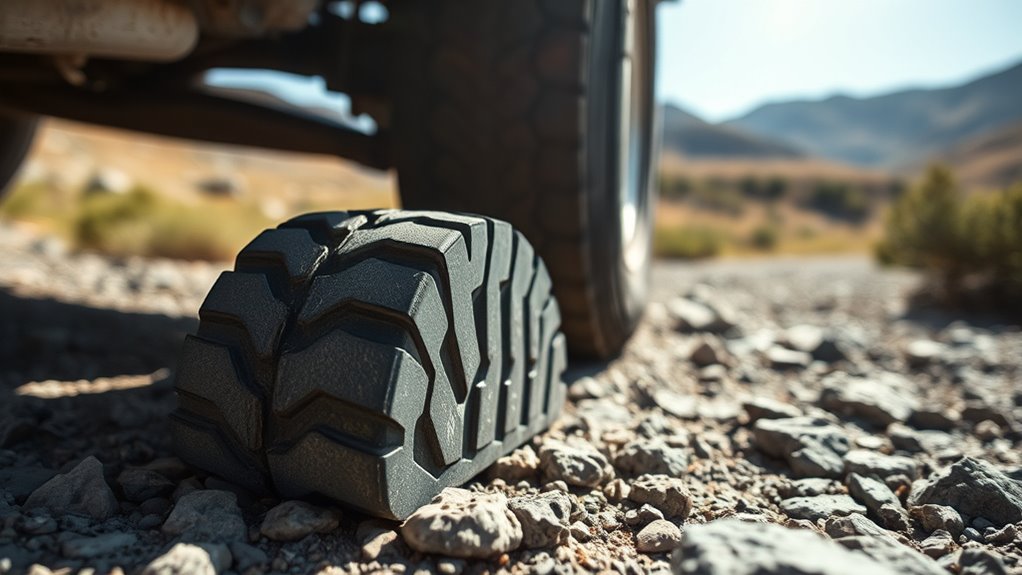
When working on soft surfaces, you need to choose chocks that won’t sink or slip, ensuring they stay in place under load. On sloped terrain, proper placement and additional chocks or wheel stops can prevent unintended movement. Wet or muddy conditions demand extra caution, as reduced grip increases the risk of chock failure, so always verify your setup before proceeding.
Soft Surface Challenges
Soft surface conditions, such as mud, gravel, or wet soil, pose significant challenges for effective wheel chocking because these terrains reduce the grip and stability of chocks. When surfaces are unstable, your chocks may slip or sink, risking vehicle movement. To prevent accidents, you must:
- Use larger, heavier chocks that can withstand soft terrain and provide better grip.
- Place chocks on firm ground or add a solid base like wood or gravel to improve stability.
- Apply additional chocks or wedges to increase friction and security.
- Ensure proper placement at the wheel’s center, avoiding angled or off-center positioning, especially in loose conditions.
Adapting your chocking method to soft terrain is essential for safety. Ignoring these steps increases the risk of unintended movement, injuries, or costly accidents.
Sloped Terrain Strategies
Navigating sloped terrain requires careful chocking techniques to guarantee vehicle stability and safety. When parking on inclines, position your chocks at the tire’s center, ensuring full contact. Use at least two chocks—one on each side of the wheel—to prevent rolling. Adjust placement based on the slope’s steepness and surface conditions. Soft or loose soil demands deeper, more secure chock placement. Always set the parking brake before installing chocks.
| Terrain Condition | Chock Placement Strategy | Additional Considerations |
|---|---|---|
| Steep Inclines | Use multiple chocks, angled if needed | Check tire contact points |
| Soft Soil | Use sturdy, heavy-duty chocks | Pack soil around chocks for stability |
| Gravel or Loose | Place chocks deeply, ensure firm contact | Avoid slipping or shifting |
| Declines | Use chocks on the downhill side | Combine with brake application |
Wet and Muddy Conditions
In wet and muddy conditions, properly chocking your vehicle becomes even more critical to prevent slipping or shifting. Moist surfaces reduce tire grip, increasing the risk of unintended movement. To stay safe:
- Ensure full contact by placing chocks firmly against the tire’s center, not off to the side.
- Use two chocks on opposite sides to prevent rolling during parking or loading.
- Adjust placement for slopes or uneven terrain to counteract gravity’s pull.
- Test chocks before leaving the vehicle, making sure they don’t slip or shift under pressure.
Wet and muddy terrain demands extra vigilance. Proper chocking is your best defense against accidents caused by reduced traction or unstable ground.
Maintaining and Inspecting Wheel Chocks for Safety
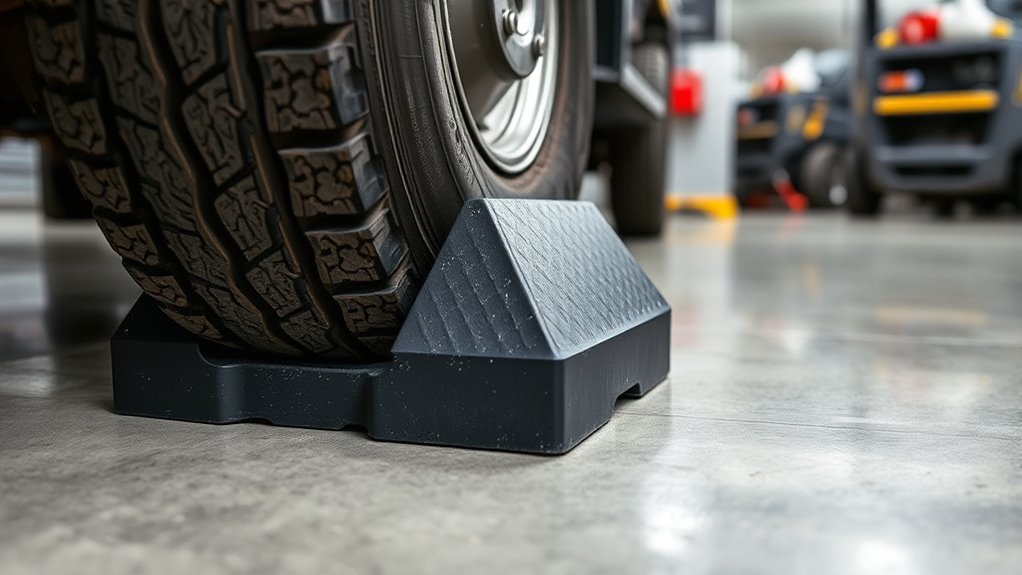
You need to regularly inspect your wheel chocks to guarantee they’re in good condition and safe to use. Look for signs of damage, such as cracks, chips, or excessive wear, and replace any chocks that show these issues. Proper storage prevents deterioration, so keep your chocks in a dry, secure place when not in use.
Regular Inspection Procedures
Regular inspection of wheel chocks is essential to guarantee they remain effective and safe to use. You need to check them regularly for signs of damage or wear that could compromise safety. Follow these steps:
- Look for cracks, chips, or deformation that weaken the material and reduce grip or stability.
- Inspect beveled edges for rounding or damage that could affect tire contact.
- Examine fastening points to ensure chocks are securely in place and not loose.
- Verify overall cleanliness—dirt, mud, or ice can hinder traction and compromise effectiveness.
Perform these inspections before each use, especially in harsh conditions. Replacing damaged or worn chocks immediately can prevent accidents that might otherwise cause injuries or costly damage. Regular checks keep you confident in your safety measures.
Damage and Wear Signs
Inspecting wheel chocks for damage and wear is essential to guarantee they provide reliable protection. Look for cracks, chips, or fractures in the material—these weaken the chock’s integrity. Check for signs of excessive wear, such as smooth or rounded edges, which reduce grip. For rubber or plastic chocks, look for brittleness, discoloration, or deformation. Steel or aluminum chocks should be free of rust, corrosion, or bent parts. Damaged or worn chocks risk slipping or failure, causing accidents. Regularly examine the following signs:
| Damage Signs | Wear Indicators |
|---|---|
| Cracks, chips, fractures | Smooth, rounded edges |
| Rust, corrosion | Discoloration, deformation |
| Bent or warped shape | Excessive surface smoothing |
| Breaks or missing parts | Reduced grip or stability |
Replace any chock showing these signs immediately.
Proper Storage Practices
Proper storage practices are essential to guarantee wheel chocks remain effective and safe for future use. When you store chocks correctly, you prevent damage, maintain their strength, and ensure reliability during critical moments. Here’s how to do it:
- Store in a dry, shaded area to prevent deterioration from moisture or sunlight.
- Keep chocks off the ground on racks or shelving to avoid contact with dirt and debris.
- Regularly inspect for cracks, chips, or warping, and replace damaged units immediately.
- Avoid stacking heavy objects on top, which can deform or weaken the materials over time.
When to Use Fixed Jacks Versus Wheel Chocks
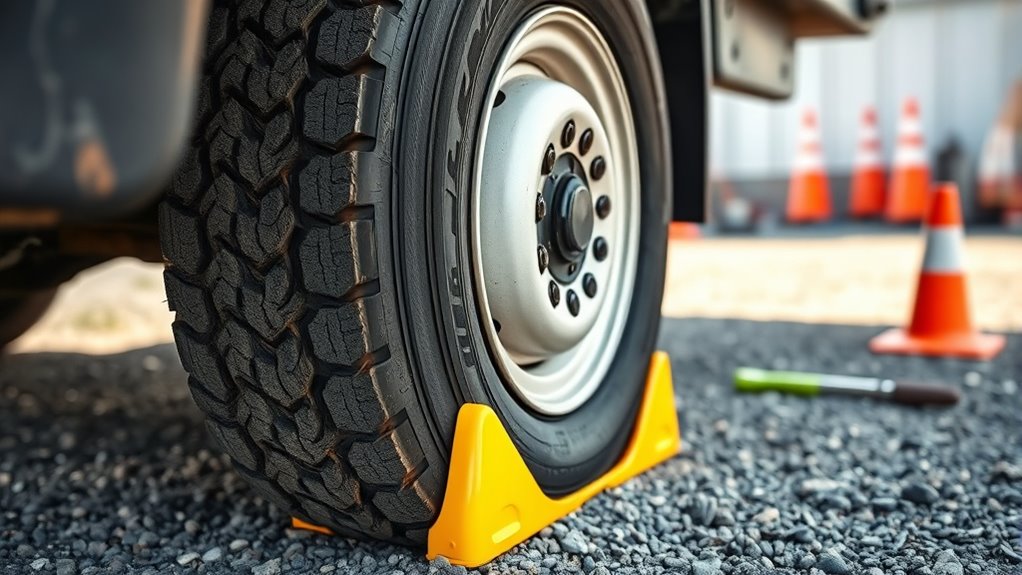
Fixed jacks are typically used when you need to stabilize a trailer or semi-truck that’s uncoupled from its cab or during maintenance, rather than for long-term parking. Use fixed jacks when the vehicle is stationary for an extended period, especially during repairs or inspections, to provide stable support. They are designed to hold the vehicle securely without relying on brakes or chocks. Wheel chocks, on the other hand, are best for preventing movement during short stops, loading, unloading, or parking on level surfaces. Always deploy wheel chocks when the vehicle is parked temporarily, especially on inclines, to supplement brake settings. Fixed jacks are not intended for quick stops or short-term immobilization; they serve as a permanent or semi-permanent stabilization method during maintenance or uncoupling.
Best Practices for Ensuring Vehicle Immobilization

To effectively immobilize a vehicle, you must follow best practices that guarantee maximum stability and safety. First, always position wheel chocks correctly—centered and flush against the tire surface—to prevent any movement. Second, place at least two chocks on opposite sides of the wheel to create a secure barrier. Third, consider surface conditions; on slopes or soft ground, adjust placement or add extra chocks for extra grip. Fourth, set the vehicle’s brakes before applying chocks, especially on inclines, to reinforce immobilization. Remember, neglecting these steps can lead to dangerous rollaways or accidents. By following these practices, you ensure the vehicle stays put safely during loading, unloading, or parking, protecting everyone around you. Safety begins with proper chocking—don’t compromise it.
Frequently Asked Questions
Can Wheel Chocks Be Reused After Exposure to Harsh Weather?
Yes, you can reuse wheel chocks after exposure to harsh weather, but you should examine them carefully first. Check for cracks, warping, or damage that could compromise their effectiveness. Clean off dirt, mud, or ice to guarantee proper contact with the tires. If the chocks are damaged or worn out, replace them immediately. Proper maintenance and inspection help keep you safe and ensure the chocks perform correctly in all weather conditions.
How Do I Know if a Wheel Chock Is the Right Size?
You might find it surprising, but the right size wheel chock depends on your vehicle’s tire dimensions and weight. Check your vehicle’s specifications or manufacturer guidelines, and compare them with the chock’s size and material. confirm the chock fully contacts the tire’s sidewall and fits snugly without gaps. Always select a chock that meets OSHA and MSHA standards, and test it for stability before use to prevent accidental movement.
Are There Specific Safety Standards for Wheel Chocks in Hazardous Environments?
You should make sure your wheel chocks meet OSHA and MSHA standards for strength and durability in hazardous environments. Look for chocks made from heavy-duty materials like steel or rubber, with beveled edges and proper dimensions. Always verify they are rated for the vehicle’s weight and tire size. Regularly inspect for damage or wear, and replace damaged chocks immediately to prevent accidents. Following these standards keeps you compliant and safe.
What Are the Consequences of Improper Chocking on Sloped Surfaces?
If you improperly chock a vehicle on a sloped surface, disaster can strike unexpectedly. You risk the vehicle rolling uncontrollably, causing property damage, serious injuries, or even fatalities. The tension builds as your oversight might go unnoticed until it’s too late, turning a simple task into a perilous situation. Always guarantee your chocks are correctly positioned, especially on inclines, to prevent this silent threat from releasing chaos.
How Often Should Wheel Chocks Be Replaced or Inspected?
You should inspect wheel chocks before each use and replace them when damaged, cracked, or worn beyond the manufacturer’s specifications. Regularly check for signs of deterioration, such as deformation or loss of integrity, especially after exposure to harsh conditions. Maintaining a routine inspection schedule guarantees they remain effective in preventing vehicle movement. Always discard compromised chocks immediately to avoid accidents and ensure compliance with safety standards.
Conclusion
Think of wheel chocks as the tiny guardians that hold your vehicle’s future in place, preventing chaos from slipping through the cracks. When you use them properly, you’re not just stopping a vehicle; you’re anchoring safety and peace of mind. Like a steadfast anchor in turbulent waters, these small tools keep you steady, confident, and in control—reminding you that sometimes, the smallest steps make the biggest difference.