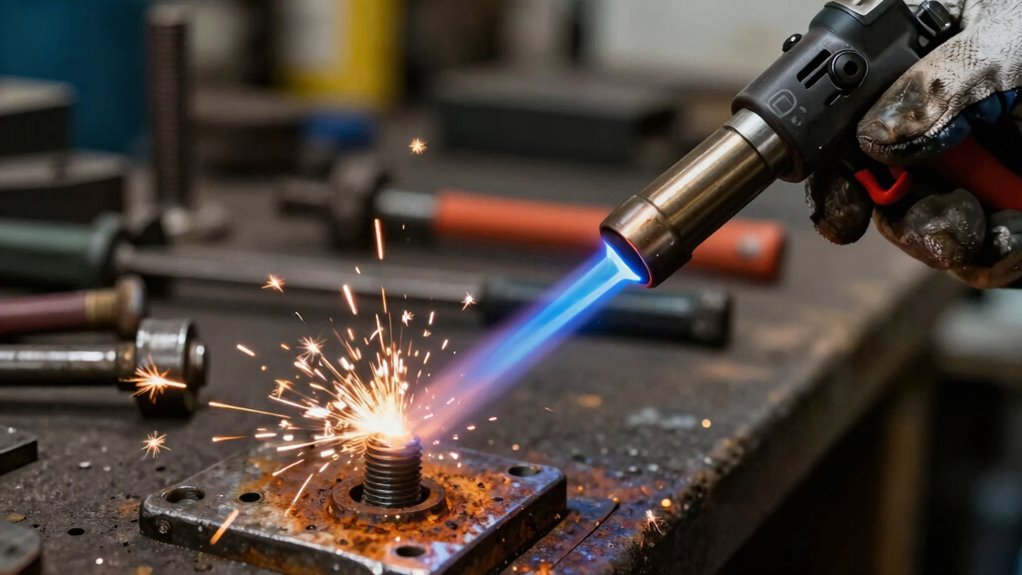

To safely heat cycle stuck bolts, focus on evenly applying controlled heat with a propane torch or heat gun, avoiding nearby parts. Keep the heat moving in small circles and monitor temperature carefully to prevent damage. Repeatedly heat and cool the bolt—using compressed air or a damp cloth—to create thermal stress that breaks rust bonds. Proper technique minimizes risks and increases your chances of loosening stubborn bolts without harm—continue to explore how to perfect your approach.

Get garage and car supplies delivered free — and shop member deals
- Fast, free delivery on millions of items
- Access to Prime Big Deal Days deals on October 6–7
- Prime Video, Amazon Music and more included
Key Takeaways
- Focus heat evenly on the bolt, avoiding nearby components to prevent damage.
- Use controlled, gradual heating with a propane torch or heat gun for safety.
- Allow the bolt to cool naturally or use rapid cooling methods like compressed air to aid contraction.
- Repeat heat and cool cycles multiple times to weaken rust bonds without overheating.
- Monitor temperature carefully to prevent overheating, which can weaken or damage the bolt.
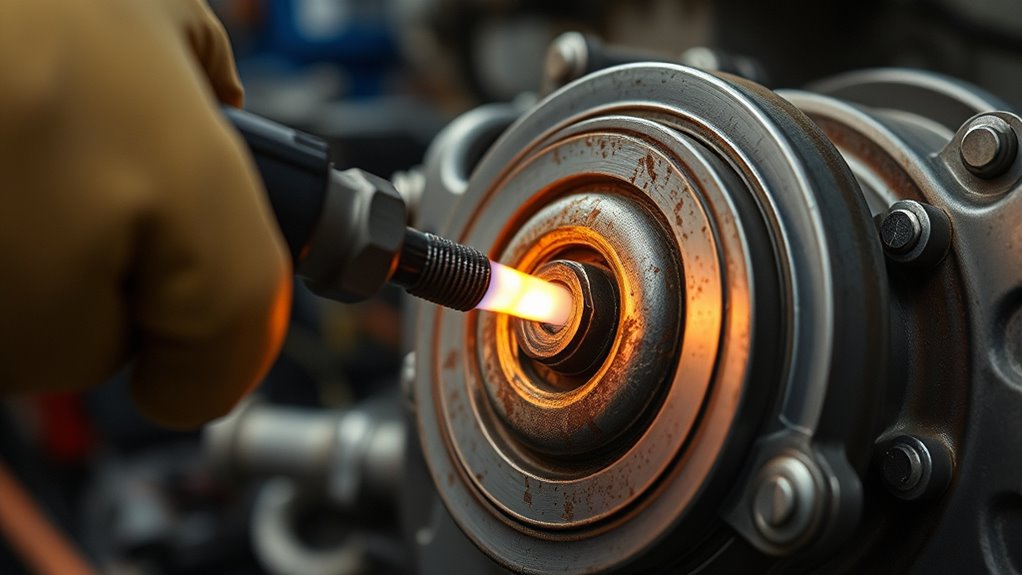
When bolts become stuck due to rust or corrosion, heat cycling can be an effective method to loosen them. This technique relies on the principle of metal expansion, which occurs when heat is applied. As you heat the bolt, the metal expands slightly, creating thermal stress that helps break the bond caused by rust or corrosion. The key is to apply heat carefully and evenly, avoiding rapid temperature changes that could damage surrounding components. By gradually heating and cooling the bolt, you encourage expansion and contraction cycles that weaken the corrosion bond, making it easier to turn the bolt free.
The process begins with heating the bolt evenly using a heat source such as a propane torch or heat gun. You want to focus the heat directly on the bolt, avoiding excessive contact with nearby parts to prevent damage. As the bolt heats up, metal expansion occurs, and thermal stress builds within the bolt and the surrounding materials. This stress can help crack the rust layer or corrosion that’s holding the bolt tight. Once the bolt reaches an adequate temperature—usually just enough to cause visible heat distortion—you allow it to cool naturally or use a controlled cooling method like compressed air or a damp cloth. The cooling causes the metal to contract, often more rapidly than it expanded, which can loosen the grip of corrosion.
It’s vital to control the temperature carefully. Overheating can weaken the bolt’s structural integrity or damage surrounding components, especially if they’re sensitive to heat. Keep the heat source moving in small circles around the bolt, and don’t hold it in one spot for too long. This prevents localized overheating and ensures a gradual, uniform expansion. As the bolt cools, the thermal stress diminishes, but the break in corrosion bonds might have already been set in motion. Repeating the heat cycle a few times can increase your chances of success without risking damage. Additionally, using high-quality tools designed for heat work can improve safety and effectiveness during this process.
As an affiliate, we earn on qualifying purchases.
Frequently Asked Questions
Can Heat Cycling Damage the Bolt’s Threads Permanently?
Yes, heat cycling can cause thread deformation if not done carefully. When you apply heat, thermal expansion can make the metal swell, potentially damaging the threads over time. Repeated heating and cooling may weaken the bolt’s threads, increasing the risk of permanent damage. To prevent this, use controlled heat levels, avoid excessive heating, and allow the bolt to cool gradually, minimizing the chances of thread deformation.
What Types of Heat Sources Are Safest for Heat Cycling?
You should prioritize safety gear and careful heat source selection when heat cycling bolts. Use a propane or MAPP gas torch, which provides controlled, even heat without excessive risk. Always wear gloves, eye protection, and fire-resistant clothing to stay safe. Avoid open flames or high-temperature tools that can cause damage or injury. Proper heat source selection guarantees effective loosening while minimizing the risk of damaging threads or surrounding components.
How Long Should I Apply Heat During the Process?
You should apply heat for about 1 to 3 minutes, depending on the bolt size and material. This heat duration allows for effective thermal expansion without risking damage. Keep the heat steady, ensuring the bolt heats evenly. Too little time won’t expand the metal enough, while too much can weaken it. Monitor the process carefully to balance thermal expansion benefits with safety and integrity of the bolt.
Is There a Risk of Fire or Injury When Heat Cycling Bolts?
Imagine sparks dancing as you work, but yes, there’s a fire risk if you aren’t careful. You need to prioritize fire safety and personal protection by keeping a fire extinguisher nearby and wearing gloves and eye protection. Properly controlling the heat prevents ignition of nearby materials. Always stay alert, avoid excessive heat, and make certain your workspace is clear of flammable objects to keep yourself safe during heat cycling.
Can Heat Cycling Be Used on All Types of Metals?
Heat cycling isn’t suitable for all metals. You need to contemplate metal compatibility and temperature limitations before applying heat. Some metals, like aluminum or zinc, can warp or weaken with repeated heating, risking damage or failure. Always identify the specific metal you’re working with and follow recommended temperature limits. If you’re unsure, consult manufacturer guidelines or conduct a small test to prevent damaging the bolt or surrounding components.
As an affiliate, we earn on qualifying purchases.
Conclusion
Remember, heat cycling is your secret weapon against stuck bolts—like a gentle dance of fire and metal working together. When used carefully, it can free stubborn fasteners without damage. Don’t let frustration ignite your temper; instead, let the heat work its magic, turning a stubborn challenge into a triumph. With patience and the right technique, you’ll tame even the most stubborn bolts, proving that sometimes, a little heat is all it takes to *disengage* the fix.
thermal stress bolt loosening kit
As an affiliate, we earn on qualifying purchases.
As an affiliate, we earn on qualifying purchases.
high-quality heat resistant gloves
As an affiliate, we earn on qualifying purchases.
As an affiliate, we earn on qualifying purchases.
Halloween Picks
halloween
As an affiliate, we earn on qualifying purchases.