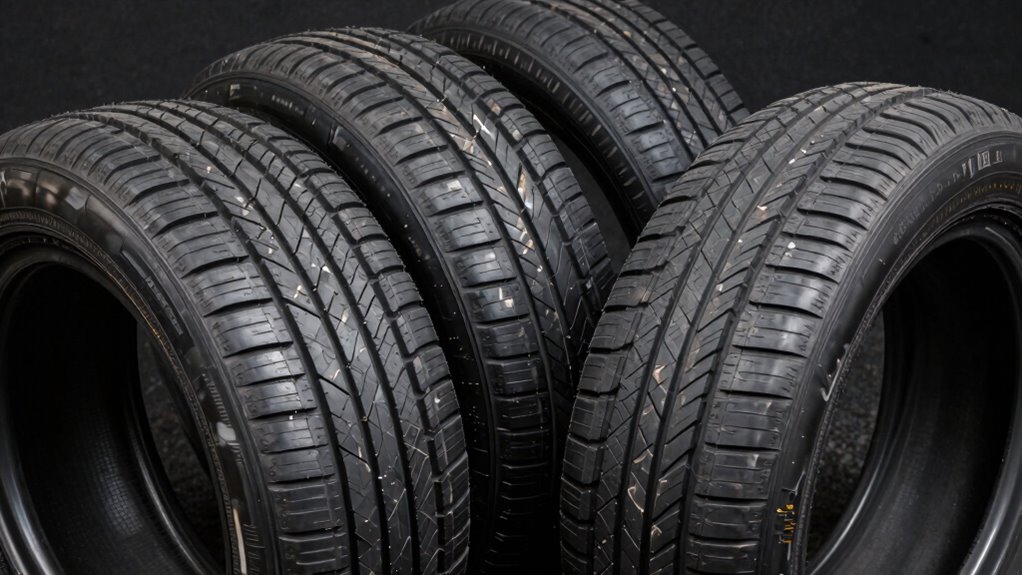

To stop uneven tire wear quickly, you need to follow proper rotation patterns based on your vehicle and tire type. The most common are front-to-rear for non-directional tires, forward and rearward cross for front or rear-wheel drives, and an X-pattern for all-wheel drive vehicles. Directional tires stay on the same side, and staggered setups may limit rotation options. Keep an eye on your tire type and options—there’s more to guarantee even wear if you keep exploring.
Key Takeaways
- Use the front-to-rear pattern for directional tires to maintain tread direction and prevent uneven wear.
- Apply the forward cross pattern for front-wheel-drive vehicles and rearward cross for rear-wheel-drive vehicles to balance tire wear.
- Employ the X-pattern for all-wheel-drive vehicles to ensure even distribution of tread wear across all tires.
- Regularly rotate tires according to their specific pattern and schedule to prevent uneven deterioration.
- Incorporate a full-size spare into rotation to extend tire life and maintain even wear across all four tires.
Understanding Front-to-Rear Rotation Patterns
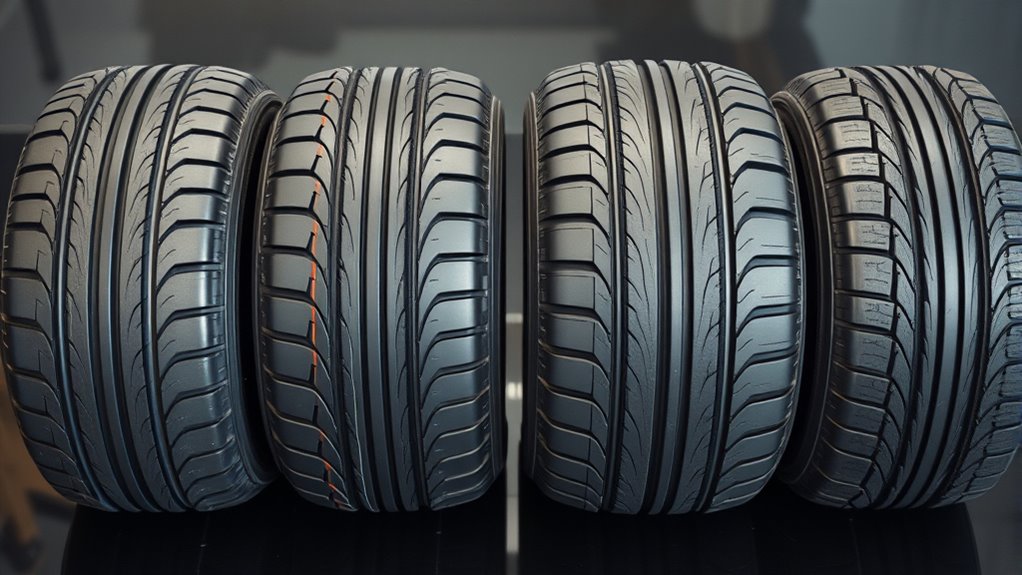
Understanding front-to-rear rotation patterns is essential for maintaining even tire wear and extending tire life. This standard method works best with directional tread tires, which have large grooves forming Y or V shapes and only rotate in one direction. When rotating, you move the rear tires straight to the front on the same side, while the front tires go straight back on the same side. The direction of rotation is often marked on the tire’s sidewall. This pattern helps balance wear because it keeps directional tires functioning correctly. It’s ideal when your tires are wearing evenly and your tread design is directional. Following this pattern regularly ensures your tires wear evenly, perform safely, and last longer, saving you money over time.
Exploring Forward and Rearward Cross Patterns
The forward and rearward cross patterns are two common tire rotation methods tailored to different vehicle configurations and driving needs. The forward cross involves moving the front tires straight back to the rear on the same side, while crossing the rear tires diagonally to the front. This method balances tread wear, particularly for front-wheel-drive vehicles, where front tires wear faster due to steering and acceleration. The rearward cross moves the rear tires forward on the same side, with front tires crossing to opposite rear positions. It’s ideal for rear-wheel-drive vehicles experiencing uneven rear tire wear from acceleration and heavy loads. Both patterns help distribute tire wear evenly, extend tire life, and improve vehicle handling—especially when tailored to your specific vehicle type and driving habits. Additionally, understanding the rotation pattern ensures optimal tire performance and safety over time. Using the correct tire rotation pattern can also contribute to better fuel efficiency and a smoother ride, making it a crucial aspect of vehicle maintenance. Regularly inspecting tires for uneven wear can help identify the appropriate rotation method for your vehicle. Proper tire alignment and maintaining correct tire pressure further enhance the effectiveness of rotation patterns and overall tire longevity. Maintaining the right tire pressure is essential for achieving the best results from your rotation pattern and preventing premature tire wear.
The Benefits of X-Pattern Rotation for All-Wheel Drive Vehicles
An X-pattern rotation helps guarantee your all-wheel-drive vehicle’s tires wear evenly, preventing premature replacements. By moving tires diagonally, it distributes the workload across all four tires more effectively. This pattern also boosts traction stability, giving you better control on varied road conditions. Additionally, following proper wiring basics can help ensure your vehicle’s electrical systems are safe and functioning correctly. Incorporating free floating concepts into your maintenance routine can also contribute to longer tire life and optimal performance. Understanding tire wear patterns can further assist in diagnosing and addressing uneven tire deterioration early, especially when combined with seasonal inspection checklists for maintenance. Regularly monitoring tire pressure is essential to maximize tire lifespan and performance.
Balanced Tire Wear
Ever wondered how to keep all four tires wearing evenly on your all-wheel-drive vehicle? An X-pattern rotation is your best solution. This method moves each tire diagonally across the vehicle, swapping front-left with rear-right and front-right with rear-left. By doing so, it distributes tread wear evenly across all four tires, preventing uneven wear patterns that can compromise handling and longevity. Since all tires experience similar driving conditions, this pattern maintains consistent tread depth, helping you avoid premature replacements. It also balances the workload on each tire, especially on AWD vehicles where power is distributed to all wheels. Regularly performing an X-pattern rotation ensures your tires wear uniformly, maximizing their lifespan and enhancing vehicle performance. Proper tire maintenance is essential for safety and efficiency, especially when aiming to prolong tire life and maintain optimal handling. Additionally, understanding tire rotation patterns can help you choose the best method for your vehicle type and driving habits. Incorporating knowledge about tire wear patterns can further optimize your rotation schedule and extend tire usability. Recognizing how tire wear distribution affects overall vehicle safety can help you make more informed maintenance decisions, and staying aware of manufacturer recommendations can ensure your tires are rotated correctly according to your vehicle’s specifications.
Enhanced Traction Stability
Have you noticed how your vehicle handles on challenging roads or in slippery conditions? Using the X-pattern rotation for all-wheel-drive vehicles enhances traction stability by promoting even tire wear across all four corners. When tires wear evenly, your vehicle maintains better contact with the road, improving grip and control. This pattern distributes the workload diagonally, preventing uneven wear that can cause handling issues. It helps guarantee that all tires contribute equally to traction, especially in adverse conditions like rain, snow, or ice. Regularly rotating tires in this pattern also prolongs tire life and preserves your vehicle’s responsiveness. Additionally, understanding tire wear patterns can help you identify issues early and maintain optimal performance. Recognizing the importance of proper maintenance practices ensures your tires perform at their best over their lifespan. Incorporating manufacturer-recommended rotation intervals can also optimize tire longevity and safety. Overall, the X-pattern ensures your all-wheel-drive system performs at its best, giving you safer, more confident handling in a variety of driving environments.
Special Considerations for Directional and Staggered Tires

When working with directional tires, you need to follow the rotation pattern on the same side of your vehicle to maintain their tread direction. Staggered tires with different sizes on the front and rear often can only be rotated side-to-side or may not be rotatable at all. Always check your owner’s manual or consult a tire expert to guarantee proper rotation for these specialized tire setups. Proper tire maintenance includes understanding these unique considerations to prevent uneven wear and extend tire life.
Directional Tire Restrictions
Directional tires are designed to roll in only one direction, which substantially restricts how they can be rotated. You must keep these tires on the same side of your vehicle to prevent uneven wear or poor performance. Unlike non-directional tires, they aren’t interchangeable side to side, so you can’t cross them over. If you attempt to rotate them incorrectly, you risk compromising their traction, especially in wet conditions, and damaging the tread pattern. Proper tire rotation patterns are essential to maintain optimal performance and safety. Consider these key points:
- Always follow the rotation pattern indicated on the tire sidewall for proper orientation.
- Avoid switching a directional tire from one side of the vehicle to the other.
- Incorporate the directional restriction into your rotation schedule to maintain safety and maximum tire life.
Staggered Tire Limitations
Staggered tire setups, where front and rear tires differ in size, impose significant limitations on rotation options, especially for directional tires. Because directional tires only roll in one direction, they must stay on the same side of the vehicle, restricting rotation patterns. When tires are staggered, swapping between front and rear may not be possible without mismatching tire sizes, leading to uneven wear or potential damage. Some staggered configurations prevent rotation altogether if sizes are incompatible. Additionally, maintaining proper alignment and ride quality becomes more challenging. To preserve tire lifespan and performance, you often need to follow manufacturer guidelines carefully or consult a tire professional. In many cases, staggered setups limit rotation options to side-to-side swaps, emphasizing the importance of regular inspections and proper maintenance.
Incorporating a Spare Tire Into Your Rotation Schedule
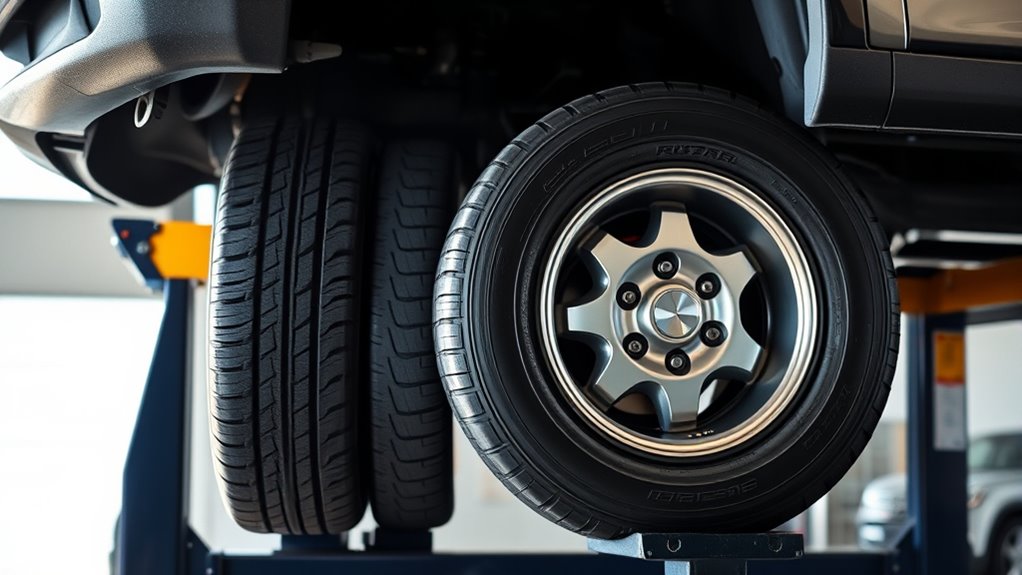
Incorporating a spare tire into your rotation schedule helps maintain even tread wear across all tires and can improve vehicle performance. To do this effectively, consider these strategies: 1. Use a full-size spare tire that matches your other tires to ensure uniform wear and performance. 2. Rotate the spare into the regular rotation pattern, replacing a worn tire after a set interval or mileage. 3. Adjust your rotation schedule to include the spare, typically swapping it in every 5,000-8,000 miles, depending on your vehicle and driving conditions. Additionally, proper maintenance practices are essential to keep all tires in optimal condition. Incorporating tire rotation patterns into your routine can help prevent uneven wear and extend the lifespan of your tires. Regularly checking tire pressure and alignment can also support tire longevity and overall safety. Moreover, understanding smart home gym technology can be beneficial for maintaining a consistent workout routine, much like proper tire care ensures vehicle safety.
Choosing the Right Rotation Pattern for Your Vehicle Type
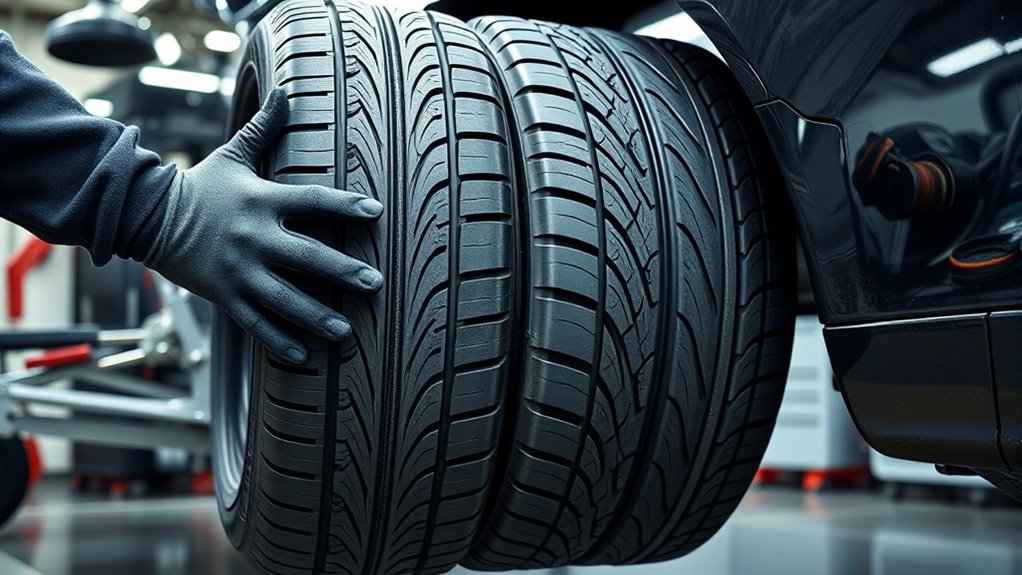
Choosing the right rotation pattern depends on your vehicle’s type and tire setup, as different vehicles benefit from specific methods to optimize tire wear and performance. For front-wheel-drive cars, the forward cross pattern helps address uneven rear tire wear by moving the front tires straight back and crossing the rear tires. Rear-wheel-drive vehicles often benefit from the rearward cross pattern, which shifts rear tires forward and crosses front tires to opposite sides, balancing wear during acceleration. All-wheel-drive models typically require the X-pattern to ensure even tread wear across all four tires. If your vehicle has directional tires, stick to the front-to-rear pattern on the same side. Always check your owner’s manual or consult a tire expert to ensure you choose the best rotation method for your specific vehicle.
Tips for Extending Tire Life and Ensuring Even Wear
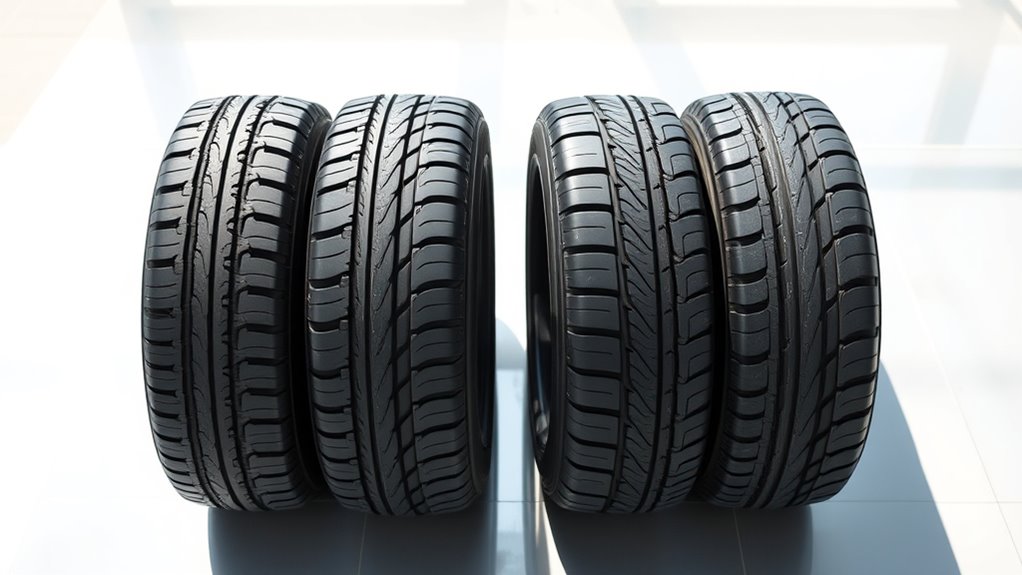
To maximize your tire lifespan and promote even wear, regular maintenance and proper driving habits are key. First, keep your tires properly inflated to the recommended pressure; under- or over-inflation causes uneven wear. Second, rotate your tires according to your vehicle’s schedule, adhering to the appropriate pattern for your tire type. Third, avoid aggressive driving, sharp turns, and sudden braking, which accelerate uneven tread wear. Additionally, regularly inspect your tires for signs of damage, embedded debris, or uneven tread patterns. Maintaining proper wheel alignment and balancing also prevents premature uneven wear. By staying proactive with these habits, you ensure your tires wear evenly, last longer, and perform safely across their lifespan.
Frequently Asked Questions
How Often Should I Rotate My Tires for Optimal Wear?
You should rotate your tires every 5,000 to 7,500 miles for ideal wear. This interval helps prevent uneven tread wear and extends tire life. Check your owner’s manual for specific recommendations, as some vehicles or tire types may require different schedules. Regular rotations also improve safety and performance, ensuring your tires wear evenly and last longer. Don’t forget to include the spare if you use a five-tire rotation system.
Can I Rotate Tires if They Have Different Tread Depths?
You can rotate tires with different tread depths, but it’s not ideal. Start by inspecting each tire’s wear, then rotate the tires so the ones with the most tread stay on the drive axle or in positions suited for your vehicle. Keep in mind, uneven wear can impact handling, so consider replacing tires with notably different tread depths for safety and peak performance. Consulting a tire professional is always a good idea.
Are There Specific Patterns for High-Performance or Sports Tires?
Yes, high-performance or sports tires often require specific rotation patterns. You should follow the manufacturer’s recommendations, which typically involve front-to-rear or diagonal X-patterns to guarantee even wear and preserve tire performance. Since these tires usually have directional tread or unique size specs, avoid mixing patterns or rotating in ways that could compromise traction or tread life. Always check your owner’s manual or consult a professional for the best approach.
What Signs Indicate My Tires Need Rotation Sooner?
You should rotate your tires sooner if you notice uneven tread wear, such as one side being more worn than the other, or if your vehicle pulls to one side while driving. Also, pay attention to vibrations, decreased traction, or if the tread depth difference is noticeable between tires. Regularly check your tires, and follow your owner’s manual recommendations to prevent premature wear and maintain ideal performance.
Does Tire Rotation Affect Fuel Efficiency or Vehicle Handling?
Yes, tire rotation can improve fuel efficiency and vehicle handling. When you rotate your tires regularly, you guarantee even tread wear, which helps maintain ideal traction and reduces rolling resistance. This means your engine doesn’t have to work as hard, saving fuel. Plus, balanced tires provide smoother handling and better steering response, making your driving safer and more comfortable. Regular rotations are a simple way to enhance performance and prolong tire life.
Conclusion
So, you’ve learned the secrets to stopping uneven tire wear—who knew rotation patterns could be so fascinating? Now, instead of just hoping your tires last, you’ve got the power to make them stretch further. Irony? The more you rotate, the less you’ll need new tires. So go ahead, follow those patterns—the best way to keep your tires happy and your wallet full. Who knew tire care could be so rewarding?