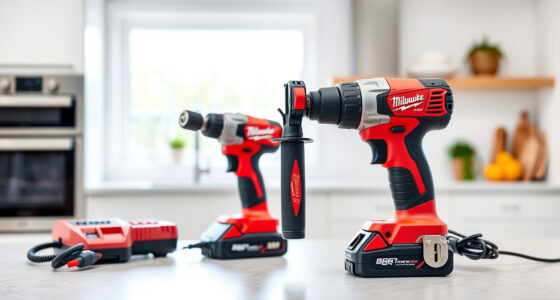
To choose the right tool organization without guessing, start by evaluating your workspace size, workflow, and how often you use each tool. Group similar items by function or size, then match storage solutions to their usage frequency—frequent tools should be easy to access. Use labels and modular systems for flexibility, and regularly review your setup for improvements. Keep these tips in mind, and you’ll discover how to create an efficient, stress-free workspace.

Get business pricing on garage and car supplies
- Business-only prices and quantity discounts
- Tax-exempt purchasing
- Multiple users, one account, clear invoices
Key Takeaways
- Assess your workspace size and layout to determine the most accessible storage solutions.
- Categorize tools by function, size, and frequency of use for logical organization.
- Choose storage options that protect tools from damage, dust, and moisture.
- Incorporate labeling and modular systems for easy identification and flexibility.
- Regularly review and refine your organization to adapt to changing tool collections and workflows.
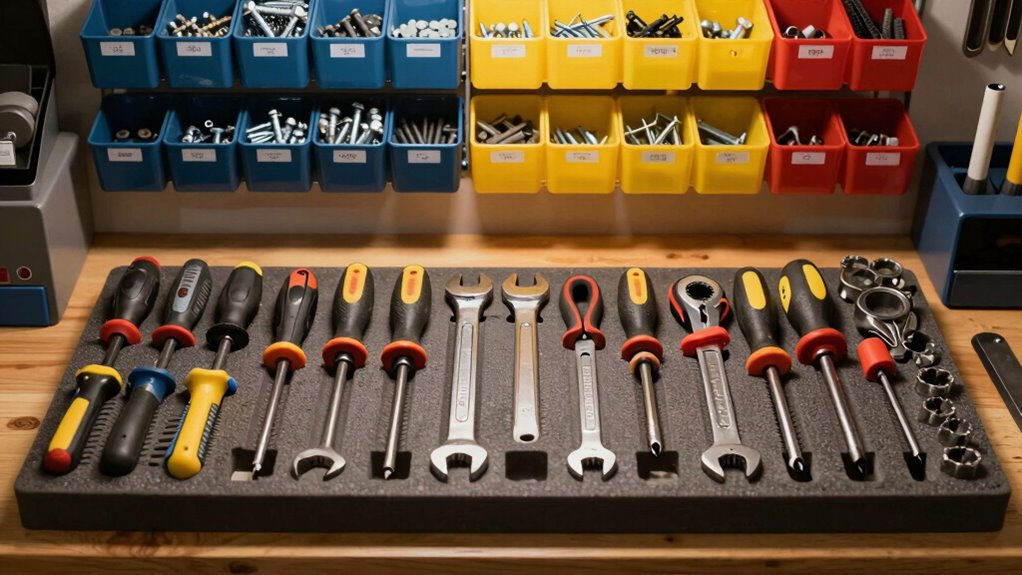
Organizing your tools effectively can make a significant difference in your productivity and workflow. When you approach your tool organization with intention, you reduce the time spent searching for the right tool and increase your efficiency. The key to achieving this lies in proper tool categorization and choosing the right storage solutions. Tool categorization involves grouping similar tools based on their function, size, or frequency of use, which streamlines your workspace and makes accessing tools faster. Whether you’re working in a garage, workshop, or toolbox, sorting tools into logical categories prevents clutter from taking over and helps you identify what’s missing or misplaced.
Effective tool organization boosts productivity by reducing search time and streamlining your workspace through logical categorization.
Your storage solutions should align with your tool categorization strategy. For instance, small parts organizers or drawer inserts work well for tiny items like nails, screws, or drill bits, while larger containers or wall-mounted racks are better suited for power tools and hand tools. When selecting storage options, consider how often you use each tool. Frequently used tools should be kept within easy reach, perhaps on a pegboard or accessible shelves, whereas seldom-used items can be stored in less accessible areas. This approach minimizes unnecessary movement and keeps your workspace efficient.
The right tool organization isn’t just about choosing storage options; it’s about understanding how you work. Think about your workflow and habits. Do you prefer to work on a specific project, or do you switch between tasks frequently? If you often switch tasks, a more modular organization that allows quick access to different tool categories makes sense. On the other hand, if you focus on one type of project, customizing your storage for that specific need can save you time and effort. Proper tool storage also helps to prevent damage to your tools by keeping them secure and protected from dust and moisture. Additionally, incorporating ergonomic storage solutions can reduce strain and improve your overall efficiency during work. To further enhance accessibility, consider incorporating labeling techniques that make it easier to find and return tools efficiently.
Investing in clear labeling can enhance your tool categorization even further. Labels help you quickly identify where each tool belongs, reducing the frustration of hunting through clutter. Properly organized storage can also facilitate preventing tool damage by reducing accidental drops or exposure to elements that cause corrosion. Additionally, consider modular storage solutions that allow for flexibility. As your collection of tools grows or changes, your storage system should adapt accordingly. Understanding proper tool storage ensures your tools stay organized and accessible.
Ultimately, choosing the right tool organization system boils down to understanding your workflow, categorizing your tools thoughtfully, and selecting storage solutions that fit your space and needs. Avoid guesswork by evaluating your habits, testing different setups, and refining your system over time. When your tools are well-organized, you’ll find that your projects become more enjoyable and less stressful, boosting both your productivity and satisfaction.
tool storage organizer with labels
As an affiliate, we earn on qualifying purchases.
As an affiliate, we earn on qualifying purchases.
Frequently Asked Questions
How Do I Assess My Current Tool Storage Needs Accurately?
You assess your tool storage needs by inspecting your current setup, noting which tools you frequently use, and identifying any clutter or inefficiencies. Use proper tool labeling to categorize items clearly, making it easier to locate and access tools quickly. Consider storage accessibility—ensure your tools are within reach and organized logically. Regularly review your setup to adapt to changing needs, optimizing both space and efficiency over time.
What Budget Considerations Should I Keep in Mind?
Starting with a gentle nudge toward prudent planning, you should focus on cost analysis and budget planning to keep expenses in check. Consider the total investment, including initial costs and ongoing maintenance. Prioritize versatile, durable solutions that offer long-term savings. Allocate funds wisely, avoiding impulse purchases, and explore options that fit your financial landscape. Staying mindful of these considerations guarantees your tool organization remains efficient without overspending.
How Can I Customize Organization for Specific Tools?
To customize your organization for specific tools, focus on tool labeling and storage accessibility. Label each container clearly to identify contents quickly, saving you time. Arrange tools based on how often you use them, placing frequently used items in easily accessible spots. Consider specialized storage options for delicate or bulky tools, ensuring everything is intuitive to find and safe to store, which streamlines your workflow and improves efficiency.
What Are Common Mistakes to Avoid When Organizing Tools?
Don’t fall into the trap of neglecting proper tool labeling and storage labels—they’re your maps in a maze. Avoid cluttering your space with unorganized tools or inconsistent labeling; it creates chaos rather than clarity. Always guarantee your labels are clear and visible, and tools are stored logically. This prevents misplacing tools, saves time, and keeps your workspace efficient. Remember, a well-labeled organization is the key to smooth, stress-free productivity.
How Often Should I Reorganize or Update My Tool Storage System?
You should reorganize or update your tool storage system at least every six months to guarantee tool safety and storage durability. Regular checks help prevent clutter, identify damaged tools, and keep everything accessible. If you notice tools are hard to find or damaged, update sooner. Consistent organization reduces accidents, prolongs the life of your tools, and maintains a safe, efficient workspace.
As an affiliate, we earn on qualifying purchases.
Conclusion
So, you’ve now got the secret sauce to choosing tool organization without firing up your guesswork engine. Remember, the right system isn’t just about neatness; it’s about making your chaos look intentional. After all, who needs a clutter-free space when you can master the art of pretending you’re organized? Embrace your new method—trust me, no one will ever suspect your “organized chaos” is just a clever disguise. Happy organizing, or at least, appearing to be!
wall-mounted tool rack for garage
As an affiliate, we earn on qualifying purchases.
As an affiliate, we earn on qualifying purchases.
small parts organizer for screws and nails
As an affiliate, we earn on qualifying purchases.
As an affiliate, we earn on qualifying purchases.
Halloween Picks
halloween
As an affiliate, we earn on qualifying purchases.