
Stop neglecting proper CFM management in your air compressor. Overloading or mismatched specifications cause performance issues, uneven pressure, and equipment failure. Failing to regularly check, calibrate, and maintain pressure regulators, relief valves, and hoses leads to pressure drops, spikes, and internal damage. Keep airflow demands in control, follow maintenance routines, and guarantee your compressor operates within its capacity. Continuing to overlook these practices risks costly repairs, but understanding these key points helps protect your equipment — and there’s more to learn.

Get business pricing on garage and car supplies
- Business-only prices and quantity discounts
- Tax-exempt purchasing
- Multiple users, one account, clear invoices
Key Takeaways
- Avoid neglecting CFM management, which can cause performance issues and equipment failure.
- Do not ignore regular maintenance of pressure relief valves, gauges, and regulators.
- Refrain from operating outside the compressor’s specified CFM range.
- Never overlook monitoring airflow demands to prevent system strain and overloads.
- Skip proactive maintenance, as neglect increases the risk of internal damage and costly repairs.
Many air compressor users make the mistake of ignoring proper CFM (cubic feet per minute) management, which often leads to performance issues and equipment failure. When you overlook how much airflow your compressor needs to operate efficiently, you risk overloading the system or causing uneven pressure regulation. Properly managing CFM isn’t just about meeting your immediate air demands; it’s about maintaining the health of your compressor over time. If you push your equipment beyond its capacity, you’ll find that pressure regulation becomes inconsistent, which can lead to fluctuations in output and potential damage to internal components. You might notice your compressor running constantly or shutting down unexpectedly, both signs of mismanaged airflow.
Ignoring proper CFM management can cause performance issues and equipment failure over time.
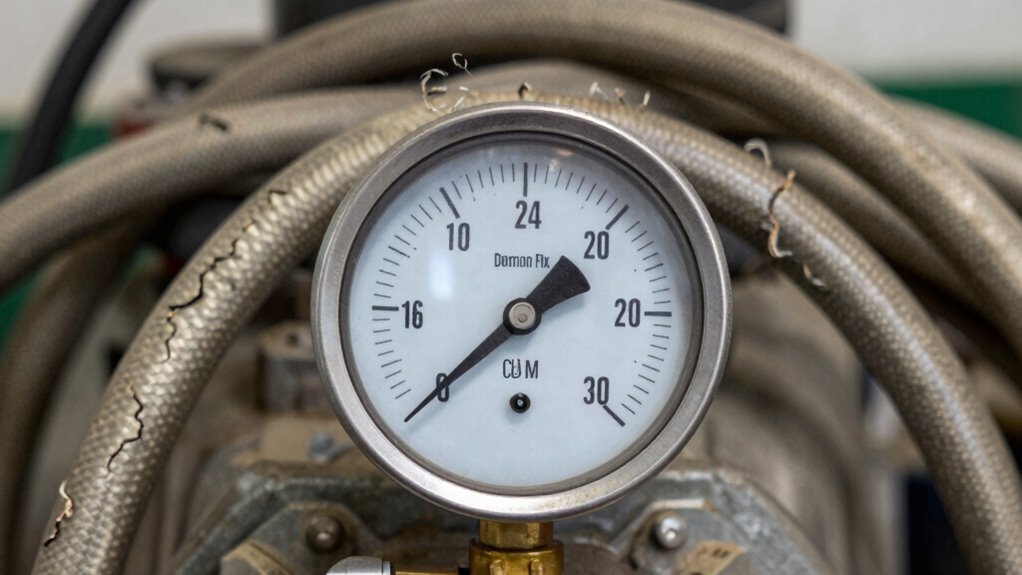
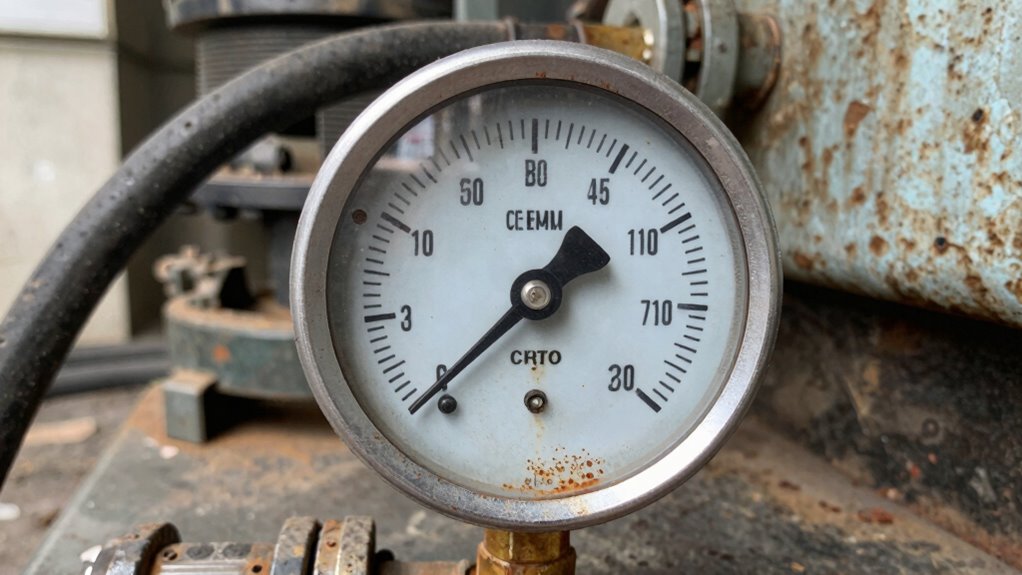
To prevent these issues, you need to develop sound maintenance practices that include regular checks on your compressor’s pressure regulation system. This involves inspecting pressure relief valves, gauges, and regulators to make sure they’re functioning correctly. When pressure regulation isn’t properly maintained, it can cause the compressor to cycle improperly, leading to inefficient operation and increased wear. Neglecting these practices means you’re likely to experience pressure drops or spikes, which can damage valves or other sensitive parts. Maintaining a consistent pressure is essential, so always verify that your pressure regulators are calibrated and free of debris. Doing this regularly helps you avoid sudden failures and keeps your system running smoothly. Additionally, understanding your compressor’s specifications ensures you’re operating within its optimal range and avoiding overloads. Recognizing the importance of airflow management can significantly enhance your system’s longevity and performance. Regularly monitoring airflow patterns and adjusting your system accordingly can prevent overuse and extend equipment lifespan.
Another key aspect of managing CFM effectively is understanding your compressor’s specifications and matching them to your workload. If you consistently demand more airflow than your compressor can deliver, you’re setting yourself up for trouble. Instead, you should monitor your usage patterns and adjust your system accordingly. This might involve upgrading your compressor or adding additional units to distribute the workload more evenly. Also, integrating filters and dryers into your setup helps maintain air quality, which in turn supports proper pressure regulation and reduces maintenance needs in the long run. Properly managing air quality plays a vital role in sustaining consistent pressure and extending equipment life. Additionally, understanding the compressor’s CFM capacity ensures you’re operating within its optimal range and avoiding overloads. Staying aware of your system’s airflow demands can help optimize performance and prevent unnecessary strain on your equipment.
Ultimately, the best way to prevent common failures related to CFM is to prioritize regular maintenance practices. This includes cleaning filters, checking hoses for leaks, and ensuring all pressure regulation components are in top shape. When you stay proactive about these tasks, you not only improve your compressor’s lifespan but also ensure consistent, reliable performance. Ignoring these steps might seem convenient at first, but it often leads to costly repairs and downtime. By paying close attention to pressure regulation and sticking to good maintenance practices, you keep your compressor functioning at its best, avoiding the common pitfalls caused by neglecting CFM management.
air compressor pressure regulator
As an affiliate, we earn on qualifying purchases.
As an affiliate, we earn on qualifying purchases.
Frequently Asked Questions
How Can I Accurately Measure My Air Compressor’s CFM?
To accurately measure your air compressor’s CFM, use proper measurement techniques like a calibrated airflow meter or a flow hood. Start by running your compressor at typical load conditions, then record the airflow readings. Make sure your measurement tools are calibrated regularly to maintain accuracy. Repeat the process several times to confirm consistency. This approach helps you identify true CFM output, avoiding common errors that can lead to inaccurate readings.
What Are the Signs of an Underperforming Air Compressor CFM?
Your air compressor’s underperformance can feel like trying to breathe through a straw. Signs include weak airflow, longer operation times, and inconsistent pressure. Check your air filter—clogged filters restrict airflow—and monitor motor wear, which can reduce efficiency. If your compressor struggles to meet demands despite proper maintenance, these signs point to a CFM issue, signaling it’s time for a thorough inspection or repair.
How Does Temperature Affect Compressor CFM Efficiency?
Temperature fluctuations directly impact compressor CFM efficiency because higher temperatures reduce air density, lowering output, while cooler temperatures improve compressor cooling, boosting efficiency. When temperatures rise, your compressor works harder to cool itself, which can decrease CFM performance. Conversely, maintaining consistent, ideal temperatures enhances compressor cooling, ensuring maximum airflow and efficiency. Monitoring and controlling temperature is essential for preventing performance drops and ensuring your compressor operates at its best.
Can CFM Issues Cause Damage to Air Tools?
While CFM issues don’t directly harm your air tools, they can subtly impact their longevity. Insufficient airflow may cause tools to work harder, leading to increased wear and potential early failure. Over time, this places unnecessary strain on your compressor, shortening its lifespan. To guarantee your tools perform at their best and last longer, maintaining proper CFM levels and avoiding pressure inconsistencies is essential, promoting both tool longevity and compressor durability.
What Maintenance Tips Improve CFM Consistency Over Time?
To improve CFM consistency over time, regularly check and replace your air filter to guarantee peak airflow. Keep your compressor well-lubricated to prevent internal wear that can reduce efficiency. Clean or replace air filters as needed and follow the manufacturer’s lubrication schedule. These maintenance steps help maintain steady airflow, prevent pressure drops, and extend your compressor’s lifespan, ensuring consistent performance for your air tools.
As an affiliate, we earn on qualifying purchases.
Conclusion
To keep your air compressor running smoothly, avoid overlooking these common CFM failures—think of it like tending a garden; neglecting one small weed can quickly turn into an overgrown mess. Regular maintenance and mindful operation are your best tools for preventing issues. Don’t let small problems snowball into costly repairs. Stay vigilant, stay proactive, and your compressor will serve you reliably, just like a trusted friend who’s always there when you need it most.
As an affiliate, we earn on qualifying purchases.
As an affiliate, we earn on qualifying purchases.
Halloween Picks
halloween
As an affiliate, we earn on qualifying purchases.