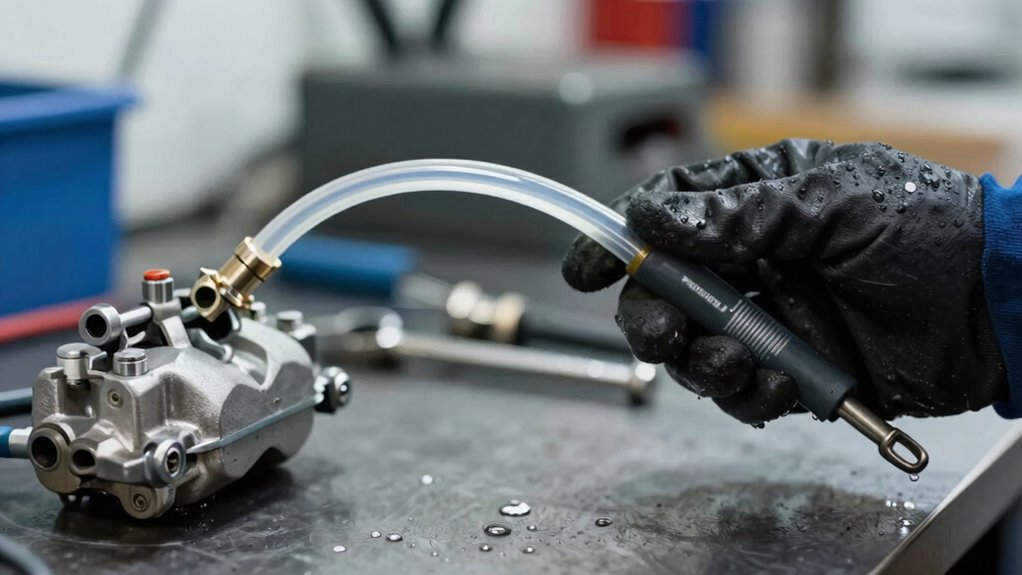

The hidden detail that makes brake bleeding work better is maintaining clean brake fluid and steady hydraulic pressure throughout the process. You need to guarantee no air or debris contaminate the system, or your pedal may stay soft or spongy. Using proper tools and techniques helps you keep pressure consistent, removing air more effectively. Pay close attention to fluid quality and pressure stability, and you’ll achieve reliable, firm brakes every time—learn more to master the full process.

Get business pricing on garage and car supplies
- Business-only prices and quantity discounts
- Tax-exempt purchasing
- Multiple users, one account, clear invoices
Key Takeaways
- Using a pressure or vacuum bleeder ensures consistent hydraulic pressure, enhancing the effectiveness of brake bleeding.
- Starting bleeding from the farthest wheel prevents residual air from remaining in the system.
- Maintaining a steady, continuous flow of fresh fluid prevents air from re-entering during the process.
- Regularly inspecting and replacing contaminated or old brake fluid improves system responsiveness.
- Properly preparing and cleaning components minimizes contamination, ensuring thorough air removal and optimal performance.
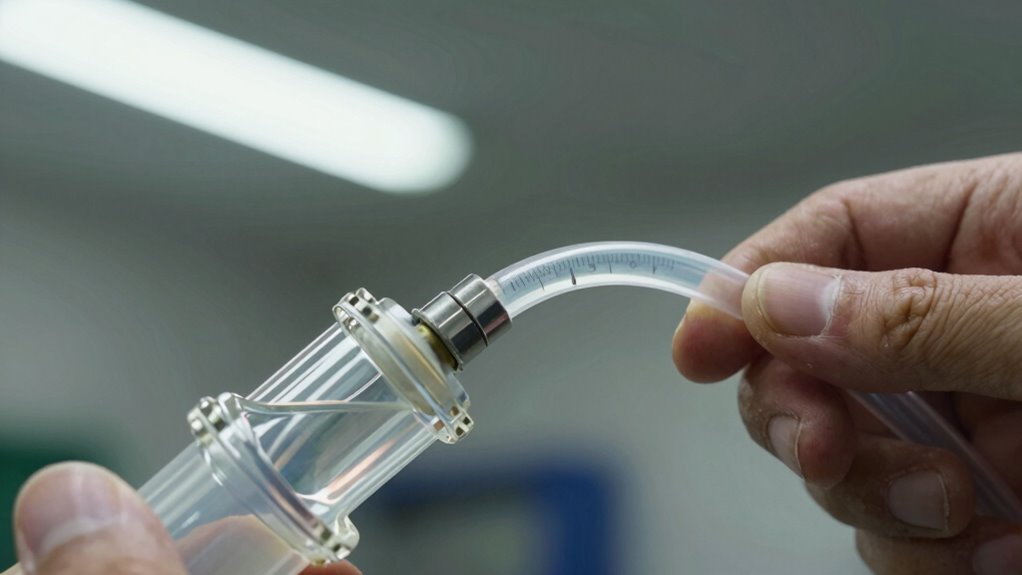
If your brake pedal feels soft or spongy, it’s a clear sign you need to bleed your brakes. This sensation usually indicates that air has entered the hydraulic system, disrupting the hydraulic pressure needed for efficient braking. When you press the pedal, instead of firm resistance, you feel a squishy feel because air compresses more easily than brake fluid. To restore proper brake performance, you must remove this air through a careful bleeding process. But here’s a crucial detail that can make your brake bleeding more effective: understanding the role of fluid contamination and ensuring the hydraulic pressure remains steady throughout the process.
Fluid contamination is often overlooked but can significantly impact brake performance. When moisture or debris gets into the brake fluid, it creates inconsistencies within the hydraulic system. This contamination reduces the fluid’s ability to transfer force effectively, making it harder to build and maintain proper hydraulic pressure. During bleeding, if you don’t use clean, fresh brake fluid, you risk perpetuating or even worsening the problem. Always inspect the brake fluid for discoloration or debris and replace it with fresh, high-quality fluid before starting the bleed. Doing so ensures that the fluid can transmit pressure uniformly, which is essential for a firm brake pedal. Additionally, understanding the importance of fluid quality can help prevent future brake issues. Proper fluid maintenance also extends the lifespan of your braking system components. Using proper tools like a pressure or vacuum bleeder can further improve the efficiency of the process. Ensuring consistent hydraulic pressure throughout the bleeding process is key to avoiding residual air pockets and achieving a reliable brake feel.
Contaminated brake fluid hampers pressure transfer; always inspect and replace for optimal brake performance.
Maintaining steady hydraulic pressure during bleeding is another key factor. When you bleed your brakes, you’re essentially pushing air and old fluid out of the system, replacing it with fresh fluid. If you don’t do this systematically—working from the farthest wheel to the closest—you might leave pockets of air or contaminated fluid behind. Proper bleeding techniques, like using a pressure or vacuum bleeder, help maintain consistent hydraulic pressure throughout the process. This consistency prevents the formation of new air pockets and ensures the entire system receives fresh fluid under the right pressure.
Ultimately, paying attention to fluid quality and controlling hydraulic pressure makes all the difference. When you keep the brake fluid clean and ensure steady pressure during bleeding, you allow the hydraulic system to perform optimally. This results in a more responsive pedal feel, shorter stopping distances, and safer driving. If you neglect these details, you’ll find yourself repeatedly bleeding your brakes without achieving lasting results. So, focus on the cleanliness of the fluid and the stability of hydraulic pressure—these are the hidden details that truly make brake bleeding work better.
brake bleeding kit with pressure pump
As an affiliate, we earn on qualifying purchases.
As an affiliate, we earn on qualifying purchases.
Frequently Asked Questions
What Tools Are Essential for Effective Brake Bleeding?
To effectively bleed your brakes, you need essential tools like a clear brake fluid reservoir, a wrench or socket set, and a brake bleeding kit with a one-way valve or pump. Focus on understanding different brake fluid types to select the right one. Employ proper bleeding process techniques, like starting from the farthest wheel, to guarantee air is expelled. These tools and methods make brake bleeding more efficient and reliable.
How Often Should Brake Fluid Be Replaced?
Imagine your brake system as a crucial river that keeps your vehicle flowing smoothly. To keep it pristine, you should replace brake fluid every 2 to 3 years, or roughly every 30,000 miles. This replacement schedule prevents corrosion and maintains brake performance. Keep an eye on the brake fluid’s color—dark or murky fluid signals it’s time for a change, protecting your safety and ensuring your brakes respond instantly when needed.
Can Brake Bleeding Be Done Without a Helper?
Yes, you can bleed your brakes without a helper by using a one-man brake bleeding kit or a vacuum pump. Just make certain you follow DIY safety tips, wear gloves, and work carefully to maintain your brake system’s integrity. Keep the reservoir topped off, and always check for leaks. With patience and attention to detail, you can effectively bleed your brakes alone, ensuring safe and reliable stopping power.
What Are Signs of Air in the Brake Lines?
Ever notice your brake pedal feels spongey or soft? That’s a clear sign of air in the brake lines. You might also see brake fluid contamination or experience inconsistent pedal firmness. Air bubbles compress under pressure, reducing braking efficiency. If your pedal feels less firm after bleeding, it’s time to check for trapped air and verify your brake fluid is clean, restoring proper pedal feel and safe braking performance.
Is Special Training Required to Perform Brake Bleeding?
You don’t need special training to perform brake bleeding if you understand the basics, but a thorough brake system inspection is crucial beforehand. Be aware of brake fluid contamination, which can affect performance. Follow proper procedures to prevent air from entering the lines. While simple, if you’re unsure or notice issues during bleeding, consider consulting a professional to guarantee safety and ideal brake system function.
As an affiliate, we earn on qualifying purchases.
Conclusion
Mastering brake bleeding basics can notably improve your vehicle’s safety and performance. Remember, a tiny hidden detail—like making sure no air bubbles remain—can make all the difference. Did you know that just 2% air in your brake lines can reduce braking effectiveness by up to 50%? By paying attention to this subtle detail, you guarantee your brakes work reliably every time. Keep these tips in mind, and your braking system will perform at its best when it matters most.
As an affiliate, we earn on qualifying purchases.
As an affiliate, we earn on qualifying purchases.
Fall Picks
fall essentials
As an affiliate, we earn on qualifying purchases.