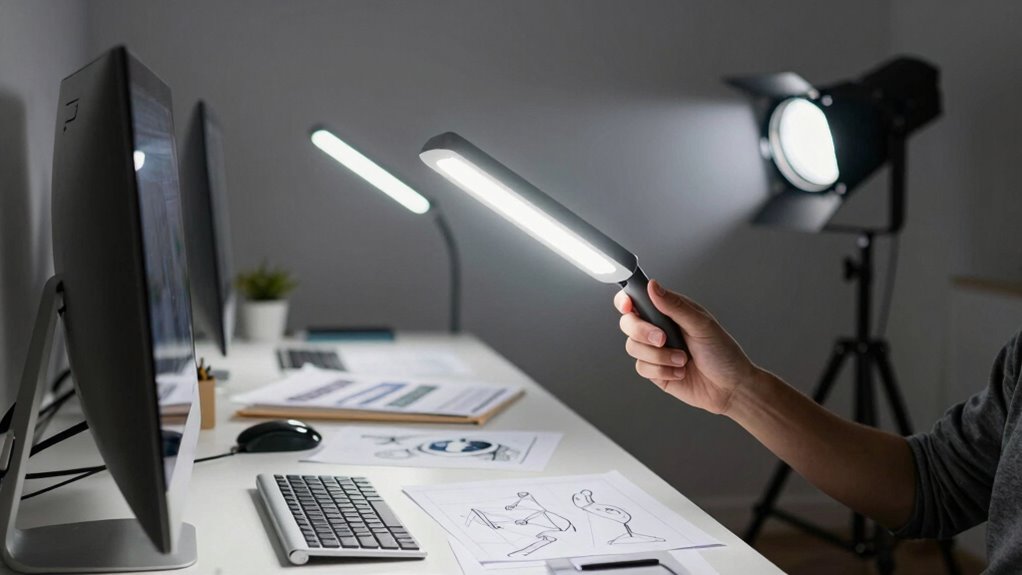

To go from beginner to pro in work light placement, focus on positioning lights slightly above your work surface, pointing downward for even illumination. Adjust angles to reduce shadows and glare, improving visibility for detailed tasks. Make certain your power sources are accessible and dedicate outlets to prevent hazards. Reposition lights as projects evolve, and experiment early to find the best setup. Keep safety and efficiency in mind—more tips await to help you perfect your workspace.

Get garage and car supplies delivered free — and shop member deals
- Fast, free delivery on millions of items
- Access to Prime Big Deal Days deals on October 6–7
- Prime Video, Amazon Music and more included
Key Takeaways
- Position lights slightly above the work surface, pointing downward for even, shadow-free illumination.
- Use adjustable, portable LED lights with accessible power sources to adapt lighting as tasks change.
- Plan for dedicated outlets and avoid daisy-chaining cords to ensure safety and reliable power.
- Reposition and angle lights as needed to minimize shadows and enhance visibility during detailed work.
- Prioritize safety and clarity to improve precision, reduce eye strain, and elevate your work from beginner to pro.
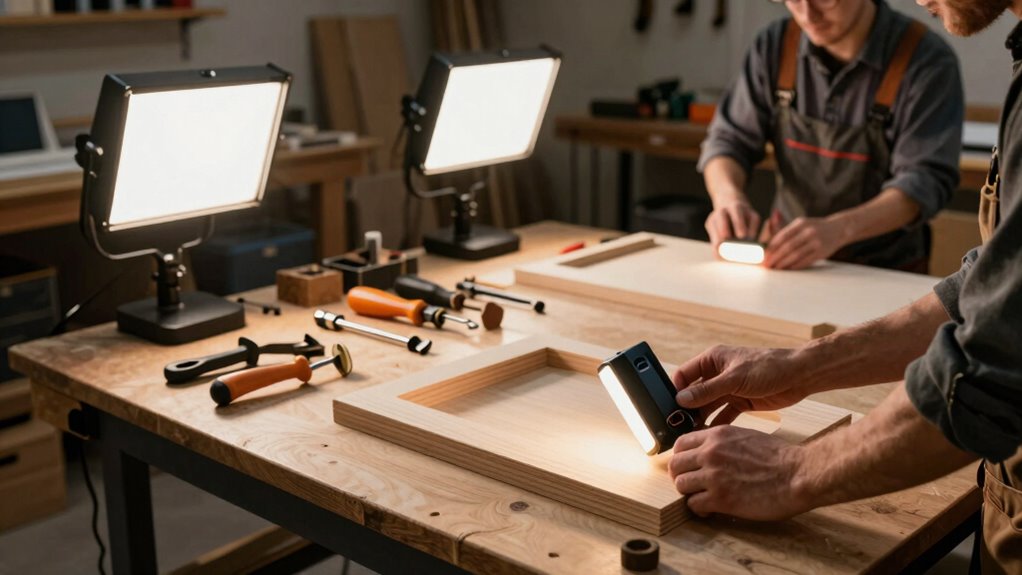
Proper work light placement is essential for working safely and efficiently, especially if you’re just starting out. When you’re setting up your workspace, the way you position your lights can make a significant difference in how well you see and how comfortable you feel. One of the first things to consider is lighting angles. You want to position your lights so that they illuminate your work area evenly, without casting harsh shadows or creating glare. A good rule of thumb is to aim your lights at an angle slightly above your work surface, pointing downwards. This way, you reduce shadows that can obscure details, making tasks like cutting, measuring, or assembling much easier. Adjusting the lighting angles as you work can help you find the perfect balance between brightness and shadow, which is especially helpful when working on intricate projects or in tight spaces. Additionally, understanding the importance of lighting angles and how they affect visibility can help you optimize your workspace effectively. Power sources are another critical aspect of proper work light placement. Your lights need a reliable power supply to operate consistently, so you should consider the location of outlets and the length of extension cords. If you’re working in a workshop or garage, make sure your power sources are easily accessible and capable of handling the wattage of your lights. Avoid daisy-chaining multiple extension cords, as this can cause electrical hazards or power drops that dim your lights. Instead, plan your setup so that each light has a dedicated and safe power source. Portable LED work lights with rechargeable batteries are also a great option for flexibility, as they offer cable-free operation and reduce clutter, making your workspace safer and more organized. Additionally, the placement of your work lights should allow for easy adjustments. As your project evolves, you might need to reposition your lights to better suit the task at hand. Keep your power sources accessible so you can quickly plug or unplug lights without hassle. Experimenting with different lighting angles and power arrangements early on helps you develop a setup that minimizes shadows, maximizes visibility, and keeps your workspace safe. Proper placement isn’t just about aesthetics; it’s about creating an environment where you can work confidently and accurately. With attention to lighting angles and thoughtful management of power sources, you’ll move from a beginner to a pro in no time, ensuring each project is done with precision and safety.
As an affiliate, we earn on qualifying purchases.
Frequently Asked Questions
How Do I Choose the Right Type of Work Light?
To choose the right work light, consider the light color you need—warm for comfort or cool for clarity. Check the power source to guarantee it fits your workspace, whether it’s battery-powered for portability or corded for continuous use. Think about the brightness level and durability based on your tasks. Matching these factors will help you pick a light that’s efficient, safe, and suited to your specific work environment.
What Safety Precautions Should I Follow When Installing Lights?
You should always wear safety gear like gloves and goggles to protect yourself from electrical hazards. Before installing lights, turn off the power supply to avoid shocks, practicing proper electrical safety. Use insulated tools and double-check connections. Keep your workspace dry and clear of clutter to prevent accidents. Following these precautions guarantees your safety, making the installation process smoother and preventing potential injuries or electrical issues.
How Can I Improve Light Coverage in Large Areas?
To improve light coverage in large areas, adjust your lighting angles to minimize shadows and guarantee even distribution. Use multiple lights strategically placed at different heights and angles. Make sure your power sources can handle the total wattage to avoid overloads. Combining different types of lighting, like ambient and task lights, enhances overall brightness. Regularly review and reposition lights for ideal coverage as your needs evolve.
What Are Common Mistakes to Avoid in Light Placement?
You should avoid placing lights too close to each other, which can cause glare and uneven coverage. Be mindful of color temperature choices; mismatched temperatures can create visual inconsistencies. Also, don’t overlook energy efficiency—using outdated or high-wattage bulbs wastes power and increases costs. Make certain lights are positioned to minimize shadows and maximize coverage, balancing brightness and color to create a comfortable, efficient workspace while avoiding common mistakes that compromise lighting quality.
How Often Should I Maintain or Replace Work Lights?
Think of your work lights like a trusty lighthouse—regular maintenance keeps them shining bright. You should check and replace bulbs or fixtures every 1-2 years, depending on usage. This guarantees energy efficiency and prevents costly breakdowns. Regularly cleaning and inspecting your lights also extends their lifespan, saving you money in the long run. Prioritize maintenance to keep your workspace well-lit, safe, and cost-effective.
rechargeable portable work light
As an affiliate, we earn on qualifying purchases.
As an affiliate, we earn on qualifying purchases.
Conclusion
Now that you’ve learned the basics, you’re ready to master work light placement. With every adjustment, picture the perfect glow illuminating your workspace, shadows fading into clarity. As you experiment, imagine yourself becoming more confident, more precise, more efficient. Keep practicing, keep visualizing, and watch your skills grow brighter with each project. Soon, you’ll create a well-lit environment that’s as polished and professional as your work itself—brightening your path from beginner to pro.
work light with dedicated outlet
As an affiliate, we earn on qualifying purchases.
As an affiliate, we earn on qualifying purchases.
As an affiliate, we earn on qualifying purchases.
Halloween Picks
halloween
As an affiliate, we earn on qualifying purchases.