Avoid costly brake bleeding errors by using the correct brake fluid type for your vehicle, as improper fluids can cause seal damage and leaks. Never skip checking and topping up the fluid reservoir, since running dry traps air and reduces braking power. Follow the proper bleed order and technique carefully, and never rush the process. Always wear safety gear and secure the vehicle before starting. Keep these tips in mind, and you’ll prevent common mistakes that could lead to expensive repairs and unsafe driving.

Get business pricing on garage and car supplies
- Business-only prices and quantity discounts
- Tax-exempt purchasing
- Multiple users, one account, clear invoices
Key Takeaways
- Using the wrong brake fluid type can cause seal damage and system corrosion.
- Neglecting to maintain proper brake fluid levels leads to air ingress and reduced braking performance.
- Failing to follow the correct bleed order traps air and results in incomplete bleeding.
- Not wearing safety gear or supporting the vehicle properly can cause injuries or accidents.
- Rushing the process or opening bleed screws too quickly introduces dirt and traps air, compromising brake efficiency.
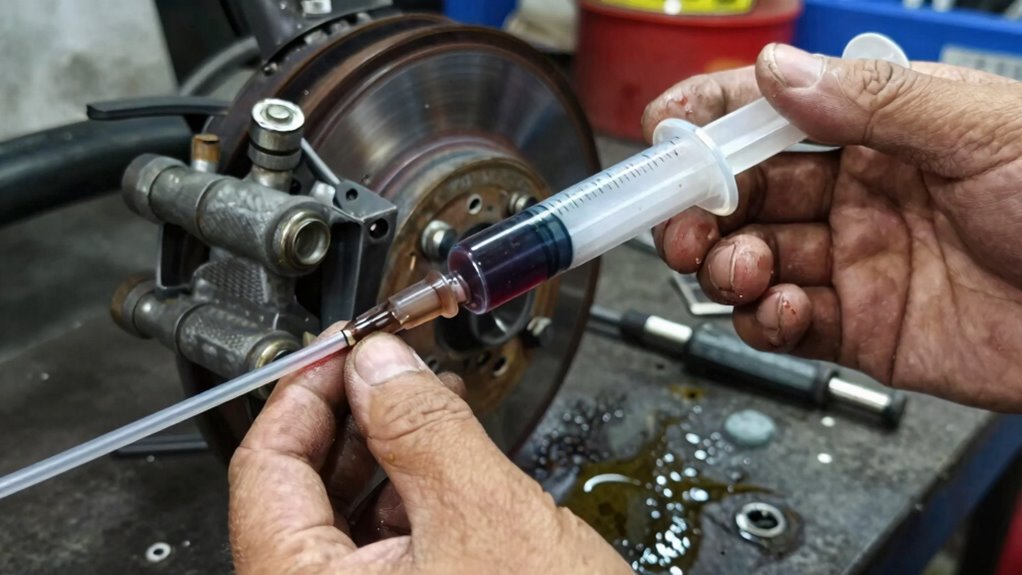
Bleeding your brakes might seem straightforward, but even small mistakes can lead to costly repairs or compromised safety. One common error is neglecting to understand your vehicle’s hydraulic system before starting. The hydraulic system relies on brake fluid to transfer force from the brake pedal to the brake calipers or drums. If you don’t use the correct type of brake fluid, you risk damaging seals, reducing braking efficiency, or causing leaks. Always check your owner’s manual for the recommended brake fluid, and make certain you’re selecting the right brake fluid type—be it DOT 3, DOT 4, or DOT 5. Using the wrong fluid can lead to corrosion or swelling of rubber components, which can turn a simple bleed into a costly repair.
Another mistake is failing to keep the brake fluid reservoir topped up during the process. If the reservoir runs dry, air gets drawn into the hydraulic system, making it harder to achieve a firm brake pedal. This can lead to incomplete bleeding, leaving air bubbles in the system that compromise braking performance. You should routinely check the fluid level and add fresh brake fluid as needed. Using old or contaminated brake fluid is another pitfall; old fluid absorbs moisture over time, which diminishes braking power and accelerates corrosion. Always use clean, fresh brake fluid and dispose of any old fluid properly.
Improperly bleeding the brakes can also stem from incorrect technique. For example, opening and closing the bleed screw too quickly or in the wrong sequence can trap air or introduce dirt into the system. Make sure to follow the manufacturer’s recommended bleed order—typically from the furthest wheel from the master cylinder to the closest—and do so slowly and steadily. Using the correct tools, like a brake bleeding kit or a one-man bleed system, makes the process more controlled and reduces the chance of error. Additionally, ensuring you understand the hydraulic system and its components can significantly improve your bleeding technique and prevent mistakes.
Lastly, overlooking safety precautions can turn a simple brake bleed into a dangerous situation. Always wear gloves and eye protection, and ensure the vehicle is securely supported on jack stands. Never work on the hydraulic system with the engine running unless specified, and always double-check that the brake pedal feels firm before driving. These precautions help prevent accidents and ensure your brakes work effectively once the job’s done. Avoiding these costly mistakes ensures your brake system remains reliable and safe, saving you money and peace of mind.
As an affiliate, we earn on qualifying purchases.
Frequently Asked Questions
How Often Should Brake Fluid Be Replaced?
You should replace your brake fluid every 2 to 3 years as part of regular brake fluid maintenance. Regularly performing bleeding procedures guarantees your brake system stays free of air and contaminants. Don’t wait until you notice brake issues—routine fluid replacement and proper bleeding techniques prevent costly repairs and ensure your vehicle’s safety. Keep an eye on manufacturer recommendations for specific intervals, and always use the right brake fluid for your car.
Can Improper Brake Bleeding Cause Pedal Softness?
Yes, improper brake bleeding can cause pedal softness. When bleeding errors occur, air gets trapped in the brake lines, preventing firm pedal feel. This trapped air compresses under pressure, leading to a spongy or soft brake pedal. To avoid this, make sure you follow correct bleeding procedures, use the right tools, and double-check for any remaining air bubbles. Proper bleeding technique is essential for maintaining brake performance and safety.
What Tools Are Essential for Effective Brake Bleeding?
You need essential tools like a clear brake fluid container, a wrench for the bleeding valve, and a clear hose to monitor fluid flow. Choosing the right brake fluid type is vital, and following the correct bleeding sequence prevents air pockets. A brake bleeder kit simplifies the process, ensuring steady flow and avoiding costly mistakes. With these tools and steps, you’ll achieve a firm pedal and safe braking performance.
Is It Safe to Bleed Brakes Without Professional Training?
Bleeding brakes without professional assistance isn’t entirely safe if you lack DIY safety experience. Brake systems are complex, and improper bleeding can lead to safety hazards. If you’re unsure, it’s best to seek professional help to guarantee proper procedure and safety measures. While DIY can save money, prioritizing safety means knowing when to call in experts, especially for critical tasks like brake bleeding.
How Do I Know if My Brake Fluid Is Contaminated?
You can tell if your brake fluid is contaminated through regular brake fluid inspection. Look for dark, cloudy, or gritty fluid, which indicates contamination detection. If the fluid smells burnt or has particles, it’s time to replace it. Contaminated brake fluid can compromise braking performance, so don’t ignore these signs. Regular checks guarantee your brake system stays safe and effective, preventing costly repairs down the line.
As an affiliate, we earn on qualifying purchases.
Conclusion
So, you’ve dodged those costly mistakes, huh? Well, don’t get too smug just yet—brake bleeding isn’t exactly brain surgery, but it’s close. Keep your wits about you, follow the basics, and avoid turning a simple job into a costly nightmare. After all, who needs a mechanic’s bill when you can master the art of bleeding brakes—and maybe even impress your friends with your newfound DIY skills? Stay sharp, and keep those brakes happy!
As an affiliate, we earn on qualifying purchases.
As an affiliate, we earn on qualifying purchases.
Halloween Picks
halloween
As an affiliate, we earn on qualifying purchases.