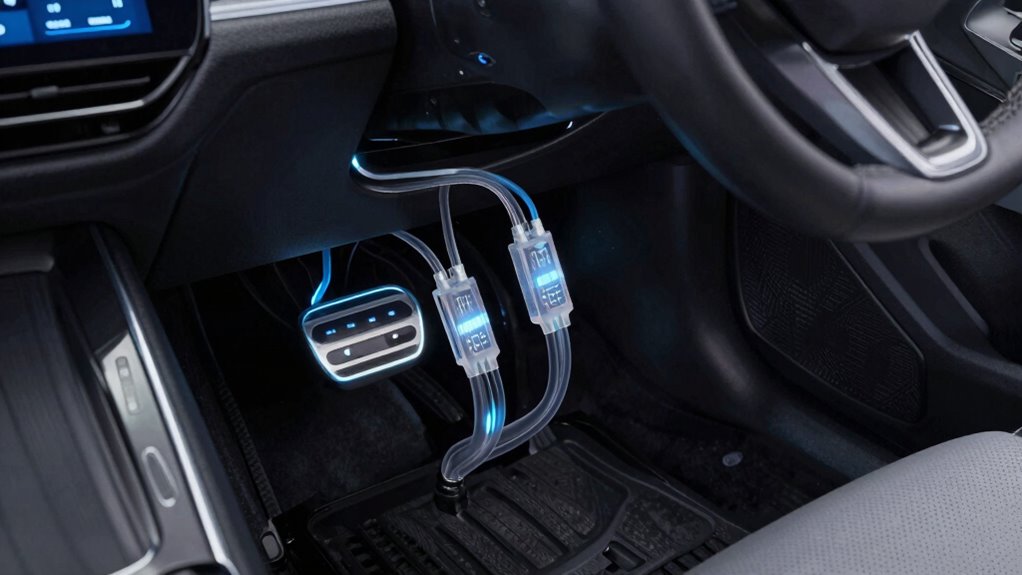

Brake-by-wire systems replace traditional hydraulic brakes with electronic controls, allowing for more precise and responsive braking. Instead of a mechanical pedal, sensors convert your input into electronic signals that manage brake force through actuators and ECUs. This setup improves pedal feel, reduces lag, and enhances safety features like ABS and regenerative braking. You’ll find better control and confidence with brake-by-wire, and if you keep exploring, you’ll discover how this technology integrates seamlessly into modern vehicles.

Get business pricing on garage and car supplies
- Business-only prices and quantity discounts
- Tax-exempt purchasing
- Multiple users, one account, clear invoices
Key Takeaways
- Replaces hydraulic components with electronic sensors, controllers, and actuators for braking management.
- Converts pedal input into electronic signals for precise, real-time braking force adjustments.
- Enhances pedal response, providing immediate, linear feedback and improved driver control.
- Integrates with safety features like ABS, ESC, and regenerative braking for optimized vehicle stability.
- Simplifies maintenance, reduces leaks, and boosts reliability through electronic system management.

Brake-by-wire systems are an innovative technology that replaces traditional hydraulic brake components with electronic controls. Instead of relying on brake fluid and mechanical linkages, these systems use sensors, electronic control units (ECUs), and actuators to manage braking functions. When you press the brake pedal, the system instantly translates that mechanical input into an electronic signal. This electronic control then determines how much braking force to apply, sending signals to electric actuators at each wheel. The result is a more precise and responsive braking experience, with the system adjusting in real time based on driving conditions.
One of the key benefits of brake-by-wire systems is their ability to enhance pedal response. Unlike traditional brakes, where pedal feel can sometimes be inconsistent or delayed due to hydraulic fluid dynamics, electronic control ensures a more consistent and immediate response. When you press the brake pedal, the system detects this input immediately and activates the brakes without any lag. This direct electronic translation allows for a more linear and predictable pedal feel, giving you better control and confidence, especially in emergency situations. You’ll notice that the pedal response feels sharper and more immediate, which can considerably improve your driving experience.
Brake-by-wire offers faster, more reliable pedal response for safer, more confident driving.
Another advantage of electronic control is that it enables the integration of advanced safety features like anti-lock braking systems (ABS), electronic stability control (ESC), and regenerative braking in electric vehicles. These systems work seamlessly with brake-by-wire technology to optimize braking force, prevent wheel lockup, and maximize energy recovery. These features are crucial for vehicle safety, as they help maintain stability and control during challenging driving conditions. The electronic controls constantly monitor wheel speeds, vehicle dynamics, and driver inputs, adjusting braking force on each wheel independently and instantly. This level of precision control helps you maintain better control during sudden stops or slippery conditions. Additionally, the absence of hydraulic components can reduce the overall system complexity, simplifying maintenance and diagnostics.
Since there are no hydraulic lines or brake fluid to worry about, brake-by-wire systems also reduce maintenance needs. They are less prone to leaks or fluid degradation, which can compromise braking performance over time. Additionally, because the system is electronically managed, manufacturers can incorporate features like brake fade compensation and auto-adjustment, further enhancing reliability and safety. Furthermore, electronic controls make it possible to implement automatic emergency braking and other driver assistance features, contributing to overall vehicle safety. These innovations are part of the broader integration of smart vehicle systems, which are transforming modern transportation.
Frequently Asked Questions
What Are the Main Advantages of Brake-By-Wire Systems Over Traditional Brakes?
You benefit from brake-by-wire systems because they offer precise electronic control, enhancing safety and responsiveness. These systems reduce weight by eliminating hydraulic components, improving overall vehicle efficiency. With fewer mechanical parts, maintenance becomes easier and less costly. Plus, brake-by-wire enables advanced features like automated braking and seamless integration with other driver assistance systems, making your driving experience smoother, safer, and more efficient.
How Do Brake-By-Wire Systems Handle Emergency Braking Situations?
In emergency braking situations, brake-by-wire systems respond instantly by activating electronic controls, providing quick and precise stopping power. They often include a hydraulic fallback, allowing traditional braking if the electronic system fails, ensuring safety. This setup enhances emergency response by minimizing delays and maintaining control. You can rely on these systems to deliver reliable, rapid braking, even in critical moments, thanks to their advanced technology and backup mechanisms.
Are Brake-By-Wire Systems Compatible With All Vehicle Types?
Is compatibility a bridge that can be crossed easily? Not quite. Brake-by-wire systems aren’t universal yet; vehicle compatibility varies based on make, model, and year. Some models may support retrofit possibilities, but many require significant modifications. Before you leap, check if your vehicle can handle such advanced tech. While the future holds promise, this innovative system isn’t a one-size-fits-all solution just yet.
What Are the Common Maintenance Requirements for Brake-By-Wire Systems?
You need to regularly check sensor calibration to guarantee your brake-by-wire system functions accurately. Keep an eye on software updates from the manufacturer, as they improve system performance and fix potential bugs. Additionally, inspect electronic components and wiring for signs of wear or damage. Proper maintenance helps prevent system failures, ensuring safe braking performance. If you notice any irregularities, consult a professional for a thorough diagnostic and necessary adjustments.
How Secure Are Brake-By-Wire Systems Against Cyberattacks?
Brake-by-wire systems are designed with cybersecurity vulnerabilities in mind, making them relatively secure against hacking. Manufacturers implement multiple layers of protection, including encryption and intrusion detection, to mitigate risks. While no system is completely immune, continuous updates and robust hacking mitigation strategies help safeguard brake-by-wire systems from cyberattacks, ensuring your safety and system reliability. Regularly staying informed about security enhancements is also essential.
Conclusion
As you navigate the future of vehicle technology, brake-by-wire systems stand out like the nervous system of a high-tech creature, seamlessly translating your commands into precise actions. They offer smoother, more responsive braking, making every drive safer and more efficient. Embracing this innovation is like upgrading from a bicycle to a jet—you’re stepping into a domain where control feels natural and instinctive. Get ready to experience driving that’s smarter, safer, and more connected than ever before.
Fall Picks
fall essentials
As an affiliate, we earn on qualifying purchases.