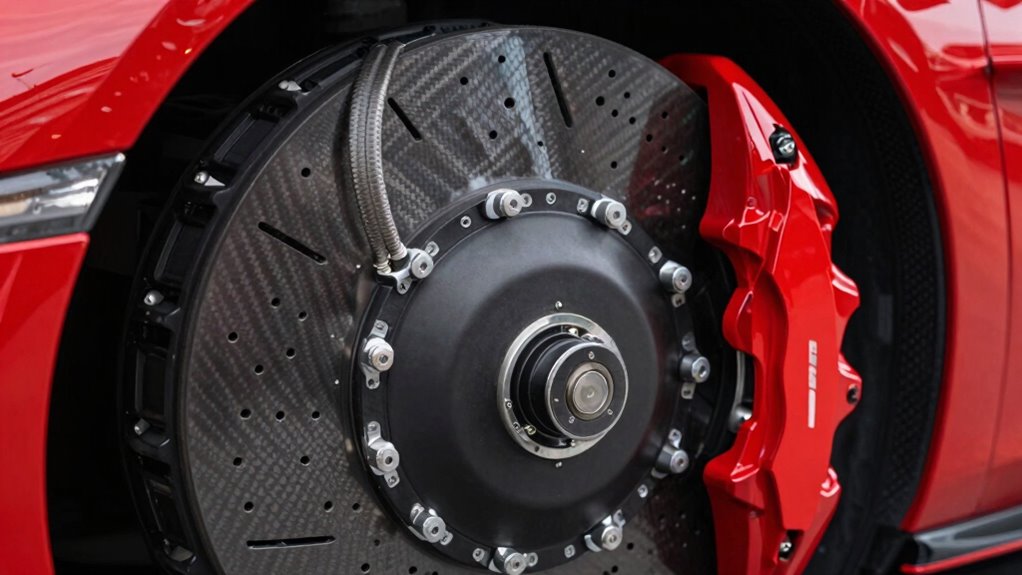

Supercars use advanced braking systems like carbon ceramic brakes and brake-by-wire technology to provide exceptional stopping power, safety, and control at high speeds. Carbon ceramic brakes reduce weight and withstand heat to prevent brake fade, while brake-by-wire systems offer precise electronic control and quick response. These innovations work together to make certain of consistent, reliable performance during intense driving. If you’re interested, you’ll discover more about how these cutting-edge systems keep supercars safe and responsive.
Key Takeaways
- Supercars utilize advanced braking systems like carbon ceramic brakes for high-performance stopping power and durability.
- Brake by wire systems electronically modulate brake pressure for precise and rapid response.
- Carbon ceramic brakes reduce weight and resist high temperatures, preventing brake fade during intense driving.
- Integration of brake by wire and carbon ceramic technology enhances safety features such as automatic emergency braking.
- These systems are continuously evolving to improve safety, efficiency, and driving control in supercars.
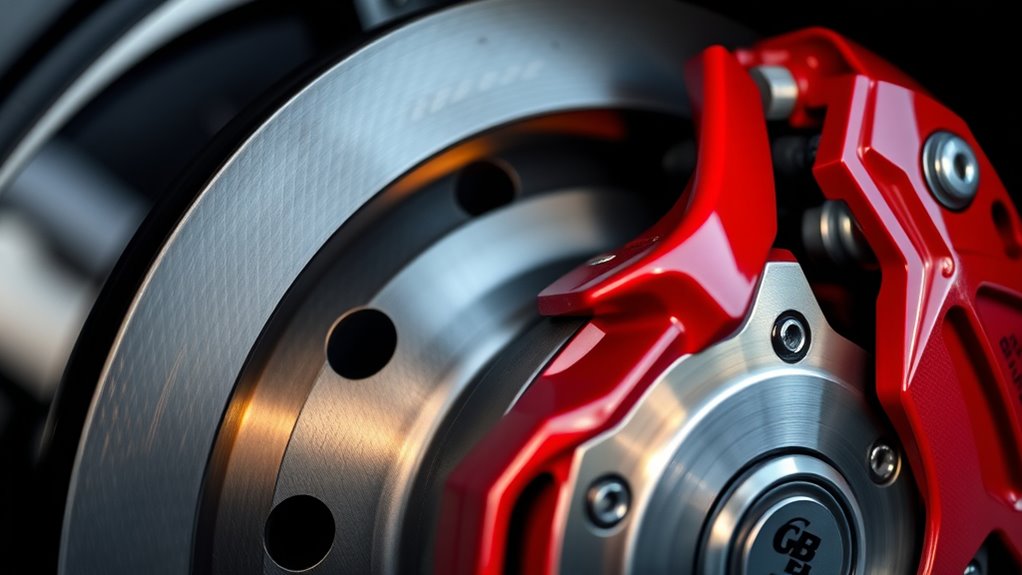
Supercars demand advanced braking systems to match their incredible speed and performance. When you’re pushing a supercar to its limits, stopping quickly and safely becomes just as important as accelerating rapidly. That’s why manufacturers equip these machines with cutting-edge technology like carbon ceramic brakes and brake by wire systems. Carbon ceramic brakes are a game-changer, offering superior stopping power while reducing weight compared to traditional steel brakes. Their high-temperature resistance allows you to brake aggressively without worry about brake fade, which can happen when brakes overheat during intense driving. This material also lasts longer, so you don’t have to worry about replacing brake components as often, keeping your supercar performing at peak level for longer periods.
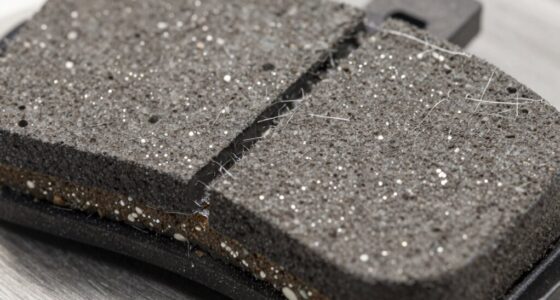
Supercars use lightweight, durable carbon ceramic brakes for superior stopping power and heat resistance during intense driving.
You’ll notice that carbon ceramic brakes deliver a more consistent pedal feel and quicker response times, critical factors when you need precise control at high speeds. These brakes work seamlessly with the car’s electronic systems to optimize braking performance, especially during aggressive deceleration. The integration of brake by wire systems further elevates the braking experience. Rather than relying solely on traditional hydraulic connections, brake by wire technology uses electronic signals to control braking force. This allows for more precise modulation of brake pressure, which can be adjusted in real-time based on driving conditions, driver input, or safety protocols. With brake by wire, you get a more immediate and predictable response, making your control over the vehicle more intuitive and confident.
Additionally, brake by wire systems enable features like regenerative braking, which recovers energy during deceleration and feeds it back into the battery in hybrid or electric supercars. This not only improves overall efficiency but also enhances the driving experience by providing smoother stops and better energy management. You might also appreciate how these systems improve safety by enabling automatic emergency braking or adaptive braking assist, which adjusts braking force to prevent accidents or reduce stopping distances.
In essence, the combination of carbon ceramic brakes and brake by wire systems transforms the braking experience in supercars. You get a setup that’s lightweight, durable, and highly responsive, giving you the confidence to push your vehicle to its limits while maintaining ideal safety. This synergy of advanced materials and electronic control not only enhances performance but also ensures that you can brake reliably, precisely, and comfortably at any speed. As supercars continue to evolve, these technologies will remain at the forefront, shaping the future of high-performance braking systems.
Frequently Asked Questions
How Do Carbon-Ceramic Brake Discs Improve Supercar Performance?
Carbon-ceramic brake discs improve supercar performance by offering exceptional durability and heat resistance, allowing you to brake harder without fading. They weigh less than traditional brakes, enhancing acceleration and handling. Their superior brake module integration ensures precise control and quick response. Plus, their long-lasting durability means you spend less time replacing pads and discs, keeping your supercar performing at its peak for longer.
What Are the Maintenance Requirements for Supercar Braking Systems?
A stitch in time prevents nine, so you should regularly check your supercar’s braking system. You need to sustain brake fluid levels and replace it as recommended, usually every 1-2 years. Inspect pad wear frequently to catch early signs of thinning or uneven wear. Keeping up with these maintenance tasks ensures your brakes perform at their best, providing safety and reliability on every drive.
How Does Brake Fade Affect Supercar Safety During High-Speed Driving?
Brake fade causes a reduction in stopping power during high-speed driving, which can seriously compromise your safety. When brake fade occurs, your supercar’s brakes become less effective as heat build-up diminishes friction. To stay safe, you should use safety measures like cooling down brakes during long descents and avoiding excessive brake use. Being aware of brake fade causes helps you prevent dangerous situations and maintain control at high speeds.
What Innovations Are Upcoming in Supercar Braking Technology?
Upcoming supercar braking innovations include advanced regenerative braking systems that recover energy during deceleration, enhancing efficiency. You’ll also see improvements in electronic brakeforce distribution, which optimizes braking force across wheels for better stability and control at high speeds. These technologies work together to boost safety, reduce wear, and improve overall performance, giving you a more responsive and reliable braking experience during intense driving scenarios.
How Do Brake Cooling Systems Prevent Overheating in Supercars?
You prevent overheating by using advanced brake cooling systems that enhance airflow and dissipate heat quickly. You should also select high-quality brake fluids that resist boiling under extreme temperatures and incorporate durable brake pad materials designed for heat resistance. These measures work together to keep your supercar’s brakes cool, ensuring consistent performance during intense driving or racing conditions, and reducing the risk of brake fade or failure.
Conclusion
In the world of supercars, superb braking systems are the silent saviors, sending speed safely to a standstill. With precise power and perfect performance, these braking beauties bring boldness to balance, blending brilliance with reliability. Embrace the excellence, experience the excitement, and enjoy the exhilarating essence of extraordinary engineering. Remember, when it comes to conquering curves, your supercar’s sensational braking system is your steadfast, super-powered safeguard.