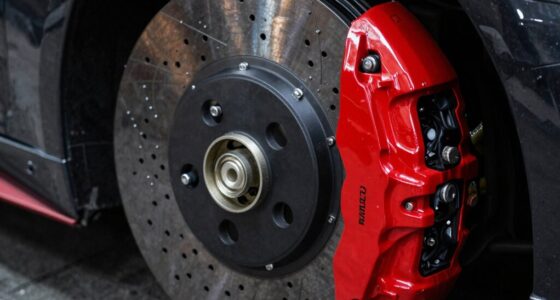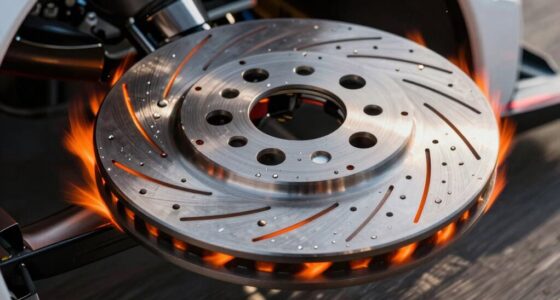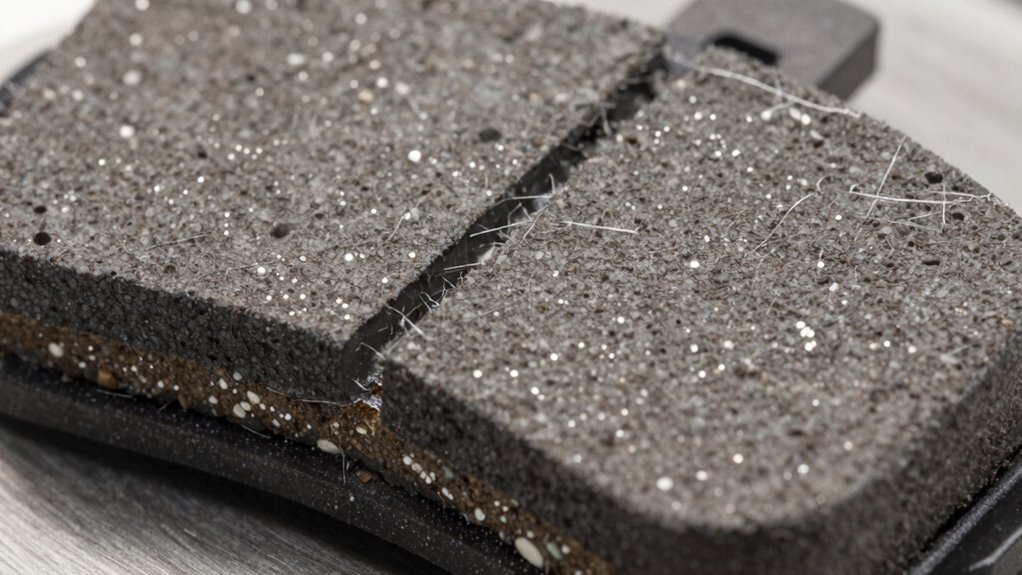

Choosing the right brake pad material depends on your driving needs. Ceramic pads are quiet, produce little dust, and last long but cost more. Semi-metal pads handle heat well and offer strong stopping power, perfect for demanding driving or towing. Organic pads are quiet and gentle on rotors but wear out faster, suitable for light vehicles. To find out which material suits your vehicle best, explore the details behind each option.
Key Takeaways
- Ceramic brake pads are made from ceramic fibers, bonding agents, and small metal content for quiet, clean, and durable braking.
- Semi-metal brake pads contain metal fibers like steel, copper, or iron, offering high heat resistance and strong stopping power.
- Organic brake pads are composed of natural materials such as rubber, glass, and resins, providing quiet and smooth braking but less durability.
- The choice of brake pad material impacts noise levels, dust production, heat management, and cost, affecting overall braking performance.
- Different materials suit various driving needs, from city commuting with ceramic pads to demanding conditions with semi-metal options.
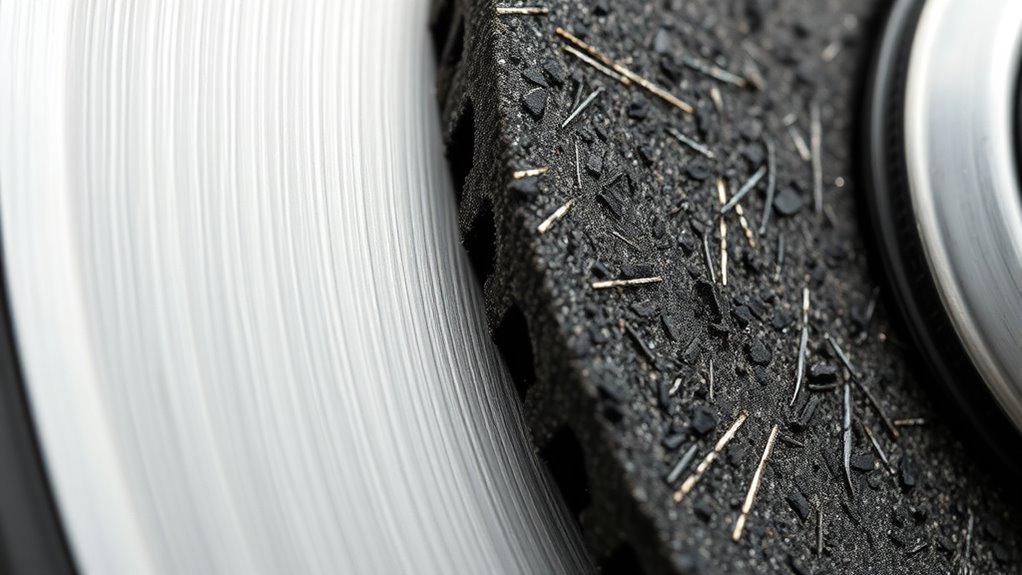
Ceramic brake pads are known for their quiet operation and clean performance. They’re made from ceramic fibers, bonding agents, and small amounts of metal. This combination results in a pad that produces minimal dust and noise, which is why many drivers prefer ceramic pads for daily commuting or city driving. They tend to last longer and handle heat well, maintaining consistent braking performance over time. However, ceramic pads can be more expensive upfront and may not deliver the same aggressive stopping power as semi-metal options, especially in high-performance or heavy-duty scenarios. Proper mammography techniques may be needed for effective imaging in smaller breasts, highlighting the importance of skilled healthcare providers. Semi-metal brake pads, on the other hand, are crafted from a blend of metal fibers—such as steel, copper, or iron—embedded within a friction material. They excel in heat dissipation and durability, making them suitable for demanding driving conditions like towing, off-roading, or sporty driving. Semi-metal pads tend to be more aggressive in stopping power and are generally less costly than ceramic pads. One downside is that they tend to produce more brake dust and noise, which some drivers find bothersome. Still, if you need a pad that can handle high temperatures and tough conditions, semi-metal is a solid choice. Organic brake pads are made from natural materials like rubber, glass, rubber, and resins. They’re softer than ceramic or semi-metal pads and usually quieter, providing a smooth and quiet braking experience. Organic pads are gentle on rotors and tend to wear out faster, which means you’ll need to replace them more often. They’re typically more affordable upfront and are often used in lighter vehicles or for occasional driving. However, because they wear down quicker, they might not be suitable for heavy or high-performance vehicles that generate a lot of heat during braking.
Frequently Asked Questions
How Do Brake Pad Materials Affect Vehicle Braking Distance?
Your brake pad materials directly impact your vehicle’s braking distance by affecting abrasion resistance and thermal conductivity. Higher abrasion resistance means the pads last longer and maintain consistent braking performance, while better thermal conductivity helps dissipate heat quickly, reducing brake fade. When your pads are made from ideal materials, they provide better grip and responsiveness, shortening the distance needed to stop safely. Choosing the right brake pad material is essential for effective and reliable braking.
Are There Eco-Friendly Brake Pad Material Options Available?
Sure, eco-friendly brake pads are available, and they’re practically superheroes in disguise. You can choose recyclable composites and biodegradable formulations that save the planet while stopping your car. Imagine reducing waste and pollution with every brake application—no more guilt trips at the recycling center! These green options prove you don’t have to compromise safety for sustainability, making your ride both eco-conscious and effective.
What Are the Signs of Brake Pad Material Failure?
If your brake pads show signs of failure, you’ll notice squealing or grinding noises, which indicate wear indicators are alerting you. You might also feel decreased braking performance or vibrations when stopping. Check for uneven wear or pad delamination, where layers separate. These signs suggest it’s time to substitute your brake pads promptly to ensure safety and avoid further damage to your braking system.
How Do Different Climate Conditions Influence Brake Pad Material Performance?
Imagine your brake pads as warriors facing nature’s extremes. In hot climates, intense heat can cause materials to soften, reducing durability and risking fade. Cold weather makes pads brittle, risking cracks and reduced grip. Humid conditions accelerate corrosion, compromising performance. Climate impact directly tests your brake pad materials’ resilience, demanding that they withstand temperature swings and moisture to maintain consistent, dependable performance. Choose pads designed for your environment to guarantee safety and durability.
Can Brake Pad Materials Cause Brake Noise or Vibrations?
Yes, brake pad materials can cause brake noise and vibration issues. You might notice squealing, squeaking, or grinding sounds, especially if the pads are worn or made from certain composites. Some materials, like metallic or ceramic pads, can also lead to brake vibration issues if they don’t perfectly match your rotor. Regular inspection and choosing the right pads for your driving style can minimize these brake pad noise and vibration problems.
Conclusion
So, next time you press the brake pedal, remember that the material inside your brake pads plays a vital role in safety and performance. While many believe ceramic pads are always best, research shows that semi-metallic pads often outperform them in high-temperature situations. Ultimately, understanding the science behind these materials helps you make smarter choices for your vehicle’s braking system, ensuring reliable stopping power when it matters most.