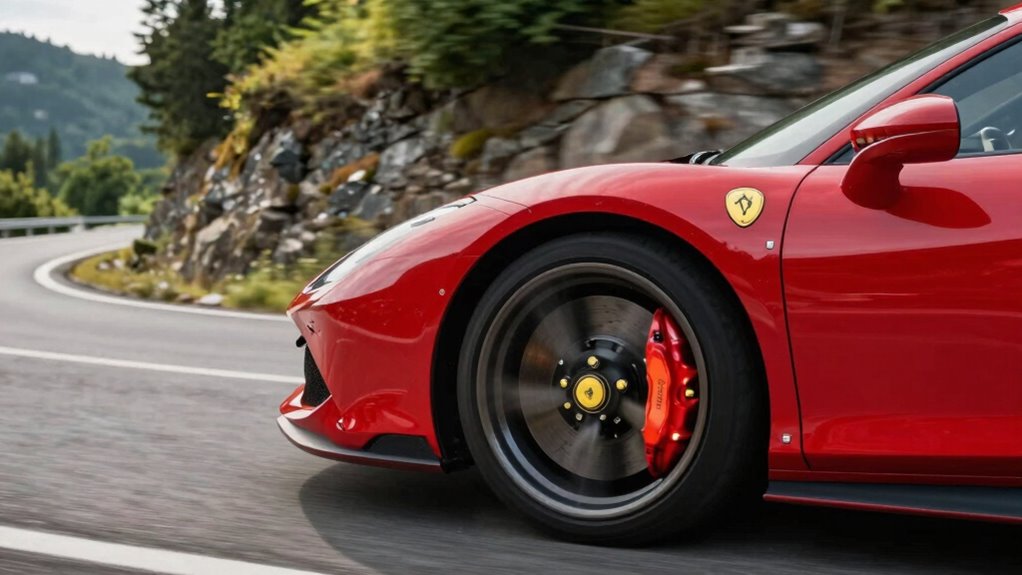

Brake fade happens when high-speed driving causes your brakes to overheat, reducing their effectiveness just when you need them most. The friction from braking turns kinetic energy into heat, and excessive heat can cause brake fluid to boil or rotors to warp, decreasing braking power. If you notice a soft pedal or longer stopping distances, your brakes might be fading. Staying alert to these signs and exploring effective prevention strategies will help keep your brakes reliable under intense conditions.
Key Takeaways
- Brake fade occurs when excessive heat from high-speed braking causes brake fluid boiling and rotor warping.
- Prolonged high-speed driving increases brake temperature, raising the risk of reduced braking effectiveness.
- Overheating brake components, like pads and rotors, diminishes friction and causes brake pedal softening or sponginess.
- Using proper cooling techniques and high-temperature brake materials can prevent fade during high-speed use.
- Recognizing early signs, such as increased stopping distance or burning smells, helps prevent brake failure.
What Is Brake Fade and How Does It Occur?

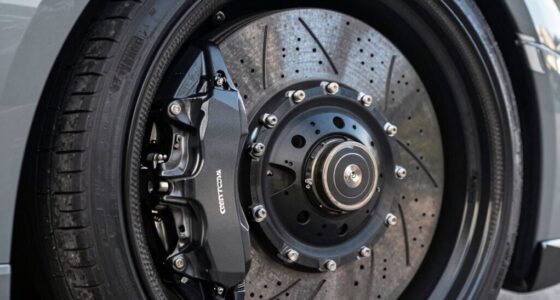
Brake fade happens when your vehicle’s braking system temporarily loses its effectiveness after prolonged or intense use. This occurs because the heat generated during braking causes brake fluid boiling, which creates vapor pockets that diminish hydraulic pressure. As a result, your brakes feel spongy or less responsive. Additionally, excessive heat can cause brake rotor warping, leading to uneven contact between the brake pads and rotors. Warped rotors reduce braking efficiency and can cause vibrations or pulsations when braking. These issues happen because the system can’t dissipate heat quickly enough, especially during high-speed driving or downhill descents. Recognizing these signs early helps prevent further damage and guarantees your braking system remains reliable under demanding conditions. Understanding heat management in braking systems can help drivers prevent brake fade and maintain safety. Proper heat dissipation methods, like vented rotors and cooling ducts, are essential for maintaining brake performance during aggressive driving. Implementing effective thermal management techniques can significantly improve the durability of brake components and prevent fade during extended use.
The Science Behind Brake Heat and Friction
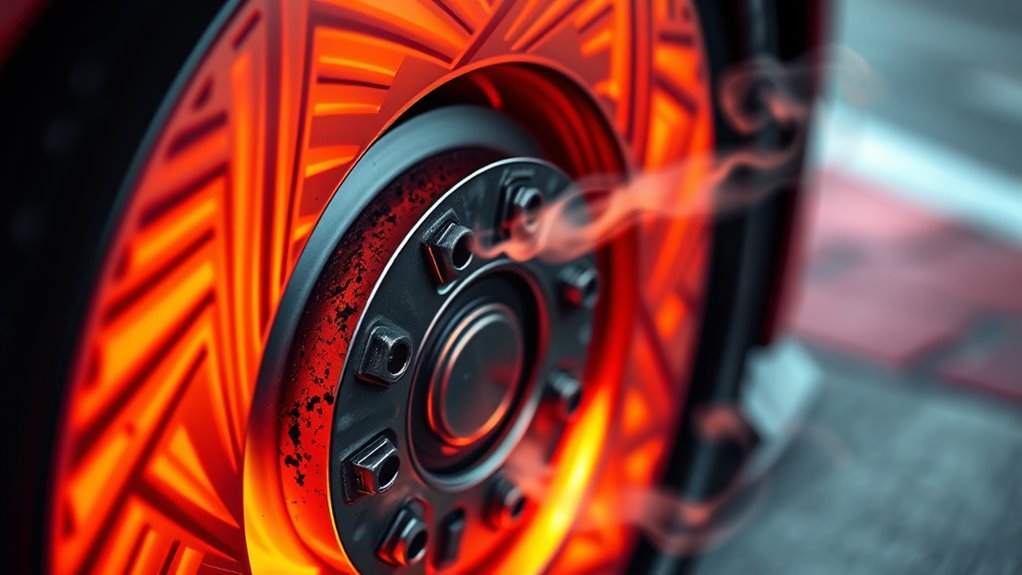
When you apply the brakes, friction between the brake pads and rotors converts kinetic energy into heat, which is vital for slowing your vehicle. The effectiveness of this process depends on brake material properties, like hardness and thermal conductivity, which influence heat absorption and dissipation. As you brake repeatedly or heavily, the friction coefficient can vary due to factors like temperature, contamination, or wear. These variations affect how much friction is generated at the contact surfaces. Higher temperatures can reduce the friction coefficient, decreasing braking efficiency. Conversely, certain materials maintain more consistent friction under heat, helping prevent brake fade. Understanding these interactions helps explain why choosing the right brake materials is essential for high-speed driving, where heat buildup is significant and can impact braking performance.
Common Causes of Brake Fade During High-Speed Driving
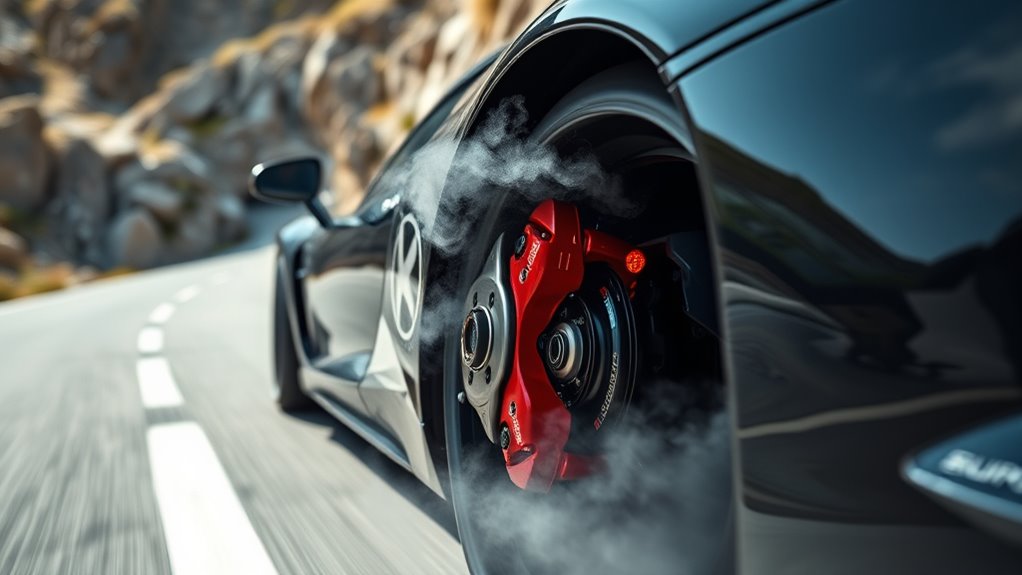
When you push your brakes hard at high speeds, overheating becomes a real risk, causing the components to lose effectiveness. Excessive brake usage, like frequent or prolonged braking, also generates more heat and accelerates fade. Understanding these common causes helps you avoid brake failure when it matters most. Additionally, advancements in nanotechnology have led to the development of brake components with enhanced heat dissipation properties, offering improved performance during high-stress driving. Incorporating performance-enhancing materials into brake design can further reduce the likelihood of fade under demanding conditions. Staying informed about brake maintenance practices can also help prevent overheating and ensure optimal performance. Proper thermal management techniques are essential for maintaining brake effectiveness during sustained high-speed driving. Regularly inspecting brake systems and using advanced cooling techniques can also significantly mitigate the risk of fade.
Overheating Brake Components
During high-speed driving, intense friction generates excessive heat in your brake components, leading to overheating. This can cause brake fluid to boil, reducing braking efficiency, and your brake calipers to warp or seize. When brake parts overheat, stopping becomes less predictable and more dangerous. The temperature rise can also damage rubber seals and other crucial parts, compounding the problem. To prevent this, monitor your brake fluid and guarantee it’s in good condition. Proper cooling systems, like ventilated rotors, help dissipate heat. Recognizing signs of overheating early can save you from brake fade and potential accidents. Additionally, understanding the contrast ratio of your braking system can help assess its ability to handle sudden temperature changes effectively. Regular maintenance and thermal management strategies are essential for high-performance braking systems. Maintaining optimal brake fluid levels and quality is vital to prevent vapor lock and ensure consistent braking performance. Implementing cooling techniques can further enhance the system’s capacity to handle extreme heat during high-speed stops, especially if your brake system has a limited thermal capacity.
Excessive Brake Usage
Excessive brake usage is a primary cause of brake fade during high-speed driving, especially when you repeatedly apply and release the brakes under heavy loads. Continuous braking generates heat that can overwhelm your brake pad materials, causing them to overheat and lose efficiency. The type of brake fluid you use also matters; high-quality brake fluid types with a higher boiling point resist vapor lock better, preventing brake fade. When you brake excessively, especially during downhill driving or sharp turns, the constant heat buildup can lead to brake fluid boiling and reduced hydraulic pressure. This diminishes braking power and increases the risk of fade. To avoid this, modulate your braking and consider using brake pad materials designed for high-temperature performance, reducing the likelihood of brake fade during intense driving conditions. Additionally, proper brake system maintenance can help ensure your brakes operate effectively under demanding conditions.
Recognizing the Signs of Brake Fade
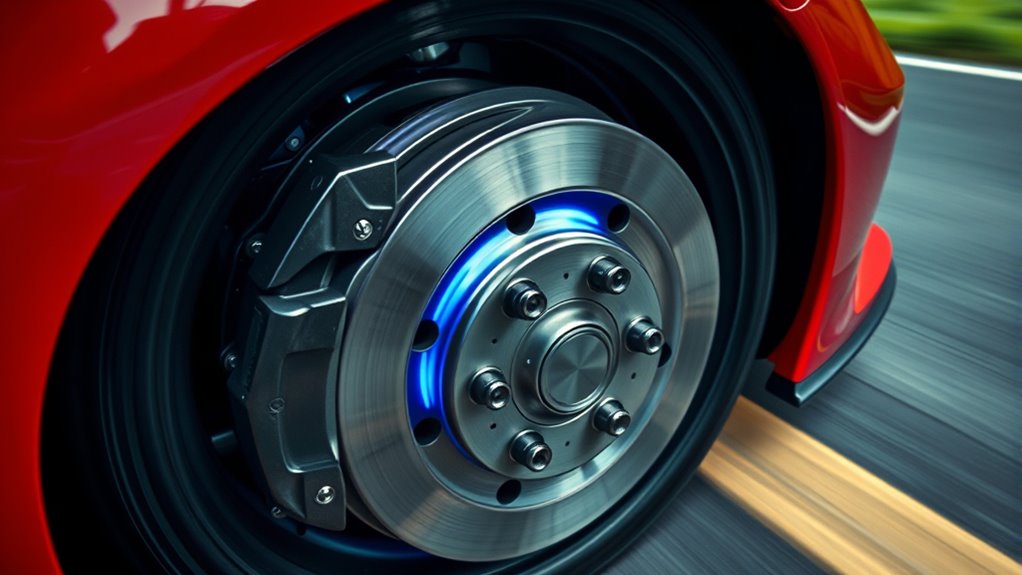
How can you tell if your brakes are starting to fade? One of the first signs is a soft or spongy brake pedal, which indicates reduced brake effectiveness. You might notice increased stopping distances or a slight burning smell, warning you that overheating is occurring. Pay attention to any brake system alarms or warning lights on your dashboard, as these are designed to alert you to potential issues. If you experience a delay in brake response or the pedal feels different than usual, it’s vital to respond immediately. Your driver response techniques should include easing off the brake gently, reducing speed, and pulling over safely. Recognizing these signs early helps prevent brake failure and allows you to take corrective action before the situation worsens. Additionally, understanding how brake fade develops can help you anticipate and prevent such issues during high-speed driving. Being aware of the overheating process can also aid in managing brake performance and avoiding dangerous situations. Monitoring brake temperature and recognizing early signs of overheating can greatly improve your safety during intense driving conditions. Consistent inspection of your brake system components can further help in identifying wear and tear before it leads to fading.
Strategies to Prevent Brake Fade at High Speeds
To prevent brake fade when driving at high speeds, you should adopt techniques that minimize excessive heat buildup. Choosing the right brake pad materials is essential; ceramic pads generate less heat and resist fade better than organic or semi-metallic options. Additionally, using high-quality brake fluid types, such as DOT 4 or DOT 5.1, helps maintain consistent hydraulic pressure and reduces boiling points, preventing vapor lock during intense braking. Avoid riding the brakes continuously and instead apply intermittent pressure to allow cooling. If your vehicle allows, upgrade to larger brake rotors, which disperse heat more effectively. Regularly inspecting brake components for wear and ensuring proper maintenance also minimizes heat accumulation, keeping your braking system reliable even at high speeds. Proper cooling techniques and understanding brake system thermodynamics can further enhance your safety during high-speed driving. Being aware of thermal management principles can help you optimize brake performance and prevent fade under demanding conditions. Incorporating proper cooling techniques can significantly extend the lifespan of your brake components and improve overall safety. Additionally, understanding the heat transfer mechanisms within your braking system can help you develop more effective cooling strategies. Developing an awareness of brake fade causes can aid in early detection and prevention of performance issues during high-speed driving.
Maintenance Tips to Keep Braking Performance Reliable

Regular brake inspections are essential to catch any issues early and guarantee your system functions properly. Proper brake pad care, like replacing worn pads promptly, helps maintain consistent stopping power. Staying on top of these maintenance tips keeps your brakes reliable when you need them most. Additionally, understanding Free Floating systems can help you better diagnose and maintain your braking system effectively. Regularly inspecting caliper operation can prevent uneven pad wear and improve overall braking performance.
Regular Brake Inspection
Routine brake inspections are essential for maintaining reliable braking performance and preventing brake fade during critical moments. Regularly checking your brake fluid quality guarantees it’s free of moisture and contaminants, which can compromise braking power under high stress. If your brake fluid is old or degraded, consider flushing and replacing it to improve overall system responsiveness. Additionally, inspecting your brake system upgrades, such as high-performance rotors or calipers, helps guarantee they’re functioning correctly and haven’t developed issues. Look for uneven wear, leaks, or corrosion that could impair braking efficiency. Staying proactive with these inspections allows you to catch problems early, maintaining ideal braking performance and reducing the risk of fade during intense driving situations. Incorporating smart monitoring systems can also provide real-time alerts on brake system health, enhancing safety and maintenance efficiency. Regular brake checks also help extend the lifespan of your brake components, saving money on repairs over time. Being aware of brake system degradation signs enables you to address potential issues before they compromise your safety.
Proper Brake Pad Care
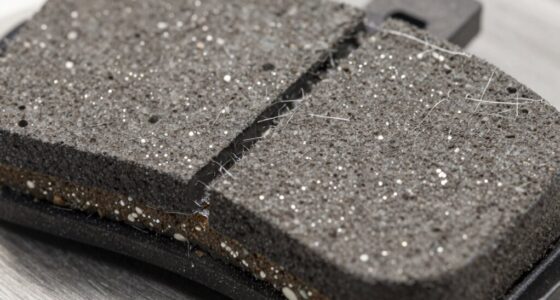
Maintaining your brake pads is key to ensuring consistent braking performance and preventing brake fade during demanding driving conditions. Regularly check the condition of your brake pad materials and replace them when they show excessive wear or glazing. Using the right brake pad materials suited for high-speed or heavy-duty driving can improve heat dissipation and reduce fade risk. Equally important is maintaining good brake fluid quality; old or contaminated fluid can impair brake response and cause overheating. Flush and replace brake fluid as recommended by your vehicle manufacturer to keep braking efficiency *best possible*. Proper brake pad care involves staying attentive to these elements, ensuring your braking system remains reliable under pressure, and helping you avoid fade when it matters most.
Frequently Asked Questions
How Does Brake Fade Differ Between Types of Vehicles?
You’ll notice brake fade varies between vehicle types, like electric vehicles and off-road vehicles. Electric vehicles often have regenerative braking, reducing fade because they recover energy and generate less heat. Off-road vehicles, with larger brakes and tougher conditions, tend to experience more fade due to prolonged braking over rough terrain. In both cases, heat buildup impacts braking efficiency, but design differences influence how quickly fade occurs and how it’s managed.
Can Upgrades in Brake System Materials Reduce Fade?
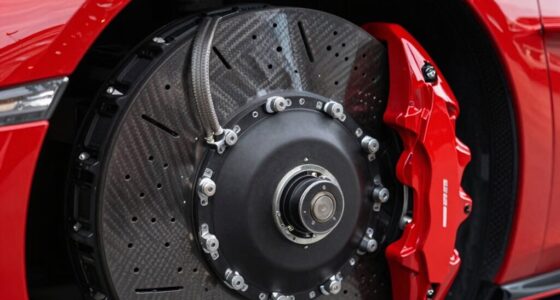
Upgrading your brake system materials can considerably reduce fade. By choosing high-quality brake pad composition, you improve heat resistance and friction stability, while rotor material selection, like ceramic or carbon-ceramic, helps dissipate heat more effectively. These upgrades keep your brakes cooler during high-speed driving, maintaining stopping power and preventing fade. Investing in better materials ensures your brakes perform consistently, even under intense conditions, enhancing safety and driving confidence.
What Role Does Ambient Temperature Play in Brake Fade?
Ambient temperature plays a vital role in brake fade because higher ambient heat increases the likelihood of thermal expansion in brake components. As temperatures rise, brake fluid and pads can overheat more quickly, reducing braking efficiency. When you drive in hot conditions, this ambient heat accumulates, causing the brake system to reach critical temperatures faster, which can lead to fade and decreased stopping power.
Are There Specific Driving Techniques to Minimize Brake Fade Risk?
To minimize brake fade risk, you should use proper driving techniques like applying light, steady pressure rather than harsh braking. Remember to perform cool-down procedures after high-speed driving to allow brakes to recover. Also, choose high-temperature brake fluid to maintain consistent performance under stress. These practices help prevent overheating and maintain braking efficiency, ensuring your safety during intense driving situations.
How Do Brake Fade Issues Vary in Different Racing Disciplines?
Brake fade issues can hit like a lightning bolt in different racing disciplines. In drag racing, intense stops cause rapid brake fluid degradation and brake pad glazing, leading to quick fade. In endurance racing, sustained braking heats components over long periods, risking similar problems. Rally racing faces muddy, unpredictable terrains that exacerbate brake overheating. Your challenge is recognizing how each discipline’s unique demands impact brake performance and prevention strategies.
Conclusion
As you push your car to its limits on the open road, imagine your brakes as a crucial shield, glowing with heat but still ready to stop you in an instant. By understanding brake fade and staying vigilant, you keep that shield strong. Regular maintenance and smart driving habits ensure your brakes remain reliable, even at high speeds. Keep your focus sharp and your brakes cool—so your ride stays safe, powerful, and unstoppable.