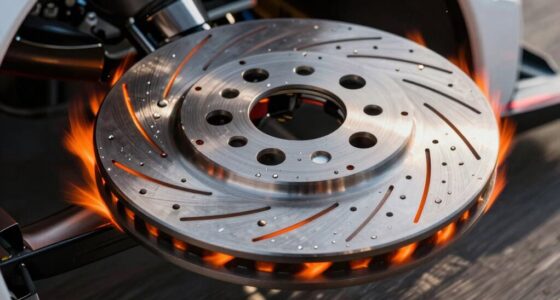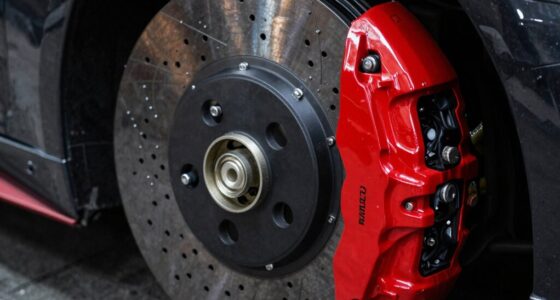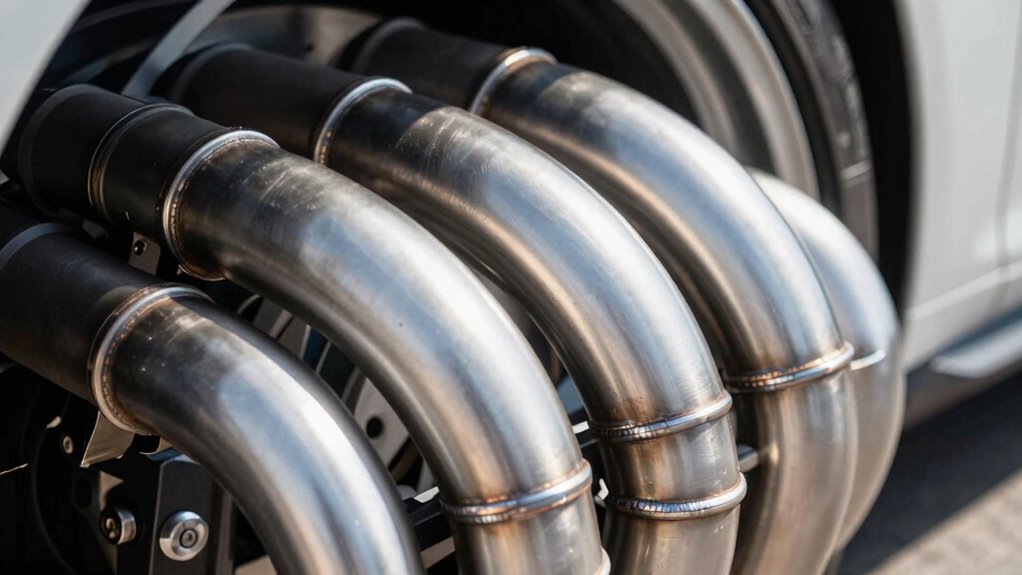

Brake cooling ducts are designed to direct cool air toward your brakes to prevent overheating during intense driving. They help dissipate the heat generated from braking forces, reducing the risk of brake fade and ensuring consistent performance. Using specially shaped channels and strategic placement, these ducts optimize airflow while minimizing drag. As you learn more, you’ll discover how their materials, design, and testing work together to keep your brakes cool and reliable under pressure.
Key Takeaways
- Brake cooling ducts channel cool air directly to brakes to prevent overheating during intense braking.
- They are made from durable, lightweight materials like plastics, aluminum, or composites to withstand high temperatures.
- Proper aerodynamic design ensures efficient airflow, minimizing drag and turbulence for optimal cooling.
- Strategic placement near wheel wells or calipers enhances cooling while maintaining vehicle aerodynamics.
- Testing and CFD simulations are essential to optimize duct effectiveness and validate performance under real racing conditions.
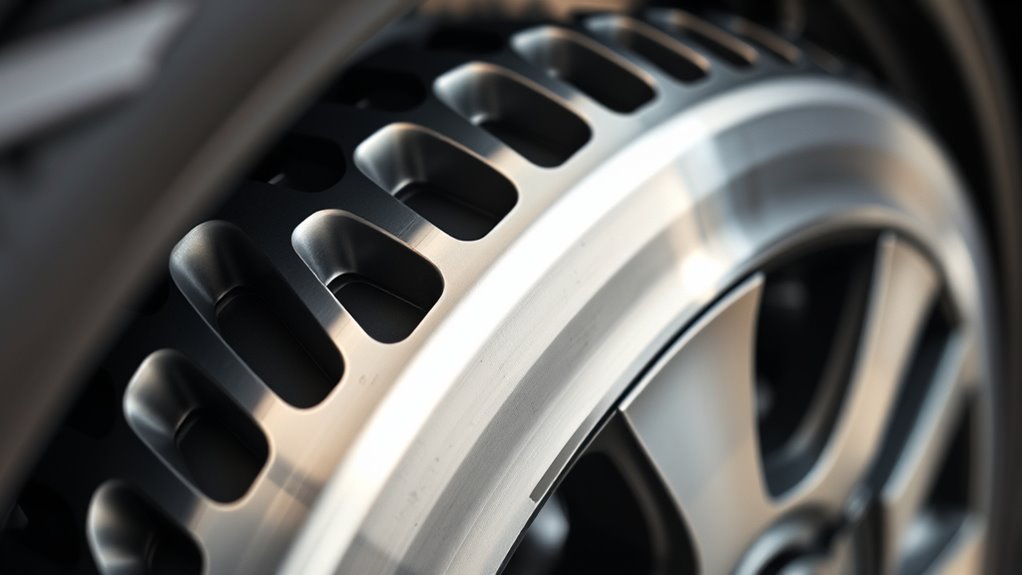
Have you ever wondered how race cars keep their brakes from overheating during intense driving? It’s a combination of smart engineering, with brake cooling ducts playing a pivotal role. These ducts are specially designed channels that direct cool air toward the brakes, helping to dissipate the heat generated during braking. To make them effective, engineers pay close attention to material selection and aerodynamic design. Using the right materials ensures the ducts are durable, lightweight, and capable of withstanding high temperatures without degrading. Materials like reinforced plastics, aluminum, or composites are popular choices because they balance strength with minimal weight, which is essential in racing where every ounce counts. The durability of these materials means the ducts can endure the harsh conditions of high-speed braking, ensuring consistent performance race after race.
Aerodynamic design is equally important. You want the ducts to smoothly channel air towards the brakes without creating unnecessary drag or turbulence that could slow the vehicle down. Engineers shape the ducts to optimize airflow paths, making sure the air enters swiftly and efficiently reaches the brake components. They often incorporate smooth curves and strategic vents to maintain a steady flow, avoiding turbulence that could diminish cooling effectiveness. The design process involves computational fluid dynamics (CFD) simulations, which help visualize how air flows around and through the ducts. By refining these designs, they maximize cooling while minimizing aerodynamic penalties, so you get both safety and speed. Additionally, understanding the role of airflow in cooling efficiency is vital to developing effective duct systems. Proper airflow management enhances the cooling performance, ensuring that the brakes stay within optimal temperature ranges during aggressive driving. Incorporating real-world testing also helps validate these designs under actual racing conditions. Furthermore, advancements in material technology continue to push the boundaries of duct performance, allowing for even lighter and more efficient cooling solutions.
To further improve cooling performance, engineers consider air intake placement and how it influences airflow direction and volume. The placement of the ducts also matters. Typically, they’re positioned near the wheel wells or behind the brake calipers, where airflow is naturally stronger. This strategic positioning enhances cooling efficiency without requiring additional modifications to the car’s body. The ducts are also designed to be as unobtrusive as possible, blending seamlessly with the car’s aerodynamics to avoid disrupting the overall airflow. When you’re pushing your vehicle to its limits, these carefully crafted ducts help prevent brake fade—where brakes become less effective due to excessive heat. They keep the temperature in check, allowing you to brake harder, more confidently, and for longer periods.

EWK 6.5L Pneumatic/Manual Oil Extractor, Oil Change Pump for Automotive Fluids Vacuum Evacuation, Fluid Extractor Pump Tool for DIY Mechanics
【Oil Change Made Simple】 Skip the shop and stay clean — extract oil right through the dipstick without...
As an affiliate, we earn on qualifying purchases.
Frequently Asked Questions
How Do Brake Cooling Ducts Affect Overall Vehicle Aerodynamics?
Brake cooling ducts can influence your vehicle’s aerodynamics by increasing aerodynamic drag due to additional openings and ducting. However, they improve airflow management by directing air efficiently to brake components, preventing overheating. Properly designed ducts balance cooling needs with minimal drag impact, enhancing overall performance. You’ll notice better braking stability and potentially improved fuel efficiency, as effective airflow management reduces turbulence and maintains smoother airflow around your vehicle.
Are There Different Types of Materials Used for Brake Cooling Ducts?
Did you know that aluminum is the most common material for brake cooling ducts due to its lightweight and excellent heat dissipation? You have several material options, including carbon fiber, plastic, and aluminum, each offering different benefits. Installation methods vary from simple clips to more complex mounting brackets, ensuring the ducts stay secure under harsh conditions. Choosing the right material and method depends on your vehicle’s performance needs and environmental demands.
Can Brake Cooling Ducts Be Added to Any Vehicle?
Yes, you can add brake cooling ducts to most vehicles, but universal compatibility varies. You’ll need to take into account custom installation to guarantee the ducts fit your specific make and model. Some kits are designed for broad compatibility, making installation easier, while others may require modifications. Always check if the ducts are compatible with your vehicle’s design and consult a professional if needed to attain optimal cooling performance.
What Maintenance Is Required for Brake Cooling Ducts?
You should regularly inspect your brake cooling ducts for debris, damage, or blockages. Cleaning procedures involve removing dirt, leaves, and buildup to guarantee proper airflow. Check for cracks or loose fittings that could affect performance. Incorporate these inspection routines and cleaning procedures into your vehicle’s maintenance schedule to keep the ducts functioning efficiently. Proper maintenance prevents overheating, prolongs brake life, and maintains ideal braking performance.
Do Cooling Ducts Impact Brake Performance in Wet Conditions?
In wet weather, cooling ducts can improve brake performance by directing water away from the brakes, enhancing water diversion and reducing the risk of brake fade. Properly designed ducts help keep brakes dry and cool, maintaining ideal braking efficiency. However, if they’re blocked or damaged, water can accumulate, negatively impacting performance. Regular inspection ensures your ducts function correctly, especially in wet conditions, for safer and more reliable braking.

FOUR UNCLES 200cc Fluid Extractor & Fill Pump for Automotive Use - Oil Syringe with a 23" Hose & Two 12" Extension Tubes for Easy Oil Change
LONGER TUBES: The fluid transfer pump includes two extension hoses that can be connected for a reach of...
As an affiliate, we earn on qualifying purchases.
Conclusion
By now, you see how essential brake cooling ducts are for maintaining ideal braking performance. Some might think they’re just a minor upgrade, but neglecting them can lead to brake fade or failure during intense driving. Don’t underestimate their importance—proper cooling keeps your brakes reliable and safe under pressure. Installing quality ducts is a smart investment that pays off, especially if you push your car hard. Stay proactive, protect your brakes, and enjoy confident, consistent stopping power every time.

SEDY Fluid Extractor - 200cc Multi-Purpose Syringe, Oil Suction Pump, Manual Extraction and Filling Pump, Automotive Oil Syringe
EFFICIENCY BOOST - 200cc Multi-Purpose Syringe ensures efficient fluid pump actions, be it brake fluid, gear oil, or...
As an affiliate, we earn on qualifying purchases.

DURATECH 500CC Fluid Extractor, Oil Extractor with Long Hose and Extension Tubes, Brake Fluid Extractor, Fluid Pump Automotive, Suction Pump for Lawn Mowers Cars Ships Golf Carts
Package Contents: The DURATECH fluid extractor includes 1 x 500cc fluid pump, 2 x 12" extension tubes with...
As an affiliate, we earn on qualifying purchases.