
Fuel trims show how your car’s ECU adjusts the air-fuel mixture to keep your engine running smoothly and efficiently. They’re free, easy to access with an OBD-II scanner, and great at revealing early engine issues like leaks or sensor problems. Small deviations are normal, but large ones indicate trouble. If you keep an eye on these trims, you’ll catch problems early and save money—keep going to learn more about what your fuel trims reveal.
Key Takeaways
- Fuel trims show how the ECU adjusts fuel delivery to keep the air-fuel ratio optimal, indicating engine health.
- Positive trims mean the engine needs more fuel; negative trims indicate it needs less, helping identify leaks or sensor issues.
- Monitoring fuel trims regularly can detect early engine problems like vacuum leaks, faulty sensors, or fuel system issues.
- Normal fuel trim ranges within ±10-12%; deviations beyond suggest potential engine or emissions system problems.
- Using free OBD-II scanners to check fuel trims provides a simple, cost-free way to assess engine health and prevent costly repairs.
What Are Fuel Trims and Why Do They Matter?
Have you ever wondered how your car’s engine maintains the right air-to-fuel ratio? Fuel trims are the system’s way of fine-tuning that balance. Your ECU adjusts fuel delivery based on real-time sensor data to keep the mixture close to 14.7:1, the ideal ratio for combustion. These adjustments correct deviations caused by component wear, leaks, or changes in driving conditions. Fuel trims, stored in the ECU, include short-term (STFT) and long-term (LTFT) values, which help maintain engine performance and efficiency. Monitoring these trims allows you to catch issues early, ensuring your engine runs smoothly and saving you money on repairs.
How the ECU Uses Fuel Trims to Keep Your Engine Running Smoothly
The engine control unit (ECU) actively manages your engine’s air-fuel mixture by continuously adjusting fuel delivery through fuel trims. It monitors oxygen sensor data to detect whether the mixture is too lean or rich. When it senses a lean condition, the ECU increases fuel injection, raising the short-term fuel trim (STFT). If the lean condition persists, the ECU gradually adjusts the long-term fuel trim (LTFT), making a more permanent correction. Conversely, if the mixture is too rich, the ECU reduces fuel, decreasing the trims. This ongoing process ensures your engine maintains a suitable air-fuel ratio for efficiency, power, and emissions. The ECU’s real-time adjustments help prevent drivability issues and protect engine components from damage caused by improper fuel delivery. Additionally, maintaining proper fuel trims is essential for optimal engine performance and fuel economy. Proper fuel trim adjustments also help in diagnosing potential engine problems early, saving you time and money on repairs. Understanding how the ECU manages these adjustments allows you to better interpret engine diagnostic readings and identify issues before they become severe. Recognizing the significance of adaptive learning in fuel trims can further aid in understanding how your vehicle adapts to changing conditions over time.
Decoding Short-Term and Long-Term Fuel Trims
Understanding how fuel trims work involves decoding two key parameters: short-term (STFT) and long-term (LTFT) adjustments. STFT reacts instantly to real-time sensor data, making quick changes to maintain the ideal air/fuel ratio. It adjusts fuel delivery based on conditions like engine load, temperature, and speed, oscillating around zero. If the mixture is too lean, STFT adds fuel; if too rich, it subtracts fuel. LTFT, on the other hand, averages these adjustments over time, capturing persistent trends. When STFT consistently indicates a lean or rich condition, the ECU shifts these trends into LTFT, which then influences future fuel delivery. These trims help keep your engine running efficiently and smoothly, providing a dynamic balance between immediate needs and long-term adjustments, and understanding fuel trim can help diagnose engine performance issues more effectively. Recognizing sensor data and how it influences fuel trims can offer deeper insights into your engine’s health. Monitoring air/fuel ratio is also crucial for maintaining optimal engine performance and avoiding potential damage. Being aware of long-term trends can help identify underlying issues before they become serious problems.
Interpreting Fuel Trim Values: What Does Positive or Negative Mean?
When you see fuel trim values, their sign indicates whether your ECU is adding or subtracting fuel to maintain the ideal air/fuel ratio. A positive value means the ECU is increasing fuel delivery because it detects a lean condition, where there’s too much air or not enough fuel. Conversely, a negative value means the ECU is reducing fuel because it detects a rich condition, with too much fuel or too little air. Small deviations are normal, but high positive or negative trims suggest your engine is struggling to stay balanced. For example, a +15% trim indicates your engine needs more fuel to run properly, while -12% shows it’s trying to cut back on excess fuel. Keep an eye on these signs—they reveal how your engine is responding to underlying issues.
Normal Fuel Trim Ranges and Warning Signs of Trouble
Knowing the normal fuel trim ranges helps you spot potential issues early. Typically, trims within ±10-12% are acceptable, but readings outside this range could indicate problems. Watch for signs like consistently high positive or negative values, which may signal leaks, sensor failures, or fuel delivery troubles. Understanding engine diagnostics can further aid in interpreting these readings accurately. Additionally, being familiar with vehicle maintenance can help you take timely action to prevent more serious engine issues. Regularly monitoring fuel trim patterns can also provide early warnings of developing fuel system problems, saving you costly repairs down the line. Recognizing net worth fluctuations and their impact on vehicle maintenance budgets can help you plan better for unexpected repairs. Monitoring security measures in your vehicle, such as alarm systems, can also contribute to overall safety and protection against theft or vandalism.
Acceptable Fuel Trim Limits
Maintaining fuel trims within their acceptable limits is essential for peak engine performance and efficiency. Most vehicles consider ±10-12% as the normal range for short-term and long-term trims. When your readings stay within this range, your engine is likely running smoothly, with proper air/fuel mixture. If trims exceed these limits, it signals potential problems like vacuum leaks, failing sensors, or fuel delivery issues. Positive trims above +12% suggest the engine needs more fuel due to a lean condition, while negative trims below -12% indicate too much fuel or a rich mixture. Consistent readings outside the normal range should prompt further diagnosis. Staying within acceptable limits helps prevent long-term engine damage and keeps emissions in check. Regular monitoring ensures your engine runs efficiently and reliably. Understanding fuel trim readings can help you identify early signs of engine trouble before more serious damage occurs, especially since sensor accuracy plays a vital role in providing correct data for adjustments. Additionally, maintaining proper air/fuel mixture helps optimize engine performance and longevity. Being aware of fuel system health can further assist in diagnosing underlying issues that affect fuel trims.
Signs of Diagnostic Trouble
If your fuel trims stay within the normal range of ±10-12%, it usually indicates your engine is running properly and your air/fuel mixture is balanced. Signs of trouble appear when fuel trims consistently push beyond these limits. For example, persistent positive trims over +15% suggest your engine is running lean, possibly due to vacuum leaks, clogged injectors, or faulty sensors. On the other hand, negative trims below -15% point to a rich mixture, often caused by leaking fuel injectors, a stuck-open fuel pressure regulator, or exhaust leaks. If you notice fuel trims frequently hitting the extremes, it’s a warning sign that your engine isn’t in ideal health. These deviations can lead to poor fuel economy, increased emissions, and potential engine damage if left unaddressed.
How to Read Fuel Trim Data With an OBD-II Scanner

To read your fuel trim data with an OBD-II scanner, start by connecting the scanner to your vehicle’s diagnostic port and turning on the ignition. Once connected, navigate to the live data or real-time parameters menu to find the fuel trim readings, usually labeled as STFT and LTFT. Understanding these values helps you identify if your engine is running lean or rich and guides you toward necessary repairs. Familiarity with essential oils for engine health and their properties can also support overall vehicle maintenance. Additionally, knowing the support breakfast options available at local spots can help you start your day energized and ready for vehicle troubleshooting or road trips. Monitoring local automation features in your vehicle can enhance your driving experience and vehicle longevity. Being aware of fuel trim data interpretation techniques can further improve your diagnostic skills and vehicle performance, especially when considering wave and wind influences on engine efficiency.
Connecting Your Scanner
Connecting your OBD-II scanner to your vehicle is straightforward and essential for reading fuel trim data accurately. First, locate the OBD-II port, usually beneath the dashboard on the driver’s side. Turn on your vehicle’s ignition without starting the engine. Connect your scanner’s cable to the port securely. Once connected, power on your scanner and select the “Read Live Data” or similar option. To verify accurate readings, follow these steps:
- Confirm your vehicle’s engine is at operating temperature.
- Select the “Fuel Trim” or “Lambda” parameters from the scanner menu.
- Monitor both short-term and long-term fuel trim values during engine operation.
- Understanding engine health is crucial for interpreting these readings effectively.
This process provides real-time data necessary for diagnosing fuel delivery issues. Proper connection ensures you get reliable, actionable insights into your vehicle’s engine health.
Interpreting Fuel Trim Values
Interpreting fuel trim values with an OBD-II scanner involves understanding what the numbers mean and how they reflect your engine’s condition. Positive values indicate the ECU adds fuel to fix a lean mixture, while negative values subtract fuel for a rich mixture. Typically, ±10-12% is acceptable; higher deviations suggest issues. Here’s a quick guide:
| Fuel Trim Type | Meaning |
|---|---|
| Positive | Engine is lean; ECU adds fuel |
| Negative | Engine is rich; ECU reduces fuel |
| STFT | Immediate adjustments based on real-time data |
| LTFT | Long-term trend adjustments over time |
| Normal Range | Usually within ±10-12%; outside indicates problems |
Use these readings to diagnose fuel delivery or sensor issues, and remember, consistent high deviations signal potential trouble.
Practical Examples: Diagnosing Common Engine Problems Using Fuel Trims
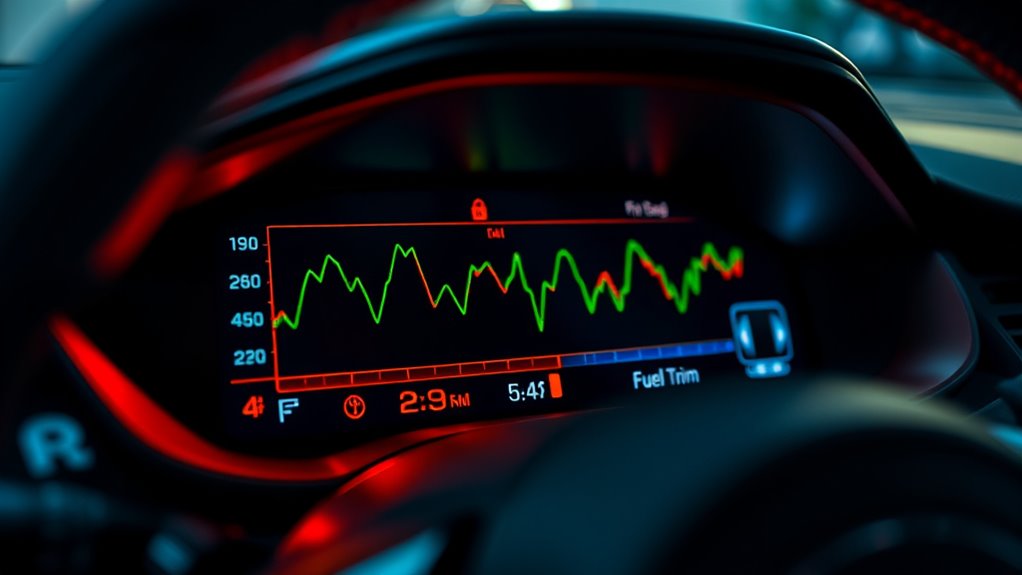
When you notice fuel trims consistently running high or low, you can use these readings to diagnose common engine issues. Positive trims often point to a lean condition, caused by vacuum leaks, clogged filters, or faulty sensors. Negative trims suggest a rich mixture, which may result from leaking injectors, a stuck open fuel pressure regulator, or a faulty oxygen sensor.
Fuel trim readings help diagnose engine issues like vacuum leaks or fuel mixture problems.
Consider these scenarios:
- High positive LTFT (+15%): indicates a lean condition, possibly from intake leaks or dirty MAF sensors.
- Persistent negative STFT: suggests excess fuel delivery, often from a leaking injector or fuel pressure problem.
- Fluctuating trims: could mean sensor instability or intermittent leaks.
Simple Tests to See If Your Fuel Trims Are Healthy

To quickly determine if your fuel trims are within healthy ranges, start by using your vehicle’s OBD-II scanner to check the short-term and long-term fuel trim percentages while the engine is warm and idling. Look for values between -10% and +10%. If they stay within this range, your fuel delivery is likely healthy. Positive numbers indicate the ECU is adding fuel for a lean condition, while negative numbers show it’s subtracting fuel for a rich mixture. If trims are consistently outside this range, especially above +12% or below -12%, it could signal issues like leaks, faulty sensors, or injector problems. Repeat the test after driving for a few minutes to see if trims stabilize. Regularly monitoring these numbers helps catch engine problems early and keeps your engine running smoothly.
Why Monitoring Fuel Trims Is the Best Free Engine Health Check
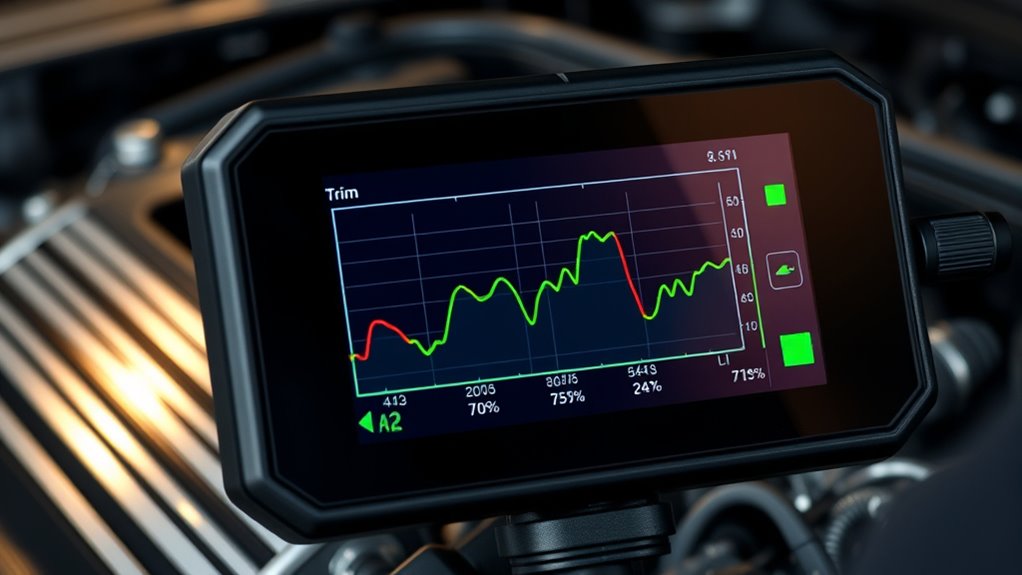
Monitoring fuel trims offers a straightforward and cost-free way to assess your engine’s health. By examining short-term and long-term trims, you can spot early signs of issues like leaks, faulty sensors, or injector problems. Fuel trims respond quickly to changes, providing real-time insights into how well your engine maintains the ideal air/fuel ratio.
Consider these key advantages:
- They reveal subtle deviations before noticeable symptoms appear
- They help identify specific causes, like leaks or sensor failures
- They enable ongoing monitoring without extra costs or tools
Frequently Asked Questions
Can Fuel Trims Indicate Head Gasket Leaks or Other Engine Issues?
Yes, fuel trims can indicate head gasket leaks or other engine issues. If you notice consistently high positive trims, it suggests your engine runs lean, which could be caused by a coolant leak into the combustion chamber from a failing head gasket. Similarly, erratic or abnormal fuel trim readings may point to vacuum leaks, faulty sensors, or fuel delivery problems. Monitoring fuel trims helps you spot these issues early before they worsen.
How Often Should I Check My Fuel Trims for Engine Health?
You should check your fuel trims every few months or if your check engine light comes on. About 10-12% is normal, but readings above that signal potential issues. Regular checks help you catch problems early, especially if you notice rough idling or decreased fuel economy. Use an OBD-II scanner, which is affordable and easy to use. Frequent monitoring keeps your engine running smoothly and prevents costly repairs down the line.
Do Aftermarket Modifications Affect Fuel Trim Readings?
Yes, aftermarket modifications can affect your fuel trim readings. When you install parts like air intakes, exhausts, or performance chips, they alter airflow or fuel delivery, causing the ECU to adjust fuel trims accordingly. These changes might lead to higher or lower trim values, but as long as they stay within acceptable limits, they’re usually normal. Just keep an eye on your trims if you notice engine performance issues.
Are Fuel Trims Affected by Altitude or Weather Changes?
Sure, altitude and weather are like that clingy ex who always shows up uninvited. They can mess with your fuel trims, making your ECU think the engine’s running lean or rich when it’s just the environment acting up. Higher altitudes often cause positive trims, while cold weather might trigger adjustments to keep things balanced. So yes, Mother Nature definitely crashes your fuel trim party, and you’ll notice the effects in your readings.
What Is the Best Way to Reset Fuel Trims After Repairs?
To reset fuel trims after repairs, start by disconnecting the battery for about 15 minutes to clear the ECU memory. Alternatively, use a scan tool to access the vehicle’s ECU and select the “reset fuel trims” or “clear codes” option. After resetting, drive the vehicle through different conditions to allow the ECU to recalibrate fuel trims naturally, ensuring ideal engine performance and accurate readings.
Conclusion
By keeping an eye on your fuel trims, you reveal the secret to maintaining peak engine health without spending a dime. These metrics are like a crystal ball, revealing hidden issues before they become costly repairs. Ignoring them is like trying to navigate a storm blindfolded—you’re risking your engine’s longevity. Embrace this free, powerful tool, and you’ll stay one step ahead, ensuring your vehicle runs smoother than a symphony for miles to come.