
MicroSD endurance cards are built for heavy, ongoing write cycles, but many fail in weeks because they’re not designed for constant recording environments like dash cams or surveillance. Regular cards wear out quickly after the maximum number of write cycles, leading to data corruption or failure. Endurance cards use special NAND memory, wear-leveling, and error correction to last longer. Keep exploring further to discover how to choose the right card for your needs.
Key Takeaways
- Endurance cards are designed for continuous write cycles, but excessive or improper use can accelerate wear and failure.
- Frequent full writes or filling the card to capacity strain NAND flash, shortening lifespan.
- Poor handling, physical damage, or environmental factors like heat can cause rapid card failure.
- Lack of proper wear-leveling or error correction can lead to uneven wear and early death.
- Using regular cards in continuous recording applications without endurancespecific features results in quick failure.

SANDISK 128GB High Endurance Video microSDXC Card with Adapter for dash cam and home monitoring systems – C10, U3, V30, 4K UHD, Micro SD Card – SDSQQNR-128G-GN6IA
- Compatibility: Works with Nintendo Switch (not Switch 2)
- Ideal Use Cases: Perfect for dash cams and home monitoring
- High Endurance: Records up to 10,000 hours of video
As an affiliate, we earn on qualifying purchases.
As an affiliate, we earn on qualifying purchases.
Understanding Endurance in MicroSD Cards
Understanding endurance in microSD cards is essential because it determines how long the card can reliably record data without failure. Endurance measures the lifespan of a card based on continuous recording hours rather than total data written (TBW). High-endurance cards use enterprise-grade NAND flash designed for constant read/write cycles, making them ideal for applications like dash cams and surveillance cameras. These cards are engineered to withstand repeated write and erase cycles, which considerably extend their lifespan. Unlike standard cards, which may fail after a limited number of writes, endurance cards prioritize longevity over speed. This focus ensures your device remains functional over years of continuous use, providing peace of mind in critical recording scenarios. Durability of NAND flash plays a crucial role in determining how well these cards perform under demanding conditions. Additionally, selecting reliable manufacturing is vital to ensure the endurance ratings are backed by quality control and testing. wear leveling techniques are employed in high-endurance cards to evenly distribute write and erase cycles, further enhancing their longevity. Recognizing the importance of quality control can help you choose cards that truly meet their endurance specifications. Implementing proper device management practices can also maximize the lifespan of your endurance microSD cards.
SANDISK 128GB High Endurance Video microSDXC Card with Adapter for dash cam and home monitoring systems – C10, U3, V30, 4K UHD, Micro SD Card – SDSQQNR-128G-GN6IA
- Compatibility: Works with Nintendo Switch (not Switch 2)
- Ideal Use Cases: Perfect for dash cams and home monitoring
- High Endurance: Records up to 10,000 hours of video
As an affiliate, we earn on qualifying purchases.
As an affiliate, we earn on qualifying purchases.
The Limitations of Standard SD Cards for Continuous Use
Standard SD cards are not built for continuous recording tasks because their endurance limits are relatively low. They typically can handle around 100,000 write cycles per sector, which quickly wears out under constant use. This means that after a certain point, data can become corrupted or the card may fail altogether. The wear-leveling process spreads writes across the memory but doesn’t prevent eventual failure when the card reaches its maximum write capacity. For applications like dash cams or surveillance, where recording 24/7 is essential, these limitations cause cards to die in weeks or months. Additionally, standard SD cards prioritize speed over longevity, making them unsuitable for sustained, non-stop data writing. As a result, they’re only reliable for short-term or infrequent use. Environmental considerations such as temperature and humidity can further reduce their lifespan when used in continuous recording environments. In contrast, endurance cards are specifically designed with higher write cycle capacities to withstand such demanding conditions, ensuring a longer lifespan in continuous recording applications.

KEXIN 3 Pack 32GB Micro SD Card Memory Card MicroSDHC UHS-I Memory Cards Class 10 High Speed Card, C10, U1, 32 GB 3 Pack
- Read Speed: Up to 80MB/s
- Speed Class: UHS-I U1, Class 10
- Durability: Water-resistant, shockproof, anti-magnetic, temperature resistant
As an affiliate, we earn on qualifying purchases.
As an affiliate, we earn on qualifying purchases.
How Endurance Cards Are Designed for Longevity
Endurance cards are built with enterprise-grade NAND flash memory, which is more durable than standard options. They also use focused write management techniques to evenly distribute data, preventing premature wear. These design choices guarantee your card can handle continuous recording over many years without failing. Safe installation practices help ensure the longevity of your endurance card by preventing damage during setup and use. Additionally, proper device handling minimizes the risk of physical damage that can compromise data integrity over time. Understanding the wear leveling process can further extend the lifespan of your card by ensuring even usage across all memory cells. Moreover, these cards often incorporate advanced error correction technology to detect and fix data issues, enhancing durability and reliability.
Enterprise-Grade NAND Usage
Enterprise-grade NAND flash memory forms the foundation of endurance cards, enabling them to withstand extensive read/write cycles that typical consumer-grade chips cannot handle. Unlike standard NAND, these chips are built for durability, featuring advanced wear-leveling, error correction, and over-provisioning. They undergo rigorous testing to ensure high endurance, often rated for hundreds of thousands of write cycles. This robust construction minimizes data errors and prolongs the card’s lifespan, making them suitable for continuous recording applications. Additionally, enterprise-grade NAND is designed to operate reliably under harsh conditions, including extreme temperatures, water, and X-ray exposure. The manufacturing quality of enterprise-grade NAND further contributes to its durability and reliability in demanding environments. By utilizing this high-quality NAND, endurance cards achieve their extended lifespans, supporting thousands of hours of non-stop recording without failure, which consumer-grade options simply can’t match. Understanding these features helps users appreciate how deep-sky imaging hardware benefits from reliable and durable storage solutions. Incorporating enterprise-grade components further ensures consistent performance over time, even in demanding environments, especially when paired with proper storage management techniques.
Focused Write Management
Focused write management is at the heart of how endurance cards achieve such long lifespans. These cards use advanced algorithms to evenly distribute write cycles across their memory, preventing any single sector from wearing out prematurely. Wear-leveling ensures that data writes are balanced, extending the device’s overall durability. Additionally, these cards incorporate bad block management, automatically isolating damaged sectors to maintain performance. Buffered write caching temporarily stores data in faster memory, reducing immediate write stress on the NAND flash. Power-loss protection and error correction further safeguard data integrity during continuous recording. Implementing proper filtration techniques in data management can also help prevent unnecessary write cycles, thereby extending the card’s lifespan. By intelligently managing how and where data is written, focused write management maximizes the card’s lifespan, making endurance cards ideal for non-stop, high-reliability applications like dash cams and surveillance systems.

Patriot LX Series Micro SD Flash Memory Card 32GB
- Storage Capacity: 32GB Micro SD Card
- Performance Class: Class 10, UHS-1
- Fast Transfer Speed: Minimizes transfer times
As an affiliate, we earn on qualifying purchases.
As an affiliate, we earn on qualifying purchases.
Comparing SanDisk and Samsung Endurance Solutions
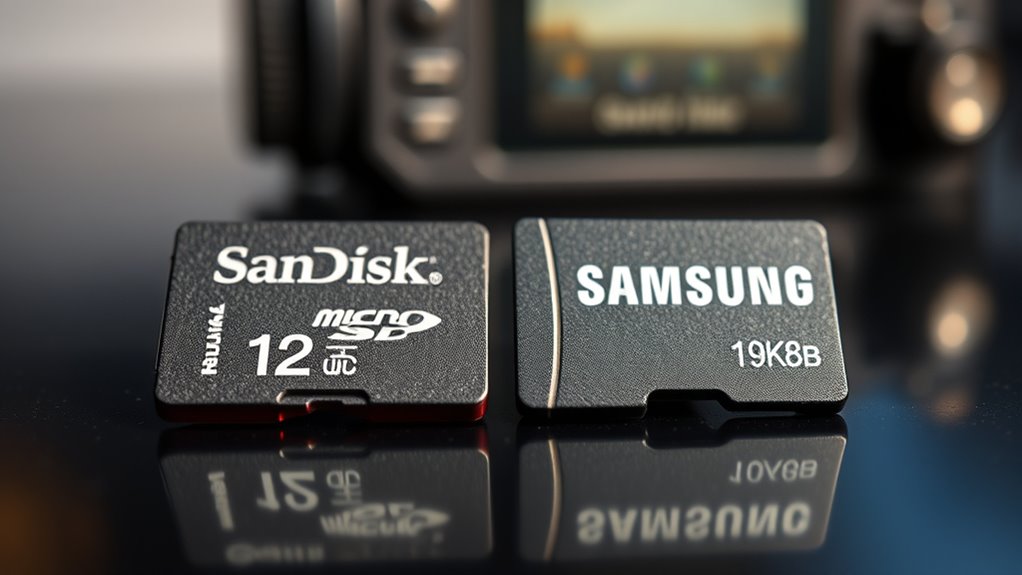
When comparing SanDisk and Samsung endurance cards, you’ll notice differences in longevity, performance, and cost. Samsung offers longer continuous recording hours with enterprise-grade NAND, but often comes at a higher price. SanDisk provides solid durability and affordability, making it a practical choice for many everyday applications. Additionally, understanding the upgrading and maintenance needs of your devices can help you choose the right card for your specific usage. Considering device compatibility is also essential to ensure optimal performance and prevent premature card failure, especially as some cards are specifically designed to withstand extreme conditions and usage patterns. Regularly reviewing product specifications can help you select the best endurance card tailored to your needs. Being aware of manufacturer warranties and support policies can further aid in making a reliable choice.
Card Longevity Differences
Compared to SanDisk, Samsung’s Endurance cards generally offer longer continuous recording lifespans across similar capacities, thanks to their advanced NAND technology and optimized firmware. Samsung’s enterprise-grade NAND enables up to 16 years of continuous recording, markedly surpassing SanDisk’s maximum of around 13 years for comparable capacities. While SanDisk’s cards focus on high endurance with warranties up to 15 years, Samsung emphasizes longevity, supported by robust durability features like heat resistance and shockproof design. The firmware in Samsung’s cards is fine-tuned for continuous write cycles, reducing premature failure. As a result, Samsung Endurance cards tend to sustain longer recording hours before wear-out, making them more suitable for applications requiring extended, non-stop data capture. Enhanced durability features also contribute to their extended lifespan under demanding conditions.
Performance and Cost Comparison
While Samsung’s Endurance cards lead in longevity, their performance and cost profiles differ from SanDisk’s solutions. Samsung offers higher sustained recording hours, with capacities supporting up to 140,160 hours, and read/write speeds up to 100MB/s and 40MB/s respectively. They tend to be more expensive upfront but provide longer-lasting endurance, especially for continuous recording applications. SanDisk, on the other hand, balances lower costs with decent performance, offering speeds up to 100MB/s read and 40MB/s write, with capacities from 32GB to 256GB. Their prices are generally more affordable, making them suitable for users with budget constraints or shorter-term needs. If longevity is your priority, Samsung’s higher-cost cards deliver better value over time, while SanDisk offers a cost-effective choice for moderate endurance requirements.
Why Regular Cards Fail in Continuous Recording Environments
Regular SD cards are not built to withstand the continuous write cycles required by devices like dash cams or surveillance cameras. These cards have a limited endurance per sector, typically around 100,000 writes, which quickly wears out under constant recording. As you record day after day, the physical memory blocks degrade, leading to data corruption or failure. Wear-leveling spreads out writes, but it can’t prevent eventual wear-out when the card is used nonstop.
| Card Type | Typical Endurance | Suitable Use Case |
|---|---|---|
| Regular SD Card | 100,000 write cycles | Short-term, occasional use |
| Endurance Card | 10+ years of continuous use | Dash cams, surveillance systems |
| Consumer Card | 1-2 years in continuous use | Limited, non-constant recording |
The Impact of Write Cycles and Wear-Leveling

Write cycles directly impact the lifespan of SD cards because each time data is written, it causes microscopic wear to the memory cells. Over time, repeated writes degrade these cells, leading to eventual failure. Wear-leveling is a technique that spreads write operations evenly across the entire memory, preventing any single area from wearing out prematurely. Without wear-leveling, certain sectors would wear out quickly, reducing the card’s overall lifespan. Endurance cards use advanced wear-leveling algorithms and enterprise-grade NAND to extend the number of write cycles they can handle. This process allows these cards to sustain continuous recording for thousands of hours. By managing how data is written and distributed, wear-leveling plays a vital role in maintaining the card’s integrity and ensuring it lasts for its intended lifespan.
Performance Trade-Offs in Endurance MicroSD Cards

Endurance microSD cards typically trade higher longevity for lower data transfer speeds, meaning they prioritize sustained recording over quick data bursts. If you’re using these cards in continuous recording devices, expect slower write speeds—around 30-40MB/s—compared to high-performance cards. This reduced speed helps extend the card’s lifespan but can limit activities like 4K video or burst photography.
Endurance microSD cards prioritize durability over speed, supporting long-term recording but limiting quick data transfers.
- Lower write speeds improve durability and lifespan
- Optimized for Full HD, not 4K or high-speed captures
- Support long hours of continuous recording, sometimes over 140,000 hours
- Higher endurance often means higher price per gigabyte
- Reduced speed may affect quick data transfers and editing workflows
Practical Advice for Choosing the Right Card for Your Needs
When choosing a microSD card for your specific needs, start by considering how much continuous recording you’ll require and the environment you’ll use it in. For long-term surveillance or dash cams, opt for high-endurance cards with longer lifespans. For occasional use, standard cards may suffice. Here’s a quick guide:
| Use Case | Recommended Card Type |
|---|---|
| Continuous recording | Endurance cards (SanDisk, Samsung) |
| Occasional recording | Standard SD cards |
| Extreme conditions | Water, temperature, shock-proof cards |
| High-quality video | Cards supporting Full HD or 4K |
| Budget constraints | Affordable endurance models |
Match your choice to your recording volume, environment, and budget to confirm your card survives and performs reliably.
Common Mistakes Leading to Premature Card Failure

Choosing the right microSD card is just the first step; using it improperly can lead to early failure. Common mistakes include overloading the card with continuous writes beyond its endurance, which wears out the NAND flash faster. Ignoring temperature limits can cause damage—operating outside the specified range accelerates wear. Using low-quality or non-endurance cards in demanding applications like dash cams shortens lifespan. Removing the card frequently during active recording risks corrupting data or damaging the memory. In conclusion, neglecting proper formatting or avoiding firmware updates can lead to performance issues and early failure.
- Overloading with continuous writes
- Operating outside temperature specs
- Using non-endurance or cheap cards
- Removing the card during recording
- Ignoring maintenance and updates
Frequently Asked Questions
How Do Endurance Cards Measure Lifespan Differently From Traditional SD Cards?
Endurance cards measure lifespan based on continuous recording hours instead of total write cycles like traditional SD cards. You’ll find that endurance cards prioritize long-term reliability for sustained use, such as dash cams or surveillance, by tracking how many hours they can record nonstop. Traditional cards focus on total data written before failure, which makes them less suitable for continuous, heavy writing tasks.
Can Endurance Microsd Cards Handle High-Resolution 4K Video Recording?
Endurance microSD cards aren’t ideal for high-resolution 4K video recording. You can support Full HD reliably, but 4K substantially reduces recording hours due to higher data rates. While some cards like Samsung Pro Endurance can handle longer periods, their lower speeds and endurance limits make 4K challenging. If you frequently record 4K, consider using high-capacity, TBW-rated cards designed for faster, sustained write speeds and longer lifespan.
What Specific Durability Features Protect Endurance Cards in Harsh Environments?
You might think endurance cards can’t survive harsh environments, but they’re built tough. They feature temperature ranges from -25°C to 85°C, resist water, x-rays, and magnets, and are shockproof, drop-proof, and wear-out-proof. With 10,000 insertion cycles, they’re designed for demanding conditions. This durability guarantees your data stays safe and intact, even in extreme temperatures, humidity, or physical shocks, making them ideal for harsh environment use.
Why Do Standard SD Cards Fail Quickly in Continuous Recording Scenarios?
Standard SD cards fail quickly in continuous recording because they aren’t built for heavy, sustained writes. Their limited endurance per sector means they can only handle around 100,000 write cycles, and wear quickly with constant use. This causes data corruption and card failure over time. If you’re recording nonstop, like in dash cams, you need endurance cards designed for continuous use, which spread out writes and last much longer.
How Do Wear-Leveling Algorithms Extend the Lifespan of Endurance Microsd Cards?
Wear-leveling algorithms distribute write and erase cycles evenly across the entire memory chip, preventing any single area from wearing out prematurely. You benefit by getting a longer lifespan from your endurance microSD card because these algorithms guarantee that no part of the flash memory is overused. This process helps maintain consistent performance over years of continuous recording, reducing the risk of card failure and maximizing your device’s reliability.
Conclusion
Choosing the right microSD endurance card can mean the difference between lasting years and facing sudden failure. Don’t get caught off guard by the wear and tear of constant recording—your data’s survival hinges on it. Think of these cards as the heartbeat of your device; neglect them, and they could fail faster than a shooting star. Make smart choices today to ensure your storage keeps up with your needs, not the other way around.