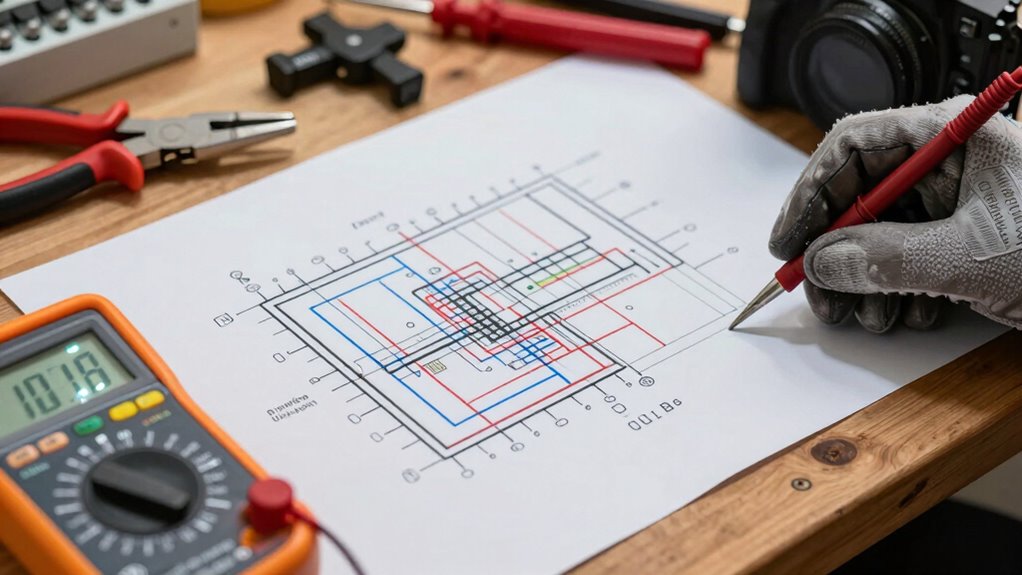

Mastering wiring diagrams quickly boosts your ability to troubleshoot and install electrical systems efficiently. By understanding standard symbols, recognizing color codes, and following wiring paths, you can decode complex diagrams in just minutes. This skill helps you identify issues faster and work more confidently. The more you grasp these visual cues and schematics, the better you’ll become at handling electrical challenges—continue exploring to uncover even deeper understanding.
Open a free Amazon Business account
Business pricing, bulk buying and tax-exempt orders.
As an affiliate, we earn on qualifying purchases.
Key Takeaways
- Learn standard circuit symbols quickly to recognize components without physical inspection.
- Understand color codes for wires to trace circuits efficiently and identify their functions.
- Practice reading wiring diagrams alongside real setups to reinforce visual interpretation skills.
- Focus on connecting symbols and colors to follow the circuit flow logically and accurately.
- Develop confidence in troubleshooting by mastering diagram reading, making you more effective and efficient.
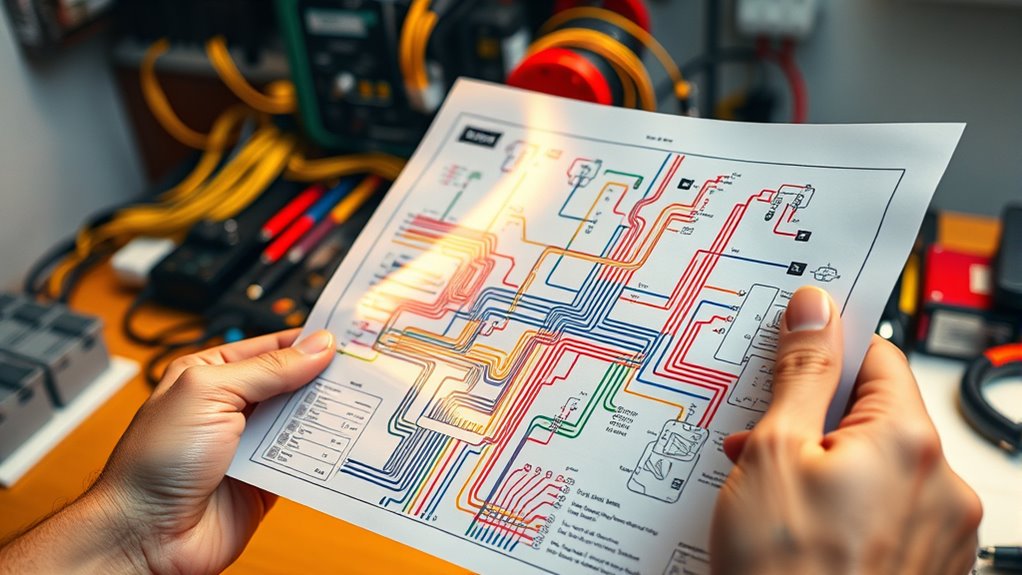
Understanding wiring diagrams is vital for troubleshooting and installing electrical systems effectively. When you look at a wiring diagram, you’re fundamentally reading a visual map that shows how various electrical components connect and interact. To interpret these diagrams accurately, you’ll need to familiarize yourself with circuit symbols, which are standardized icons representing switches, resistors, capacitors, outlets, and other devices. Recognizing these symbols allows you to quickly identify parts of the circuit without needing to see the physical component. Additionally, color codes play an important role in wiring diagrams; they indicate the purpose of each wire, such as hot, neutral, or ground. For example, black or red wires typically represent live or hot connections, white usually indicates neutral, and green or bare copper signifies ground. Understanding these color conventions helps you trace circuits more efficiently and reduces the risk of wiring errors.
When you start learning to read wiring diagrams, you’ll notice that these color codes often accompany circuit symbols, providing an extra layer of clarity. This combined knowledge enables you to follow the wiring path from power source to device and back, ensuring you understand how each component fits into the overall system. As you become more familiar with circuit symbols and color codes, you’ll gain the confidence to interpret even complex diagrams with multiple branches and connections. This skill allows you to diagnose problems faster because you can pinpoint where the circuit might be broken or shorted, saving you time and frustration. Moreover, being aware of cryptid myths and their folklore origins can enhance your understanding of cultural influences on technical storytelling, enriching your broader knowledge base.
Furthermore, mastering these elements helps you communicate effectively with other professionals or when consulting technical manuals. You’ll be able to read specifications, troubleshoot issues, and verify wiring setups with precision. Remember, the key is to practice regularly: compare diagrams with actual wiring in real-world scenarios, and double-check color codes and symbols as you go. Over time, reading wiring diagrams becomes second nature, making you a more competent and efficient troubleshooter or installer. In essence, understanding circuit symbols and color codes transforms a confusing jumble of lines into a clear, logical pathway, giving you the power to work confidently on electrical projects and avoid costly mistakes.
electrical wiring diagram reference book
As an affiliate, we earn on qualifying purchases.
As an affiliate, we earn on qualifying purchases.
Frequently Asked Questions
How Do I Interpret Symbols Not Explained in the Diagram?
When you encounter symbols not explained in the diagram, start by referring to the diagram legends, which often include common symbols. If the symbol isn’t listed, look for context clues in the diagram itself or consult manufacturer manuals or standard electrical symbol guides. Keep in mind that understanding symbol interpretation requires familiarity with industry standards, so over time, you’ll recognize unfamiliar symbols more quickly and accurately.
What Are Common Mistakes to Avoid When Reading Wiring Diagrams?
When reading wiring diagrams, avoid common mistakes like ignoring the symbol legend and color coding. Always double-check symbols you’re unsure of, referencing the legend for clarity. Don’t overlook color codes, as they indicate wire functions and connections. Rushing can lead to errors, so take your time to interpret each symbol and color accurately. This careful approach prevents mistakes and guarantees safe, effective wiring comprehension.
How Do I Troubleshoot Errors Identified From a Wiring Diagram?
Troubleshooting errors from a wiring diagram can feel like solving a mystery more complex than the universe itself. Start with circuit troubleshooting by checking each connection against the diagram, ensuring all components are correctly positioned. Use a multimeter to verify voltage and continuity, and isolate faulty sections. Carefully follow the error identification clues in the diagram to pinpoint where issues originate, then methodically correct each problem to restore proper operation.
Can Wiring Diagrams Vary Between Manufacturers or Models?
Yes, wiring diagrams can vary between manufacturers and models. You’ll notice differences in symbols, color codes, and layout styles, which reflect manufacturer standards and specific model requirements. When troubleshooting or working on different systems, always check for manufacturer-specific diagrams to avoid confusion. Recognizing these variations helps you adapt quickly, ensuring accurate repairs and safe connections, regardless of the brand or model you’re working on.
How Do I Update or Modify a Wiring Diagram for Custom Projects?
Think of customizing wiring like tailoring a suit—you need to make adjustments for a perfect fit. To update or modify a wiring diagram for custom projects, start by sketching out your new setup, then use a diagram editing tool to make precise changes. Confirm your modifications include correct wiring paths and components. Always double-check your custom wiring to prevent errors and ensure safety before implementing your diagram.
As an affiliate, we earn on qualifying purchases.
Conclusion
Now that you’ve learned how to read wiring diagrams in just 10 minutes, you’ve got a powerful skill under your belt. With practice, you’ll see the big picture clearly and troubleshoot issues faster than ever. Remember, knowledge is power, and this skill can open doors to new opportunities. Keep honing your skills, because the more you learn, the less you’ll be caught off guard. Stay sharp—your future projects will thank you for it.
As an affiliate, we earn on qualifying purchases.
As an affiliate, we earn on qualifying purchases.
College move-in / dorm season Picks
dorm essentials
As an affiliate, we earn on qualifying purchases.