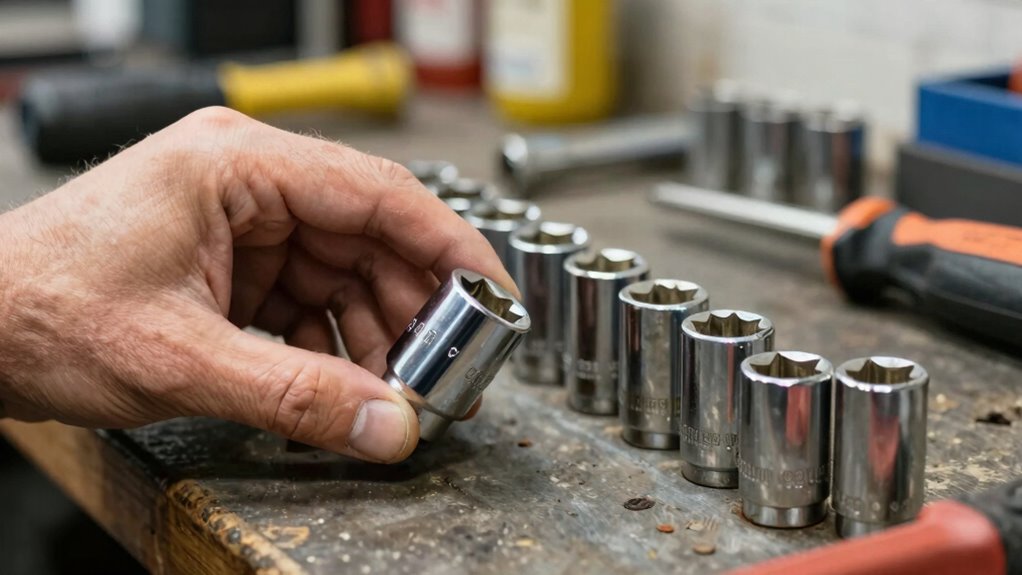

In just five minutes, guarantee your impact socket fits your fastener correctly by checking the size and thread compatibility. Confirm the socket is made from durable materials like chrome molybdenum for impact resistance, and verify it has a secure drive fit (1/2-inch or 3/8-inch). Inspect for signs of damage, and look for industry certifications for safety. Using proper tools prevents damage and injuries, so stick with the essentials—your next step will guide you through applying these checks effectively.

Get business pricing on garage and car supplies
- Business-only prices and quantity discounts
- Tax-exempt purchasing
- Multiple users, one account, clear invoices
Key Takeaways
- Verify the impact socket’s thread size matches fastener specifications for proper fit and safety.
- Ensure the socket is made from durable materials like chrome molybdenum to withstand high torque.
- Confirm drive size (1/2-inch or 3/8-inch) and check for industry certifications for compatibility and safety.
- Inspect the socket for cracks, deformities, and proper finish before use.
- Maintain a variety of sizes on hand, measuring fasteners accurately to prevent damage.
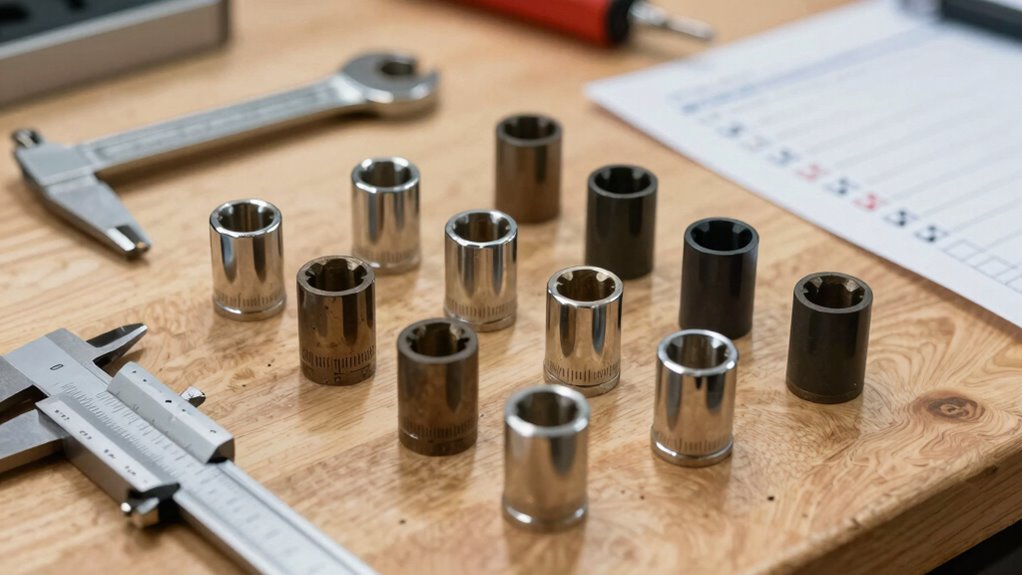
Are you choosing the right impact socket for your project? It all begins with understanding the key factors that guarantee your tool performs safely and efficiently. One of the most important considerations is the thread size, which must match the fasteners you’re working with. Using an impact socket with the wrong thread size can lead to stripped bolts or damaged sockets, disrupting your workflow and risking injury. Measure the fastener carefully or check the specifications to select the perfect fit. Equally essential is the material durability of the impact socket. Since impact tools generate high torque, you need a socket made from sturdy, resilient materials that can withstand repeated heavy-duty use without cracking or wearing down prematurely. Look for sockets constructed from high-quality chrome molybdenum or other alloy steels known for their toughness and resistance to impact fatigue.
Next, consider the socket’s design and construction. Impact sockets are typically thicker and more robust than standard sockets, designed specifically to absorb and distribute the force from impact wrenches. Make certain that the socket’s walls are thick enough to prevent deformation during use. Verify that the socket has a secure drive fit, usually a 1/2-inch or 3/8-inch drive, depending on your tool. Compatibility here assures the socket stays firmly attached during operation, preventing accidents or damage. Additionally, check the socket’s finish; a corrosion-resistant coating like black oxide or chrome plating helps prolong its lifespan, especially if you’ll be working in harsh environments. Choosing impact sockets with industry-standard certifications can further ensure their safety and reliability. Proper labeling on the sockets can also help you quickly identify the right size and specifications, saving time on the job. A comprehensive understanding of impact socket standards can assist in verifying their safety and quality.
Another key factor is the socket’s size compatibility with your project. While the thread size is vital for fastener fit, the overall size of the socket should suit the specific nuts or bolts you’ll be working with. Keep a variety of sizes on hand to handle different tasks, but always verify the measurements beforehand. This prevents wasting time switching tools and reduces the risk of forcing a socket onto an incompatible fastener, which can cause damage. Properly labeled and tested sockets can also help you avoid the pitfalls of using mismatched tools.
Finally, think about your safety. Choose impact sockets that meet industry standards and safety certifications. A socket that’s well-made, with the right thread size and durable material, minimizes the risk of shattering under high torque. Always inspect your impact sockets before use—look for cracks, deformities, or signs of wear. Being aware of impact socket standards and their certifications can help ensure you’re selecting reliable tools. Using the correct socket for your project isn’t just about efficiency; it’s about protecting yourself and assuring the longevity of your tools. When you follow these quick but necessary steps, you’ll be well on your way to selecting the perfect impact socket for every job.
impact socket set 1/2 inch drive
As an affiliate, we earn on qualifying purchases.
As an affiliate, we earn on qualifying purchases.
Frequently Asked Questions
What Materials Are Impact Sockets Typically Made From?
Impact sockets are typically made from durable materials like chrome molybdenum or chrome vanadium steel, which guarantee material durability under high torque. These materials meet strict manufacturing standards to withstand tough conditions without cracking or deforming. You’ll notice that impact sockets are designed for strength and resilience, making them ideal for heavy-duty tasks. Choosing the right material guarantees safety and longevity, especially when working with powerful impact wrenches.
How Do I Identify the Correct Socket Size for My Tool?
Did you know that choosing the right socket size can improve your tool’s performance by up to 30%? To identify the correct socket size, check your tool’s socket grip and compare it with your fastener’s dimensions. Always ensure your socket matches the bolt or nut size precisely. Accurate torque calibration relies on using the correct socket size, preventing damage and ensuring safety. Measure carefully for maximum results.
Are Impact Sockets Compatible With All Power Tools?
Impact sockets are designed specifically for impact wrenches, so they’re not compatible with all power tools. Using them with non-impact tools can compromise their durability and safety. To guarantee longevity, choose impact sockets with high impact socket durability, and always store them properly—socket storage tips—so they stay in good condition. Always check your tool’s specifications before use to avoid damage and maintain peak performance.
What Safety Precautions Should I Follow When Using Impact Sockets?
When using impact sockets, you should always wear proper gloves to protect your hands from potential sparks or debris. Maintain a secure grip on the tool to prevent slipping, which could cause injury or damage. Before starting, inspect the socket and tool for damage, and verify the socket is properly attached. Keep your workspace clear, and stay alert to avoid accidents. Following these precautions keeps your work safe and efficient.
How Often Should Impact Sockets Be Inspected or Replaced?
Imagine your impact socket as a trusted partner in your toolbox’s journey. You should inspect impact sockets regularly—every few months or after heavy use—to catch cracks, corrosion, or wear. Swap them when signs of damage appear or if they no longer fit securely. Impact socket maintenance and socket lifespan tips include avoiding over-torquing and storing them properly. Staying vigilant ensures safety and prolongs their durability, keeping your projects running smoothly.
chrome molybdenum impact sockets
As an affiliate, we earn on qualifying purchases.
As an affiliate, we earn on qualifying purchases.
Conclusion
By mastering this meticulous checklist, you’ll confidently choose the correct impact socket, avoiding costly errors and cranky consequences. With keen knowledge and careful consideration, you’ll quickly circumvent confusion, craft consistent connections, and conquer countless tasks. Remember, precise preparation and persistent practice pave the path to perfection. So, stay sharp, stay savvy, and seize each socket selection with skill and swagger—success is just a checklist away!
impact socket size measurement tool
As an affiliate, we earn on qualifying purchases.
As an affiliate, we earn on qualifying purchases.
impact socket with industry certification
As an affiliate, we earn on qualifying purchases.
As an affiliate, we earn on qualifying purchases.
Halloween Picks
halloween
As an affiliate, we earn on qualifying purchases.