TL;DR
Automotive tool sets bundle common tools for vehicle maintenance, but no single kit suits every car or repair. Choose by checking your vehicle’s fasteners, the jobs you plan to do, drive sizes, tool quality, and storage; add torque and impact-rated tools when needed. A standard kit cannot replace service information, proper vehicle support, diagnostic equipment, or certified help for safety-critical and high-voltage repairs.
A shiny 200-piece case can still leave you stranded halfway through a simple repair. You open it for a battery terminal or a loose bracket, and the socket you need is missing—or the pieces look impressive but don’t fit your car. The piece count tells you how many items come in the box, not whether they’re useful.

Get business pricing on garage and car supplies
- Business-only prices and quantity discounts
- Tax-exempt purchasing
- Multiple users, one account, clear invoices
Automotive tool sets bundle commonly used tools for vehicle maintenance and repair. They range from compact kits for roadside fixes to large collections built for a garage or shop. Your best choice depends on the car you work on and the tasks you expect to handle, whether that means changing a battery, maintaining a motorcycle trailer, or doing routine work on a family sedan.
This guide explains what belongs in a starter kit, how to compare sizes and construction, and when you need tools beyond a basic set. You’ll also find practical advice for choosing a roadside kit and recognizing when a job calls for a certified mechanic. Think of a tool set as a toolbox-shaped starting point—not a promise that every repair is within reach.
Choose a kit around your vehicle’s fasteners and the jobs you plan to do, not the box’s piece count.
A 3/8-inch drive is versatile for many general repairs; 1/4-inch and 1/2-inch drives serve smaller and larger work.
Check whether you need metric sizes, SAE sizes, or both before buying.
Use a torque wrench when the vehicle maker specifies tightening torque, and use impact-rated sockets with impact tools.
A standard set doesn’t replace safe jack stands, diagnostic equipment, service information, or certified help for safety-critical and high-voltage work.
Start with the jobs you actually plan to do
An automotive tool set is a collection of hand tools for common vehicle tasks, such as loosening fasteners and removing small components. A beginner doing battery checks needs less than a home mechanic servicing brakes or suspension. Choose around your real jobs, because an unused specialist tool takes up case space while a missing basic wrench can stop work cold.
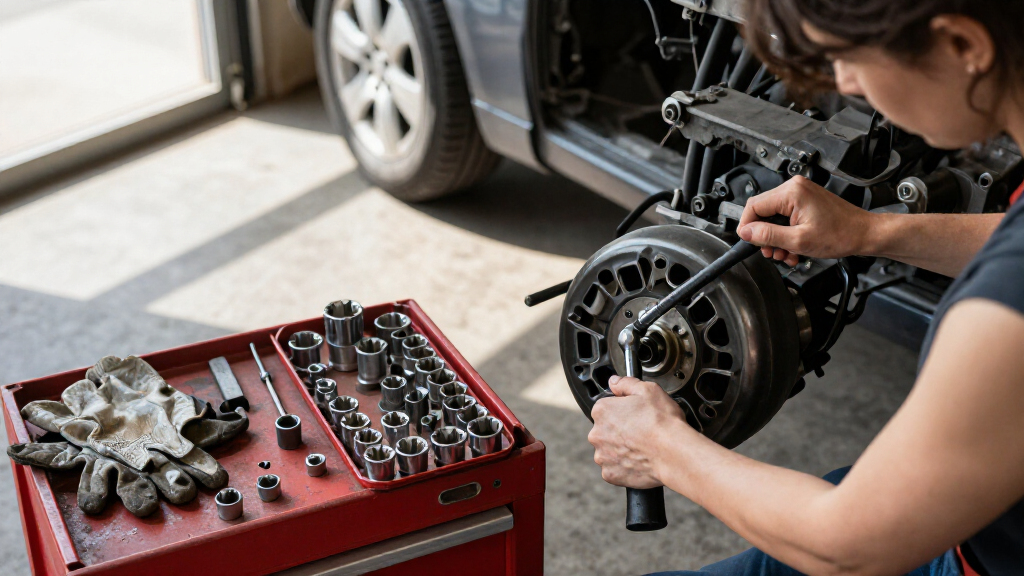
For a first kit, look for metric sockets and ratchets, combination wrenches, screwdrivers, pliers, extensions, and hex or Torx keys. Those tools can help with routine tasks like removing a battery hold-down or tightening a loose interior bracket. A neighbor who changes a cabin air filter twice a year may need little more; someone replacing suspension parts will likely add larger tools and follow model-specific service instructions.
Start by writing down three jobs you expect to do in the next year. If your list says “battery, wipers, and underbody inspection,” compare kits for suitable sockets, extensions, and access rather than buying a large set full of duplicate bits. If you don’t yet know what your vehicle uses, check its manual or inspect its fasteners before choosing.
Key fact: a general mechanics set may not include a torque wrench, jack stands, diagnostic scanner, or vehicle-specific adapter. A kit supplies tools for vehicle work; it doesn’t supply every tool—or the skill and instructions—needed for every repair.
Products Worth Considering
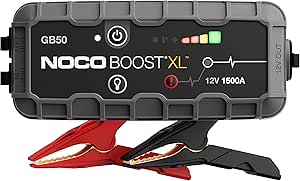
NOCO Boost GB50 1500A 12V Lithium Jump Starter

Garmin Dash Cam 47, 1080p HD, 140° Field of View, Voice Control, Includes 16 GB Memory Card

Chemical Guys TORQX Random Orbital Polisher Kit, 9-Piece
As an affiliate, we earn on qualifying purchases.
Compare what the drive sizes can handle
For many general repairs, a 3/8-inch drive gives you a useful balance of reach and strength. A 1/4-inch drive fits smaller fasteners and tight spots, while a 1/2-inch drive suits larger fasteners and higher loads. Using a drive that fits the job can make turning smoother and reduce the temptation to force a poorly matched tool.
| Drive size | Best suited to | Everyday example |
|---|---|---|
| 1/4 inch | Small fasteners and confined spaces | Removing an interior trim fastener |
| 3/8 inch | Many general maintenance jobs | Working on an accessible engine bracket |
| 1/2 inch | Larger fasteners and higher loads | Turning a suitable larger fastener |
Drive size alone doesn’t tell you whether a tool is right for every job. Your car’s fastener size, access, and service instructions matter too. A short 3/8-inch ratchet might fit between a pipe and bracket where a larger tool cannot reach; a longer handle may provide more leverage, but that doesn’t make every fastener safe to force.
Metric and SAE sizes also deserve a check before you buy. Metric sizes suit many vehicles sold outside the United States and are common on newer U.S. vehicles. Older or particular U.S.-made vehicles may use SAE sizes, so match the tools to the cars you’ll service instead of guessing from the brand or age alone.
Pick a set by tool fit and construction, not the count
A higher piece count does not automatically make a set more useful; check its actual size coverage, tool fit, materials, warranty, and replacement support. A case with duplicate bits and tiny accessories may advertise more pieces than a simpler kit that covers the fasteners you need. When your ratchet slips or a socket rocks on a fastener, the printed number on the box won’t help much.
Many hand tools use chrome vanadium steel, while impact sockets use tougher alloy steel designed for powered impact tools. A polished finish can make tools easier to wipe clean and help resist corrosion, but a bright shine doesn’t prove the tool’s strength. Check what the set contains, how the ratchet engages, and whether you can buy a lost socket without replacing the entire kit.
Imagine comparing two cases at a shop. One claims 200 pieces but devotes much of the count to bits you rarely use; the other has fewer pieces, clear metric coverage, useful extensions, and a solid warranty. For a home mechanic, that second set may be the better buy if it matches the car and the jobs on the list.
Storage matters, too. A molded case keeps pieces organized and makes missing tools easier to spot, like an empty space in a cutlery tray. If the set will ride in a car, weigh the case and check whether its latches can stay shut over bumps. If it will live on a garage shelf, easy-to-replace pieces may matter more than a compact footprint.
Build a starter kit that grows with your repairs
A starter automotive kit works best when it covers basic fasteners first and lets you add specialist tools as your repair plans grow. You don’t need to buy a shop’s entire wall of equipment to begin. Pick a reliable core set, then add pieces when a real job or your vehicle’s service information shows what’s missing.
- Check your vehicle. Use its manual or service information to confirm fastener types and sizes. Note whether you need metric, SAE, or both.
- Choose the core. Look for sockets and ratchets, combination wrenches, screwdrivers, pliers, extensions, and hex or Torx keys in useful sizes.
- Add by task. Buy a torque wrench when a job requires a specified tightening value. Add impact-rated sockets only if you use an impact tool.
- Check the case and support. Confirm storage suits your needs and replacement parts or warranty service are available.
For example, a driver who only handles a battery and simple trim work may start with a compact metric kit, then add a torque wrench when a suitable maintenance task requires one. A person working on an older U.S. vehicle may discover that SAE wrenches belong in the first purchase. Let the vehicle and planned repair decide.
This gradual approach can keep your collection useful instead of turning a crowded case into a junk drawer. Keep track of what each tool is for and store it in the same place after a job. When you reach for an extension on a cold morning, you’ll know where to find it.
Know where an ordinary tool set reaches its limits
A standard hand-tool kit can help with many routine tasks, but it doesn’t make every repair safe or suitable for a beginner. Torque control, correct vehicle support, diagnostic equipment, and specialist procedures matter on particular jobs. Follow the vehicle maker’s instructions and use tools only for their intended purpose; guessing can damage a fastener or create a safety hazard.
A torque wrench helps tighten fasteners to specified values when the repair calls for it. Wheel work is a familiar example: a wheel may seem secure after tightening by feel, but the vehicle’s instructions specify how to fasten it. Use a wrench with a suitable range, follow its operating instructions, and check the maker’s torque specifications instead of relying on a generic value.
Never work beneath a raised vehicle supported only by a jack. Use correctly rated jack stands on stable ground and suitable eye protection, and follow reliable service instructions. If you discover a brake, airbag, or other safety-critical repair you aren’t trained to handle, use a certified mechanic. Check the vehicle’s recall status through the NHTSA recall lookup when a defect or repair concern arises.
A tool kit is not a substitute for safe vehicle support, training, or model-specific service instructions.
Hybrid and electric vehicles add another clear limit. A basic set may suit some non-high-voltage work, but high-voltage systems require specialist training, protective equipment, and procedures. Don’t try to work on those systems based on a standard tool set alone; use a qualified technician.
Pack a roadside kit for small problems, not every emergency
A roadside tool kit is for minor tasks that you can handle safely in your location; it can’t make every breakdown a do-it-yourself repair. A compact case can help with a loose accessory or a simple check, but a busy shoulder, poor weather, or unsafe traffic can turn a small repair into a dangerous one. Protect yourself and other road users before you reach for a ratchet.
For a practical vehicle kit, consider a few common hand tools, a tire-pressure gauge, flashlight, gloves, and appropriate emergency equipment. Check that the tools suit your car and that the case stays secured in the vehicle. A flashlight with fresh batteries can be more useful than an oversized socket assortment when you need to inspect something after dusk.
Picture a driver whose car stops in heavy rain beside a narrow motorway shoulder. Even a good wrench set doesn’t make that a safe place to inspect the engine; the sensible move is to get to a safer location if possible and call for assistance. On a quiet driveway, the same driver might safely check a simple, accessible issue using the manual.
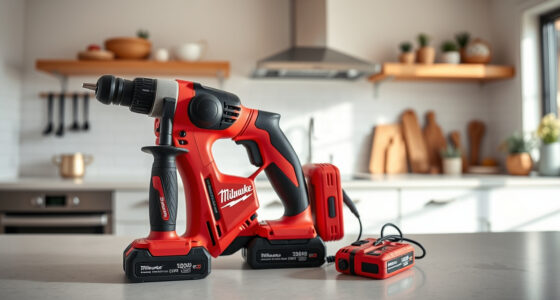
Battery-powered impact tools have made some tasks faster and reduce the need for an air compressor, but they need compatible batteries and appropriate impact-rated sockets. Ordinary chrome hand sockets generally aren’t intended for impact use. Use the right accessories and follow the tool’s instructions, and don’t let speed encourage a repair you can’t do safely.
Frequently Asked Questions
What tools should a beginner automotive set include?
Look for metric sockets and ratchets, combination wrenches, screwdrivers, pliers, extensions, and hex or Torx keys. Check your vehicle before buying, then add tools for the jobs you plan to handle.
Is a 200-piece set better than a 100-piece set?
Not by piece count alone. Compare useful size coverage, tool quality, warranty, and replacement support; a smaller set may contain more of what your car actually needs.
Do I need both metric and SAE tools?
It depends on the vehicles you’ll work on. Metric sizes suit many modern vehicles, while SAE tools can be useful for older or particular U.S.-made models. Check the vehicle rather than assuming.
Can I use regular sockets with an impact wrench?
Use impact-rated sockets with impact tools. Ordinary chrome hand sockets generally aren’t designed for repeated impact loading, so follow the tool maker’s instructions and use the correct accessories.
Is a torque wrench necessary for car repairs?
Use one when the vehicle maker specifies a torque value for the job. Choose a wrench with a suitable range, follow its instructions, and use the model-specific service information rather than guessing a number.
Can I repair a hybrid or electric car with a standard tool set?
A standard kit may handle some non-high-voltage tasks, but it doesn’t prepare you to work on high-voltage systems. Those repairs require specialist training, protective equipment, and procedures, so use a qualified technician.
Conclusion
Choose an automotive tool set by matching its sizes, construction, and storage to your vehicle and the repairs you’re prepared to do. Start with a useful core, add specialist tools as real jobs demand them, and follow the maker’s instructions when torque or safe support matters.
A good kit should make a straightforward task feel organized, not tempt you into a repair beyond your training. Put the right tool back in its place, and your next job can start with a clear case instead of a frantic search.