
Using traction boards as bridges works when the terrain is firm, the gap is small, and the boards are securely placed in front of your tires on stable ground. Avoid using them over large gaps, loose, or soft terrain, as they can slip, sink, or collapse under your vehicle’s weight, causing damage or accidents. If you want to know the key limits and safety tips, you’ll find more helpful guidance ahead.

Get business pricing on garage and car supplies
- Business-only prices and quantity discounts
- Tax-exempt purchasing
- Multiple users, one account, clear invoices
Key Takeaways
- Traction boards can serve as bridges when placed over small, firm gaps supported by stable ground.
- They work best on firm surfaces; avoid soft or loose terrain that can cause sinking or shifting.
- Use multiple stacked boards for wider gaps within the width of the tire, ensuring secure placement.
- Do not attempt to span large gaps or unstable terrain, as boards may crack or slip under load.
- Always verify ground stability and board integrity to prevent failure and ensure safe vehicle passage.
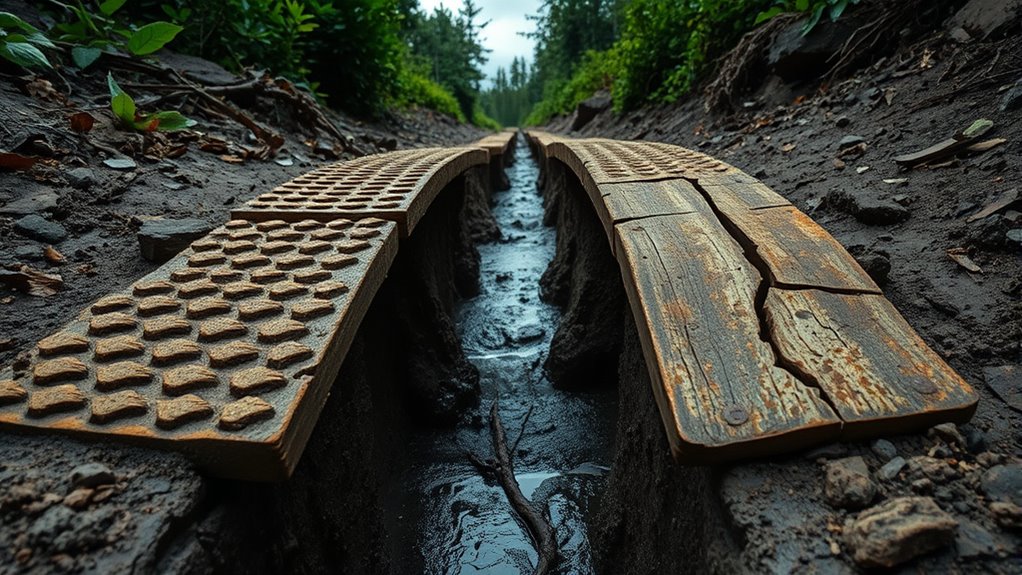
When stuck in difficult terrain, traction boards can do more than just provide grip—they can serve as makeshift bridges in a pinch. If you’re steering through off-road environments, knowing how to use traction boards as bridges can be a game-changer for vehicle recovery. Off-road safety isn’t just about avoiding obstacles; it’s about being prepared for situations where your vehicle might become immobilized, especially in muddy, snowy, or sandy conditions. In these moments, your traction boards can help you create a stable path across challenging terrain, but only if you understand their limits and proper application.
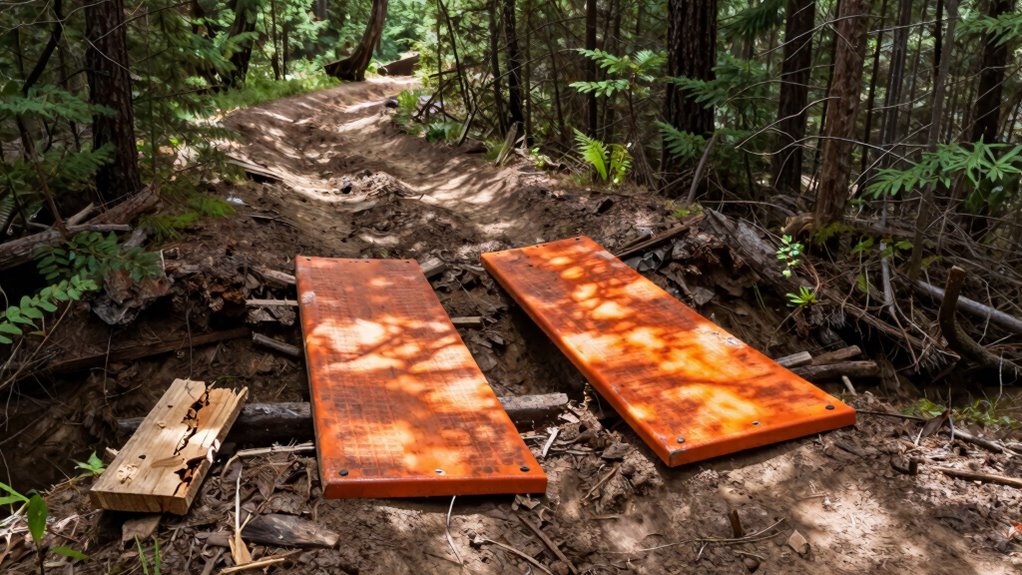
To use traction boards as bridges effectively, you need to assess the terrain carefully. If your vehicle is perched on a small rise or stuck in deep ruts, placing the boards in front of the tires can provide enough grip to move forward. However, when attempting to span larger gaps or crossing over uneven surfaces, you might consider stacking multiple boards to create a bridge. It’s essential to guarantee the boards are securely positioned and that the surface underneath is firm enough to support the weight of your vehicle. If the ground beneath is too soft or loose, the boards may sink or shift, jeopardizing your vehicle recovery efforts and risking damage. Always check the stability of the ground and the boards before proceeding. Additionally, understanding the safe weight limits of traction boards can prevent overloading and potential failure.
While traction boards can be useful as bridges, they aren’t invincible. They work best when the gap is relatively small—ideally no wider than a tire’s width—and when the terrain is firm enough to support the weight of your vehicle. Trying to span large gaps or crossing over unstable ground with boards can lead to failure, potentially causing your vehicle to slip or tip over. Remember, off-road safety is paramount, so if a bridge attempt feels risky or if the terrain is too unpredictable, it’s better to seek alternative recovery methods or call for professional help. Never force your vehicle across a makeshift bridge that seems unstable, as this can lead to injury or further vehicle damage.
traction boards for off-road vehicles
As an affiliate, we earn on qualifying purchases.
As an affiliate, we earn on qualifying purchases.
Frequently Asked Questions
Are Traction Boards Suitable for All Terrains?
Traction boards aren’t suitable for all terrains. They work best on mud, snow, and loose gravel, providing tire traction and mud relief when your vehicle gets stuck. However, on rocky or hard-packed surfaces, they might not offer enough grip and can snap under pressure. Always assess the terrain first, and use traction boards where they can effectively improve traction and prevent getting stuck.
How Do Traction Boards Compare to Traditional Bridges?
Ever thought about turning traction boards into makeshift bridges? They compare favorably to traditional bridges in rugged terrains, offering quick, portable solutions. Their design variations and alternative uses make them versatile for crossing small creeks or unstable ground. Unlike heavy, permanent structures, traction boards are lightweight and easy to deploy. While they might not replace full bridges, they’re invaluable for emergency or temporary crossings, making your adventures safer and more adaptable.
What Maintenance Do Traction Boards Require Over Time?
You’ll need to check your traction boards regularly to guarantee their board durability stays intact. Maintenance frequency isn’t high but involves removing debris, inspecting for cracks, and cleaning surfaces to prevent slipping. If you notice any damage or significant wear, replace or repair the boards promptly. Proper upkeep helps extend their lifespan and ensures safety, especially in challenging conditions. Staying attentive to maintenance keeps your traction boards reliable and effective over time.
Can Traction Boards Support Heavy Vehicle Loads?
You bet traction boards can support heavy vehicle loads if they’re made from durable materials designed for such stress. When you select boards with high material durability, they can handle substantial vehicle weight without snapping or buckling. Keep in mind, over time, heavy use might wear them down, so inspecting for cracks or damage is essential. Properly maintained traction boards ensure safety and reliability, even under the heaviest of loads.
Are There Safety Concerns When Using Traction Boards as Bridges?
Yes, there are safety concerns when using traction boards as bridges. You need to consider vehicle weight and material durability, as heavier loads can cause the boards to break or shift unexpectedly. Always ensure the traction boards are rated for your vehicle’s weight and made from durable materials. Proper placement and inspection are vital to prevent accidents, especially when supporting a vehicle across a gap or obstacle.
vehicle recovery traction boards
As an affiliate, we earn on qualifying purchases.
As an affiliate, we earn on qualifying purchases.
Conclusion
In the end, traction boards can serve as a lifeline, turning a tricky situation into a manageable one—if used wisely. When your vehicle’s weight and terrain align, they act like sturdy bridges over muddy waters. But remember, they aren’t invincible; pushing beyond their limits can cause them to snap like brittle twigs. Use them thoughtfully, knowing they’re a tool, not a magic wand, in your adventure toolkit.
As an affiliate, we earn on qualifying purchases.
As an affiliate, we earn on qualifying purchases.
Fall Picks
fall essentials
As an affiliate, we earn on qualifying purchases.