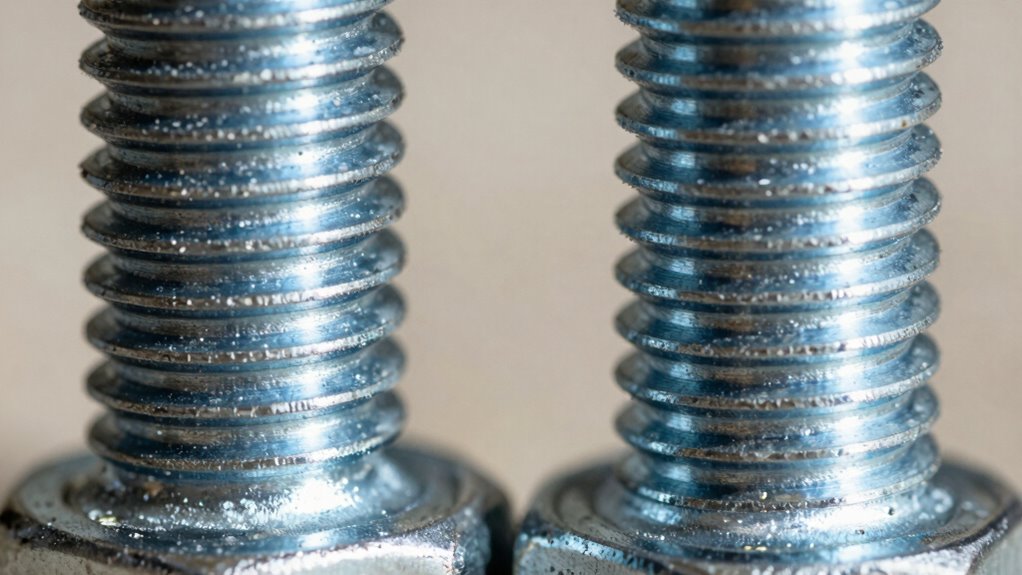

Torque specs aren’t fixed because dry and lubricated threads behave differently. When threads are dry, friction is higher, so you need more torque to achieve proper tension. Lubricants reduce friction, meaning you can tighten bolts with less force. Using the same torque on both can cause over-tightening or under-tightening. Understanding how lubrication impacts torque guarantees proper fastening. Keep exploring to learn how surface conditions and lubricants change these requirements for safe, reliable results.
Key Takeaways
- Lubrication reduces thread friction, meaning the same torque produces more tension in the fastener.
- Torque specifications are based on dry, unlubricated conditions; lubricated threads typically require lower torque.
- Applying dry torque to lubricated threads can cause over-tightening and damage.
- Always adjust torque values when using lubricants to ensure proper fastener tension.
- Consistent lubrication practices improve reliability and prevent unpredictable fastening results.
Understanding the Basics of Thread Friction

Have you ever wondered what role friction plays when tightening threads? Friction is the force resisting movement between the bolt and nut surfaces. Without lubrication, this friction is at its highest, so you’ll need more torque to achieve the desired tension. Clean, dry threads are the baseline for most torque calculations because they provide consistent friction. When threads are new, they often need burnishing to ensure uniform friction levels. Factors like surface finish, plating, and material type influence friction levels considerably. Higher friction means more torque is required to tighten a fastener properly. Conversely, reducing friction—by lubrication—lowers the torque needed, but it also makes applying the correct tension trickier. Understanding how friction works helps you tighten fasteners accurately and avoid damage.
How Lubrication Changes Torque Requirements

Lubrication greatly reduces thread friction, which means you’ll need less torque to achieve the same clamping force. Without adjusting torque specs for lubrication, you risk overtightening or under-tightening your fasteners. Consistent lubrication practices help ensure reliable, predictable results every time. Proper thread maintenance is essential to prevent damage and ensure safety during assembly. Additionally, understanding torque requirements helps in selecting the appropriate fastener tension for different applications. Recognizing how lubrication impacts torque values can also extend the lifespan of fasteners and prevent premature failure. Being aware of free floating conditions can influence how lubrication affects thread engagement and torque application. For example, thread engagement plays a key role in how lubrication modifies the necessary torque for secure fastening.
Friction Reduction Impact
Ever wondered how applying lubricant to fastener threads considerably impacts the torque needed to achieve proper tension? Lubrication reduces the friction between threads, meaning you don’t have to apply as much torque to reach the desired preload. For example, lubricated threads often require 10–15% less torque than dry threads; using oil can reduce torque by up to 45%. This friction reduction ensures consistent bolt tension and minimizes over-tightening risks. Without lubrication, higher torque is needed to overcome increased friction, which can lead to overtightening or thread damage. Different lubricants have varying effects—graphite can cut torque by over half, while oils typically reduce it by 30–40%. Recognizing these impacts allows you to adjust torque specifications accurately, preventing damage and ensuring reliable joint performance. Understanding friction reduction is key to proper fastener installation and maintaining joint integrity. Additionally, consistent application of lubrication practices contributes to safer and more reliable assembly processes.
Torque Adjustment Necessity
Since lubrication considerably reduces friction between threads, you must modify torque specifications accordingly. Applying dry torque to a lubricated fastener risks overtightening, which can damage threads or distort parts. Conversely, tightening a dry-thread torque on a lubed fastener can lead to insufficient clamping force, risking component loosening. To prevent this, use torque reduction factors based on the lubricant type—typically decreasing torque by 10-15%, with specific lubricants like SAE 30 oil or graphite requiring greater reductions. Always verify whether the torque chart accounts for lubrication, or adjust accordingly. When in doubt, consult manufacturer guidelines or perform test torques to ensure proper tension. Properly adjusting torque ensures safety, ideal load, and minimizes damage from over- or under-tightening. Detecting passive voice can help improve clarity and precision in technical writing.
Consistent Lubrication Benefits
Applying consistent lubrication to threads guarantees that torque requirements become more predictable and reliable. When you lubricate threads properly, friction decreases markedly, which means you’ll need less torque to reach the desired clamp load. This reduction in friction directly impacts the torque needed, ensuring more consistent results across different applications. This consistency helps prevent overtightening or undertightening, reducing the risk of damage or failure. Using the same lubricant and application method each time ensures minimal variation in bolt stress, leading to safer, more accurate assemblies. Lubrication also minimizes scatter in bolt load measurements, making your torque specifications more dependable. Whether you’re working with steel or aluminum, consistent lubrication standardizes friction conditions, so your torque values produce the intended tension every time. Standardized friction also helps ensure that your torque applications are uniform across different projects and materials. This predictability simplifies your process, saves time, and improves overall joint integrity. Understanding the effects of lubrication on torque can also assist in establishing proper maintenance schedules to prevent rework. Regularly checking lubricant quality ensures that your threads maintain consistent friction levels over time.
The Risks of Using Dry Torque on Lubed Threads
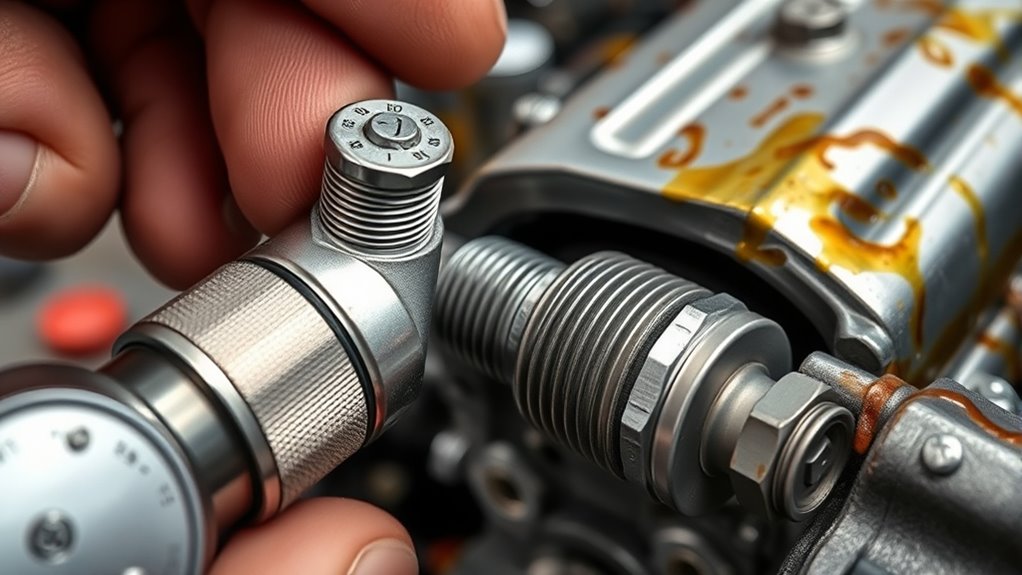
Using dry torque specifications on lubed threads can lead to serious issues, as the reduced friction from lubrication means the fastener will reach its tension at a much lower torque than intended. This can cause overtightening, which stresses the bolt and surrounding material, or undertightening, risking loosening under load. If you use the dry torque spec, you might strip threads or cause fatigue in softer metals like aluminum. Additionally, inconsistent lubrication can result in unpredictable torque-tension relationships, leading to unreliable clamping force. To avoid these risks, always adjust torque values based on whether threads are lubricated. Understanding how thread friction impacts torque is crucial for proper fastener installation. Proper lubrication helps ensure consistent tension and prevents damage to threads and fasteners, especially considering how lubrication variability can affect overall fastener performance. Being aware of torque-tension relationship is essential to achieve accurate fastening results and prevent mechanical failures. Furthermore, using the correct torque specifications enhances fastener reliability and extends the lifespan of mechanical assemblies.
Quantifying Torque Reduction With Different Lubricants

Understanding how different lubricants affect torque is essential for accurate fastener assembly. You’ll see torque reductions ranging from 10% to over 50%, depending on the lubricant used. Recognizing these impact percentages, specific examples, and factors that influence variability helps make certain proper tightening without risking damage or failure. Proper pet care essentials and understanding how lubricants modify torque can prevent over-tightening and potential damage to components. Additionally, ear wax odor can sometimes signal underlying health issues that may require attention, emphasizing the importance of awareness in seemingly minor details. The type of lubricant and its viscosity play a critical role in how much torque is affected during assembly. Moreover, the lubricant’s chemistry influences how it interacts with fastener materials, further affecting torque outcomes. It’s also important to consider the environmental conditions during assembly, as temperature and humidity can alter lubricant performance.
Lubricant Impact Percentages
Ever wonder how different lubricants affect torque requirements? They can considerably lower the amount of torque needed to achieve proper clamp load. For example, SAE 30/40 oil can reduce torque by 30-45%, while graphite can cut it by 50-55%. White grease typically offers a 35-45% reduction, and specialized lubes like ARP or waxed compounds can decrease torque by up to 50%. These percentages help you gauge how much less force is needed when applying lubricants, preventing over-tightening. Understanding these variations ensures you use the right torque setting for each lubricant, maintaining fastener integrity and avoiding damage. Remember, the actual impact depends on factors like surface finish, material, and environmental conditions, which can influence the effectiveness of each lubricant.
Specific Reduction Examples
Different lubricants can markedly reduce the torque needed to achieve the same fastener clamping force. For example, a 1-inch Grade 5 coarse bolt typically requires about 628 lbf-ft when dry. Applying a light lubricant drops this to roughly 483 lbf-ft, a 30% reduction. Using SAE 30 oil reduces torque further to around 377 lbf-ft, nearly 40% less than dry. Similarly, an 18mm class 12.9 bolt’s dry torque of 560 N·m decreases to 440 N·m with lubrication. For small fasteners like 1/4 inch bolts, lubrication nearly halves the torque. In more specialized cases, a CAT-50 1×8 stud needs 110 ft-lbs dry, but with oil, the required torque remains similar to achieve the same preload. These examples highlight how different lubricants can substantially cut the torque needed. Understanding proper lubrication techniques can further optimize fastening procedures and prevent over-tightening.
Variability Factors
Lubricants considerably influence torque reduction, but their effects can vary widely depending on several factors. You need to understand these variables to accurately predict torque changes and avoid damage. The type of lubricant plays a pivotal role; for example, graphite can reduce torque more than general oils. Surface finish matters too—rough threads generate more friction, so lubrication impacts them differently than smooth threads. Environmental conditions like humidity and temperature can alter friction levels, affecting torque values. Additionally, material differences, such as aluminum versus steel, influence how lubricants behave and how torque reduction manifests.
- Type of lubricant used
- Surface finish and cleanliness
- Environmental conditions (humidity, temperature)
- Material and plating of fasteners
Real-World Examples of Torque Variations

In the real world, torque variations often occur because of differences in lubrication, surface finish, and environmental conditions. For example, a bolt tightened to 60 lbf ft dry might require only 40 lbf ft if properly lubricated with oil, saving time and reducing risk of over-tightening. Similarly, a rusty or plated surface increases friction, meaning you need more torque to achieve the same clamp load. Environmental factors like humidity can cause moisture buildup, altering friction and leading to inconsistent torque readings. In practice, two technicians tightening the same bolt under different conditions can produce markedly different results, even if they follow the same torque specs. These real-world variations highlight the importance of understanding how lubrication and surface conditions influence torque requirements.
Factors That Affect Thread Friction and Torque
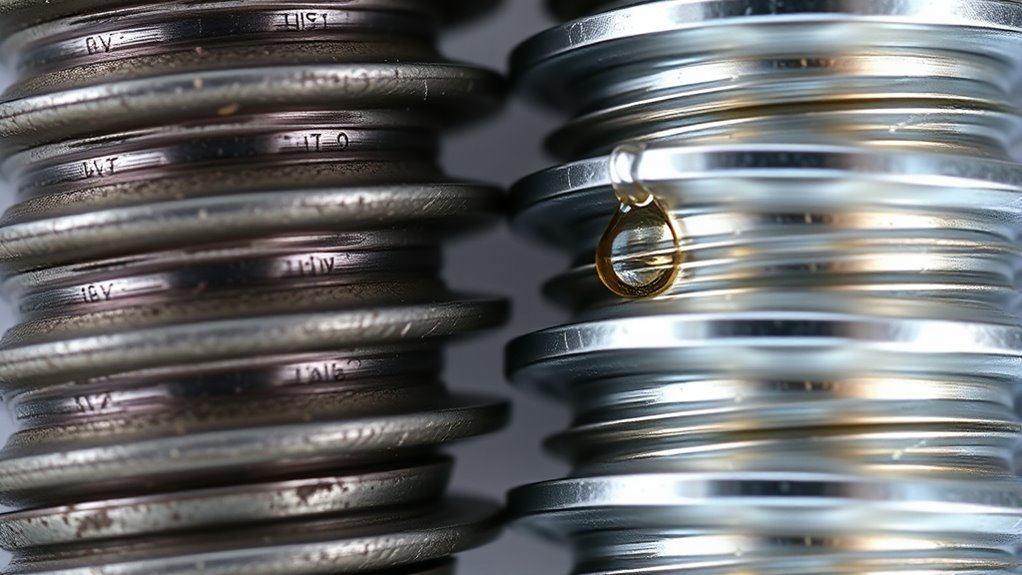
Several factors directly influence the amount of friction in threaded fasteners, which in turn affects the torque required for proper tightening. The surface finish of the threads plays a significant role; rougher surfaces increase friction, requiring more torque, while smoother finishes reduce it. The type of plating or coating impacts how well a lubricant works, altering friction levels. Environmental conditions like humidity and temperature can change friction, especially on dry threads. Additionally, the material of the fastener and mating surface impacts how friction behaves, with softer materials often increasing friction.
- Thread surface finish: rough vs. smooth
- Plating or coating type
- Environmental factors: humidity, temperature
- Material properties and compatibility
Frequently Asked Questions
How Do I Identify if Threads Are Dry or Lubricated?
You can identify if threads are dry or lubricated by inspecting their surface. Dry threads typically look clean, matte, and free of any grease, oil, or coatings. Lubricated threads may appear shiny, oily, or coated with a lubricant like grease or oil. Feel the surface; lubricated threads often feel slick or slimy. If unsure, wipe a small area with a clean cloth—if it feels greasy or leaves residue, it’s lubricated.
Can Using the Wrong Torque Cause Bolt Failure?
Ever seen a bolt snap in half under pressure? Using the wrong torque can definitely cause bolt failure. Tightening too much risks stripping threads, breaking the bolt, or damaging components. Conversely, too little torque means the bolt won’t hold securely, leading to loosening and eventual failure. Always match your torque to the thread condition—dry or lubed—to prevent these issues and guarantee safety and reliability.
What Are Signs of Over-Tightening or Under-Tightening?
You can tell if you’ve over-tightened a bolt by noticing stripping threads, cracked or deformed fasteners, or excessive effort during tightening. Under-tightening shows as loose fittings, movement, or vibrations. Both issues compromise safety and durability. Always check for proper torque specs, use a torque wrench, and verify the feel of resistance. Recognizing these signs helps prevent damage and guarantees your assembly remains secure and reliable.
How Does Environmental Humidity Influence Torque Requirements?
Environmental humidity affects torque requirements by altering the friction between threads. When humidity is high, moisture can create corrosion or a thin film on threads, increasing friction and requiring more torque for the same tension. Conversely, dry conditions reduce friction, so less torque is needed. You should modify torque specifications accordingly, especially in humid environments, to ensure proper fastener tension and avoid over- or under-tightening.
Are There Universal Torque Settings for Lubricated Threads?
Think of torque settings like fitting puzzle pieces; there’s no one-size-fits-all. For lubricated threads, you generally reduce dry torque values by 30-50%, depending on the lubricant. For example, if a dry torque is 600 lbf ft, lubed might need around 300-420 lbf ft. Always follow manufacturer specs for specific lubrication types, since factors like surface finish and environment impact the exact settings.
Conclusion
Remember, torque specs aren’t set in stone—they’re more like guidelines that dance with the friction between threads. When you add lubricant, you’re changing the tune, making it easier for threads to turn. Ignoring this can turn your project into a ticking time bomb. Think of proper lubrication as the secret ingredient in your recipe for safe, reliable fasteners. Master it, and your work will hold tight through thick and thin.