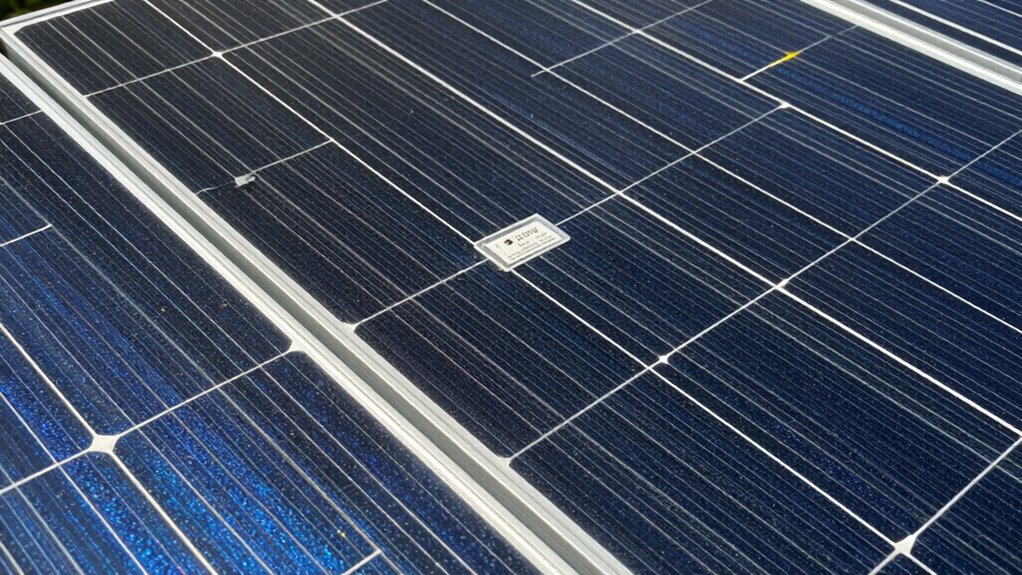
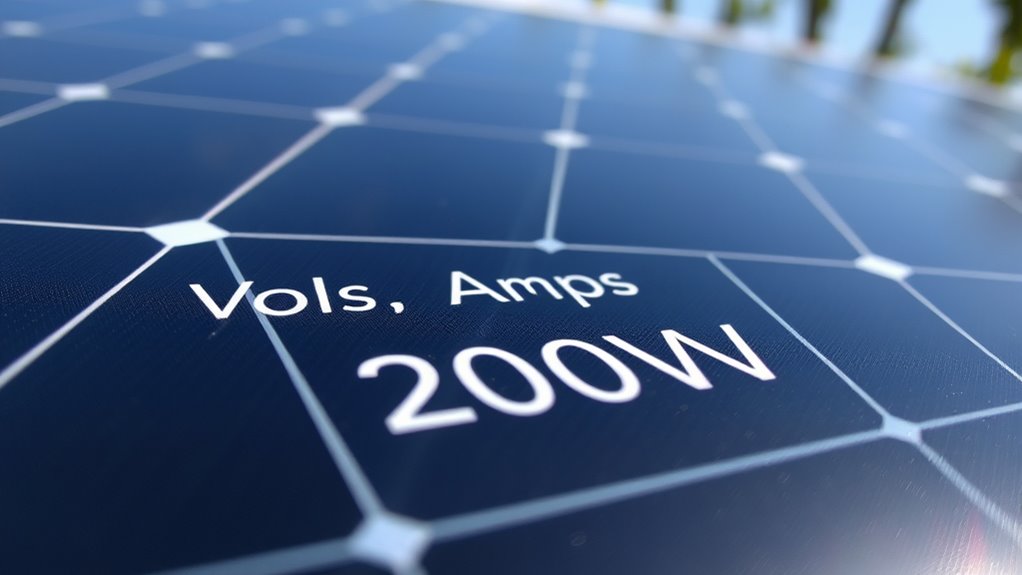
When you see a solar panel labeled as ‘200W,’ it’s based on ideal test conditions that don’t reflect real-world factors like temperature, shading, or weather. Voltages (Vmp, Voc) and currents (Imp) show how the panel performs under different scenarios but don’t guarantee output. High temperatures or shading can cause actual power to fall short. Understanding these specs helps you set realistic expectations—if you keep going, you’ll discover ways to interpret these numbers accurately.
Open a free Amazon Business account
Business pricing, bulk buying and tax-exempt orders.
As an affiliate, we earn on qualifying purchases.
Key Takeaways
- “200W” reflects maximum power under ideal conditions; real-world output often falls due to temperature, shading, and weather.
- Panel voltage (Vmp, Voc) and current (Imp) determine how the panel performs in different system configurations.
- Standard Test Conditions (STC) simulate ideal sunlight, but actual environmental factors cause deviations from rated wattage.
- Higher efficiency panels produce more power in less space, but their rated wattage still varies with temperature and shading.
- Wattage ratings can be misleading; always consider environmental factors and tolerances for realistic performance expectations.

USANOOKS Microfiber Cleaning Cloth Grey - 12 Pcs (12.5"x12.5") - High Performance - 1200 Washes, Ultra Absorbent Microfiber Towel Weave Grime & Liquid for Streak-Free Mirror Shine - Car Washing Cloth
- High Absorbency Grip Root Weave: Locks in 8-10x weight in liquids
- Lint-Free and Scratch-Resistant: Ensures streak-free, mirror shine
- Durable for 1200+ Washes: Long-lasting reusable microfiber cloths
As an affiliate, we earn on qualifying purchases.
Understanding Solar Panel Power Ratings
Understanding solar panel power ratings is essential because it helps you compare different panels and estimate their real-world performance. The wattage rating, measured in watts, indicates the maximum power a panel can produce under ideal conditions, known as Standard Test Conditions (STC). For example, a 350W panel produces 350 watts in perfect laboratory settings. The Pmax or MPP rating combines voltage and current to give the highest wattage point. Keep in mind, this rating is a benchmark for comparison, not a guarantee of actual output. Real-world factors like weather, shading, and temperature often cause actual performance to fall short. Standard Test Conditions are used as a reference point to evaluate panel performance consistently across different products. Choosing higher wattage panels typically means fewer panels are needed to meet your energy needs, simplifying installation and reducing costs. Additionally, understanding the power ratings helps in assessing the panel efficiency and suitability of panels for specific applications. Recognizing the impact of environmental factors on performance can also guide better system design and expectations.

HOMEXCEL Microfiber Cleaning Cloth 12 Pack, 12.5 x 12.5 inch Microfiber Towels for Cars, Ultra Absorbent Washing Cloth, Lint Free Streak Free Cleaning Rags for Car, Kitchen, and Window (Grey)
- High Water Absorption: Outstanding absorption for dirt and liquids
- Scratch-Free Cleaning: Soft fabric gently wipes without scratching
- Fast Drying: Rapidly absorbs water for quick drying
As an affiliate, we earn on qualifying purchases.
The Role of Standard Test Conditions (STC)
Standard Test Conditions (STC) give you a consistent way to compare solar panels by simulating ideal sunlight and temperature. While STC helps manufacturers provide uniform ratings, real-world performance often varies due to weather, shading, and temperature changes. Understanding this difference guarantees you set realistic expectations for your solar system’s output.
Consistent Comparison Basis
When comparing different solar panels, using Standard Test Conditions (STC) provides a consistent benchmark for performance. STC simulates ideal conditions—25°C cell temperature, 1000 W/m² sunlight, and air mass 1.5—to measure a panel’s rated wattage. This standard allows you to compare panels objectively, regardless of location or weather. While actual output can vary due to temperature, shading, and sunlight intensity, STC offers a common baseline. Manufacturers test panels under these conditions to determine their maximum potential. Keep in mind, the rated wattage is a laboratory figure, not a guarantee of real-world performance. Additionally, understanding the Free Floating nature of some systems can help optimize performance by reducing shading and maximizing exposure. Recognizing how temperature effects influence panel efficiency can further aid in selecting the best system for your environment.
Real-World Performance Variance
Although STC provides a useful benchmark, real-world conditions often cause solar panel output to fall short of those ideal numbers. Factors like weather, shading, and temperature influence actual performance. You might notice your panel produces less than its rated wattage on a cloudy day or during summer heat. Here’s what affects real-world output:
- Temperature: High temperatures reduce efficiency, lowering wattage.
- Sunlight Intensity: Cloud cover or shading cuts down energy production.
- Angle and Orientation: Poor positioning decreases exposure.
- Dust and Dirt: Dirt buildup blocks sunlight and reduces output.
- Partial Shading: Shadows on even part of the panel can considerably drop power.
Understanding these variables helps you set realistic expectations and optimize your system‘s performance beyond the STC benchmark.
Deciphering Voltage and Current: Vmp, Imp, and Voc
Understanding the key electrical parameters of a solar panel—Vmp, Imp, and Voc—is essential for evaluating its performance. Vmp is the voltage at maximum power, usually 70-80% of Voc, which is the open-circuit voltage when no load is connected. Imp is the current at maximum power under ideal conditions. These values determine how your panel will perform in a system. Here’s a quick comparison:
| Parameter | Meaning | Typical Range |
|---|---|---|
| Vmp | Voltage at max power | 30-40V for a 350W panel |
| Imp | Current at max power | 8-10A |
| Voc | No-load voltage | 36-45V |
Knowing these helps you design your system effectively, ensuring compatibility and best performance.
Why the ‘200W’ Label Can Be Deceptive
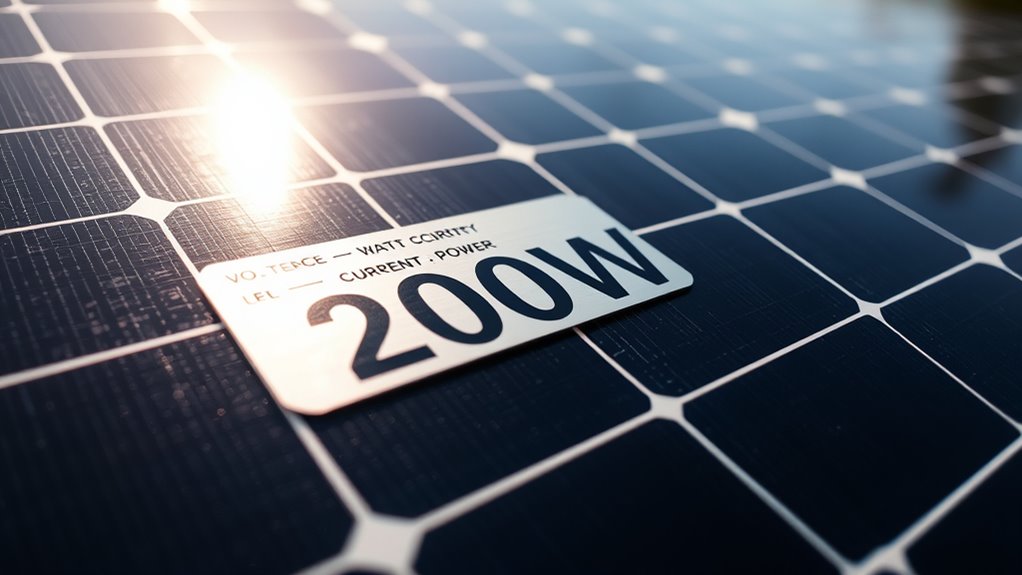
The ‘200W’ label on a solar panel often gives a false impression of its real-world performance, since manufacturers typically test and rate panels under ideal laboratory conditions that rarely match actual sunlight and environmental factors. This means your panel might produce substantially less power in everyday conditions. Factors like temperature, shading, and sunlight intensity impact actual output. For example:
- Real-world sunlight is usually less than the ideal 1000 W/m².
- Higher temperatures reduce panel efficiency.
- Shading can cut power dramatically.
- Power tolerance ratings mean actual output varies.
- Older panels may not reach their labeled wattage anymore.
Being aware of performance ratings helps you set realistic expectations for your solar investment. Additionally, understanding how environmental conditions influence solar panel efficiency can help optimize your system’s performance and lifespan.
Comparing Wattages: Older vs. Modern Panels

Modern solar panels typically deliver markedly higher wattages than their older counterparts, reflecting advances in technology and manufacturing. An older 250W panel might produce around 250W under ideal conditions, but a modern 350-460W panel often exceeds that, thanks to improved efficiency and larger cell counts. This means fewer panels are needed for the same power output.
| Panel Type | Wattage Range |
|---|---|
| Older Residential | 250-300W |
| Modern Residential | 350-460W |
| Commercial | 550W+ |
| High-End | 430-470W |
These differences highlight how newer panels can generate more power with less space, making them a smarter choice for maximizing energy production.
Power Tolerance and Its Impact on Real-World Output
Power tolerance determines how much a solar panel’s actual output can vary from its rated wattage, affecting real-world energy production. If a panel has a positive tolerance, it might produce slightly more than the rated wattage, giving you a bonus. Conversely, a negative tolerance means it could underperform, producing less energy than expected. This variation can impact your system’s efficiency and energy estimates. Additionally, understanding power tolerance can help you appreciate how newer or different panels might have varying tolerances and performance outcomes. Some key points to consider: – A 300W panel with a +5% tolerance can reach 315W in ideal conditions. – Negative tolerance panels might produce 290W instead of 300W. – power tolerance affects your system’s total energy calculations. – Always check tolerances to avoid overestimating your potential output. – Manufacturers often specify tolerance ranges to clarify expected performance. Moreover, being aware of energy output variations can assist in more accurate system planning and performance expectations.
Typical Wattage Ranges for Residential Solar Systems

Most residential solar panels today range from 350 to 460 watts, with 450W panels becoming the standard choice in 2025. Older models typically produce between 250 and 300 watts, offering a lower capacity option. Understanding these sizes helps you compare modern and legacy panels to select the best fit for your energy needs.
Common Residential Panel Sizes
Have you ever wondered what typical residential solar panels look like regarding wattage? Most residential panels fall within a common range, making it easier to estimate system size and output. Here’s what you should know:
- 350-460W: The popular range in 2025, offering high efficiency.
- 250-300W: Older panels often fall in this range.
- 60-cell panels: Typically produce 300-350W.
- 72-cell panels: Usually generate 350-450W.
- Efficiency: High-end models reach 17-23%, maximizing power output per square foot.
Knowing these sizes helps you compare options, plan your system, and understand what to expect in real-world conditions. Remember, actual output varies based on factors like temperature, shading, and sunlight availability.
Modern vs. Older Models
Over the years, residential solar panel wattages have considerably increased, reflecting improvements in technology and efficiency. Older models typically ranged from 250 to 300W, while modern panels now regularly produce 350 to 460W, with 450W becoming standard in 2025. This boost means fewer panels are needed for the same system capacity. The table below compares typical wattages:
| Panel Type | Wattage Range | Typical Efficiency |
|---|---|---|
| Older Models | 250-300W | Around 15-18% |
| Modern Models | 350-460W | 17-23% |
| 60-Cell Panels | 300-350W | Slightly lower than larger |
| 72-Cell Panels | 350-450W | Higher efficiency, larger |
Efficiency and Its Effect on Energy Production
How efficiently a solar panel converts sunlight into electricity directly impacts how much energy you can generate. The higher the efficiency, the more power you get from each square foot. This means you need fewer panels to meet your energy needs. Consider these points:
- Better efficiency means more wattage in less space.
- It reduces the number of panels required for your setup.
- Higher efficiency panels perform better in limited or shaded areas.
- They generate more energy during cloudy days or low sunlight.
- Improved efficiency often correlates with newer, advanced technology.
- Additionally, solar panel efficiency can influence the overall lifespan and durability of the panels, impacting long-term performance and maintenance costs.
- The warranty and quality of high-efficiency panels can also contribute to their longevity and consistent energy output over time.
- Knowing the efficiency rating of panels helps you make informed decisions aligned with your specific energy goals.
- As technology advances, innovations in solar efficiency continue to improve, making modern panels more effective than ever.
- Advancements in manufacturing techniques also play a crucial role in enhancing panel efficiency and performance.
Ultimately, efficiency determines how much sunlight is turned into usable electricity, affecting your system’s overall productivity and cost-effectiveness. Choosing high-efficiency panels can maximize your energy output, especially if space is limited.
How Sunlight and Temperature Influence Panel Performance
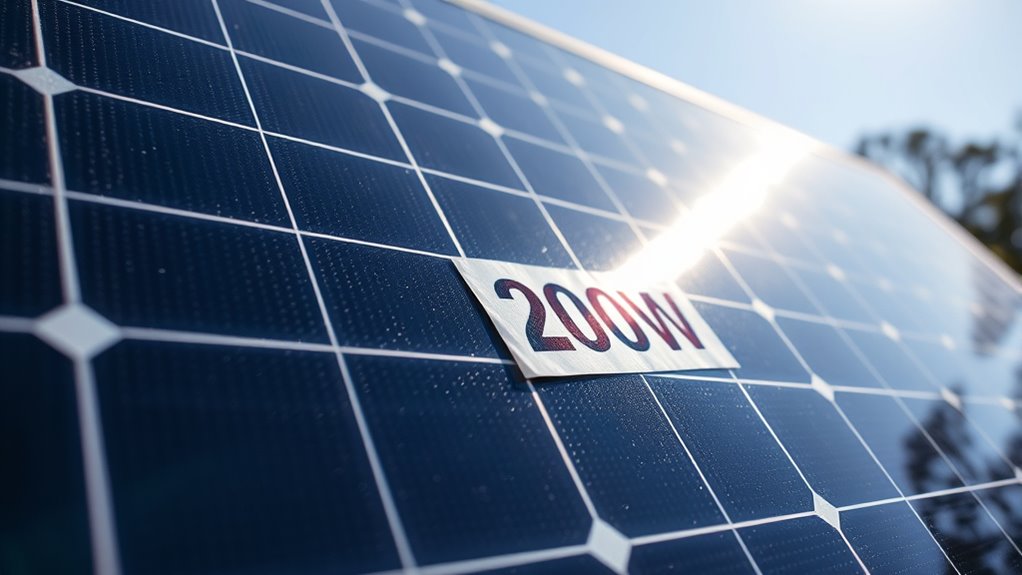
Sunlight and temperature directly impact your solar panel’s performance, shaping how much energy your system can produce throughout the day. Bright sunlight increases the panel’s output, but this depends on the angle and intensity, which vary with time and weather. Temperature also plays a key role; higher temperatures can reduce efficiency by causing the cells to overheat, lowering voltage and power output. Cooler conditions often boost performance, as panels operate closer to their rated capacity. This relationship highlights the importance of understanding panel efficiency to maximize energy harvest. This means that even with strong sunlight, hot days might reduce your energy harvest. To optimize performance, consider the local climate and shading when installing panels. Proper placement and ventilation help manage temperature, ensuring your system produces as much clean energy as possible. Additionally, understanding solar panel performance factors can help you select the best setup for your specific environment. Recognizing the impact of temperature variations can also guide you in choosing appropriate cooling solutions to maintain optimal output. Being aware of ambient conditions allows for better planning and maintenance, ensuring sustained efficiency over time. Moreover, selecting panels with higher temperature coefficients can further enhance energy production in warmer climates.
Tips for Interpreting Solar Panel Specifications
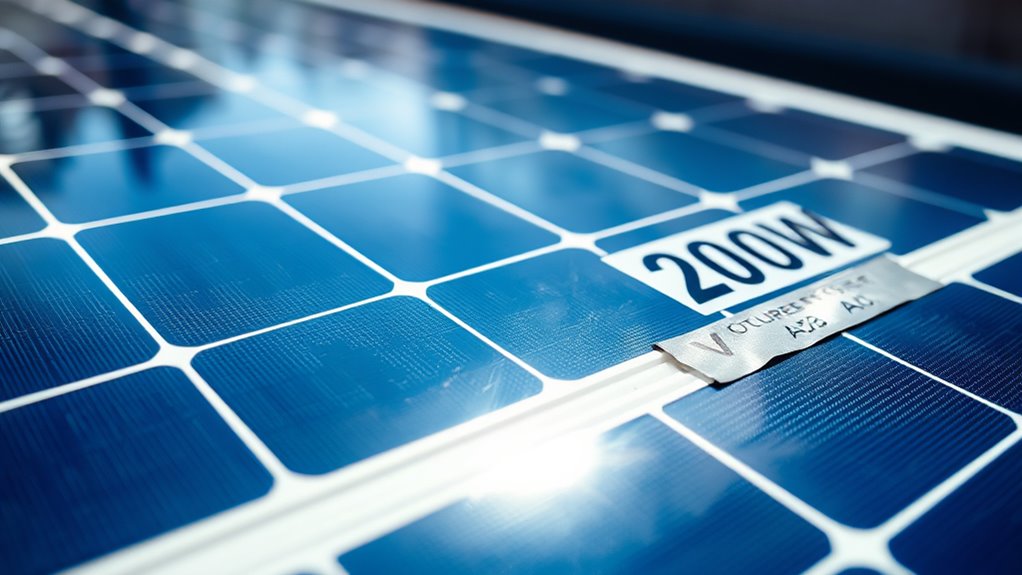
When reviewing solar panel specs, understanding how power ratings reflect actual performance is key. You’ll want to interpret voltage and current values accurately, as they determine the panel’s maximum power output. Keep in mind that real-world factors like weather and shading can cause actual output to differ from the specifications. Additionally, comprehending power ratings helps you make informed decisions about your solar investment. Recognizing the importance of standard testing conditions can further improve your understanding of a panel’s true capabilities.
Understanding Power Ratings
Understanding a solar panel’s power ratings is essential for selecting the right system. The wattage indicates the panel’s ideal output, but real-world performance varies. To interpret ratings accurately, consider these tips:
- Look beyond the labeled wattage; check the Power Tolerance to understand possible output range.
- Remember that the wattage is based on Standard Test Conditions, not everyday conditions.
- Focus on the Pmax or MPP rating, which combines voltage and current for maximum power.
- Be aware that older panels might have lower wattages, while newer, high-efficiency models deliver more power.
- Use the wattage in conjunction with sunlight hours to estimate actual energy production.
- Recognize that material quality and manufacturing standards influence overall panel durability and efficiency.
These tips help you make informed decisions, ensuring your system meets your energy needs.
Reading Voltage and Current
To interpret a solar panel’s specifications accurately, focus on its voltage and current ratings, which reveal how the panel performs under different conditions. Look at the Vmp (maximum power point voltage) and Imp (current at maximum power). Vmp is usually 70-80% of Voc (open circuit voltage), and Imp indicates the current at peak output under ideal conditions. These numbers tell you how much voltage and current the panel can produce at its best. When evaluating a panel, consider how temperature and shading can affect these ratings. A higher Vmp and Imp generally mean more power, but remember, real-world factors can reduce these values. Understanding these ratings helps you estimate actual performance and compare panels effectively.
Recognizing Real-World Variations
Real-world conditions rarely match the ideal laboratory settings used for specifications. This means your solar panel’s actual output can differ markedly from its rated wattage. To better interpret specs, keep these tips in mind:
- Temperature: Hotter days lower panel efficiency, reducing power output.
- Shading: Shadows from trees or buildings can cut energy production.
- Sunlight angle: Panels perform best when facing the sun directly; tilt and orientation matter.
- Weather: Cloud cover and haze decrease sunlight intensity.
- Wattage tolerance: Panels often produce slightly more or less than their rated power, so expect variability.
Frequently Asked Questions
How Does Shading Affect a Solar Panel’s Actual Wattage Output?
Shading considerably reduces your solar panel’s actual wattage output by blocking sunlight, which limits the energy it can generate. When part of the panel is shaded, its cells produce less current, causing a drop in overall power. This effect can reduce your system’s efficiency, especially if the shading covers critical areas. To minimize impact, you should trim shading sources or use bypass diodes to maintain higher output levels.
Can Two Panels With the Same Wattage Have Different Efficiencies?
Think of two panels as runners in a race; they may share the same finish line (wattage), but their speed (efficiency) varies. You can have two 350W panels, but one might convert sunlight to electricity more effectively. This means one could produce more actual power under the same conditions. So, yes, panels with identical wattages can have different efficiencies, impacting your overall energy yield.
What Is the Difference Between Peak Power and Real-World Energy Production?
Peak power reflects the maximum wattage a solar panel can produce under ideal conditions, like perfect sunlight and temperature. Real-world energy production, however, varies due to factors like weather, shading, and panel temperature. So, even if a panel hits its peak power in lab tests, your actual energy output will often be lower, depending on these environmental factors. Always consider real-world conditions when estimating your solar system’s performance.
How Do Temperature Changes Impact a Solar Panel’s Performance?
Temperature changes directly affect your solar panel’s performance. As temperatures rise above standard test conditions, panels become less efficient, reducing their power output. Conversely, cooler temperatures boost efficiency and increase energy production. You’ll notice this variation especially on hot sunny days, where high temperatures can lower wattage. To maximize your system’s performance, consider installing panels with good temperature coefficients, which indicate how well they handle temperature fluctuations.
Why Do Some Panels Produce More Power Than Their Rated Wattage?
Did you know some panels can produce up to 10% more power than their rated wattage? You see, manufacturers often assign a positive tolerance, meaning your panel might generate more than the labeled wattage in ideal conditions. Factors like high sunlight, cooler temperatures, and efficient design boost actual output. So, your solar panel can outperform expectations, giving you more energy and savings—making it a smarter investment.
Conclusion
Now that you know how to decode solar panel specs, you’ll spot the subtle differences others might overlook. Don’t be lulled by simple labels like ‘200W’—there’s more beneath the surface. With this knowledge, you can make smarter choices and avoid potential pitfalls. Remember, understanding these details isn’t just clever—it’s your best bet for truly harnessing the sun’s power and getting the most out of your investment.
Labor Day sales Picks
labor day deals
As an affiliate, we earn on qualifying purchases.