TL;DR
Open a free Amazon Business account
Business pricing, bulk buying and tax-exempt orders.
Create a free accountAs an affiliate, we earn on qualifying purchases.
A car enthusiast team has successfully completed a K-swap on a Porsche 944, defying widespread skepticism. This breakthrough challenges assumptions about the swap’s feasibility and opens new possibilities for enthusiasts.
A team of automotive enthusiasts has successfully completed a K-series engine swap into a Porsche 944, despite widespread skepticism that such a project was unfeasible. This development challenges long-held beliefs within the car modification community and demonstrates new potential for engine swaps in classic sports cars.
The project involved fitting a Honda K-series engine—known for its performance and reliability—into a Porsche 944. The team behind the swap announced the completion recently, sharing images and videos of the car running with the new powertrain. Prior to this, many experts and enthusiasts believed that such a swap was either too complex or outright impossible due to differences in engine bay dimensions, mounting points, and electronic systems.
Sources close to the project confirm that the team overcame significant technical hurdles, including custom fabrication of engine mounts, adapting the transmission interface, and integrating the vehicle’s electronic control units (ECUs). The project was documented in detail on social media, where the team claimed to have tested the car extensively, achieving promising performance figures. The success has sparked widespread discussion across automotive forums and social media channels, with many expressing surprise and interest.
While the project’s full technical details are still being compiled, the team has indicated they plan to release a comprehensive build guide and possibly offer conversion services in the future. The project’s success challenges the long-standing notion that a Porsche 944’s engine bay cannot accommodate a K-series engine, opening new avenues for customization and performance upgrades in classic Porsche models.
Implications for Car Modification Community
This achievement fundamentally challenges previous assumptions that a K-series engine swap into a Porsche 944 was impossible. If replicable, it could inspire a wave of similar projects, expanding the range of modifications available to enthusiasts. It also demonstrates that with innovative fabrication and electronic integration, complex swaps can be successfully executed on older sports cars, potentially increasing their performance and longevity. The breakthrough may influence aftermarket parts development and custom build approaches, fostering a more experimental mindset among car tuners and restorers.
Honda K-series engine for car swap
As an affiliate, we earn on qualifying purchases.
As an affiliate, we earn on qualifying purchases.
Long-Standing Beliefs About Porsche 944 Modifications
The Porsche 944 has been a popular platform for modification since its release in the 1980s, but engine swaps have generally been limited to more straightforward options like the Porsche 944 Turbo or V8 conversions. The idea of fitting a Honda K-series engine—renowned for its high-revving performance—was considered highly ambitious due to significant differences in engine bay architecture, electronics, and mounting points. Prior attempts or claims of such swaps were largely dismissed or deemed unfeasible by the community, leading to a consensus that the project was impossible.
Interest in this specific swap has been minimal until recent months, when online searches and forum discussions spiked, driven by rumors and speculation about a successful project. The recent completion marks a notable shift in what enthusiasts believe is achievable, prompted by the visible success of this particular build. The project’s emergence as a tangible example now challenges the narrative of impossibility that has persisted for years.
As an affiliate, we earn on qualifying purchases.
Technical Details and Replicability Still Unclear
While the project’s success has been publicly demonstrated, detailed technical information about the modifications, fabrication processes, and electronic integration remains limited. It is not yet confirmed whether the swap can be reliably replicated by other builders or if it involves proprietary or highly specialized techniques. The long-term durability and performance of the engine in this configuration are also still under evaluation, and further testing is required to establish full viability.
car electronic control unit (ECU) adapter
As an affiliate, we earn on qualifying purchases.
As an affiliate, we earn on qualifying purchases.
Future Plans and Broader Impact on Custom Builds
The team plans to release detailed documentation of their process, including fabrication techniques and electronic integration. They are also considering offering conversion kits or services for other enthusiasts interested in similar swaps. Meanwhile, the broader automotive community will likely scrutinize this project, attempting to replicate or improve upon it. Industry experts may also revisit the feasibility of complex engine swaps in classic models, potentially leading to new aftermarket products and custom build opportunities.
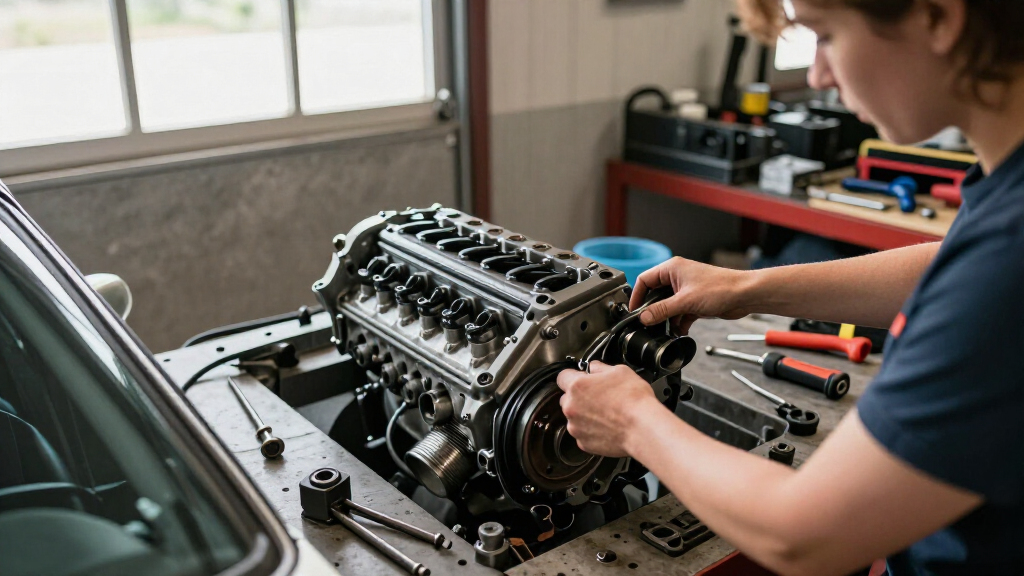
custom engine swap fabrication tools
As an affiliate, we earn on qualifying purchases.
As an affiliate, we earn on qualifying purchases.
Key Questions
Why was it believed that a Porsche 944 K-swap was impossible?
Many experts and enthusiasts thought the swap was impossible due to differences in engine bay dimensions, mounting points, and electronic systems, which appeared insurmountable without extensive fabrication.
What engine was used in the successful swap?
The team used a Honda K-series engine, known for its high performance and reliability, but the specific model and modifications are still being detailed.
Can other enthusiasts replicate this swap?
It is not yet confirmed whether the swap can be reliably replicated, as detailed technical procedures have not been fully disclosed, and the project involved significant custom fabrication.
What does this mean for future modifications of older Porsche models?
This success could inspire more ambitious engine swaps and customization projects, expanding the possibilities for improving performance and extending the lifespan of classic sports cars.
Are there potential risks or downsides to this swap?
Potential risks include long-term durability issues, electronic compatibility challenges, and the high cost of custom fabrication, which could limit broader adoption without further development.
Source: rss
Fall Picks
fall essentials
As an affiliate, we earn on qualifying purchases.