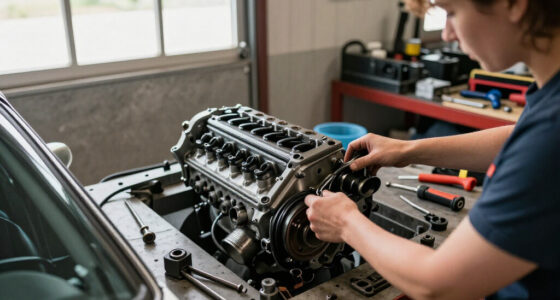
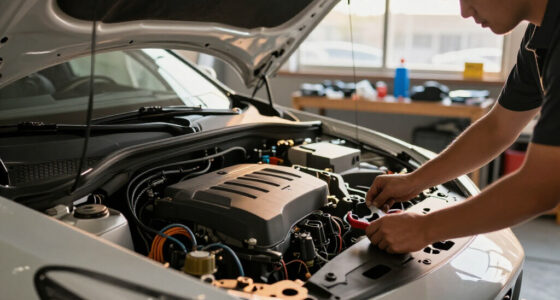
Electronic differentials use sensors to monitor wheel speeds, steering angle, and acceleration in real time. They send this data to the vehicle’s control system, which adjusts torque between wheels instantly, especially during turns. This process improves traction, stability, and handling by preventing slipping and skidding. Unlike mechanical systems, electronic differentials respond quickly for safer, smoother driving. Keep exploring to discover how these smart systems enhance your vehicle’s performance and safety behind the scenes.

Get business pricing on garage and car supplies
- Business-only prices and quantity discounts
- Tax-exempt purchasing
- Multiple users, one account, clear invoices
Key Takeaways
- Electronic differentials use sensors and digital control to monitor wheel speeds, steering, and acceleration for precise traction management.
- They adjust torque dynamically across wheels, enhancing grip and stability during turns and various driving conditions.
- Reacting instantly to sensor data, they improve handling, prevent skidding, and provide a smoother, safer driving experience.
- These systems integrate with safety features, applying subtle braking or torque shifts for optimal vehicle control.
- By combining sensor technology and smart torque adjustments, electronic differentials optimize vehicle handling without active driver input.
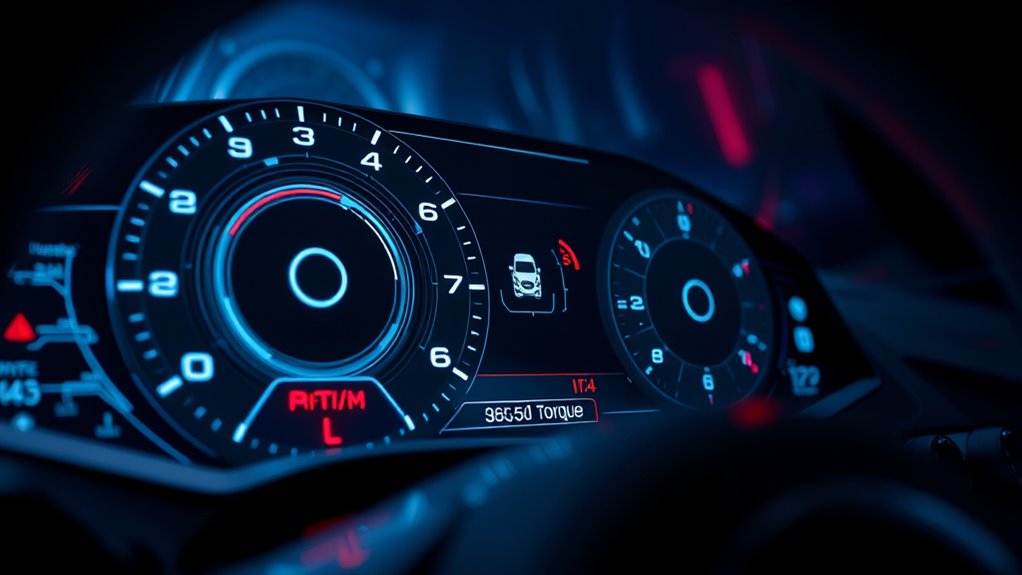
Have you ever wondered how modern vehicles smoothly turn corners without slipping or skidding? The secret lies in advanced systems like electronic differentials, which rely heavily on sensor technology and torque vectoring. These innovations work together to give your vehicle precise control during turns, enhancing safety and performance. Sensor technology is at the heart of this process; it continuously monitors wheel speeds, steering angle, acceleration, and other essential parameters. These sensors send real-time data to the vehicle’s electronic control unit (ECU), allowing it to assess the exact state of each wheel and the overall driving conditions.
Sensor technology continuously monitors wheel speeds and steering, enabling precise, real-time adjustments for safer, smoother vehicle turns.
Once the ECU gathers this information, it uses sophisticated algorithms to determine the ideal distribution of torque across the wheels. This is where torque vectoring comes into play. Unlike traditional differentials that distribute power equally or rely on mechanical components, electronic differentials adjust torque dynamically. For example, if you’re cornering and the sensors detect that one wheel is slipping or losing grip, the system can transfer more torque to the wheel with better traction. This targeted torque distribution helps the vehicle maintain stability and follow the intended path more accurately.
The beauty of this setup is its responsiveness. Because the system reacts instantly to changing conditions, you experience smoother turns and better grip without having to actively control it. When you accelerate out of a bend, the electronic differential can increase torque to the outer wheels, helping you push through the turn with confidence. Conversely, if one wheel begins to slip, the system can rapidly reduce power to that wheel, preventing skidding and potential loss of control. This sensor technology also enables other vehicle safety features to work more effectively, creating a comprehensive approach to intelligent driving assistance. Additionally, advances in digital control systems have further refined how these systems respond to dynamic driving environments.
Torque vectoring also enhances handling during high-speed maneuvers. It can subtly apply braking or torque adjustments to individual wheels, effectively steering the vehicle with greater precision. This not only improves cornering but also distributes forces more evenly, reducing tire wear and increasing safety. The integration of sensor technology and torque vectoring creates a responsive, adaptive system that works seamlessly to optimize traction and stability under various driving conditions. Additionally, color accuracy in projectors plays an essential role in delivering realistic and immersive visuals, much like how precise torque distribution enhances vehicle handling. Incorporating vehicle sensor networks further improves the system’s ability to adapt to changing environments, ensuring optimal performance.
In essence, electronic differentials use real-time data and smart torque adjustments to act like an invisible hand guiding your vehicle through turns. Instead of relying solely on mechanical parts, they leverage digital intelligence to provide smoother, safer driving experiences. The combination of sensor technology and torque vectoring transforms how your vehicle handles curves, making driving more confident and controlled—no slipping, no skidding, just precision at every turn.
As an affiliate, we earn on qualifying purchases.
Frequently Asked Questions
How Do Electronic Differentials Compare to Mechanical Ones in Cost?
Electronic differentials tend to be more expensive than mechanical ones when considering cost comparison, mainly due to their advanced technology and components. However, they offer superior control and adaptability, which can justify the higher price. Installation feasibility is generally straightforward for electronic differentials, but you should verify your vehicle’s system supports them. While initial costs are higher, their benefits might lead to savings through improved performance and reduced wear over time.
Can Electronic Differentials Be Installed on Older Vehicle Models?
You can install electronic differentials on older vehicle models, but you’ll face retrofit challenges and compatibility issues. These systems often require specific sensors, controllers, and wiring, which might not be suitable with older setups. You’ll need to assess whether your vehicle’s existing components can support the electronic differential or if significant modifications are necessary. Consulting a specialist helps ensure proper installation and avoids costly compatibility problems.
What Maintenance Is Required for Electronic Differential Systems?
Think of maintaining your electronic differential like tending a delicate garden—you need to stay attentive. You should regularly check sensor calibration to make sure sensors are accurate, and keep software updated to fix bugs and improve performance. These steps help your system operate smoothly and prevent costly repairs. Staying proactive with sensor calibration and software updates keeps your vehicle’s electronic differential system reliable, giving you peace of mind on every drive.
Are Electronic Differentials Effective in Off-Road Driving Conditions?
Yes, electronic differentials are highly effective in off-road driving conditions. They enhance off-road traction by automatically adjusting power distribution to wheels with the most grip, helping you navigate tough terrains smoothly. Electronic performance systems quickly respond to changing conditions, providing better control and stability. With these systems, you can confidently tackle mud, rocks, or uneven surfaces, knowing your vehicle’s traction is optimized for challenging off-road adventures.
How Do Electronic Differentials Impact Fuel Efficiency?
Think of electronic differentials as a symphony conductor, fine-tuning power distribution with precision. They can improve your fuel economy by optimizing how power is sent to your wheels, reducing wasteful energy loss. When you drive efficiently, you conserve fuel and extend your journey’s horizon. By intelligently managing power, electronic differentials help you achieve a smoother ride while saving fuel, making every drop count and turning your drive into a more economical adventure.
As an affiliate, we earn on qualifying purchases.
Conclusion
Don’t let the complexity of electronic differentials frighten you. They’re designed to make driving safer and more efficient without needing manual intervention. Some might worry about their reliability, but modern technology guarantees they’re dependable and quick to adapt. Once you understand how they work, you’ll appreciate their role in enhancing vehicle performance. Embrace these innovative systems—they’re the future of driving, offering smoother, safer journeys without the hassle of traditional differentials.
vehicle stability control system
As an affiliate, we earn on qualifying purchases.
As an affiliate, we earn on qualifying purchases.
As an affiliate, we earn on qualifying purchases.
Halloween Picks
halloween
As an affiliate, we earn on qualifying purchases.