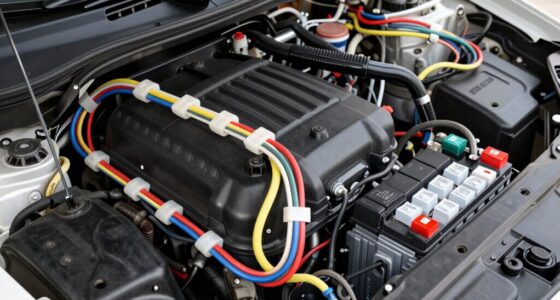
To size your battery cables properly, first determine your vehicle’s power needs, including current draw and distance from the battery to components. Use an appropriate wire gauge chart to select a size that handles your electrical load without excess. Avoid overspending on oversized cables but don’t go too small, which can cause overheating and voltage drops. Investing in quality terminals and insulation guarantees durability, and understanding these steps helps you select the right cables without wasting money. Keep going to learn how to make those choices confidently.

Get business pricing on garage and car supplies
- Business-only prices and quantity discounts
- Tax-exempt purchasing
- Multiple users, one account, clear invoices
Key Takeaways
- Calculate the total current load and select a cable gauge that handles it comfortably without excessive oversizing.
- Refer to industry voltage drop guidelines to ensure cables are thick enough for efficient power transfer.
- Use manufacturer charts or standards (e.g., SAE, AWG) to match cable size with the specific electrical demands of your system.
- Avoid under-sizing by considering future upgrades or added accessories that may increase current draw.
- Balance cost and durability by choosing the appropriate cable gauge that ensures performance without unnecessary expense.
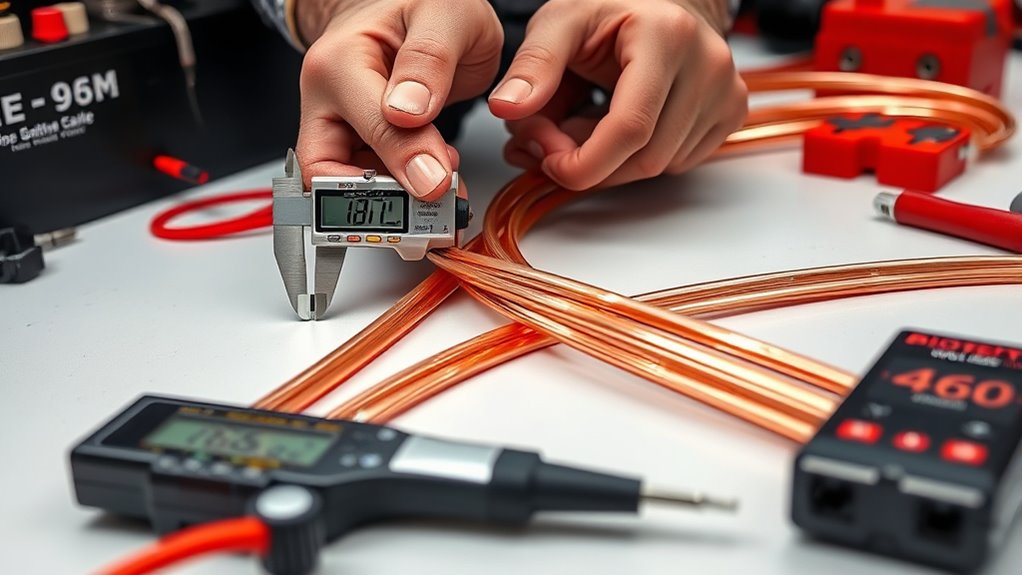
Upgrading your battery cables can substantially improve your vehicle’s electrical performance. When considering a cable upgrade, one of the most critical aspects is ensuring the cable insulation is durable and resistant to heat, moisture, and chemicals. High-quality insulation prevents corrosion and minimizes energy loss, which means more reliable power delivery to your vehicle’s electrical components. Cheaper cables with poor insulation can deteriorate quickly, leading to voltage drops and potential starting issues, especially under demanding conditions. Thus, investing in cables with superior insulation pays off in the long run by maintaining ideal conductivity and reducing the need for frequent replacements.
Another crucial factor is terminal quality. The terminals are where your cables connect to the battery and other electrical systems, so their design and material quality directly impact overall performance. High-quality terminals ensure a tight, secure connection that resists corrosion and minimizes resistance at the contact points. Poor-quality terminals can cause intermittent power issues, increased heat buildup, and eventual failure of your electrical system. When upgrading, pay attention to terminals that are designed for a snug fit and made from materials such as brass or copper, which offer excellent conductivity and durability. Properly crimped or soldered terminals also reduce the chances of loose connections, which can be hazardous and lead to voltage drops.
Additionally, selecting the correct cable gauge is essential for optimizing performance and avoiding unnecessary costs or risks.
As an affiliate, we earn on qualifying purchases.
Frequently Asked Questions
Can I Use Household Wiring for My Battery Cables?
You shouldn’t use household wiring for your battery cables because it isn’t designed for high current or automotive conditions. Household wiring may lack the necessary insulation and current-carrying capacity, posing safety risks like shorts or fires. Always choose cables specifically rated for automotive use, ensuring they meet safety standards. This way, you protect your vehicle and yourself, avoiding potential hazards caused by improper wiring choices.
How Often Should I Upgrade My Battery Cables?
You should upgrade your battery cables when you notice signs like melting insulation or frequent corrosion, typically every 3-5 years. For example, a truck owner found that replacing worn cables improved safety and performance. Regularly check cable insulation for damage, and guarantee proper installation safety. Upgrading on time prevents power issues and potential hazards, saving you money and ensuring reliable operation.
What Are Signs My Cables Are Undersized?
If your cables are undersized, you’ll notice increased heat, voltage drops, or dimming lights during high power draw. Check for damaged cable insulation or signs of corrosion, especially at connection points, which can indicate inadequate sizing. Properly rated cables guarantee corrosion and promote efficient current flow. Regular inspection helps you catch these signs early, avoiding potential electrical failures and maintaining your system’s performance.
Do Cable Materials Affect Performance and Longevity?
You might think cable materials don’t matter, but research shows they do impact performance and longevity. High-quality conductor materials like copper ensure efficient power flow and durability, while cable insulation protects against wear, heat, and corrosion. Using inferior materials can lead to voltage drops, overheating, and early failure. So, choosing the right conductor and insulation materials isn’t just about cost—it’s about guaranteeing your cables last longer and perform reliably.
Is Professional Installation Necessary for Cable Upgrades?
You should definitely opt for professional installation when upgrading your battery cables. It guarantees safety considerations are met, reducing the risk of electrical shorts or fires. Professionals have the right tools and expertise to properly size, connect, and secure cables, preventing future issues. Doing it yourself may save money initially, but it could lead to costly mistakes or safety hazards. Trusting experts guarantees a safe, reliable upgrade that lasts longer.
As an affiliate, we earn on qualifying purchases.
Conclusion
Upgrading your battery cables wisely can save you money and boost performance, but don’t rely solely on standard sizing charts. Instead, consider factors like cable length, current draw, and potential voltage drops. Some theories suggest that oversizing cables reduces resistance and improves efficiency, but it’s not always necessary and can be costly. By understanding your specific needs and testing different setups, you’ll find the perfect balance—saving money while ensuring reliable power delivery.
As an affiliate, we earn on qualifying purchases.
automotive insulation for cables
As an affiliate, we earn on qualifying purchases.
As an affiliate, we earn on qualifying purchases.
Fall Picks
fall essentials
As an affiliate, we earn on qualifying purchases.