
To catch a bad diode early, you need to perform an alternator ripple test using a digital oscilloscope or a multimeter with AC measurement. Start your engine and connect the device to your battery terminals. Look for a steady waveform; irregular spikes or increased ripple suggest diode failure. Detecting these early signs helps prevent battery damage and electrical issues. Keep going, and you’ll discover how to interpret the results and keep your system healthy.

Get business pricing on garage and car supplies
- Business-only prices and quantity discounts
- Tax-exempt purchasing
- Multiple users, one account, clear invoices
Key Takeaways
- Use a multimeter or oscilloscope to measure AC ripple on the battery terminals during engine operation.
- Look for irregular spikes or high-frequency fluctuations indicating potential diode failure.
- Regularly perform ripple tests as part of vehicle maintenance to catch issues early.
- Elevated ripple levels suggest compromised diodes, risking battery damage and electrical system failure.
- Promptly repair or replace faulty alternator diodes to prevent further battery and system harm.

The Alternator Ripple Test is a vital diagnostic tool used to assess the health of your vehicle’s charging system. When you perform this test, you’re fundamentally checking the quality of the electrical output from your alternator, which directly impacts your battery maintenance and overall vehicle performance. A healthy alternator produces a smooth, consistent electrical signal, but when a diode within it starts to fail, it creates ripple—a fluctuating current that can harm your battery over time. Catching these issues early can save you money and prevent breakdowns, making this test an indispensable part of electrical diagnostics.
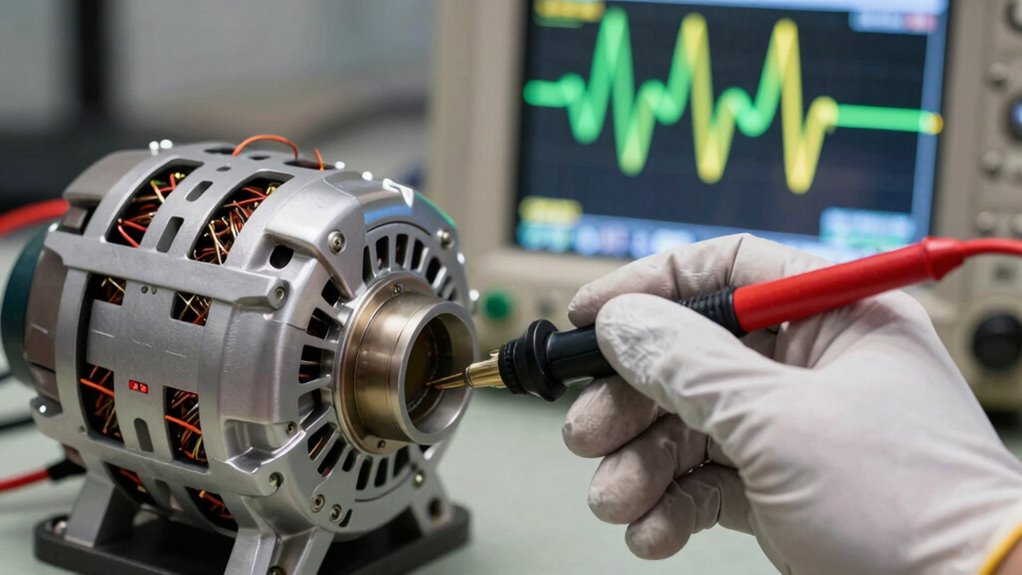
To perform the ripple test, you’ll need a digital oscilloscope or a multimeter with a frequency or AC voltage measurement feature. Start your engine and allow it to reach normal operating temperature. Connect the testing equipment to your vehicle’s battery terminals, ensuring a solid connection. As the engine runs, observe the signal displayed on your device. A steady, clean waveform indicates that your alternator is functioning properly, with minimal ripple. However, if you see a waveform with high-frequency fluctuations or irregular spikes, it’s a sign that a diode may be failing.
Use a multimeter or oscilloscope to check for ripple, indicating alternator health.
A failing diode causes the alternator to produce an irregular electrical output, which leads to increased ripple. This ripple can cause your battery to receive inconsistent charging, accelerating battery wear and risking failure. In terms of electrical diagnostics, a high ripple level is a warning sign that your alternator isn’t efficiently converting mechanical energy into electrical energy. It’s also a signal that your battery maintenance routine needs updating, as a compromised charging system can lead to decreased battery life or unexpected failures.
Catching a bad diode early through the ripple test allows you to address the problem before it severely damages your battery or other electrical components. If you notice abnormal ripple levels, it’s best to have your alternator inspected and repaired by a professional. Replacing a faulty diode is usually straightforward, but neglecting it can lead to costly repairs down the line. Regular testing as part of your vehicle’s maintenance schedule ensures you stay ahead of potential electrical issues, keeping your battery healthy and your vehicle running smoothly.
Frequently Asked Questions
Can a Bad Diode Cause Engine Stalling?
Yes, a bad diode can cause engine stalling. When diodes fail prematurely due to manufacturing defects or a shortened diode lifespan, they can disrupt the alternator’s ability to regulate voltage properly. This instability may lead to inconsistent power supply, causing engine stalls or rough running. Regularly testing your alternator helps catch diode issues early, preventing potential engine problems caused by faulty diodes.
How Often Should I Perform an Alternator Ripple Test?
You should perform an alternator ripple test during your regular maintenance schedule, ideally every 6 to 12 months, or if you notice electrical issues. Incorporating this diagnostic frequency helps catch bad diodes early, preventing battery damage and other electrical problems. Regular testing guarantees your vehicle’s charging system remains reliable, keeps batteries healthy, and avoids unexpected breakdowns. Make it a routine part of your vehicle’s maintenance to stay ahead of potential issues.
What Tools Are Required for the Ripple Test?
Performing an alternator ripple test is like tuning a guitar—you need the right tools. You’ll need a digital multimeter with AC voltage measurement capabilities and possibly an oscilloscope for detailed analysis. Before testing, follow safety precautions like disconnecting the battery and wearing gloves. These tools help you accurately detect diode issues, preventing battery damage and ensuring your vehicle runs smoothly. Always prioritize safety and proper equipment handling.
Are All Alternator Diodes Susceptible to Failure?
Not all alternator diodes are equally susceptible to failure, but their lifespan varies based on usage and conditions. You should watch for failure symptoms like dimming lights, battery warning signs, or unusual noises. Diodes can fail over time due to heat or voltage stress, so proactive testing helps catch issues early. Regular ripple tests can reveal a failing diode before it causes more damage, saving you from costly repairs.
How Does Ambient Temperature Affect Ripple Measurements?
Think of ambient temperature as a quiet guardian that influences your ripple measurements. When it’s hot, measurement accuracy can suffer, like trying to read a fading sign in bright sunlight. Cold temperatures sharpen the signal, making faults easier to spot. Temperature influence is vital; it can mask or exaggerate diode issues, so you must adjust your testing approach accordingly to get precise, reliable readings and prevent costly battery failures.
Conclusion
By performing the alternator ripple test regularly, you catch bad diodes early, protect your batteries, and prevent costly damages. By staying vigilant, by understanding the signs, and by acting promptly, you guarantee your vehicle’s electrical health remains strong. Don’t wait for trouble to strike—test, monitor, and maintain. Keep your alternator in check, keep your batteries safe, and keep your vehicle running smoothly. Stay proactive, stay informed, and drive with confidence.
Halloween Picks
halloween
As an affiliate, we earn on qualifying purchases.