
To guarantee a no-drama clean install, start by checking your hardware meets minimum specs and backing up your important data. Confirm all your software and drivers are compatible and gather your installation media and keys beforehand. Follow the prompts carefully during setup, paying attention to partition choices. After installation, install essential drivers and updates to keep your system stable. Staying organized and patient helps prevent headaches—keep going to discover more tips for a smooth setup.
Key Takeaways
- Prepare by verifying hardware meets minimum specifications and backing up important data beforehand.
- Ensure software compatibility by reviewing system requirements and updating drivers and applications.
- Follow installation prompts carefully, selecting correct partitions and performing a clean wipe if needed.
- Install essential drivers and updates immediately after setup to ensure hardware functionality.
- Take your time during post-installation to configure security, stability, and necessary software updates.

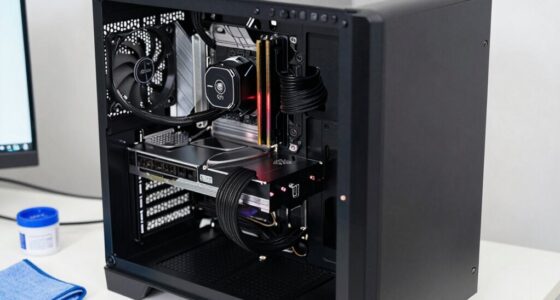
Setting up a new system doesn’t have to be stressful. When you’re preparing for a clean install, the key is to approach it methodically. First, you want to verify your hardware prerequisites are met. Check that your device meets the minimum specifications for the operating system or software you plan to install. This means confirming processor speed, RAM, storage space, and graphics capabilities. If your hardware isn’t compatible or falls short in any area, the installation might fail or lead to performance issues later. Taking the time upfront to confirm hardware prerequisites will save you headaches down the line and help guarantee a smooth setup.
Verify hardware requirements first to ensure a smooth, hassle-free system setup.
Next, focus on software compatibility. Before you start the clean install, make sure your new system will support all the applications and drivers you need. Review the software requirements and see if there are any updates or patches available that improve compatibility with your new OS version. For essential applications, visit their official websites or support forums to verify compatibility. This step helps you avoid surprises like incompatible drivers or missing features after installation, which can cause frustration and delays. Planning ahead in this way means you’re less likely to run into issues that force you to troubleshoot or redo parts of the process. Additionally, understanding the importance of software compatibility can help you select the right versions and updates before installation begins.
Once you’ve confirmed hardware prerequisites and software compatibility, back up all important files. A clean install wipes your drive, so safeguarding your data is essential. Use an external drive or cloud storage to save documents, photos, and configurations. It’s also helpful to create a system image backup before proceeding, so you can restore your system to its previous state if needed. Incorporating a backup plan that includes cloud storage options can provide extra security for your data. After backing up, gather all necessary installation media, product keys, and driver files. Having everything ready will streamline the process and prevent interruptions. When you start the installation, follow the prompts carefully, and avoid rushing. Pay attention to partitioning options, ensuring you’re installing on the correct drive and wiping the right partitions if needed. This prevents accidental data loss and ensures your system is fresh.
Throughout the installation, stay patient and avoid unnecessary tweaks. Once the OS is installed, focus on installing essential drivers and updates. This step guarantees your hardware works correctly and your system stays secure. Remember, a no-drama setup hinges on preparation. By understanding your hardware prerequisites, verifying software compatibility, and organizing your files beforehand, you set yourself up for success. Proper hardware verification can prevent compatibility issues before they happen. This planned approach minimizes surprises, reduces downtime, and helps you enjoy your new system without hassle. When you keep things straightforward and prepared, the entire process becomes much less intimidating and more efficient.

64GB – Bootable USB Drive 3.2 for Windows 11/10 / 8.1/7, Install/Recovery, No TPM Required, Included Network Drives (WiFi & LAN),Supported UEFI and Legacy, Data Recovery, Repair Tool
Beginner watch video instruction ( image-7 ), tutorial for "how to boot from usb drive", Supported UEFI and…
As an affiliate, we earn on qualifying purchases.
As an affiliate, we earn on qualifying purchases.
Frequently Asked Questions
What Tools Are Essential for a No-Drama Installation?
You need essential tools like a reliable USB installer or disc, and a compatible OS installer to guarantee a smooth, no-drama installation. Check software compatibility beforehand to avoid issues, and verify hardware prerequisites like sufficient RAM, storage, and compatible drivers. Use tools like disk partitioning software, and keep drivers and firmware updated. These steps help you streamline the process, minimize errors, and guarantee a clean, successful install every time.
How Long Does a Typical Clean Install Take?
A typical clean install can take anywhere from 20 minutes to an hour, depending on hardware compatibility and how quickly you meet software prerequisites. Ironically, you might think it’s quick, but ensuring your hardware is compatible and all prerequisites are satisfied can stretch the process. Rushing through might cause issues, so take your time to double-check everything. A smooth setup beats rushing and fixing errors later.
Can I Customize My Setup During the Process?
Yes, you can customize your setup during the clean install process. Many installers offer customization options that let you choose which features, applications, or settings to include, giving you setup flexibility. You can often select or deselect components, configure preferences, and tailor the installation to your needs. This guarantees your system is optimized from the start, making your setup more efficient and aligned with how you use your device.
What Common Mistakes Should I Avoid?
You might think skipping data backup or ignoring hardware compatibility is no big deal, but those are common mistakes to avoid. Overlooking hardware compatibility can turn your clean install into a tech nightmare, while neglecting data backup risks losing important files. Don’t rush the process or skip checks—these simple steps save you headaches later. Double-check your hardware and back up your data, and you’ll enjoy a smooth, drama-free setup.
Is There a Step-By-Step Checklist Available?
Yes, a step-by-step checklist is available for a smooth, no-drama clean install. First, verify hardware compatibility to prevent issues later. Next, back up your data and note user preferences, such as software settings. Then, create a bootable installation media and disable unnecessary startup programs. Follow the prompts carefully, install drivers, and restore your data. This approach helps you avoid common mistakes and guarantees a seamless setup tailored to your needs.

Kosbees 500 GB External Hard Drives,Portable Hard Drive for Windows,Ultra Slim External HDD Store Compatible with PC, MAC,Laptop,PS4, Xbox one, Xbox 360;Plug and Play Ready
【Plug-and-Play Expandability】 With no software to install, just plug it in and the drive is ready to use…
As an affiliate, we earn on qualifying purchases.
As an affiliate, we earn on qualifying purchases.
Conclusion
By following this no-drama setup, you’ll breeze through your clean install faster than a rocket blasting off! Say goodbye to chaos, stress, and endless troubleshooting—you’ll be practically dancing through the process. With this foolproof method, you’ll have your system running smoother than silk in record time, leaving you wondering why you ever worried. Get ready to conquer your install like a tech superhero, making chaos a thing of the past and victory your new normal!
AOMEI Backupper PRO – Backup software, recovery in case of malware infection, hard drive failure, or Windows crashes — for 2 PCs, lifetime license for Win 11 and 10
Never lose data again and enjoy instant recovery after a system failure
As an affiliate, we earn on qualifying purchases.
As an affiliate, we earn on qualifying purchases.

XiHu 76951 Window Handle Removal Tool with 10 Window Handle Crank Fixing Clips, Universal Automotive Upholstery Repair Tool
【Multifunctional Repair Tool】Designed specifically for disassembling car window handles, it can easily be inserted and removed from the…
As an affiliate, we earn on qualifying purchases.
As an affiliate, we earn on qualifying purchases.